Key Takeaways
-
A properly fitted vest with correct shoulder straps and side closures prevents shifting and restricts breathing; pair this with a ventilation layer underneath to cut sweat and heat buildup significantly.
-
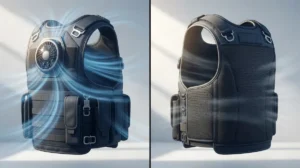
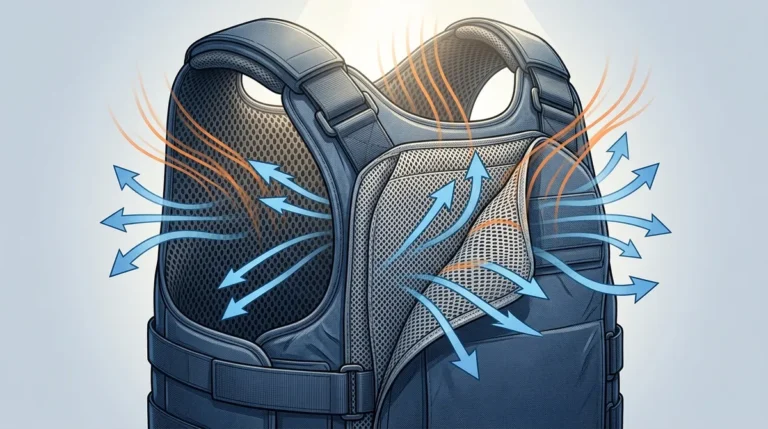
Adding a ventilation vest under armor creates a physical air gap (up to 1.5 inches with inflatable designs) that allows hot, humid air to escape while cool air circulates, preventing armor from pressing directly against skin.
-
Keep ventilation products under 10 ounces to avoid adding meaningful weight; lightweight options like BluHalo (under 7 oz) actually make armor feel lighter by improving airflow and reducing the oppressive sensation of heat.
-
Choose between passive ventilation for active patrol work, active fan systems for stationary posts or extreme heat, and inflatable vests for flexible on-demand cooling based on your specific duty conditions.
-
Look for anti-microbial fabric and moisture-wicking 3D mesh in ventilation vests to prevent bacterial growth, reduce odor, and pull sweat away from skin during long shifts.
-
Pair your ventilation system with smart habits: hydrate consistently, use vehicle AC strategically, activate cooling before overheating, and take shade breaks to maximize airflow effectiveness throughout your shift.
Wearing body armor every day is no small thing. Whether you’re a patrol officer pulling a 12-hour shift in summer heat, a soldier on an extended mission, or a security professional on the move, one challenge stays constant: heat. Body armor traps warmth against your skin, moisture builds up fast, and before long, discomfort starts affecting your focus and performance. That’s a real problem when your job demands your full attention.
The good news? Getting your body armor fit and airflow right can make a massive difference. A well-fitted vest combined with smart ventilation solutions can cut down on sweat, reduce heat buildup, and help you stay sharp all day long. In this guide, we’re breaking down 9 practical tips to help you feel cooler, drier, and more comfortable under your armor — no matter what the day throws at you.
Why Body Armor Fit and Airflow Matter So Much
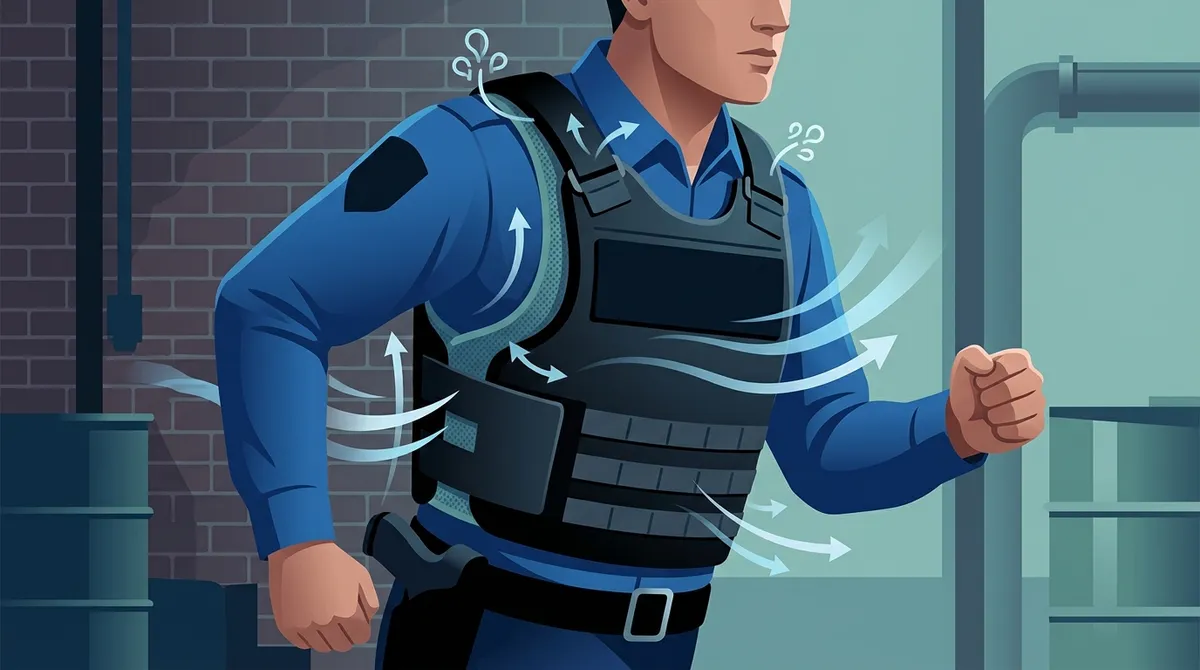
Before we dive into the tips, let’s talk about why this matters. According to the OSHA Heat Stress Guide, prolonged heat exposure can lead to serious health risks including heat exhaustion and heat stroke. For people wearing body armor in warm conditions, that risk goes up significantly because armor acts like an insulating layer that traps body heat.
Poor armor fit makes things worse. When armor doesn’t sit right, it can restrict your breathing, shift during movement, and create uncomfortable pressure points. Add in zero airflow, and you’ve got a recipe for a very long, very miserable shift. That’s why both fit and airflow need to work together — you can’t really have one without the other.
9 Body Armor Fit and Airflow Tips to Stay Cool on Duty
1. Identify Your Heat Zones Before You Start
Not all areas of your body heat up equally under armor. The back, chest, and sides are the biggest heat-trapping zones. Before choosing a ventilation solution, spend a shift paying attention to where you feel the most heat buildup. This helps you target the right areas with the right solution and get the most out of any ventilation vest you add to your setup.
2. Make Sure Your Armor Fits Snugly — But Not Too Tight
A properly fitted vest should cover your vital organs without squeezing your ribcage or restricting your breathing. Check out the Body Armor Standards from the National Institute of Justice for guidance on proper fit. A vest that’s too loose will shift and ride up, while one that’s too tight adds pressure and makes heat worse. Aim for a secure, comfortable fit with room to breathe normally.
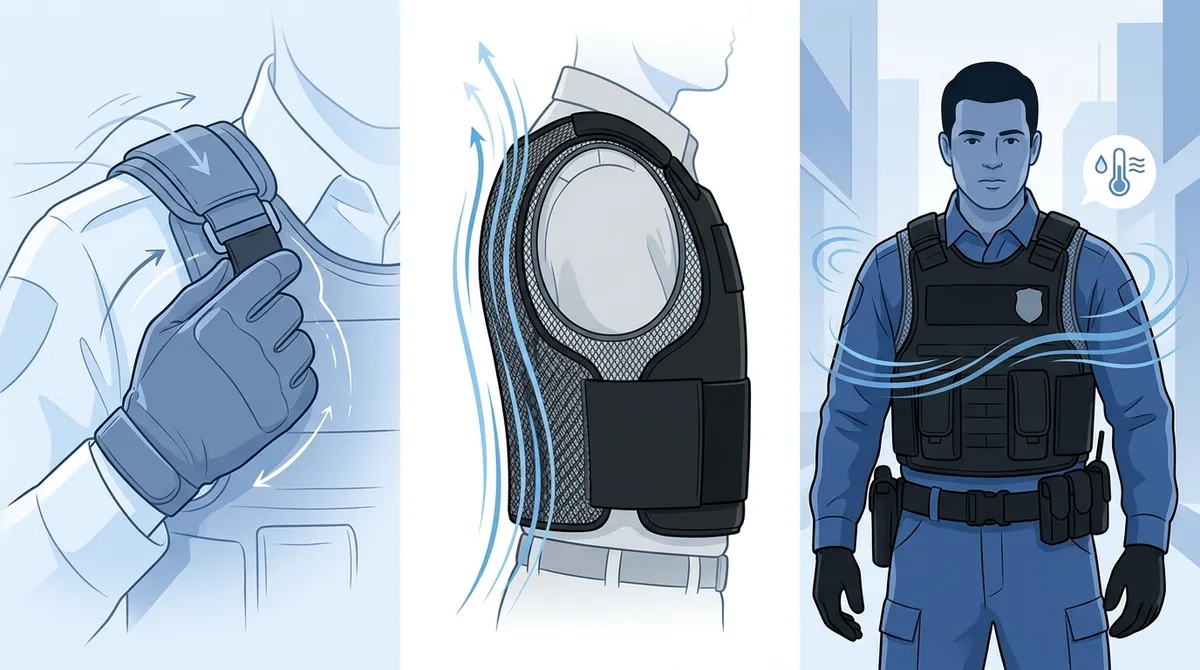
Use your armor’s shoulder straps and side closures to dial in the fit. Many modern vests offer 4-point adjustability — shoulders and sides — so you can fine-tune positioning for your body shape. Once your armor fits right, adding a ventilation layer underneath becomes much more effective. You can learn more about finding the right setup through our guide on how to choose the right body armor ventilation vest in 2026.
3. Add a Ventilation Vest Layer Under Your Armor
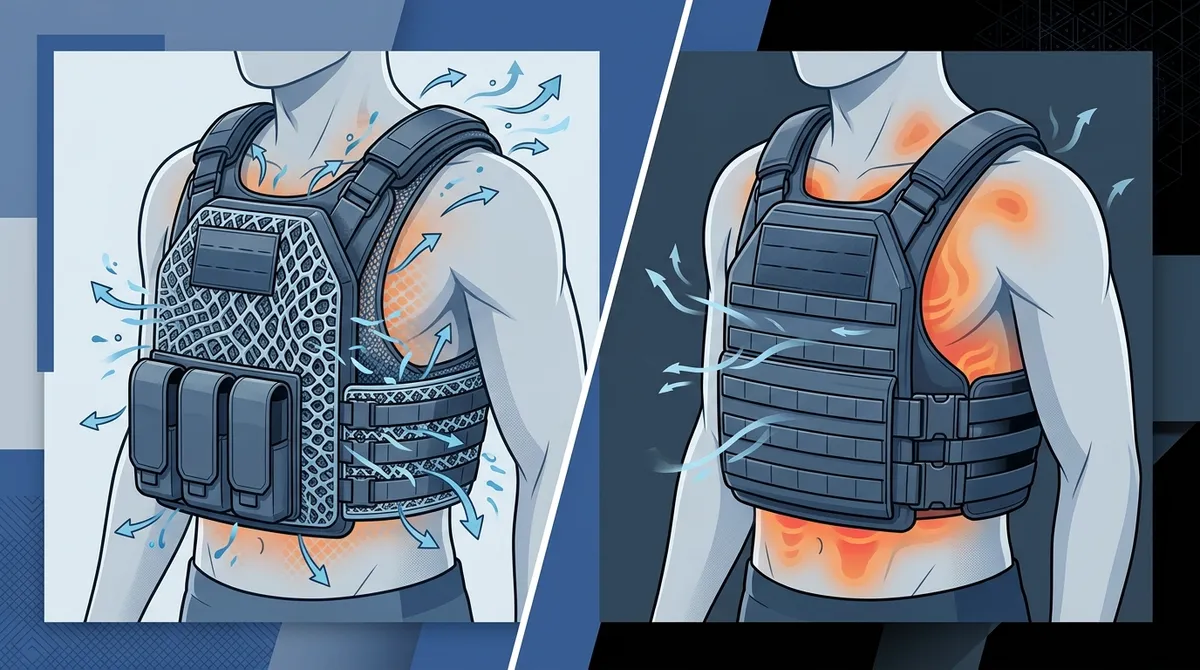
This is the single biggest upgrade you can make for airflow. A ventilation vest sits between your body and your armor, creating space for air to move. Instead of armor pressing directly against your skin and trapping heat, there’s now a gap where cool air can circulate and hot, humid air can escape.
BluHalo’s ventilation vest is a great example of this approach done right. Designed by a Chicago police officer, it inflates on demand to create a 1.5-inch air gap under your armor — all while weighing under 7 ounces. You won’t even notice it’s there when it’s deflated, but when you need cooling relief, it’s ready. Check out the full details on their shop page to see both BluHalo and Blufano options available individually or as a bundle.
4. Choose Between Passive and Active Ventilation
Not all ventilation systems work the same way. Understanding the difference helps you pick the right tool for your situation.
| Ventilation Type | How It Works | Best For | Weight Impact |
|---|---|---|---|
| Passive Ventilation | Uses body movement and breathing to push air through structured channels or mesh | Officers on patrol, active movement | Very low (under 6 oz) |
| Active Fan-Based | Battery-powered fan circulates fresh air continuously | Stationary posts, extreme heat conditions | Low to moderate |
| Inflatable Air Gap | On-demand inflation creates physical space between body and armor | Flexible use, on/off as needed | Under 7 oz (BluHalo) |
| 3D Mesh / Honeycomb | Structured foam or mesh keeps armor lifted off skin at all times | All-day wear, universal compatibility | Very low |
If you’re frequently on the move, passive ventilation through structured channels works great. If you spend time standing post or working in extreme heat, an active fan system like the Blufano delivers ongoing powered airflow for 8 to 32 hours depending on the fan setting. It even includes a 10,000mAh power bank so you can charge devices on duty.
5. Prioritize Lightweight Ventilation Options
Here’s a concern we hear a lot: “Won’t adding a ventilation vest just make things heavier?” The answer is — not if you choose wisely. The rule of thumb in this space is to keep any ventilation product under 10 ounces so it doesn’t add meaningful bulk. BluHalo comes in at under 7 ounces, which is lighter than most people’s phone.
Lightweight ventilation options also help reduce the perceived weight of your armor. When air circulates properly and your vest isn’t sticking to your skin, the overall load feels lighter. Some ventilation vests even create an anti-gravity effect by lifting the armor slightly off your body and distributing the weight more evenly.
6. Look for Anti-Microbial Fabric
When you’re sweating through long shifts, bacteria and odor are real problems. Ventilation vests made with anti-microbial fabric help prevent bacterial growth, reduce odor, and keep the vest fresher for longer. This matters more than people realize — nobody wants to deal with a stinky vest on top of everything else.
When shopping for a ventilation solution, check the product specs for anti-microbial treatment. Many quality products combine this with moisture-wicking 3D mesh so sweat gets pulled away from your skin as well as aired out. This combination is one of the top features to look for, as highlighted in our guide on what is body armor vent and why you need one.
7. Use Adjustable Straps to Prevent Shifting
One of the most common body armor fit issues is shifting — the vest rides up, slides to the side, or gaps open during movement. A ventilation vest can contribute to this if it’s not secured properly. Look for options with:
- Velcro attachment that sticks directly to your existing vest interior
- Side closures that allow adjustments on the fly
- High-grip technology that prevents slipping during dynamic movement
- Extended side panels to maintain airflow coverage even when the vest shifts slightly
- Shoulder strap compatibility for 4-point custom fit
Getting this right is especially important for SWAT and tactical teams who need full freedom of movement during high-intensity operations. A ventilation vest that shifts or bunches up becomes a distraction — and distractions on duty can be dangerous. Learn how officers are handling this with body armor ventilation solutions built for the field.
8. Match Your Ventilation Solution to Your Armor Type
Not all armor is the same, and your ventilation setup should match what you’re wearing. Here’s a quick reference guide:
| Armor Type | Recommended Ventilation Approach | Key Considerations |
|---|---|---|
| Concealable Soft Armor | Thin inflatable vest or lightweight mesh | Must stay low-profile under uniform |
| Plate Carrier (Tactical) | Structured ventilation vest with extended sides | More space available; coverage of side gaps important |
| Hybrid / Modular Armor | Universal-fit ventilation with Velcro attachment | Compatibility with both hard and soft panels needed |
| Ceremonial / Dress Armor | Ultra-thin passive mesh layer | Appearance matters; slim profile essential |
Universal-fit ventilation vests are the most flexible choice. BluHalo is designed to work with both plate carriers and concealable vests, using simple Velcro attachment that doesn’t require any modifications to your existing gear. You can explore how different setups perform in our best vest cooling systems breakdown.
9. Pair Active Cooling with Smart Shift Habits
Technology is great, but your habits matter too. Even the best ventilation vest works better when you pair it with smart practices on shift. Here are some easy adjustments that boost the effectiveness of your airflow setup:
- Hydrate consistently — your body cools itself through sweat, and that system needs water to run properly.
- Use vehicle AC strategically — when in your patrol car, direct vents toward your armor and activate fan-based cooling to help flush hot air faster.
- Take shade breaks when possible — even two minutes out of direct sun lets your ventilation system reset and expel built-up heat.
- Activate your vest early — don’t wait until you’re already overheated. Inflate or turn on your ventilation before your body temp spikes for best results.
- Clean your ventilation vest regularly — a clogged or dirty mesh reduces airflow efficiency. Follow the manufacturer’s care instructions to keep it working at full capacity.
These simple habits, combined with the right gear, create a complete system for managing heat under armor. For deeper guidance, check out our resource on how to prevent heat stress while wearing body armor.
Quick Comparison: BluHalo vs. Blufano
| Feature | BluHalo Vest | Blufano Fan System |
|---|---|---|
| Type | Inflatable ventilation vest | Active fan-based airflow unit |
| Weight | Under 7 oz | Compact, self-contained unit |
| Air Gap | Up to 1.5 inches | Fan-driven continuous airflow |
| Battery | No battery needed | 8–32 hours run time (10,000mAh) |
| Best Use | On-demand, flexible cooling | Continuous cooling, stationary or mobile |
| Bonus Feature | Flat profile when deflated | USB charging + forward-facing light |
| Price | $60.00 | See shop for current pricing |
For maximum cooling performance, many officers bundle both products together. You get on-demand inflatable comfort from BluHalo plus the continuous powered airflow of Blufano — a combination that tackles heat from multiple angles. See what real users are saying on the BluHalo reviews page.
Signs Your Current Setup Isn’t Working
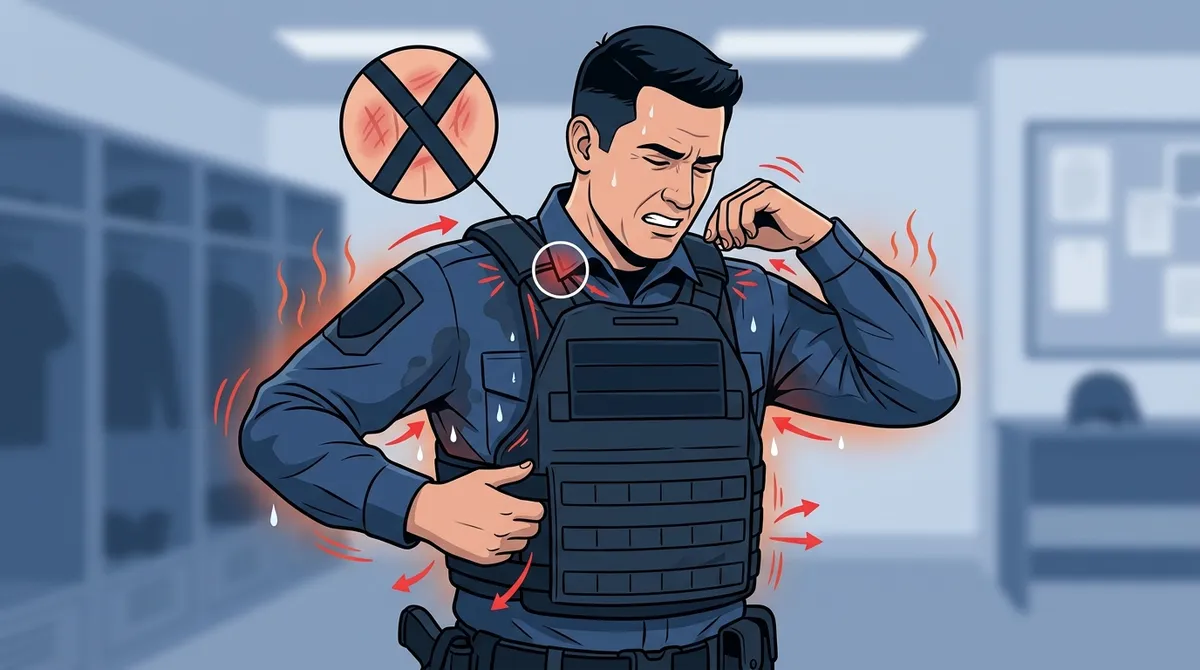
Sometimes it’s hard to know if your body armor fit and airflow setup needs improvement. Here are some red flags to watch for:
- You’re soaked in sweat within the first hour of your shift
- Your vest feels heavier as the day goes on
- You notice mental fog or fatigue earlier than usual
- Your armor is leaving skin irritation or rash where it contacts your body
- You find yourself dreading putting the vest on
Any of these signs means it’s time to look at both fit and ventilation. The right adjustments can completely change how your shift feels. For a full overview of smart ventilation strategies, visit our article on how to stay cool under body armor with smart ventilation.
Conclusion: Don’t Let Heat Win
Your job is demanding enough without fighting your gear all day. Getting your body armor fit and airflow dialed in isn’t just about comfort — it’s about staying focused, healthy, and effective on duty. Whether you’re a police officer, a soldier, a security professional, or part of a tactical team, you deserve gear that works as hard as you do.
Start with the basics: make sure your armor fits correctly, identify your heat zones, and add a quality ventilation layer. Products like BluHalo and Blufano are designed specifically for people like you — built tough, lightweight, and engineered to keep the air moving even on the hottest days. Explore the full lineup and get your cooling system sorted at the BluHalo Ventilation Vests homepage.
Ready to take the next step? Reach out to our team with any questions about which ventilation solution is the best fit for your armor, your role, and your daily conditions. We’re here to help you stay cool, stay comfortable, and stay at your best.
FAQs
Q: How do ventilation vests improve airflow under body armor?
A: Ventilation vests create a physical gap between your skin and your armor, giving heat and moisture a path to escape. Whether through inflatable designs like BluHalo (which lifts armor up to 1.5 inches off the body) or fan-driven systems like Blufano, the goal is the same: keep fresh air moving in and hot, humid air moving out so you stay cooler and drier.
Q: What features should I look for in a body armor ventilation vest?
A: Look for lightweight construction under 10 ounces, anti-microbial fabric to fight odor, universal compatibility with your armor type, and easy Velcro or strap attachment so it stays put during movement. Bonus features like on-demand inflation, powered fan airflow, or a built-in power bank (like Blufano) take things to the next level.
Q: Can ventilation vests reduce sweat and overheating during long shifts?
A: Absolutely — and that’s exactly what they’re designed for! By creating airflow beneath your armor, ventilation vests help sweat evaporate faster instead of pooling against your skin. Many officers report significant comfort improvements on hot shifts, especially during 12-hour days in high temperatures. Pair your vest with good hydration habits for best results.
Q: Are ventilation vests compatible with both plate carriers and concealable armor?
A: Yes! Quality ventilation vests like BluHalo are designed with universal compatibility in mind, fitting under both plate carriers and concealable soft armor. They attach with Velcro so there are no modifications needed to your existing gear. Always check the product specs to confirm fit with your specific armor model.
Q: How much weight does a ventilation vest add to my armor setup?
A: Very little! The best ventilation vests weigh under 10 ounces — BluHalo comes in at under 7 ounces, which is lighter than most smartphones. Some users actually report that their armor feels lighter with a ventilation vest because proper airflow reduces the oppressive sensation of heat and weight pressing against the body.