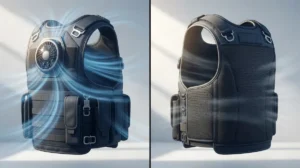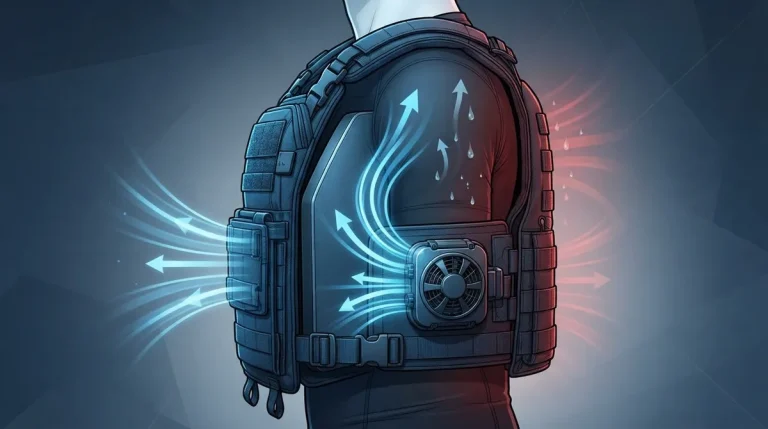
Key Takeaways
-
Forced ventilation under body armor increases heat loss by 45W and reduces thermal resistance by 17%, with measurable cooling that improves reaction time and reduces heat exhaustion risk during long shifts.
-
Active fan systems like BluFano offer 8-32 hours of battery life with built-in power banks and lighting, while passive options like BluHalo weigh under 7 ounces and inflate on-demand without batteries—choose based on shift length and climate.
-
Combining both active and passive cooling systems delivers maximum relief; pairing an inflatable vest with a forced-air fan creates instant air gaps plus continuous airflow for all conditions.
-
BluHalo’s manual inflation design created by a police officer lifts armor 1.5 inches off your body instantly, while passive mesh inserts cost $70-$85 and require no maintenance for budget-conscious professionals.
-
Always confirm ventilation system compatibility with your specific plate carrier and vest before purchasing, and avoid common mistakes like skipping cleaning, improper attachment, and failing to charge active systems pre-shift.
-
Heat exposure under body armor causes fatigue and poor judgment according to OSHA guidelines; ventilation fans directly address this occupational hazard for patrol officers, soldiers, and security personnel working long shifts in extreme heat.
If you’ve ever finished a 12-hour shift soaked in sweat with your vest stuck to your back, you already know why a body armor ventilation fan matters. Heat builds up fast under body armor, and it doesn’t just make you uncomfortable. It slows your reactions, drains your energy, and makes every hour feel longer than the last. The good news? You don’t have to just live with it anymore.
Whether you’re a patrol officer baking in your cruiser, a soldier moving through triple-digit heat, or a security pro standing post for hours, the right cooling gear changes everything. In this guide, we’re walking through 10 of the best body armor ventilation fan options and airflow solutions on the market today. We’ll cover how they work, what makes them different, and how to pick the one that fits your job best. Grab a cold drink and let’s dig in together.

1. Why Heat Under Body Armor Is a Bigger Problem Than You Think
Body armor is built to protect you, but that protection comes at a cost. Thick ballistic panels trap heat against your torso, and once sweat starts, it has nowhere to go. This creates a sauna-like effect that builds throughout your shift.
Research backs this up. A thermal manikin study found that forced ventilation under torso armor increased heat loss by 45 W in a 35°C, 50% humidity environment. That same study showed a 17% reduction in dry thermal resistance and a 20% drop in vapor resistance once the fan was switched on. In plain terms, moving air under your vest genuinely helps your body cool down faster.
This isn’t just about comfort either. According to the OSHA Heat Stress Guide, heat exposure can cause fatigue, poor judgment, and even heat exhaustion on the job. For anyone wearing body armor standards-compliant vests for hours at a time, that risk is very real.
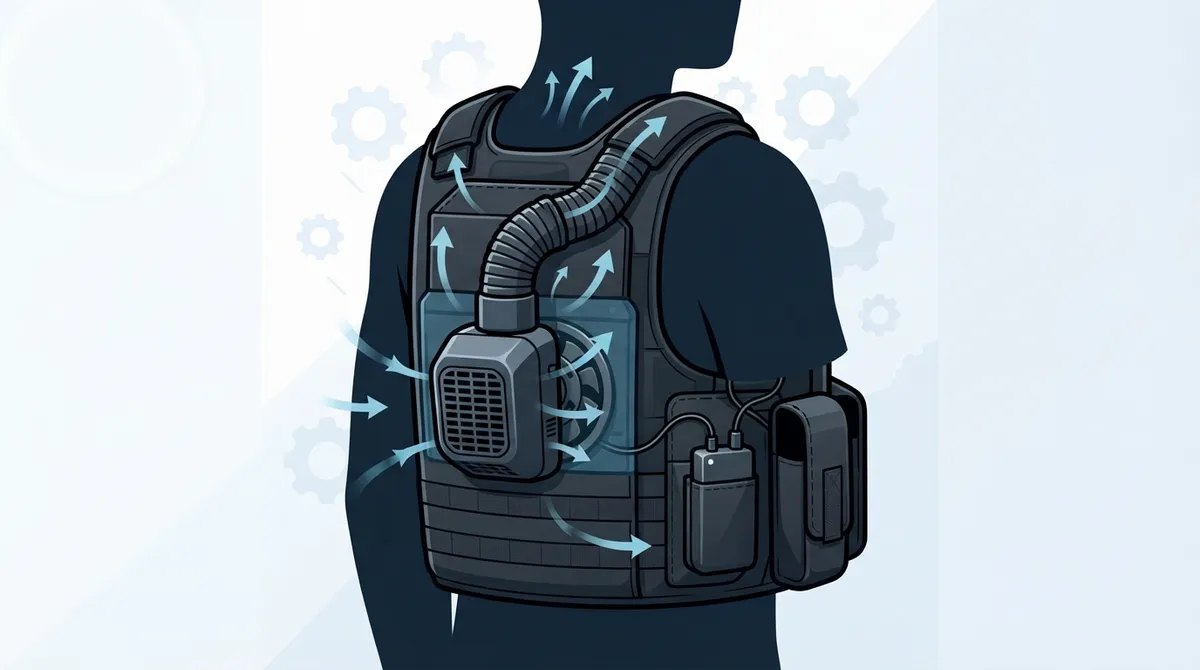
2. What Is a Body Armor Ventilation Fan, Exactly?
A body armor ventilation fan is a small, battery-powered system that pushes fresh air underneath your vest. Instead of letting heat and moisture get trapped against your skin, the fan creates constant airflow that helps sweat evaporate and heat escape.
Most systems fall into one of two categories:
- Active systems: Use a powered fan to force air movement continuously or on demand.
- Passive systems: Use spacer fabrics, mesh panels, or inflatable inserts to create an air gap without any battery power.
Both approaches aim to solve the same problem, but they work in very different ways. We’ll break down that comparison a little further down.
3. Top 10 Body Armor Ventilation Fan and Cooling Vest Picks for 2026
Here’s our roundup of the standout options professionals are choosing this year. We’ve mixed active fan systems with proven passive designs so you can compare based on your own needs.
1. BluFano Active Airflow System
Blufano is a self-contained, fan-driven ventilation system built specifically for use under body armor. It features a patented air-redirect spout that slides under any style of vest, delivering adjustable airflow for 8 to 32 hours depending on your fan setting. It also includes a built-in 10,000mAh power bank that doubles as a USB charger for your phone or radio, plus a forward-facing light for low-light situations. Officers report faster cooling, less sweat, and better focus during long, hot shifts. You can learn more about how this system performs on the Blufano product page.
2. BluHalo Inflatable Ventilation Vest
BluHalo takes a different approach. This lightweight vest was created by a Chicago police officer who got tired of overheating on duty. It weighs under 7 ounces, attaches to your existing vest with Velcro, and inflates on demand to lift your armor up to 1.5 inches off your body. That air gap lets heat and moisture escape instantly. When you don’t need it, a quick button deflates it flat again. Check out the full details on the Bluhalo page to see why so many officers call it a game changer for hot shifts.
3. Body Armor Vent EVAP Technology™ Insert
This passive vent insert uses proprietary airflow channels to separate your armor from your body. It runs around $85 and works well for officers who prefer a no-battery, low-maintenance solution.
4. IceVents Cooling Insert
A budget-friendly passive option priced around $70. It uses mesh spacer material to reduce direct contact between armor and skin, though it lacks the active airflow boost of fan-driven systems.
5. INUTEQ-AIR® Battery-Powered Vest
This system uses a rechargeable battery pack to drive small fans built directly into the vest lining. It’s designed for continuous wear in extreme heat environments.
6. Maxx-Dri Vest 4.0
Used by more than 250,000 law enforcement personnel globally, this passive mesh vent vest is a trusted classic for officers who want proven comfort without any electronics involved.
7. Mesh Panel Spacer Inserts
Simple, affordable, and battery-free. These inserts use raised mesh fabric to create small air pockets under your vest carrier.
8. Combo Bundle: BluHalo + BluFano
For maximum relief, many professionals combine passive and active cooling. Pairing the BluHalo inflatable vest with the BluFano fan system gives you constant air gap creation plus forced airflow, covering you in every condition. This bundle is often available at a discount through the Shop.
9. Modular Plate Carrier Vent Channels
Built into some newer plate carriers, these channels route airflow along set paths across your back and chest.
10. DIY Mesh and Cutout Modifications
Some users attempt homemade solutions like foam cutouts, though these are far less reliable and can affect armor performance. We generally recommend a tested product over guesswork here.
Active vs. Passive Ventilation: A Side-by-Side Look
Choosing between active and passive systems comes down to your budget, comfort priorities, and how long you’re on shift. Here’s a quick breakdown.
| Feature | Active Fan Systems (e.g., BluFano) | Passive Vent Inserts (e.g., BluHalo, Mesh Panels) |
|---|---|---|
| Power Source | Battery-powered fan | No battery needed (BluHalo uses manual inflation) |
| Cooling Method | Forced air movement | Air-gap creation via inflation or spacer fabric |
| Battery Life | 8–32 hours per charge | N/A (manual pump control) |
| Weight | Slightly heavier due to battery pack | Ultra-light, under 7 ounces for BluHalo |
| Best For | Long shifts, extreme heat, hands-free lighting needs | Quick relief, low-profile wear, budget-conscious buyers |
Many professionals find that combining both types, like pairing BluHalo with BluFano, delivers the best of both worlds. You get instant air-gap lift plus continuous fan-driven airflow.
How to Choose the Right System for Your Job
Not every role has the same cooling needs. Here’s how to think through your choice based on your day-to-day work.
- Consider your shift length. Longer shifts benefit more from active fan systems with extended battery life.
- Think about your climate. Extreme heat regions may call for combo setups using both passive and active cooling.
- Check compatibility. Most ventilation vests and fans fit under standard plate carriers and ballistic vests, but always confirm sizing with your gear.
- Factor in maintenance. Passive inserts need less upkeep, while active fans require charging and occasional cleaning.
- Set your budget. Passive options like IceVents start around $70, while active systems cost more but add features like lighting and USB charging.
For a deeper dive into matching gear to your specific role, our guide on how to choose the right body armor ventilation vest in 2026 walks through even more considerations.
Real Talk: Does This Gear Actually Work?
We get this question a lot, and it’s a fair one. Nobody wants to spend money on gear that just sits in a bag. The short answer is yes, based on both lab data and real-world feedback.
Remember that thermal manikin study we mentioned? A 17% drop in thermal resistance and a 45 W increase in heat loss isn’t just marketing talk. That’s measurable cooling. Add in testimonials from officers working 12-hour shifts in 95-degree heat, and the pattern becomes clear: airflow under armor makes a real difference.
Curious how it feels in action? Check out our Videos section to see real demonstrations of these systems in use.
Common Mistakes to Avoid
Even great gear can underperform if it’s used wrong. Here are a few pitfalls we see often:
- Skipping regular cleaning, which can lead to odor buildup over time
- Choosing a system that doesn’t match your shift length or climate
- Forgetting to charge active fan systems before a shift
- Attaching inserts to a dirty or damaged vest surface
- Assuming all vents fit all plate carriers without checking sizing first
Want more detail on avoiding these slip-ups? Our article on 7 body armor cooling fan mistakes you must avoid covers this in more depth.
Why BluHalo and BluFano Lead the Pack
We’re a little biased, but honestly, the numbers back us up. BluHalo’s ultra-light design and quick inflate-deflate system make it a favorite for officers who want fast relief without extra bulk. BluFano’s 8 to 32 hour battery life, built-in power bank, and hands-free light give tactical teams and first responders a serious edge during long missions.
Both products were built with input from real law enforcement professionals who understand what it’s like to sweat through a shift in body armor. That’s not something every brand can say. Read more real experiences on our Reviews page or learn about our story on the About Us page.
Ready to Stay Cooler on Every Shift?
Heat shouldn’t be the reason your shift feels twice as long. Whether you go with an active fan system, a passive insert, or a combo of both, the right body armor ventilation fan can genuinely change how you feel at the end of the day. You’ll sweat less, focus better, and finish your shift with more energy left in the tank.
Have questions about which setup fits your role best? Our team is happy to walk you through it, so feel free to reach out to our team today and we’ll help you find the perfect cooling solution for your gear.
FAQs
Q: What is a body armor ventilation fan?
A: It’s a small, battery-powered fan system that pushes fresh air under your body armor to reduce heat and sweat buildup. Think of it as a personal breeze machine hiding under your vest, working hard so you don’t have to sweat through your shift.
Q: How does a body armor cooling fan work?
A: These fans create airflow between your body and your armor, which helps sweat evaporate faster and pulls trapped heat away from your skin. Studies show this kind of forced ventilation can boost heat loss by 45 W, so it’s more than just a nice idea, it actually works.
Q: What’s the difference between passive and active body armor ventilation?
A: Active systems like BluFano use a powered fan to move air continuously, while passive options like BluHalo create an air gap through inflation or spacer fabric without any battery. Both work well, and many folks combine the two for the best of both worlds.
Q: Do body armor ventilation fans fit all plate carriers and ballistic vests?
A: Most systems, including BluFano’s slide-under spout design, are built to fit under nearly any style of body armor. Still, it’s always smart to double-check sizing details before you buy so you get a snug, comfortable fit.
Q: How much battery life do cooling fans for body armor usually provide?
A: It really depends on the fan setting, but many active systems like BluFano offer anywhere from 8 to 32 hours on a single charge. Some even come with a built-in power bank, so you can charge your phone while you stay cool.