Key Takeaways
-
Standard moisture-wicking shirts fail under body armor because compression eliminates airflow needed for evaporation, pushing sweat into your vest instead of away from your skin.
-
Creating an 8mm to 1.5-inch air gap between your body and armor is essential; ventilation vests with 3D mesh or inflatable channels allow air circulation and moisture evaporation that regular undershirts cannot achieve.
-
Active airflow systems like fan-driven ventilation keep working throughout your entire shift with adjustable runtime, preventing bacterial growth and odor buildup rather than just reacting after the smell develops.
-
Ventilation solutions work year-round: in summer they cool through evaporation, while in winter they prevent sweat accumulation that would otherwise pull heat away and make you colder.
-
Trapped heat and moisture under body armor pose real health risks including heat exhaustion according to OSHA guidelines, making proper ventilation a safety issue, not just a comfort preference.
-
Bundling passive air gap systems with active fan circulation provides comprehensive sweat management by combining on-demand separation with continuous airflow for maximum relief during long shifts.
Let’s be honest for a second: nobody warns you about the sweat when you sign up to wear body armor every day. You train for the tough calls, the long shifts, and the unexpected moments. But the constant soaking, sticking, and stink? That part sneaks up on you. If you’re a police officer, soldier, security pro, or first responder, you already know exactly what we’re talking about. The good news is that body armor sweat problems have real solutions, and we’re going to walk through them together, warmly and honestly, like a friend who’s been there.
At BluHalo, we talk to everyday heroes about this stuff constantly. And what we’ve learned is that most people are making the same three mistakes when it comes to managing sweat under their gear. Let’s fix that today, shall we?
Why Body Armor Sweat Problems Happen In The First Place
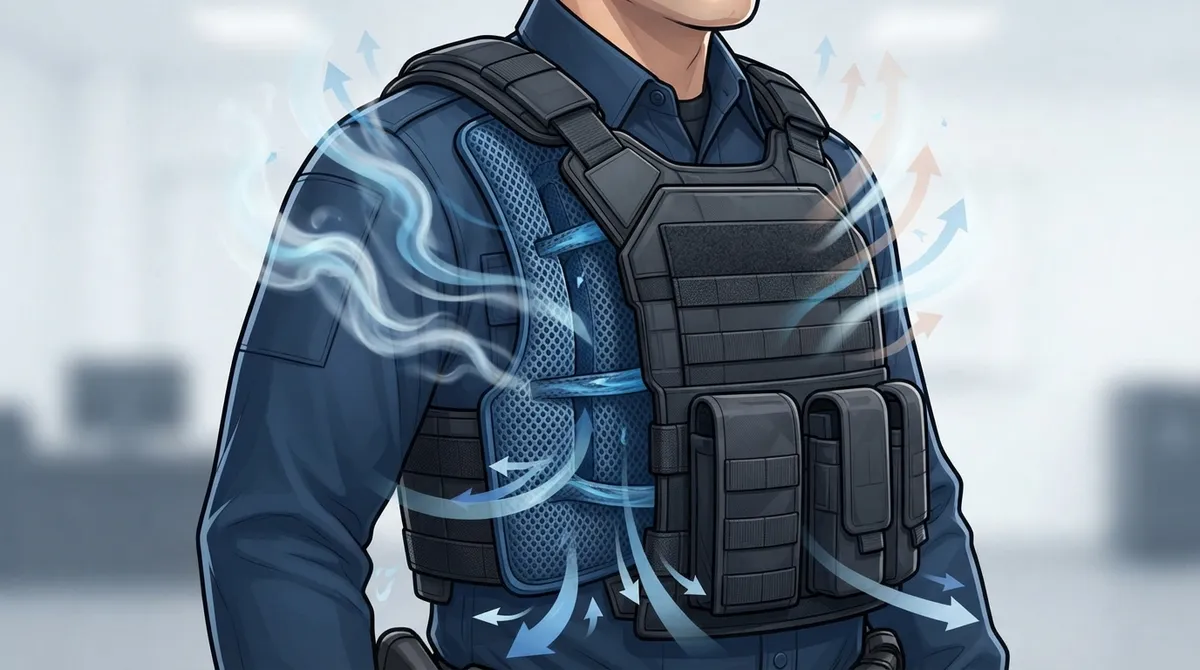
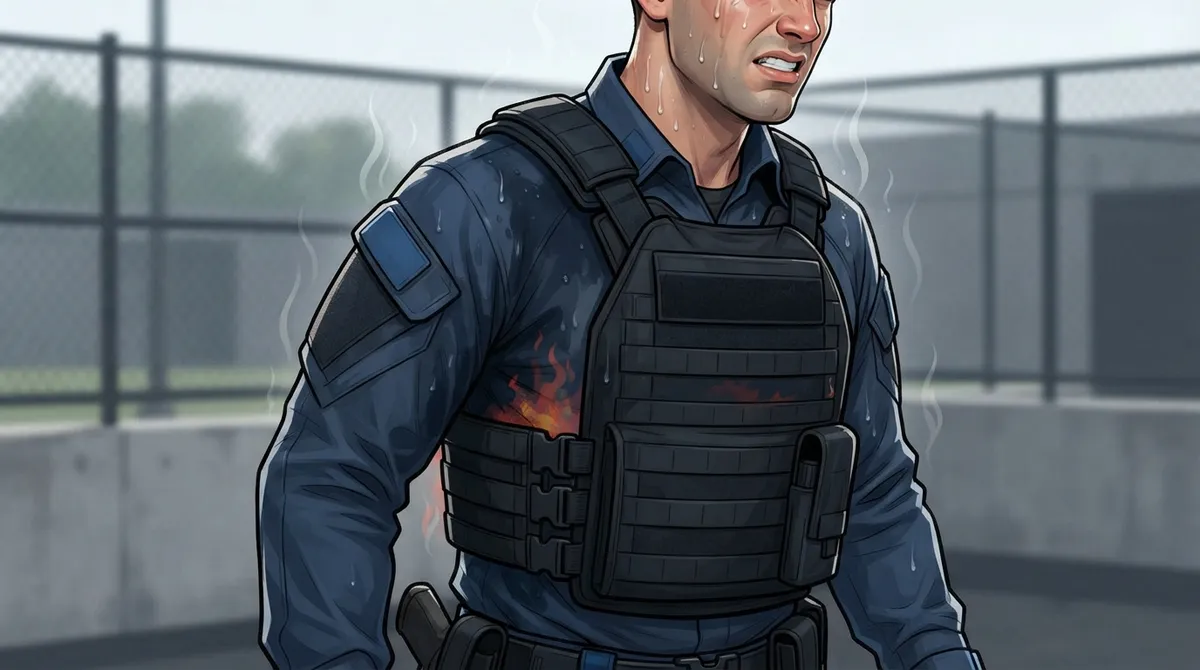
Here’s the simple truth. Your body armor is made of layers. You’ve got your undershirt, then the vest itself, then your uniform on top. Each layer traps a little more heat. Stack them together and you’ve built a personal sauna that follows you around all shift long.
Sweat needs air to evaporate. That’s just basic science. But under a compressed vest, there’s nowhere for that moisture to go. It just sits there, soaking into your undershirt, then your armor, then making you miserable by hour three of a twelve-hour shift.
This isn’t just uncomfortable. According to the OSHA Heat Stress Guide, trapped heat and moisture can lead to real health risks, including heat exhaustion. That’s a serious concern for anyone wearing protective gear that meets body armor standards designed for safety, not breathability.
Mistake 1: Relying On Regular Moisture-Wicking Shirts
We get it. Moisture-wicking shirts work great for the gym. So it seems logical they’d help under body armor too, right? Unfortunately, that’s mistake number one, and it’s a big one.
Those athletic shirts are designed for open air exposure. They need room to breathe so sweat can move away from your skin and evaporate into the surrounding air. But once you compress that fabric under a heavy vest, the whole system breaks down.
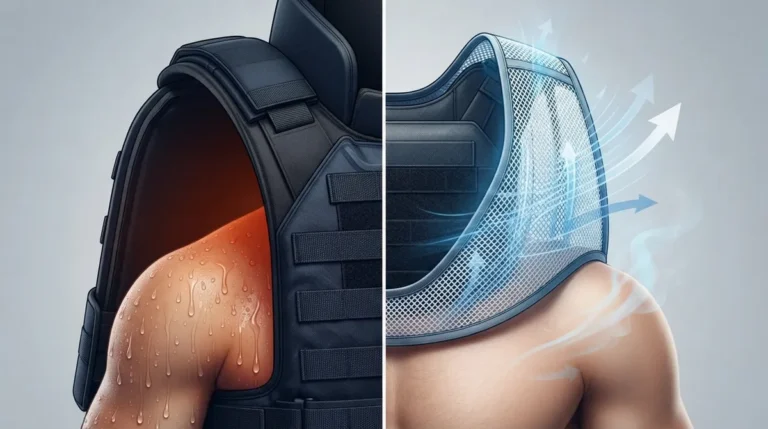
Instead of wicking sweat away from your body, the shirt basically becomes a sponge pressed directly against your skin. All that moisture gets pushed straight into your body armor instead of escaping. You end up soaked, and so does your expensive vest.
- Moisture-wicking shirts need airflow to function properly
- Compression from body armor eliminates that airflow completely
- Sweat gets trapped between layers instead of evaporating
- Your vest absorbs moisture it was never designed to handle
If you’ve ever wondered how sweat management actually works under body armor, this compression issue is the core of the problem.
Mistake 2: Ignoring The Need For An Actual Air Gap
Here’s something a lot of officers and soldiers don’t realize until someone explains it clearly. Your body needs actual physical space between your skin and your armor. Not a thinner shirt. Not a different fabric. Real space.
This is where ventilation vests come in, and it’s honestly one of the coolest (pun intended) solutions we’ve seen in this industry. Products built with proprietary 3-D mesh or foam-filled air channels create a consistent separation layer around 8mm, or about 0.3 inches, between your body and your armor.
That tiny gap makes a massive difference. It allows air to actually circulate around your torso instead of getting squeezed flat like standard mesh does. Regular mesh collapses under pressure just like everything else. Advanced ventilation materials don’t.
| Feature | Standard Undershirt | Ventilation Vest System |
|---|---|---|
| Air Gap Created | None (compresses flat) | Approx. 8mm to 1.5 inches |
| Moisture Handling | Absorbs sweat into armor | Allows evaporation and escape |
| Works Under Compression | No | Yes |
| Seasonal Use | Summer only | Year-round comfort |
This is exactly why we designed the BluHalo vest the way we did. It lifts your armor up to 1.5 inches off your body when inflated, creating that crucial cooling air gap on demand. You can read more about what body armor ventilation actually is and why you need one if you want the full picture.
Mistake 3: Not Addressing The Odor Problem Before It Starts
Let’s talk about something nobody wants to discuss but everyone deals with: the smell. That musty odor that makes you want to peel your undershirt off the second your shift ends isn’t just gross. It’s a sign that bacteria are thriving in that warm, damp environment under your vest.
Officers report washing their internal body armor vests every two weeks in summer just to keep up with sweat and odor buildup. In winter, that stretches to every one or two months, but the problem never fully disappears.
Waiting until the smell shows up means you’re already behind. By that point, moisture has been sitting against your skin and your gear for hours. The fix isn’t more laundry. It’s preventing the buildup from happening in the first place.
How Active Airflow Changes The Game
This is where a system like Blufano really shines. Instead of just creating passive space, Blufano actively circulates fresh air underneath your armor using a fan-driven system. It’s a self-contained unit with a patented air-redirect spout that slides under any style of vest.
With adjustable settings offering 8 to 32 hours of runtime, plus a built-in 10,000mAh power bank, Blufano keeps working through your entire shift. It even charges your phone and includes a forward-facing light for low-light situations. Officers describe it as a genuine game-changer, especially paired with vehicle AC for even faster cooling.
If you’re curious how this compares to passive options, check out our breakdown of passive versus active tactical vest ventilation to see which fits your needs best.
Real Solutions For Real Professionals
Let’s break down who benefits most from solving these sweat problems, because honestly, it’s basically everyone who wears armor for a living.
- Law enforcement officers pulling long patrol shifts need consistent airflow to stay alert and comfortable through summer heat waves.
- Military personnel operating in high-heat environments need thermal management that keeps working during extended missions, not just quick errands.
- Security professionals standing post for hours need relief that doesn’t interfere with their focus or professionalism.
- Tactical and SWAT teams in high-intensity operations need cooling that supports peak physical performance under stress.
- Emergency response personnel including firefighters and hazmat teams need ventilation that helps prevent heat exhaustion in extreme conditions.
No matter which category you fall into, the underlying problem is the same. Trapped heat and moisture hurt your comfort, your focus, and potentially your health. The solution is creating real airflow, not just hoping a different shirt will fix things.
Does Ventilation Work In Cold Weather Too?
This question comes up a lot, and it’s a great one. Many people assume ventilation vests are strictly a summer tool. Actually, they work beautifully year-round.
In summer, the air gap facilitates evaporative cooling, pulling heat away from your body naturally. In winter, that same airflow keeps you drier by preventing sweat from accumulating in the first place. Staying dry actually keeps you warmer, since damp fabric against your skin pulls heat away faster than dry fabric does.
This is one reason we always recommend checking out our guide on how to choose the right ventilation vest in 2026, since the best option really does work through every season.
What To Look For When Choosing A Ventilation Solution
Not every product on the market delivers on its promises. Here’s what actually matters when you’re comparing options.
- Does it create real separation, not just a thinner layer of fabric?
- Is it lightweight enough that you forget it’s there? BluHalo weighs under 7 ounces.
- Can you control it on demand? BluHalo inflates with a small pump and deflates instantly with a button.
- Is it durable enough for daily duty use? Look for double-layer, high-tensile materials.
- Does it fit under any style of body armor without bulk?
BluHalo was actually created by a Chicago police officer who got tired of overheating during 12-hour shifts in 95-degree weather. That kind of firsthand experience shapes a product differently than one designed in a lab without real-world testing. You can browse our full shop to see both BluHalo and Blufano side by side.
Bundling For Maximum Comfort
Here’s a friendly tip we love sharing. Many of our customers choose to bundle BluHalo and Blufano together for a discount, combining the on-demand air gap of BluHalo with the continuous active airflow of Blufano. It’s like giving yourself two layers of defense against heat and sweat instead of just one.
Together, these systems tackle body armor sweat problems from every angle: passive separation and active air movement working in harmony. For a deeper comparison, take a look at Blufano’s fan system versus passive cooling options.
Hearing It From The Officers Themselves
We could tell you all day how well these systems work, but nothing beats hearing it from the people actually wearing them. Officers describe going from feeling miserable and drenched to feeling genuinely fresh within minutes of activating their ventilation system. That’s not marketing fluff. That’s the real, tangible relief that comes from solving a problem that’s been ignored for way too long in this industry.
You can check out real feedback and stories on our reviews page, or watch demonstrations on our videos page to see exactly how the products work in action.
Ready To Solve Your Sweat Problems For Good
You didn’t sign up for a job that makes you miserable from the neck down. You signed up to protect people, respond to emergencies, and show up as your best self every single shift. Body armor sweat problems don’t have to be part of that deal anymore.
Whether you choose the on-demand comfort of BluHalo, the continuous airflow of Blufano, or both together, you’re taking a real step toward staying cooler, drier, and more focused on the job that matters. We built these products because we’ve lived this problem too, and we genuinely want every officer, soldier, and first responder to feel the difference fresh air can make.
Ready to leave the sweat, stink, and discomfort behind? Get in touch with our team today and let’s find the right cooling solution for your gear and your shift.
FAQs
Q: Why do moisture-wicking undershirts fail under body armor?
A: Great question, and one we hear all the time! Those shirts need open airflow to wick sweat away, but body armor compresses them flat, so moisture gets pushed straight into your vest instead of evaporating. That’s why a real air gap, like the one BluHalo creates, makes such a big difference.
Q: How does a ventilation vest prevent sweat from soaking into body armor?
A: It’s all about creating physical space! Ventilation vests use 3-D mesh or inflatable channels to lift your armor slightly away from your body, letting air circulate and moisture evaporate instead of getting trapped. BluHalo, for example, creates up to 1.5 inches of separation when inflated.
Q: Do ventilation vests work in cold weather too, or just summer?
A: Absolutely, they work year-round, and we love sharing this because so many people are surprised! In summer, airflow cools you through evaporation. In winter, that same airflow keeps you drier, which actually helps you stay warmer overall.
Q: Why does body armor smell so bad after a long shift?
A: Trapped heat and moisture create the perfect environment for bacteria to thrive, and that’s exactly what causes that musty odor. Adding active airflow, like Blufano’s fan system, helps reduce moisture buildup so you’re not stuck with that stubborn smell every shift.
Q: Can I wear a ventilation vest with concealed body armor?
A: Yes, most ventilation systems are designed to be lightweight and low-profile so they fit comfortably under concealed carriers too. BluHalo, for instance, sits flat when deflated and weighs under 7 ounces, so it won’t add bulk to your everyday setup.