Key Takeaways
-
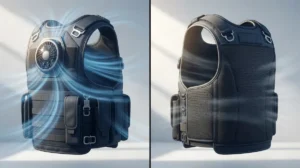
Heat under body armor reduces alertness and decision-making ability, creating safety risks for law enforcement and first responders; cooling vests measurably improve performance by lowering under-armor temperatures by 14.5°F or more.
-
BluHalo’s on-demand inflatable design weighs under 7 ounces, attaches with Velcro, and lifts armor 1.5 inches to enable air circulation without battery maintenance or permanent installation.
-
Active fan systems like Blufano provide continuous cooling even while standing still, running 8-32 hours per charge, while passive mesh or foam options depend on body movement but require no charging.
-
Compatibility varies by role: patrol officers need low-profile, deflatable options; tactical teams need continuous active cooling; emergency responders require maximum airflow to prevent heat exhaustion.
-
Budget passive spacers cost $20-35 and require minimal maintenance, while premium active systems cost $60-100 but deliver superior cooling during extreme heat or high-stress situations.
-
Proper setup requires cleaning armor surfaces for Velcro adhesion, fit-testing before shifts, charging active systems overnight, and practicing device controls to avoid failures during critical situations.
If you’ve ever finished a 12-hour shift soaked in sweat with a vest that feels like an oven, you already know why this topic matters. Heat under body armor isn’t just uncomfortable. It can slow your reaction time, wreck your focus, and even become dangerous on a hot day. The good news? A cooling vest for body armor can change everything about how you feel on duty.
This guide walks you through exactly how these systems work, what separates the good ones from the gimmicks, and how to choose the right option for your job. Whether you’re patrolling in a squad car, standing post in tactical gear, or running calls as a first responder, staying cool isn’t a luxury. It’s a performance tool. Let’s find you a solution that actually fits your life.
What Is a Cooling Vest for Body Armor?
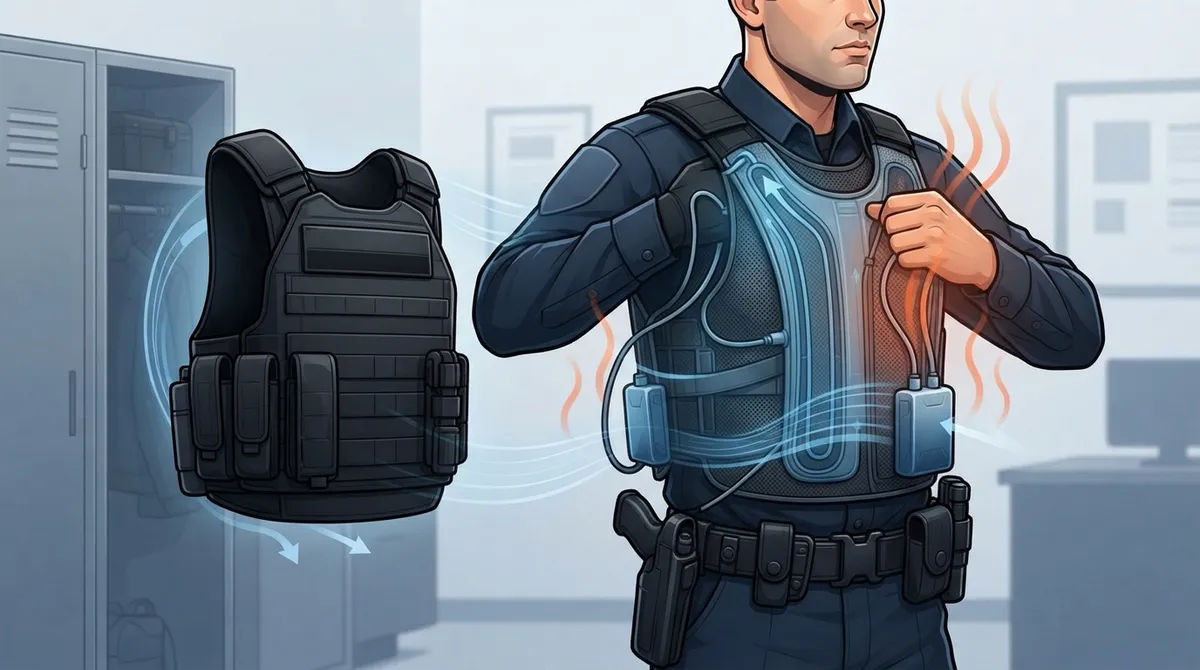
A cooling vest for body armor is a thin layer worn between your body and your armor. Its job is simple: create space so air can move and sweat can escape. Without it, heat gets trapped against your skin, and that trapped heat builds fast under heavy plates or soft armor panels.
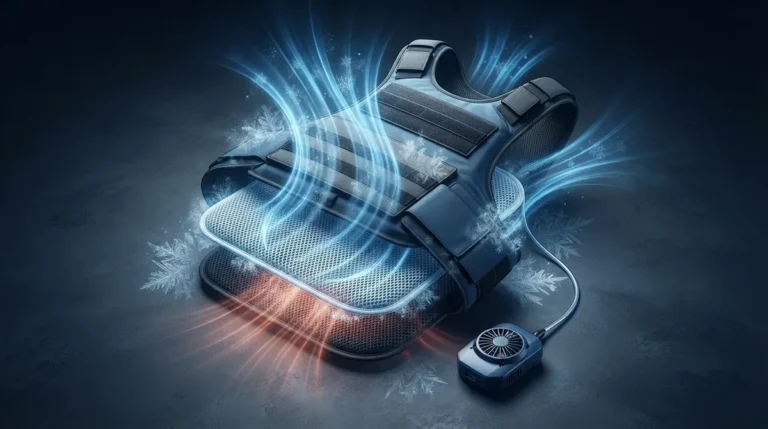
Most systems fall into two camps. Passive designs use mesh, foam, or air-filled spacers to create a gap. Active designs use small fans or pumps to push air through that gap continuously. Both aim to solve the same problem, just with different tools.
According to a comparison review of body armor ventilation options, the core issue is always the same: body armor blocks natural airflow, and that leads to sweat buildup, discomfort, and fatigue over long shifts.

Why Heat Under Armor Is a Real Problem
Body armor is built to protect you, not to breathe. Ballistic panels and plate carriers trap heat close to your skin. Add a hot patrol car, direct sun, or a foot chase, and your core temperature can spike fast.
This isn’t just about feeling sweaty. The OSHA Heat Stress Guide outlines how heat exposure can lead to reduced alertness, poor decision-making, and even heat exhaustion in workers who wear heavy protective gear. For officers, soldiers, and security teams, that’s a safety issue, not just a comfort issue.
Common Signs You Need Better Ventilation
- Sweat soaking through your uniform before lunch
- Feeling foggy or slow during long shifts
- Skin irritation or rashes under your vest line
- Constantly adjusting your armor to find relief
- Dreading hot-weather shifts more than the job itself
If any of these sound familiar, it’s time to look at the best vest cooling systems built specifically for this problem.
Passive vs. Active Cooling: What’s the Difference?
This is one of the biggest decisions you’ll make. Both styles work, but they solve the heat problem in different ways.
Passive Ventilation Vests
Passive systems use mesh, foam spacers, or honeycomb structures to lift your armor slightly off your body. There’s no battery, no charging, and no moving parts. You put it on and forget about it.
These are great for all-day wear because there’s nothing to maintain. The tradeoff is that airflow depends on your movement. Standing still in the heat won’t cool you as much as walking or running will.
Active Cooling Systems
Active systems use small fans to push air continuously, even when you’re standing still. This means steady cooling all shift long, not just when you’re moving.
The catch is you’ll need to charge a battery and do a bit more upkeep. But for many professionals, that tradeoff is worth it for the extra performance. You can learn more in this breakdown of passive vs. active tactical vest ventilation.
| Feature | Passive Vents | Active Fan Systems |
|---|---|---|
| Power Needed | No | Yes (rechargeable battery) |
| Cooling When Standing Still | Limited | Strong, continuous |
| Weight | Very light (under 2 oz typical) | Slightly heavier (7-9 oz typical) |
| Maintenance | Minimal | Charging required |
| Best For | All-day, low-fuss comfort | Maximum cooling in extreme heat |
How to Choose the Right Cooling Vest for Your Role
Not every job needs the same setup. Here’s how different professionals typically choose their gear.
1. Law Enforcement Officers
Patrol officers spend long hours in a car, then get out for foot patrols or traffic stops. A lightweight, low-profile option that fits under a uniform is key. Many officers prefer something they can inflate on demand and deflate flat when they’re back in the car.
2. Military Personnel
Soldiers in the field need something rugged that survives rough conditions. Ventilation gear here has to handle dust, sweat, and heavy gear layering without falling apart. Durability matters as much as cooling power.
3. Security Professionals
Guards on extended shifts, especially outdoors, need steady comfort without a lot of bulk. A slim design that doesn’t interfere with sidearm access or radio gear is important.
4. Tactical and SWAT Teams
High-intensity operations mean you need cooling that keeps up with heavy exertion. Active fan systems often win here because they keep working even during short bursts of stillness between movements.
5. Emergency Response Personnel
Firefighters and hazmat teams face extreme heat on top of already-hot protective gear. For this group, maximizing airflow and moisture control isn’t optional, it’s essential for avoiding heat exhaustion.
No matter your role, understanding how to prevent heat stress while wearing body armor can help you make a smarter choice.
Comparing Popular Cooling Vest Options
Let’s look at how some well-known products stack up in terms of weight, price, and design approach.
| Product | Weight | Price | Type |
|---|---|---|---|
| IceVents® | Under 1 oz | $70 | Passive mesh |
| Maxx-Dri Vest 3.0 | 9 oz | $100 | Passive spacer |
| Body Armor Vent | Not listed | $85 | Passive |
| TacVent | 9 oz | $35 | Passive mesh |
| SKD Tactical Pontoons | 1.4 oz | $20 | Passive foam |
| BluHalo | Under 7 oz | $60 | Inflatable, on-demand cooling |
One vendor review reported that TacVent lowered under-armor body surface temperatures by at least 14.5°F, which shows just how much difference a simple air gap can make. But weight and price aren’t the whole story. How the vest fits into your daily routine matters just as much.
Why BluHalo and Blufano Lead the Pack
This is where BluHalo really stands out. Created by a Chicago police officer who got tired of overheating on duty, BluHalo weighs under 7 ounces and lies completely flat when not in use. When you need cooling, you inflate it with a small pump, and it lifts your armor about 1.5 inches off your body. That gap lets air circulate and moisture escape almost instantly.
It attaches to your existing vest with Velcro, so there’s no complicated installation. Officers using BluHalo during 12-hour shifts in 95-degree heat have reported major comfort improvements, especially during high-stress calls when overheating would otherwise make things worse.
For those who want continuous, active airflow instead of on-demand inflation, Blufano is the next-level option. It’s a self-contained fan system with a patented air-redirect spout that slides under any body armor style. Blufano runs 8 to 32 hours depending on your fan setting, and it includes a 10,000mAh power bank that can also charge your phone or radio. It even has a forward-facing light for low-visibility situations.
Many professionals choose to bundle both products together. BluHalo gives you fast, on-demand relief, while Blufano provides steady, all-shift airflow. Together, they cover both ends of the cooling spectrum. You can browse both options and current bundle pricing in the shop.
Steps to Get the Most Out of Your Cooling Vest
- Clean your armor surface first. Most attachment systems, including Velcro, need a clean surface to stick properly.
- Fit-test before your shift. Put on your full gear and check that the cooling layer doesn’t shift or bunch up.
- Know your controls. Whether it’s a pump, button, or fan knob, practice using it before you’re in a high-stress situation.
- Charge active systems the night before. Don’t get caught with a dead battery on a hot shift.
- Deflate or power down when not needed. This extends battery life and keeps your gear low-profile when cooling isn’t necessary.
Following these steps helps you avoid common mistakes. In fact, many people run into the same issues, which you can read about in 7 mistakes to avoid with a body armor ventilation system.
Compatibility With Different Armor Types
One question we hear a lot: will this work with my specific gear? The good news is most modern cooling vests are designed to be flexible. They work with plate carriers, soft body armor, and concealable vests used in plainclothes assignments.
This matters a lot for law enforcement and military users who might switch between gear setups depending on the assignment. Always check the product specs, but most passive spacers and active fan systems on the market today are built to be gear-agnostic. For a deeper look at compatibility standards, the National Institute of Justice’s body armor resources offer useful background on how armor is tested and classified.
Cost vs. Comfort: Is It Worth the Investment?
Prices in this category range from around $20 for basic foam spacers to $100 for premium fan-assisted systems. That’s a wide range, so how do you decide what’s worth it?
Think about how many hours you wear body armor each week. If it’s a daily requirement, even a modest investment pays off fast in comfort and focus. A $60 to $100 cooling vest is a small price compared to the physical toll of heat stress over months and years on the job.
For those comparing budget vs. premium options, our roundup of top body armor ventilation vests for 2026 breaks down the best picks at every price point.
Final Thoughts on Choosing Your Cooling Vest
Staying cool under body armor isn’t about luxury. It’s about staying sharp, safe, and comfortable while you do a demanding job. Whether you lean toward a passive spacer for simplicity or an active fan system for maximum airflow, the right choice depends on your role, your climate, and how long you’re in gear each day.
BluHalo and Blufano remain two of the most trusted names in this space, built by people who understand exactly what it feels like to overheat on the job. If you’re ready to stop dreading hot shifts and start feeling comfortable again, our team is here to help you find the right fit. Feel free to reach out to our team with any questions about which system matches your needs best.
FAQs
Q: What is a cooling vest for body armor?
A: It’s a thin layer worn under your armor that creates space for air to move and sweat to escape. Think of it as giving your body room to breathe even when your gear is pressed tight against your skin. Some use fans, others use mesh or foam, but the goal is always the same: less trapped heat, more comfort.
Q: How does a body armor ventilation vest work?
A: Most designs lift your armor slightly off your body, creating a small air gap. Passive versions rely on your movement to push air through that gap, while active versions use a fan to keep air moving even when you’re standing still. Either way, that gap is what stops heat and sweat from building up against your skin.
Q: Are body armor ventilation vests better than ice pack vests?
A: They serve different purposes, honestly. Ice packs cool you down fast but melt and need replacing, while ventilation vests work continuously without ice or refrigeration. Many professionals prefer ventilation systems for all-day wear since there’s nothing to freeze or swap out mid-shift.
Q: How much do body armor cooling vests weigh?
A: Most passive options weigh between 1 and 9 ounces, so they barely add any bulk to your gear. Active fan systems tend to be a bit heavier due to the battery, but options like BluHalo still stay under 7 ounces. You honestly won’t notice the extra weight once it’s on.
Q: Do cooling vests work with plate carriers and bulletproof vests?
A: Yes, most modern designs are built to work with a wide range of gear, including plate carriers, soft body armor, and concealable vests. It’s always smart to double check compatibility with your specific setup, but flexibility is a big selling point across this whole category.