Key Takeaways
-
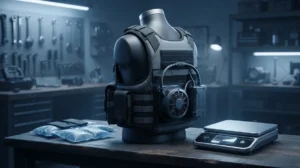
External vest carrier fans are removable, battery-powered devices that mount on duty vests and push air behind the armor to increase sweat evaporation and heat dissipation, offering flexibility to move between different carriers.
-
Fan effectiveness depends heavily on humidity levels, airflow distribution, battery runtime at actual usage speeds, and compatibility with your specific armor carrier—always test fit before duty use.
-
Independent research shows mixed results: a 2017 study found wearable fans had significant cooling effects near the head but minimal impact on other body regions, so verify manufacturer claims with real-world testing.
-
Fans are comfort tools, not medical devices or heat illness prevention replacements; they work best paired with moisture-wicking base layers, proper hydration, rest breaks, and smart heat safety habits.
-
Before purchasing, check seven key factors: airflow distribution, noise level, battery runtime, weight and snag risk, secure attachment, cleaning/weather resistance, and armor compatibility to avoid costly mistakes.
-
Blufano and BluHalo represent proven options—Blufano provides active airflow with 8-32 hour runtimes, while BluHalo creates an air gap under armor; pairing them creates stronger cooling than either alone.
If you wear body armor for a living, you already know the feeling. Your shirt is soaked by mid-shift, your back is wet, and the heat just sits against your torso like a warm blanket you never asked for. You are not alone, and there are real tools that can help.
One of the most talked-about tools in 2026 is the external vest carrier fan. It is a small, battery-powered fan that mounts on the outside of your duty vest or plate carrier and pushes air behind the garment. Sounds simple, right? It is, but there are a few things worth knowing before you buy one.
In this guide, we will walk through what these fans are, how they cool, what to look for, and where they fall short. We will keep it friendly and honest, because you deserve straight answers. Whether you work patrol, security, tactical, military, or emergency response, this is for you.
What Is an External Vest Carrier Fan?
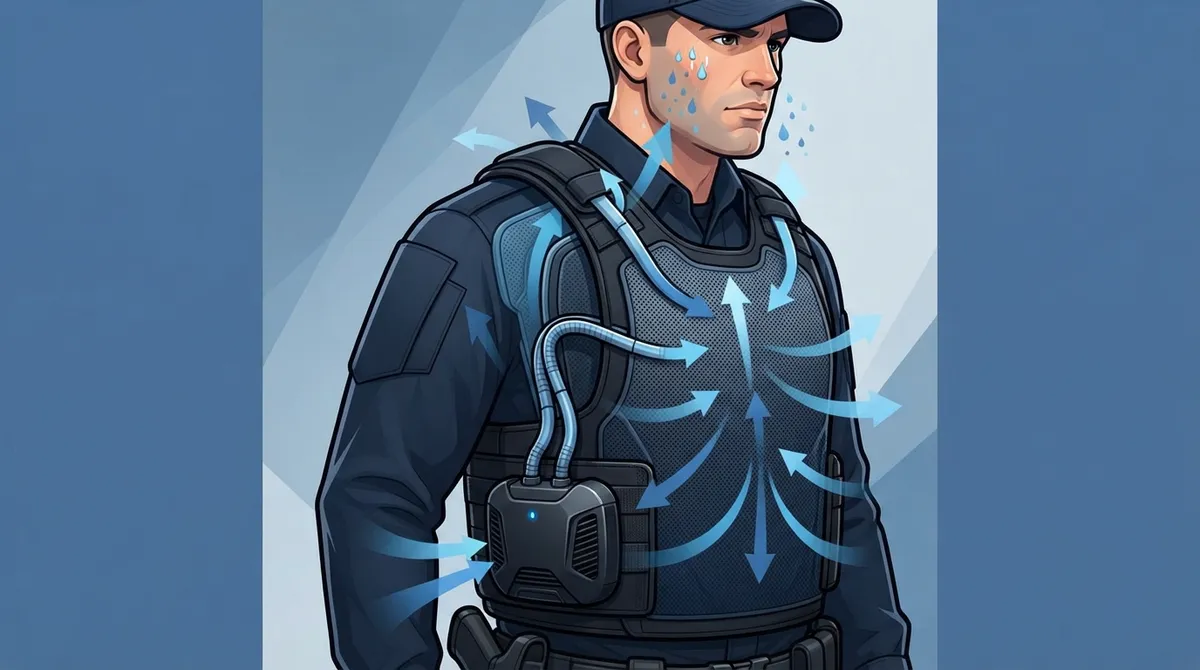
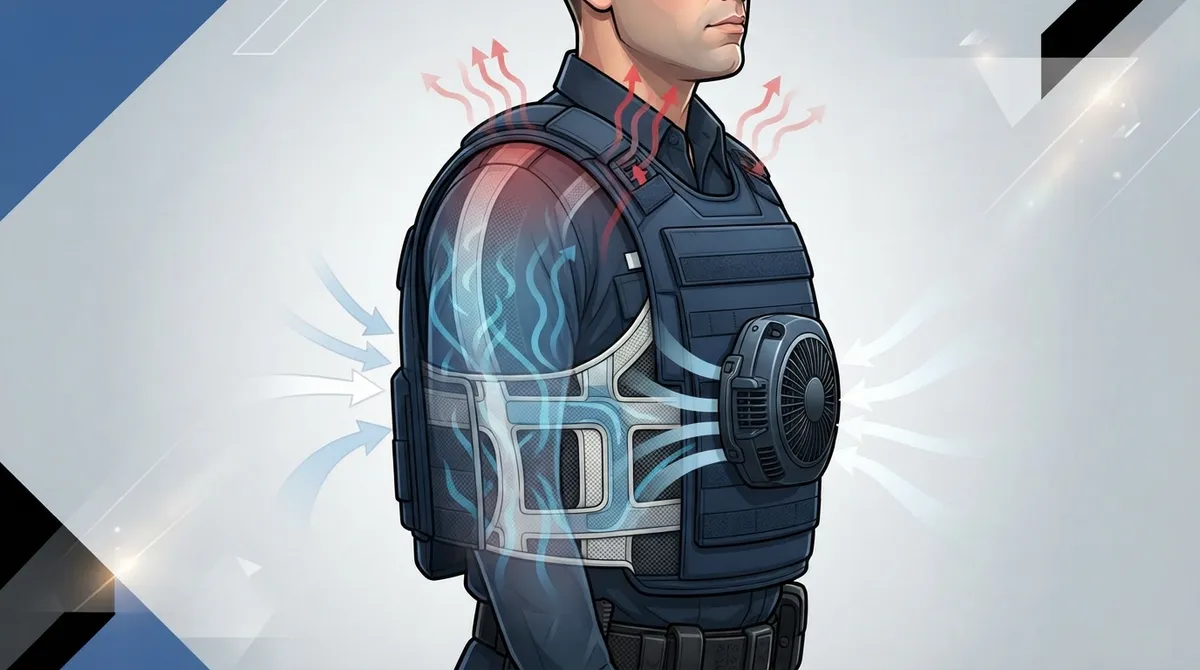
An external vest carrier fan is a removable fan-and-nozzle unit that attaches to your vest or carrier. It is not sewn into a shirt. It is not a spacer-mesh liner. It is a separate device that you can mount, remove, check, and swap between carriers.
Most units include a few core parts:
- A small fan that pulls in outside air
- A nozzle or spout that guides the air behind your vest
- A rechargeable battery for power
- A strap, clip, or slide-in design to hold it in place
The big draw is flexibility. Because the unit sits outside the garment, you can move it from one carrier to another. You can also look it over easily and clean it without taking your whole kit apart.
How Does a Carrier-Mounted Fan Cool You Down?
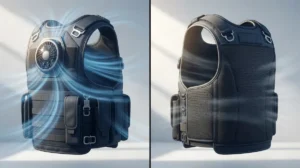
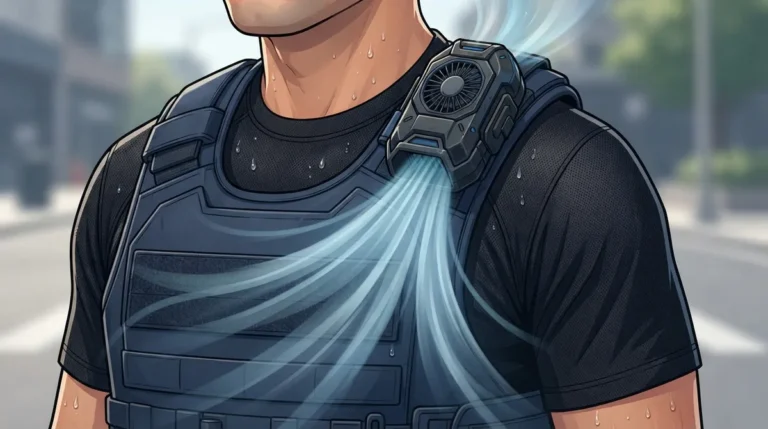
Here is the simple version. The fan draws in air from around you. The nozzle sends that air under or behind your vest. The air then moves across your torso and leaves through the gaps at the edges.
Moving air helps in two ways:
- It carries heat away. Warm air near your skin gets swept out and replaced with fresher air.
- It speeds up sweat evaporation. When sweat dries, your skin feels cooler.
That second point matters a lot. Fans work best when sweat can actually dry. If the air is very humid, or if your layers block airflow, the benefit gets smaller. A fan also does not chill the air. It only moves the air that is already around you.
For a deeper look at the science, see our guide on how an active cooling system works in ventilation vests.
External Fan vs. Built-In Fan Vest vs. Spacer Mesh
People often mix these up, so let us sort them out. Each style has its place, and the best pick depends on your job and your gear.
| Feature | External Carrier Fan | Built-In Fan Vest | Passive Spacer Mesh |
|---|---|---|---|
| Power source | Rechargeable battery | Battery | None |
| Removable | Yes | Usually no | Often yes |
| Active airflow | Yes | Yes | No |
| Works with many carriers | Often, but check fit | Limited to that vest | Varies |
| Noise | Low to moderate | Low to moderate | Silent |
| Best for | Flexible, mixed-gear users | One dedicated setup | Light, low-effort comfort |
If you want to explore the trade-offs further, read passive vs. active tactical vest ventilation and our breakdown of built-in vs. modular tactical gear ventilation.
Why Officers and Responders Are Paying Attention
Body armor is life-saving gear. But it can also trap heat and moisture right against your core. Over a long shift, that adds up to fatigue, distraction, and plain old misery.
Here is who benefits most from airflow-based cooling:
- Law enforcement officers on 10- and 12-hour patrol shifts
- Military personnel working in hot climates with heavy armor
- Security professionals standing posts for hours
- Tactical and SWAT teams doing high-effort work in full kit
- Emergency responders who need to stay sharp in heavy protective gear
Heat is not just about comfort. The OSHA heat stress guidance reminds workers that heat can become a serious safety issue. We will come back to that point, because it is an important one.
What Research and Manufacturers Actually Say
Let us keep things honest. A lot of marketing around fans sounds amazing. But there is a difference between a maker’s claim and independent testing.
For example, one maker lists five fan speeds and a 4,000 mAh battery on its product page. It reports real-world runtimes from about 17 hours on the lowest setting down to about 2 hours on the highest. Charging is listed at roughly 3 hours and 40 minutes through USB-C. Those are manufacturer numbers, not independent lab results, so always confirm current specs before you buy.
Independent research gives us a more careful view. A 2017 study on cooling devices for construction workers tested wearable fans. The fans ran for almost 3 hours. They had a big cooling effect near the head, but little effect on other body regions in the test setup. The same study found the fans lowered the insulation of a typical work outfit from 0.75 clo to 0.48 clo. That test used a specific fan-and-harness design, so it does not apply to every vest-mounted product.
The takeaway? Airflow can help, but results depend on the product, the setup, and the conditions.
7 Things to Check Before You Buy
Not all fans are equal. Use this checklist to compare options like a pro.
- Airflow distribution. Does the air spread across your torso, or just blast one spot?
- Noise level. A loud fan can be a problem on a stealth or radio-heavy job.
- Battery runtime. Look for tested runtimes at the speed you will actually use.
- Weight and snag risk. Bulky parts can catch on seat belts, doors, or gear.
- Secure attachment. It should stay put when you run, kneel, or climb.
- Cleaning and weather resistance. Sweat, dust, and rain happen.
- Armor and uniform compatibility. It must not block coverage or other equipment.
Want more help? Our guide on how to pick a cooling fan for body armor goes deeper, and 7 body armor cooling fan mistakes to avoid can save you a headache.
Will It Fit Your Vest? Compatibility Basics
This is where many buyers get tripped up. Fit is product-specific. A fan that slides neatly under one carrier may not seat right on another.
Think about these points:
- Attachment method: clip, strap, slide-in spout, or hook-and-loop
- Carrier shape: flat plate carrier, load-bearing vest, or soft armor carrier
- Armor placement: the nozzle must not push on or shift your plates
- Clearance: there needs to be room for air to actually flow
Always make sure the unit does not block protective coverage. If you are unsure, test it in a safe setting before you wear it on duty.
The Honest Limits of a Fan
Here is the part we want you to hear clearly. A fan is a comfort tool. It is not a medical device, and it is not a replacement for safe heat habits.
- It does not cool the incoming air.
- It does not guarantee a lower core body temperature.
- It should never be treated as heat illness prevention on its own.
You still need water, rest breaks, and time to adjust to hot weather. Our article on how to prevent heat stress while wearing body armor covers those habits in simple steps. Think of a fan as one helpful layer in a bigger plan.
A Smarter Option: BluHalo and Blufano
If you want a proven way to move air under your gear, BluHalo and Blufano are the two names to know. They were built for people who wear armor every day, and they work well on their own or together.
Blufano is a self-contained active airflow unit. It has a patented air-redirect spout that slides under any style of body armor. You can secure it with an optional strap. The fan gives adjustable airflow for roughly 8 to 32 hours depending on the setting. It also has a built-in 10,000mAh power bank that can charge your USB devices, plus a forward-facing light for hands-free use in low light. Learn more in our Blufano overview.
BluHalo takes a different approach. It is a lightweight ventilation vest, under 7 ounces, that goes under your armor. A Chicago police officer created it after dealing with the heat firsthand. When you inflate it with a small pump, it lifts the vest up to about 1.5 inches off your body. That creates a cooling air gap. A button deflates it fast so it lies flat when you do not need it. Check out the BluHalo ventilation vest for details.
Why pair them? BluHalo creates the space. Blufano moves fresh air through it. Together they give you a stronger setup than either one alone. You can buy them separately or bundle them at a discount in the BluHalo shop.
Not sure which fits you? Our comparison of BluFano vs BluHalo breaks it down clearly. You can also read real feedback on our reviews page.
Tips to Get the Most From Any Vest Fan
A few small habits can make a big difference, no matter which product you choose.
- Wear a moisture-wicking base layer so sweat can move and dry.
- Start the fan before you get overheated, not after.
- Use a lower speed when you can to stretch your battery.
- Charge your unit every night so it is ready for the next shift.
- Keep outlets and nozzles clear of debris and clothing folds.
- Cool your vehicle first, then step out into the heat with a fresh start.
Small wins add up. A cooler core can help you stay focused, calm, and ready when it counts.
Friendly Reminders for Care and Safety
Treat your fan like any other piece of duty gear. Check the attachment before each shift. Wipe it down when it gets dirty. Look for cracks, loose straps, or worn parts.
If you ever notice dizziness, nausea, or confusion, stop and get to a cooler place right away. No gadget replaces smart safety. For armor standards and general guidance, the National Institute of Justice body armor resources are a helpful place to start.
And while you are planning your gear, do not forget the rest of your life off duty. A tidy yard and a healthy smile are nice to come home to. Teams like Wayne & Sons Landscaping & Junk Removal can help keep your home base in shape, and a friendly practice like Dental Theory can keep you smiling through those long weeks.
Final Thoughts: Stay Cool, Stay Sharp
An external vest carrier fan can be a handy way to move air behind your armor, especially if you want a removable, flexible setup. Just remember that results depend on fit, humidity, layers, and battery settings. Compare claims with real testing, and never treat a fan as a stand-in for hydration, rest, and smart heat habits.
If you want a setup built by people who understand the job, BluHalo and Blufano are a great place to start. Have questions about which combo suits your gear? Get in touch with our team and we will help you find the right fit. Stay safe, stay cool, and take care of yourself out there.
FAQs
Q: What is an external vest carrier fan?
A: It is a removable, battery-powered fan and nozzle unit that mounts on the outside of a duty vest or plate carrier. It pushes outside air behind the vest so sweat can dry and heat can escape. It is different from a fan sewn into a garment or a passive mesh liner.
Q: How long does a vest carrier fan battery last?
A: It depends on the fan speed and battery size. Some makers list runtimes from about 2 hours on high up to 17 hours or more on low. Blufano offers roughly 8 to 32 hours depending on the setting, but always check current manufacturer specs.
Q: Does a carrier-mounted fan work in hot, humid weather?
A: It can still help, but the benefit is smaller in high humidity because sweat dries more slowly. Moving air still carries some heat away. Pairing a fan with an air gap and a wicking base layer gives you a better shot at staying comfortable.
Q: Can a vest fan be worn with body armor?
A: Yes, many are made for exactly that, but fit matters. Make sure the unit does not block protective coverage or shift your plates. Blufano’s spout slides under any style of body armor and can be held in place with an optional strap.
Q: Is a fan a substitute for heat illness prevention?
A: No. A fan is a comfort tool and does not cool the incoming air or guarantee a lower core temperature. You still need water, rest breaks, and time to adjust to the heat.