Key Takeaways
-
Active cooling fans increase heat loss by approximately 45 watts and reduce thermal resistance by 17-20%, making them especially effective during stationary work like vehicle patrols or standing posts where natural airflow is limited.
-
Passive ventilation vests and active cooling fans work best together: passive vests suit mobile patrol work, while active fans excel in sedentary situations, with many users combining both systems for maximum cooling performance.
-
Check compatibility carefully with your specific armor carrier, duty belt, and uniform to ensure the fan doesn't interfere with radio cables, weapon access, emergency removal, or shoulder mobility.
-
Real-world battery runtime differs significantly from marketing claims; prioritize systems offering 8-32 hour runtimes and verify actual performance at your typical fan speed setting rather than maximum speed.
-
Regular maintenance is critical—clean mesh panels, air ducts, and fan intakes after each shift to prevent sweat and dust buildup that reduces airflow efficiency and causes odor.
-
Cooling fans are comfort tools, not replacements for proper heat-safety practices; pair them with hydration, rest breaks, moisture-wicking base layers, and occupational heat-stress guidelines for comprehensive protection.
Ever finished a shift feeling like you just climbed out of a sauna wearing 20 pounds of gear? You’re not alone. Officers, soldiers, security pros, and first responders everywhere deal with the same sweaty, sticky problem: body armor traps heat against your torso like a personal oven. The good news? A cooling fan for body armor can change your entire shift experience, and we’re going to walk you through exactly how to choose one that actually delivers.
Think of us as your friendly guide through this whole cooling gear world. We’ve dug into the research, talked to people who wear armor every single day, and we’re excited to share what really matters when picking a fan system. Whether you’re patrolling in the summer heat, deployed somewhere brutal, or standing post for hours at a stretch, this guide will help you breathe easier (literally).
What Is a Cooling Fan for Body Armor, Really?
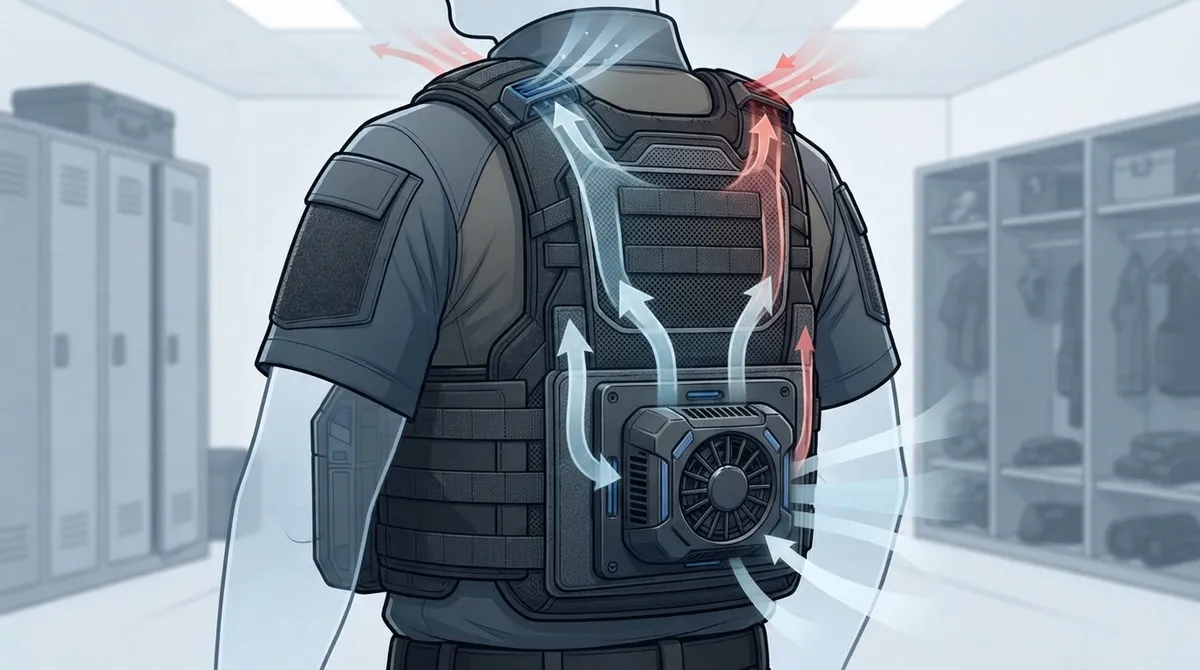
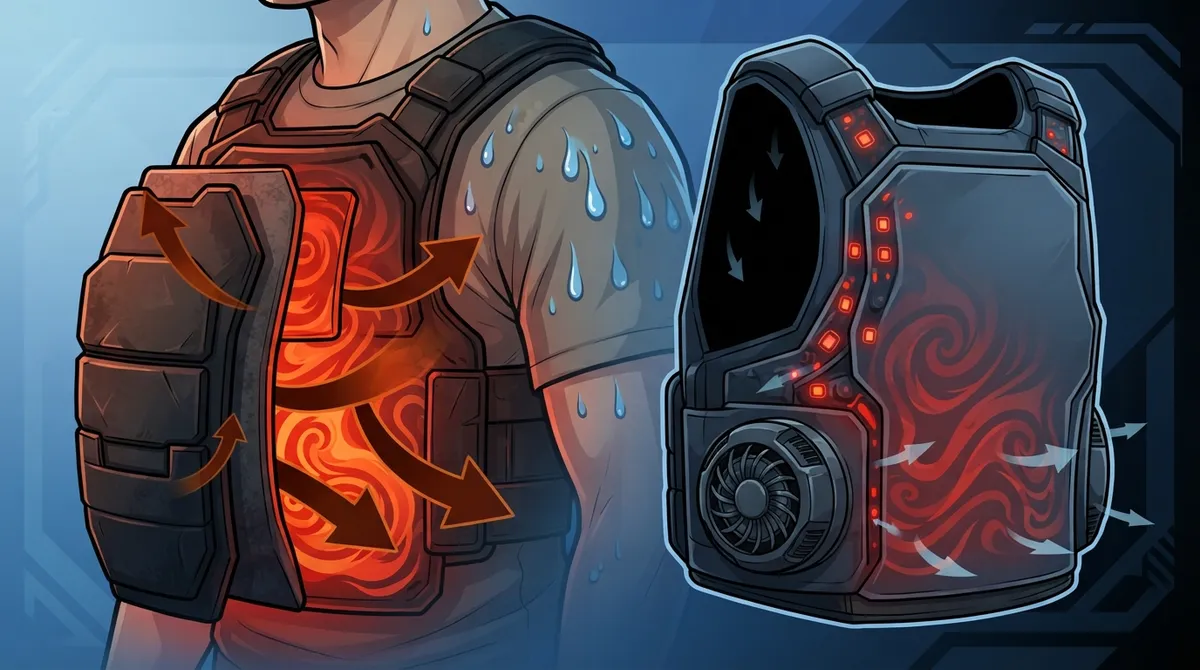
A cooling fan for body armor is a small, battery-powered device that pushes fresh air into the space between your torso and your armor carrier. It’s not magic, but it’s pretty close. Instead of letting hot, sweaty air just sit there against your skin, the fan actively moves it out and pulls cooler air in.
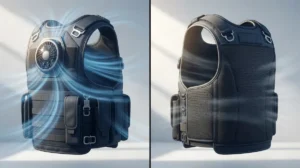
These systems usually pair with a ventilation vest that creates room for the air to travel. Picture a spacer-mesh layer or air-channel design that gives the fan somewhere to push air. Without that gap, even the best fan can’t do much good. This is why active fan ventilation and passive vests work so well together, one creates the space, and the other keeps air constantly moving through it.
A typical setup includes a compact fan, a small duct or nozzle, a way to attach it to your carrier, and a manifold that spreads airflow across your torso. Some designs mount the fan near your lower back. Others attach the airflow outlet near the top of the carrier. Either way, the goal is the same: get air moving where it’s needed most.
Why Your Armor Traps So Much Heat in the First Place
Let’s be honest, body armor was designed to stop bullets, not to keep you cool. That protective coverage creates a sealed pocket against your torso. Heat builds up. Sweat can’t evaporate properly. And before you know it, you’re dealing with discomfort that pulls focus away from the job in front of you.
This matters more than people realize. According to OSHA Heat Stress Guide, heat exposure can seriously impair judgment, reaction time, and physical performance, all things you need sharp when wearing protective gear on the job. When sweat can’t evaporate, your body loses one of its best natural cooling tools.
That’s exactly why NIOSH lists air-cooled garments and cooling vests as legitimate auxiliary cooling strategies for people working in high heat. It’s not just comfort talk, it’s backed by occupational health research.
The Science Behind Fan-Powered Cooling (No Boring Lecture, We Promise)
Here’s something pretty cool we found. A U.S. Defense Technical Information Center evaluation tested forced ventilation under torso armor at 35°C and 50% humidity, basically a hot, muggy summer day. The battery-powered fan system delivered about 9 liters of air per second.
The results were impressive. Heat loss from a sweating thermal manikin increased by roughly 45 watts when the fan was running. Researchers also measured a 17% drop in dry thermal resistance and a 20% drop in vapor resistance with the fan active. In plain terms: the fan helped heat and moisture escape a lot more efficiently.
That same test used a fabric manifold to spread air around the waist and torso, with the fan tucked near the lower back, similar to how many of today’s ventilation systems are built. Keep in mind, this was a manikin study, not a guarantee of exact human results, but it’s solid evidence that airflow really does help.
Active Fans vs. Passive Ventilation Vests: Do You Need Both?
This is probably the most common question we hear, and it’s a good one. Should you go with an active fan, a passive vest, or both? Here’s the honest answer: they work best together.
| Feature | Passive Ventilation Vest | Active Cooling Fan |
|---|---|---|
| How it works | Creates an air gap for natural airflow | Actively pushes air through the gap |
| Best for | Walking, moving, outdoor patrol | Sitting in vehicles, standing post, low airflow areas |
| Power needed | None | Battery required |
| Weight added | Very light (under 7 oz for some models) | Slightly more due to battery and fan unit |
| Maintenance | Simple wipe-down and airing out | Battery charging plus mesh and duct cleaning |
A passive vest works great when you’re moving around, walking a beat, or out on foot patrol where your own motion helps push air through. But when you’re sitting in a patrol car, standing at a checkpoint, or working in humid conditions with zero breeze, that’s exactly when an active fan earns its keep. This comparison of passive vs. active tactical vest ventilation breaks down the differences even further if you want to dig deeper.
How to Choose the Right Cooling Fan for Your Gear
Ready to actually pick one? Let’s walk through this step by step, because getting it right matters more than you might think.
Step 1: Check Compatibility With Your Carrier
Not every fan system fits every setup. You need something that works with your armor carrier, plate configuration, duty belt, and uniform without messing up armor coverage or shoulder mobility. If you wear concealable armor, look for a low-profile design. If you’re rocking an external carrier for tactical work, you’ll have a bit more room to work with. Either way, check that the fan won’t interfere with radio cables, weapon access, or your ability to remove the carrier quickly in an emergency.
Step 2: Look at Airflow and Battery Life
This is where specs actually matter. Some commercial systems claim runtimes anywhere from 8 to 32 hours depending on fan speed, with battery capacities around 10,000 mAh. That’s a big range, so ask about real-world runtime at each speed setting, not just the maximum. Also think about recharge time, whether the battery adds noticeable weight, and if the charging port matches gear you already own.
Step 3: Consider Noise and Comfort
A fan that hums loudly might be fine for patrol but distracting during quiet tactical operations. Test the noise level if you can, especially if you’re on a SWAT team or doing detail work where silence matters.
Step 4: Think About Cleaning and Upkeep
Sweat, dust, and body oils build up fast. A good system should let you inspect, clean, and dry the mesh, ducts, and fan intake easily. If cleaning feels like a hassle, you’ll skip it, and that leads to odor and reduced performance over time.
Step 5: Match the System to Your Job
Here’s a quick breakdown by role, because what works for a SWAT operator might not fit a security guard’s daily routine:
- Law enforcement officers: Look for low-profile fans that fit under concealable vests for long patrol shifts.
- Military personnel: Prioritize durability and long battery life for extended missions in extreme heat.
- Security professionals: Choose comfortable, quiet systems for long standing or sitting shifts.
- Tactical and SWAT teams: Focus on quick-attach designs that won’t slow down gear changes during high-intensity operations.
- Emergency response personnel: Go with rugged, easy-clean systems built to handle extreme heat and heavy protective gear.
Introducing BluHalo and Blufano: Two Cooling Approaches, One Goal
We’re proud of what our team has built here at Home, and we think you’ll appreciate having options that fit different needs.
The Bluhalo ventilation vest was created by a Chicago police officer who got tired of overheating on long, hot shifts. It weighs under 7 ounces, sits flat when deflated, and lifts your vest up to about 1.5 inches off your body when inflated, creating that all-important air gap. You attach it with Velcro, inflate it with a small pump when you need cooling, and deflate it instantly with a button. It’s built from double-layer, high-strength polyethylene, so it holds up to daily wear. Officers working 12-hour shifts in 95-degree heat have reported major comfort improvements after switching to this system.
If you want active airflow instead of a passive air gap, Blufano is our answer. It’s a self-contained fan system with a patented air-redirect spout that slides under nearly any body armor style. It runs 8 to 32 hours depending on your fan speed setting, powered by a built-in 10,000mAh battery that can also charge your phone or radio. It even has a forward-facing light for low-visibility situations. Users love pairing it with vehicle AC for extra-fast cooling on brutal days.
Curious how they stack up against each other? Check out this BluFano vs BluHalo comparison to see which fits your needs best. Many of our customers actually bundle both products together for maximum cooling performance, since the passive lift from BluHalo pairs nicely with the active airflow from Blufano.
Common Mistakes to Avoid
We’ve seen plenty of people make small errors that hurt their cooling results. Here’s what to watch for:
- Buying based on battery claims alone. Real-world runtime almost always differs from marketing numbers, so read reviews and ask real users.
- Ignoring fit with your specific carrier. A fan that doesn’t sit right can bunch up, shift, or create pressure points.
- Skipping maintenance. Sweat and dust clog mesh and ducts fast, cutting airflow efficiency over time.
- Expecting a fan to replace hydration and rest breaks. Fans help with comfort, but they don’t replace proper heat-safety practices.
- Forgetting about humidity. In very humid climates, sweat evaporates slower no matter how much air you move, so pair your fan with moisture-wicking base layers.
For a deeper dive into avoidable errors, this guide on body armor cooling fan mistakes covers even more ground.
Fans Are a Tool, Not a Cure-All
We want to be upfront about this because your safety matters to us. A cooling fan is not a substitute for properly rated protection. Always follow guidance from Body Armor Standards when selecting your protective gear, and treat cooling systems as an added comfort layer, not armor itself.
Heat stress prevention also means staying hydrated, taking breaks when possible, and recognizing early warning signs of overheating. A fan helps manage comfort and moisture, but it works best as part of a bigger heat-safety plan. If you want to build out a full comfort strategy, our article on how to prevent heat stress while wearing body armor is a great next read.
Keeping Your System Clean and Reliable
A little upkeep goes a long way. Wipe down mesh panels regularly, let your vest air dry fully after each shift, and check ducts for buildup. If your fan system has a removable battery, store it somewhere dry and avoid extreme temperatures when not in use. Taking five minutes after your shift can add months, even years, to your gear’s lifespan.
We also recommend checking out real feedback from other wearers before buying. Our Reviews page has honest experiences from officers, military members, and security professionals who’ve tested our systems in real conditions.
Ready to Stay Cooler on Your Next Shift?
You put in long hours doing tough, important work. You deserve gear that supports you, not gear that fights against you every step of the way. Whether you go with the passive lift of BluHalo, the active airflow of Blufano, or both together, you’re taking a real step toward a more comfortable, focused shift.
If you have questions about which system fits your specific gear setup, our team is happy to help you figure it out. Get in touch with our team today and let’s find the right cooling solution for you.
FAQs
Q: How does a cooling fan work under body armor?
A: A cooling fan pulls or pushes fresh air through the gap created by a ventilation vest, moving heat and sweat away from your skin. It works alongside a spacer-mesh or air-channel vest that gives the air somewhere to flow, and it’s especially helpful when you’re not moving much, like sitting in a vehicle or standing post.
Q: Is an active cooling fan better than a passive body-armor ventilation vest?
A: Honestly, they’re best as a team, not competitors. Passive vests work great while you’re walking or moving around, but fans shine when you’re stationary or stuck in humid, low-breeze conditions. Many of our customers pair BluHalo and Blufano together for the best of both worlds.
Q: Can a cooling fan fit under a concealed or external armor carrier?
A: Yes, but fit matters a lot here. Look for a low-profile design if you wear concealable armor, and always check that it doesn’t interfere with mobility, radio cables, or quick removal in an emergency. Our team can help you match a system to your specific carrier setup.
Q: How long does a body-armor cooling fan run on one battery charge?
A: Runtime varies quite a bit depending on fan speed and battery size. Some systems, like Blufano, claim 8 to 32 hours with a 10,000mAh battery, though real-world results depend on settings and conditions. Always ask about runtime at your typical fan speed, not just the maximum claim.
Q: Does a body-armor fan reduce heat stress or only improve comfort?
A: A fan definitely helps with comfort by improving airflow and moving sweat away from your skin, and research shows it can meaningfully increase heat loss. That said, it works best as part of a bigger heat-safety plan that includes hydration, rest breaks, and following occupational heat guidelines.