Key Takeaways
-
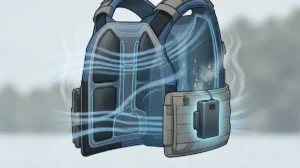
Passive ventilation vests like BluHalo offer battery-free, lightweight cooling through simple air gaps and natural airflow, making them ideal for daily law enforcement and security patrols without maintenance hassle.
-
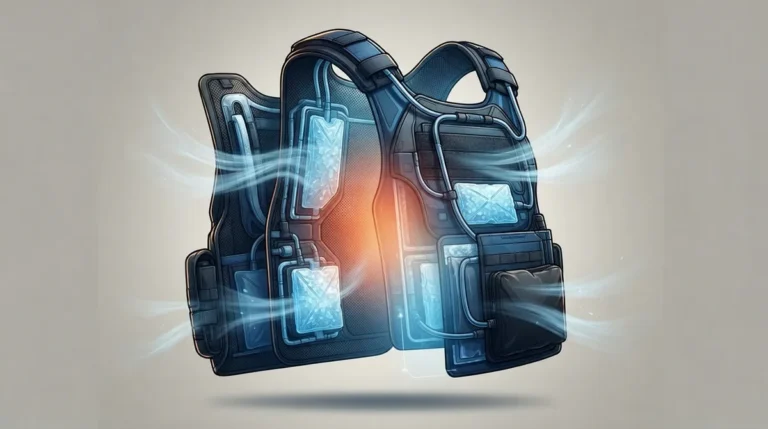
Research shows PCM (phase-change material) vests reduce torso temperature by 1.5-4°C for 60-120 minutes, while liquid-circulating systems can achieve up to 6°C cooling but require more complex equipment and mobility trade-offs.
-
Fan-assisted systems like Blufano provide 8-32 hours of runtime per charge and active airflow for extreme heat scenarios, with many professionals combining passive and active systems for maximum cooling flexibility.
-
Cooling systems must never interfere with ballistic panel positioning, weapon handling, or your armor's tested protective configuration; always verify compatibility with your specific plate carrier before purchase.
-
Key evaluation criteria include weight, battery life, noise level, compatibility with existing gear, ease of use during shifts, and durability for daily wear and laundering in professional settings.
-
Cooling vests are most effective when paired with OSHA heat stress guidance, proper hydration, acclimatization, and work-rest scheduling rather than relied upon as a standalone solution for heat illness prevention.
If you’ve ever finished a 12-hour shift with a soaked undershirt and a vest that felt like a personal sauna, you already know why this topic matters. A good bulletproof vest cooling system can be the difference between powering through your shift comfortably and counting the minutes until you can rip off your gear. Whether you’re a patrol officer, a soldier on deployment, a security professional standing post, or a firefighter suiting up for the next call, heat under body armor is a real problem that deserves a real solution.
The good news? You have more options today than ever before. From simple passive spacer designs to fan-powered airflow systems, the ventilation vest industry has come a long way. In this article, we’ll walk through exactly how these cooling systems work, what the research says about their real-world performance, and how to pick the right one for your job. We’ll also share where BluHalo fits into the picture as a trusted name built by someone who’s actually worn the gear.

What Is a Bulletproof Vest Cooling System, Really?
A bulletproof vest cooling system is any product designed to reduce heat and moisture trapped between your body and your ballistic armor. It’s important to understand that these systems don’t touch or alter your actual ballistic panels. Their whole job is to manage airflow and separation, not to add or change ballistic protection.
Think of your body armor like a heavy blanket you can’t take off. It traps heat, blocks airflow, and holds sweat close to your skin. A cooling system creates a gap, moves air, or absorbs heat so your body can actually breathe underneath all that protective gear. This is a comfort and heat-management layer, and it should always be treated that way, according to guidelines around body armor standards.
The Main Types of Cooling Technology You’ll Find Today
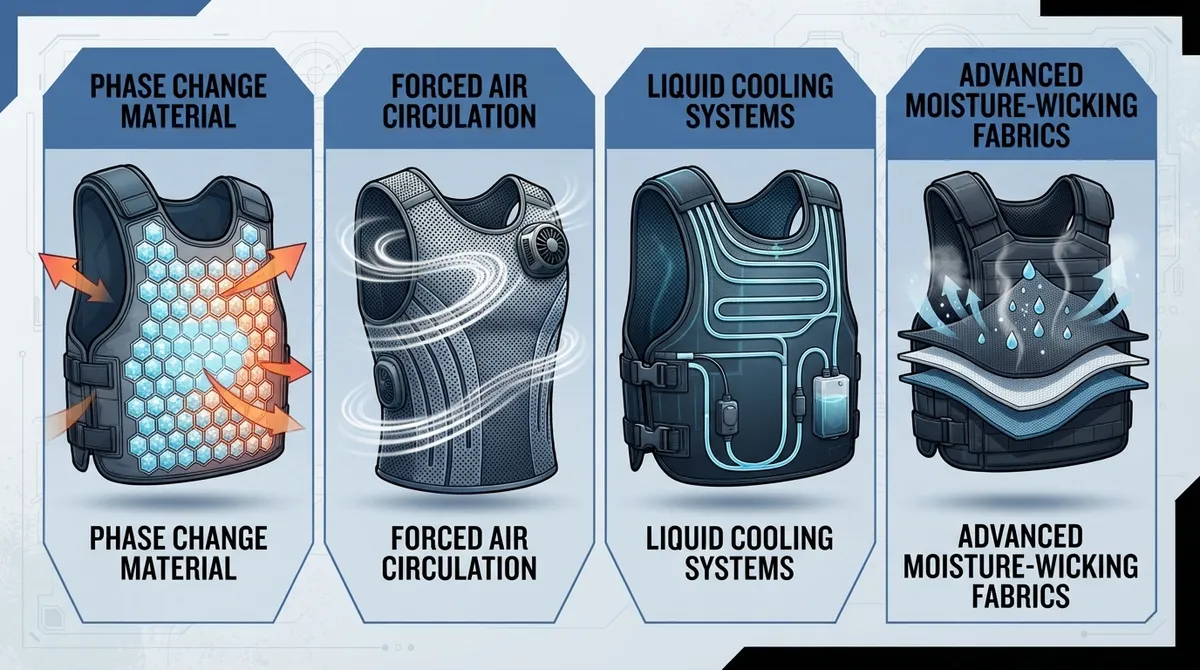
Not all cooling systems work the same way. Here’s a simple breakdown of the main categories you’ll come across when shopping for relief under your vest.
- Passive ventilation vests: These lift your armor slightly off your torso, letting air flow naturally and sweat evaporate.
- Fan-assisted systems: These use small battery-powered fans to push air through channels beneath your armor.
- Phase-change material (PCM) packs: These absorb heat as a special material melts, cooling your body without batteries.
- Evaporative cooling garments: These use wetted fabric that cools as moisture evaporates from your skin.
- Liquid-circulating systems: These pump cool liquid through tubing for stronger, longer cooling, though they add bulk and complexity.
Each type has strengths and trade-offs. The right pick depends on your job, your climate, and how much gear you’re willing to manage during a shift. You can browse a full lineup of ventilation vest options to compare what fits your needs best.
Passive Ventilation: Simple, Lightweight, and Battery-Free
Passive ventilation is exactly what it sounds like. A spacer or mesh insert sits between you and your armor, creating a small air gap. This lets fresh air move in and lets heat and sweat vapor move out.
The biggest advantage here is simplicity. There’s no battery to charge, no noise, and almost no maintenance. This is exactly the philosophy behind the BluHalo ventilation vest, which was created by a Chicago police officer who got tired of sweating through his vest on hot patrol shifts. It weighs under 7 ounces, lies flat when deflated, and can lift your armor up to about 1.5 inches off your body when inflated. You attach it with Velcro, pump it up on demand, and deflate it with one button when you don’t need it anymore.
Fan-Powered Cooling: More Airflow, More Power
Fan-assisted systems take things a step further by actively forcing air through channels under your armor. This can move more air than passive designs alone, especially during high-intensity activity.
The Blufano fan system is a great example of this approach done right. It’s a self-contained active airflow unit with a patented air-redirect spout that slides under any style of body armor. It runs on a built-in 10,000mAh power bank, giving you roughly 8 to 32 hours of runtime depending on your fan setting, and it can even charge your phone or other USB devices. It also includes a forward-facing light, which is a nice bonus for anyone working night shifts or low-light situations.
What the Research Actually Shows
It helps to know what science says about cooling performance, rather than relying only on marketing claims. Here are some findings worth knowing.
- A 2025 defense-clothing study tested cooling vests at 30°C and 48% humidity over 120 minutes of light activity. The PCM vest lowered torso microclimate temperature by an average of 1.5°C across the full trial.
- That same PCM vest showed its strongest cooling effect during roughly the first 60 minutes, after which the material’s cooling power gradually faded.
- Water-based systems in the study only produced about a 0.5°C temperature drop at 60 minutes and became a burden later in the trial as the water warmed up.
- A separate 2025 review found liquid-circulating systems can lower skin temperature by up to 6°C in some protective-clothing applications, outperforming both air ventilation and PCM in certain trials.
- The same review noted PCM vests typically reduce skin temperature by 3 to 4°C for up to 120 minutes, depending on how much PCM material is used and how well it fits the body.
These numbers show that no single cooling method is perfect for every situation. Humidity, workload, and duration all change how well a system performs. That’s why it’s smart to read up on passive versus active cooling options before deciding which direction fits your daily routine.
Comparing Cooling Methods Side by Side
| Cooling Method | Battery Required | Typical Cooling Duration | Best For |
|---|---|---|---|
| Passive ventilation (like BluHalo) | No | All shift, reusable | Daily patrol, long shifts, low maintenance |
| Fan-assisted (like Blufano) | Yes | 8-32 hours per charge | High heat, active duty, extended missions |
| PCM packs | No | 60-120 minutes peak effect | Short bursts of intense heat exposure |
| Liquid-circulating | Yes | Varies, needs pump/reservoir | Controlled environments, less mobility needs |
Why Ventilation Vests Are Often the Smartest Everyday Choice
For most people who wear body armor daily, like law enforcement officers and security professionals, simplicity wins. You don’t want to worry about charging batteries or replacing melted cooling packs mid-shift. A well-designed body armor ventilation vest gives you steady comfort without extra hassle.
This is especially true for tactical and SWAT teams who need to move fast and can’t afford bulky gear getting in the way. Emergency response personnel and firefighters face similar challenges, often working in extreme heat while wearing heavy protective layers. A lightweight, quiet system that doesn’t interfere with mobility or equipment access is usually the better fit for these high-stakes situations.
When Fan-Powered Systems Make More Sense
That said, active fan systems shine in specific scenarios. Military personnel operating in brutal heat during extended missions may benefit from the extra airflow a fan provides. Security details working long static posts in direct sun might also appreciate the boosted cooling power.
Many professionals actually combine both approaches. Pairing a passive spacer vest with a fan system can maximize airflow while keeping backup comfort if the battery runs low. You can explore how these two systems compare to decide if a bundle makes sense for your role.
Key Features to Look for Before You Buy
Choosing the right cooling system isn’t just about the coolest gadget. Here’s what actually matters when you’re evaluating options.
- Weight and thickness: Does it add noticeable bulk under your armor?
- Compatibility: Will it work with your specific plate carrier or soft armor setup?
- Noise level: Fan systems should stay quiet enough for tactical situations.
- Battery life: How long does it run, and how easy is it to recharge?
- Ease of use: Can you attach, inflate, or activate it quickly without help?
- Durability: Will it hold up to daily wear, laundering, and rough conditions?
- Fit impact: Does it change how your armor sits or affect your tested configuration?
It’s worth repeating: any cooling accessory must never interfere with ballistic coverage, plate positioning, or weapon handling. Always follow your department or unit’s guidance, and check in with your armor manufacturer if you’re unsure about compatibility.
Simple Steps to Choose the Right System for Your Job
- Identify your biggest heat challenge, whether it’s long static shifts, high-intensity movement, or extreme climate exposure.
- Decide if battery-free simplicity or active fan power fits your daily routine better.
- Check compatibility with your current plate carrier or soft armor.
- Read real user reviews and testimonials from people in similar roles.
- Test the fit and comfort before committing to daily use.
- Keep a backup plan, like hydration and rest breaks, since no cooling system eliminates heat risk entirely.
Following OSHA’s heat stress guidance alongside your cooling gear gives you the best protection against heat illness. Cooling systems reduce thermal burden, but hydration, acclimatization, and smart work-rest scheduling still matter every single shift.
Real Stories From People Who’ve Worn the Gear
Officers who’ve used the BluHalo vest often describe dramatic comfort improvements during brutal summer shifts, including 12-hour days in 95-degree heat. Many say the difference between wearing it and not wearing it feels like night and day. Similarly, Blufano users report faster cooling, especially when combined with vehicle AC during breaks, along with reduced sweat and better focus throughout their shift.
These aren’t just marketing claims. They reflect what real law enforcement officers, security professionals, and everyday heroes experience when they finally get relief from trapped heat. You can read more customer reviews to see how these products perform across different roles and climates.
Bringing It All Together
A bulletproof vest cooling system isn’t a luxury anymore. It’s quickly becoming a standard part of gearing up for anyone who spends long hours in body armor. Whether you choose a passive design, an active fan system, or a smart combination of both, the goal stays the same: stay cooler, stay focused, and stay comfortable enough to do your job well.
BluHalo and Blufano remain two of the most trusted names in this space, built specifically with everyday heroes in mind. If you’re ready to stop sweating through your shifts and start feeling the difference, reach out to our team today and let’s find the right cooling setup for your gear.
FAQs
Q: What is the best cooling system for a bulletproof vest?
A: It really depends on your job! If you want simple, battery-free comfort for all-day wear, a passive ventilation vest like BluHalo is fantastic. If you need extra airflow power for extreme heat, a fan system like Blufano might be your best friend.
Q: Can a cooling vest be worn under a plate carrier?
A: Yes, most ventilation vests are designed to slide right under your plate carrier or soft armor without any hassle. Just double check compatibility with your specific gear setup so everything fits snugly and comfortably.
Q: Do bulletproof vest cooling systems affect ballistic protection?
A: Nope, and that’s the beauty of it! These systems are built purely for comfort and heat management, sitting alongside your armor rather than altering it. Always keep your armor in its tested configuration for full peace of mind.
Q: How long do phase-change cooling packs last under body armor?
A: Research shows PCM packs deliver their strongest cooling for about 60 to 120 minutes before the material fully melts. After that, you’ll need to recondition or swap the pack to keep the cooling effect going strong.
Q: Are passive ventilation vests better than fan-powered systems?
A: Both have their moment to shine! Passive vests are lightweight, quiet, and need zero charging, making them great for daily wear. Fan-powered systems offer stronger airflow for intense heat, so many folks love pairing both for maximum comfort.