Key Takeaways
-
Fan-powered ventilation vests circulate fresh air between your skin and gear to speed up sweat evaporation, providing noticeably cooler and drier relief during long stationary tasks like patient treatment or traffic duty where passive mesh vests fail.
-
Battery runtime varies significantly by capacity: 2,000-4,000 mAh provides 2-4 hours, 5,000-7,000 mAh offers 5-8 hours, and 8,000+ mAh systems deliver 12+ hours, so choose based on your typical shift length and consider carrying spares for double shifts.
-
Active fan systems outperform passive designs specifically when you're standing still at scenes, treating patients, or in vehicles—exactly when EMS work demands cooling most, unlike passive vests that only work during movement.
-
Fan vests are most effective in dry or moderately humid conditions; effectiveness drops significantly in high humidity since sweat cannot evaporate efficiently, so set realistic expectations for summer or coastal operations.
-
Maintenance is critical: wipe down after every shift, air dry completely, check battery contacts weekly for corrosion, and inspect straps monthly to ensure the cooling system is ready when needed during emergency calls.
-
A cooling vest is only one layer of heat safety; pair it with proper hydration (one cup of water every 15-20 minutes during hot activity), scheduled rest breaks, acclimatization training, and heat illness symptom recognition per NIOSH guidelines.
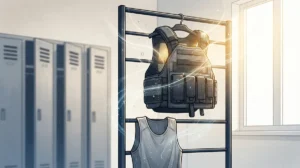
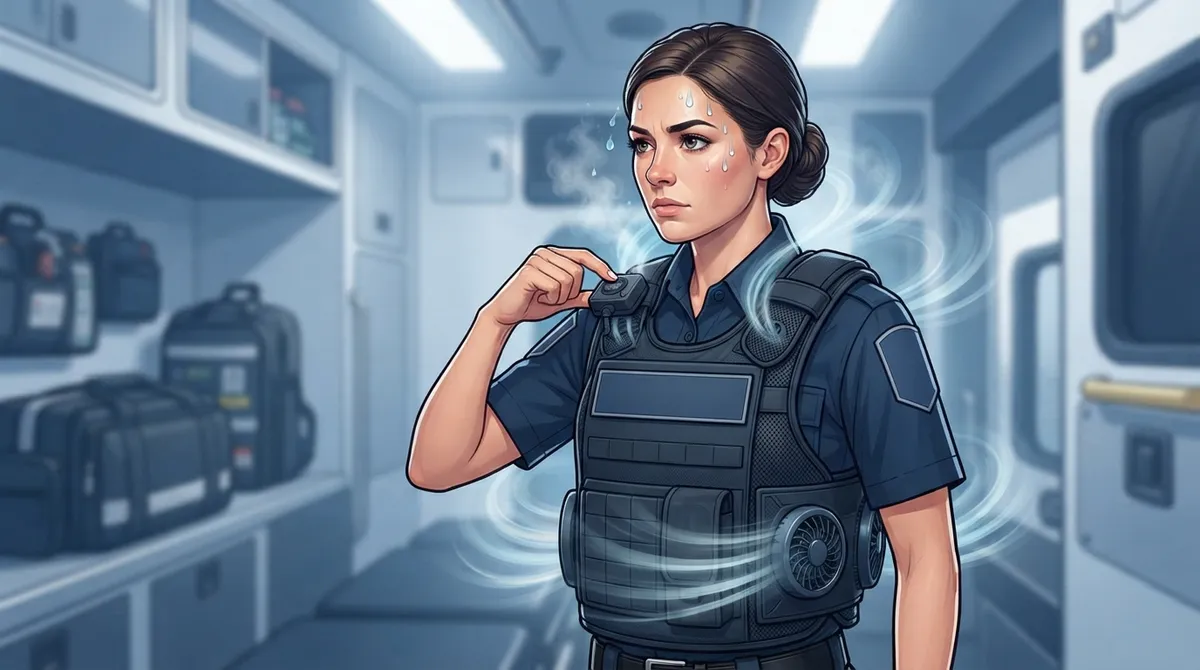
Let’s get one thing straight right away: when we say “EMS vest cooling fan,” we’re not talking about electrical muscle stimulation gear. We mean something way more useful for the folks who run into emergencies while everyone else runs out. An EMS vest cooling fan is a wearable, battery-powered airflow system built to keep paramedics, EMTs, and other first responders cooler and drier under their protective gear. If you’ve ever finished a 12-hour shift soaked in sweat with your vest sticking to your back, you already know why this matters.
Heat buildup under body armor or heavy protective vests isn’t just uncomfortable. It can slow you down, fog up your focus, and make an already tough job even harder. That’s where fan-powered ventilation vests come in. They move fresh air across your torso, which speeds up sweat evaporation and helps pull trapped heat away from your skin. It’s a simple idea with a big impact, especially during long shifts, standby duty, or those brutal summer calls where the ambient temperature feels like it’s fighting you.
In this guide, we’ll break down how these systems actually work, what to look for before you buy one, and how they fit into a bigger heat-safety plan. We’ll also share some real talk about battery life, humidity, and keeping your gear clean. Let’s dive in.
What Is an EMS Vest Cooling Fan, Exactly?
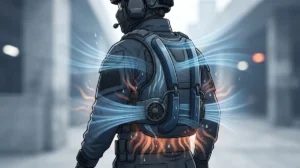
An EMS vest cooling fan is a small, battery-powered fan system worn under or attached to body armor, turnout gear, or other protective equipment. Its job is simple: pull in ambient air and push it between your body and your outer gear. This constant airflow speeds up how fast sweat evaporates off your skin, which is the main way these systems help you feel cooler.
It’s important to know that a fan vest isn’t the same as a cold-therapy device. It won’t lower the actual air temperature around you. Instead, think of it like a personal breeze machine tucked under your vest. According to NIOSH’s heat stress guidance, personal cooling systems like these fall into a category called “auxiliary” cooling tools. They’re designed to reduce the heat burden created by wearing PPE, not replace medical-grade cooling methods entirely.
Fan Ventilation vs. Passive Mesh Vests
Passive mesh or spacer-fabric vests rely on your own movement to push air through the fabric. They work fine if you’re walking a beat or staying active. But if you’re standing at a traffic scene, treating a patient, or sitting in a rig for an hour, passive designs don’t do much. That’s exactly when an active fan system shines, because it keeps air moving even when you’re standing still.
BluHalo’s own research on first responder vests that beat the heat in 2026 highlights this difference clearly. Active airflow tends to outperform passive designs specifically in stationary, high-heat scenarios common to EMS work.
How Does a Fan-Powered Ventilation Vest Actually Cool You Down?
Here’s the science made simple. Your body naturally cools itself through sweat evaporation. When sweat turns from liquid to vapor, it pulls heat away from your skin. The problem is that body armor and heavy gear trap air against your torso, which slows evaporation to a crawl. That trapped, humid air just sits there, making you feel hotter and stickier by the hour.
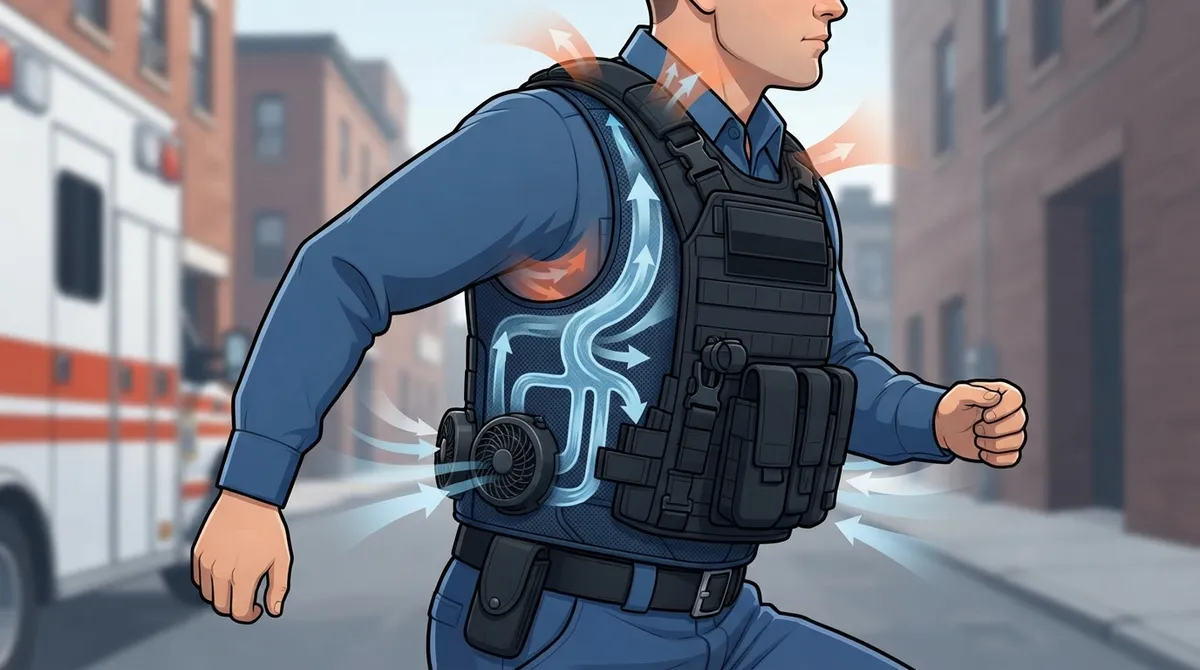
A fan vest breaks that cycle. It draws in outside air and circulates it through small channels between your body and your gear. This moving air carries away the humid layer sitting on your skin and replaces it with drier air, so sweat can evaporate faster. The result? You feel noticeably cooler, even though the air temperature hasn’t changed one bit.
- Ambient air enters through vents or intake points on the fan unit.
- The fan pushes that air into channels between your skin and your protective gear.
- Moving air speeds up sweat evaporation on your torso and back.
- Heat and moisture get pushed out through exhaust points, away from your body.
- You feel cooler and drier, even during long, stationary tasks.
This process is why BluHalo built the original ventilation vest around the idea of lifting your gear away from your body just enough to create that all-important air gap. Their design was actually created by a Chicago police officer who got tired of sweating through his vest on hot patrol shifts, so the story behind it feels pretty relatable if you’ve ever worn armor in July.
Where Fan Vests Shine (and Where They Don’t)
Fan-powered cooling works best in specific situations. Understanding these helps you set realistic expectations before you buy.
- Standing by at a scene, directing traffic, or waiting for backup
- Treating patients in the back of an ambulance or on scene
- Long shifts in vehicles with limited air conditioning
- Hot, humid ride-alongs where passive vests just aren’t cutting it
- Indoor duty combined with heavy gear, like hospital security or triage support
On the flip side, fan vests have limits. Humidity is a big one. When the air outside is already thick with moisture, sweat can’t evaporate as efficiently, so the fan won’t feel as powerful. That doesn’t mean it’s useless in humid weather, it just means you shouldn’t expect miracles. NIOSH guidance confirms that increased air movement helps cooling, but effectiveness drops when humidity or air temperature works against evaporation.
Key Features to Look For in an EMS Cooling Vest
Not all fan vests are built the same. If you’re buying gear for yourself or your department, here’s what actually matters.
| Feature | Why It Matters |
|---|---|
| Low-profile design | Must fit under body armor without adding bulk or shifting your gear’s fit |
| Quiet operation | Loud fans are distracting during patient care or radio communication |
| Glove-friendly controls | You need to adjust settings without removing gloves mid-call |
| Washable materials | Sweat and exposure to bodily fluids demand easy cleaning |
| Protected wiring and battery | Gear takes a beating; electronics need to survive drops and moisture |
| Compatibility with PPE | Cooling gear can’t interfere with armor certification or coverage |
This last point deserves extra attention. Cooling accessories should never compromise the fit or protective rating of your body armor. Always check manufacturer guidance and review official body armor standards before pairing new equipment with your existing vest. If you’re unsure whether a specific fan system works with your armor setup, it’s worth reaching out directly to a manufacturer for compatibility details.
Battery Life: What to Realistically Expect
Battery runtime is probably the number one question we hear. The honest answer is: it depends. Runtime varies based on battery size, fan speed, and even the outside temperature. Here’s a general breakdown based on published product specs across the ventilation vest industry.
| Battery Capacity | Estimated Runtime |
|---|---|
| 2,000–4,000 mAh | Approximately 2–4 hours |
| 5,000–7,000 mAh | Approximately 5–8 hours |
| 8,000 mAh or larger | 12+ hours, depending on fan speed |
Some systems on the market today report runtimes stretching from 2 to over 32 hours, but that huge range reflects very different products and power setups. It’s not a standardized number you can compare apples to apples. That’s why Blufano’s built-in 10,000mAh power bank stands out. Depending on your fan speed setting, it can run for 8 to 32 hours, and it doubles as a charger for your phone or radio. For a 12-hour shift in the field, that kind of flexibility is a game-changer.
Tips for Managing Battery Life on Duty
- Charge your unit fully before every shift, not just when it’s convenient.
- Carry a spare battery if your department allows it, especially for double shifts.
- Store batteries away from extreme heat or cold when not in use.
- Inspect wiring and connectors regularly for wear or moisture damage.
- Log charging and inspection dates so nothing slips through the cracks.
Fan Vest vs. Cooling Vest vs. Air-Conditioned Vest: What’s the Difference?
These terms get thrown around a lot, and it’s easy to get confused. Here’s a quick breakdown.
- Ventilation vest: Uses airflow (fan-powered or passive) to speed up evaporation and move trapped heat away from the body.
- Cooling vest: A broader term that can include ice packs, phase-change materials, or water-cooled garments, in addition to fan systems.
- Air-conditioned vest: Typically refers to systems using compressors or refrigerant to actually lower air temperature, which is rare and usually heavier or more expensive.
For most EMS and law enforcement applications, a fan-powered ventilation vest hits the sweet spot between comfort, weight, and practicality. If you want to dig deeper into how these compare, our article on ventilation vs. phase-change cooling vests breaks down the pros and cons of each approach.
Why BluHalo and Blufano Lead the Pack
We’re a little biased here, but for good reason. BluHalo was designed specifically for people who wear body armor daily and needed a lightweight, on-demand solution. It weighs under 7 ounces, sits flat when deflated, and inflates in seconds to lift your vest about 1.5 inches off your body. That gap is where the magic happens, allowing air to circulate freely instead of getting trapped against your skin.
Blufano takes things further with active fan-driven airflow. Its patented air-redirect spout slides under any style of body armor, and the built-in power bank keeps the fan running for hours while also charging your other devices. Officers and EMS personnel who’ve tested it report faster cooling, especially when combined with vehicle AC during breaks, along with noticeably less sweat and better focus during long, hot shifts.
You can grab either product on its own or bundle them together for maximum cooling performance. Check out the full lineup in our shop to see which setup fits your daily routine best. We also recommend browsing real feedback from working professionals in our customer reviews section before making a decision.
Cleaning and Maintenance: Keep Your Gear Ready
A fan vest is only helpful if it’s clean, charged, and working when you need it. Here’s a simple maintenance routine to follow.
- Wipe down exterior fabric after every shift using mild soap and water.
- Air dry completely before storing to prevent mold or odor buildup.
- Check battery contacts for corrosion or moisture damage weekly.
- Inspect straps and Velcro attachments for wear every few months.
- Replace batteries per manufacturer guidance, even if they still hold some charge.
Skipping maintenance is one of the most common mistakes we see. For a deeper look at what not to do, check out our guide on common body armor cooling fan mistakes.
Fan Vests Are One Piece of a Bigger Heat-Safety Plan
It’s tempting to think a good cooling vest solves the whole heat problem. It doesn’t, and that’s okay. NIOSH and OSHA’s heat exposure guidelines both recommend a layered approach to heat illness prevention. That means hydration, scheduled rest breaks, acclimatization to hot conditions, and proper training on recognizing heat illness symptoms.
A commonly cited hydration guideline is about one cup of water every 15 to 20 minutes during moderate activity in hot conditions. Pair that with smart scheduling, shaded rest areas, and a reliable ventilation vest, and you’ve got a solid foundation for staying safe on even the toughest shifts.
Frequently Searched Comparisons Worth Knowing
If you’re comparing options, you’re definitely not alone. Plenty of EMS teams and departments research this topic before committing to new gear. For side-by-side breakdowns, our articles on BluFano vs. BluHalo and passive vs. active tactical vest ventilation can help you figure out exactly what fits your role and budget.
Ready to Stay Cooler on Every Call?
You show up for everyone else on their worst day. You deserve gear that shows up for you too. Whether you’re drawn to BluHalo’s lightweight, on-demand inflation or Blufano’s long-lasting fan-driven airflow, both were built by people who understand exactly what it feels like to sweat through a vest during a brutal shift. If you have questions about which system fits your role best, our team is happy to help you figure it out. Reach out to our team today and let’s get you set up with gear that actually keeps up with your workload.
FAQs
Q: What is an EMS vest cooling fan?
A: It’s a small, battery-powered fan system worn under body armor or protective gear that circulates fresh air to help sweat evaporate faster. It’s designed for paramedics, EMTs, and other first responders, not to be confused with electrical muscle stimulation devices used in fitness gear.
Q: How does a fan-powered ventilation vest cool paramedics and EMTs?
A: The fan pulls in outside air and pushes it between your skin and your gear, which speeds up sweat evaporation and pushes trapped heat away from your body. It won’t lower the actual air temperature, but it makes a real difference in how cool and dry you feel during long shifts.
Q: Can an EMS cooling vest be worn under body armor or turnout gear?
A: Yes, most fan vests are designed with a low profile specifically so they fit comfortably under body armor without shifting the fit. Just double-check manufacturer compatibility guidance first, since cooling gear should never compromise your armor’s coverage or certification.
Q: How long does the battery last in a fan cooling vest?
A: It really depends on battery size and fan speed. Smaller batteries around 2,000-4,000 mAh last about 2-4 hours, while larger 8,000 mAh or bigger systems can run 12 hours or more. Blufano’s built-in 10,000mAh power bank runs 8-32 hours depending on your speed setting, which is great for long shifts.
Q: Are fan-cooled vests effective in humid weather?
A: They still help, but they work best in dry or moderately humid conditions since evaporation slows down when the air is already saturated with moisture. Even in humid weather, moving air feels better than stagnant, trapped heat under your gear, so it’s still worth wearing.