Key Takeaways
-
Passive accessories work best for constantly moving professionals like patrol officers, while active systems with fans or pumps are essential for stationary roles like checkpoint guards or long stakeouts where movement-generated airflow isn’t sufficient.
-
BluHalo and Blufano are leading active cooling solutions: BluHalo is a lightweight inflatable liner (under 7 oz) that creates up to 1.5 inches of separation on-demand, while Blufano offers continuous fan-powered cooling with bonus features like phone charging and built-in lights.
-
Material quality directly impacts durability and performance—mesh fabric, EVA foam, honeycomb padding, and high-strength polyethylene each serve different purposes, so check construction before purchasing to avoid flimsy accessories that won’t survive daily wear.
-
A hybrid approach maximizes comfort and budget: use passive spacer frames for routine patrol shifts and switch to active systems like BluHalo during extreme heat, extended assignments, or summer months when cooling demands are highest.
-
Tactical ventilation accessories improve officer safety by enhancing comfort during 8-12 hour shifts, which directly increases consistent body armor wear—a critical factor since protective gear only works when actually worn by law enforcement and security professionals.
-
The tactical ventilation market is projected to grow from $0.48 billion in 2026 to $0.82 billion by 2034, reflecting growing industry recognition that cooling solutions are essential for professional performance in extreme heat conditions.
If you’ve ever peeled off your vest at the end of a shift and felt like you’d been wrung out like a wet towel, you already know the problem. Body armor traps heat. It traps sweat. And it can leave you feeling drained long before your shift is over. That’s where tactical accessories come in. But here’s the thing: not all tactical accessories are created equal, and picking the wrong one can leave you just as hot and miserable as wearing nothing at all.
In this article, we’re going to break down the two main types of tactical accessories built for ventilation: passive systems and active systems. We’ll look at what makes each one tick, who they work best for, and how to pick the right one for your job. Whether you’re patrolling the streets, deployed overseas, or standing guard on a hot afternoon, this guide is for you. Grab a cold drink, get comfy, and let’s dig in together.
What Are Tactical Accessories in the Ventilation World?
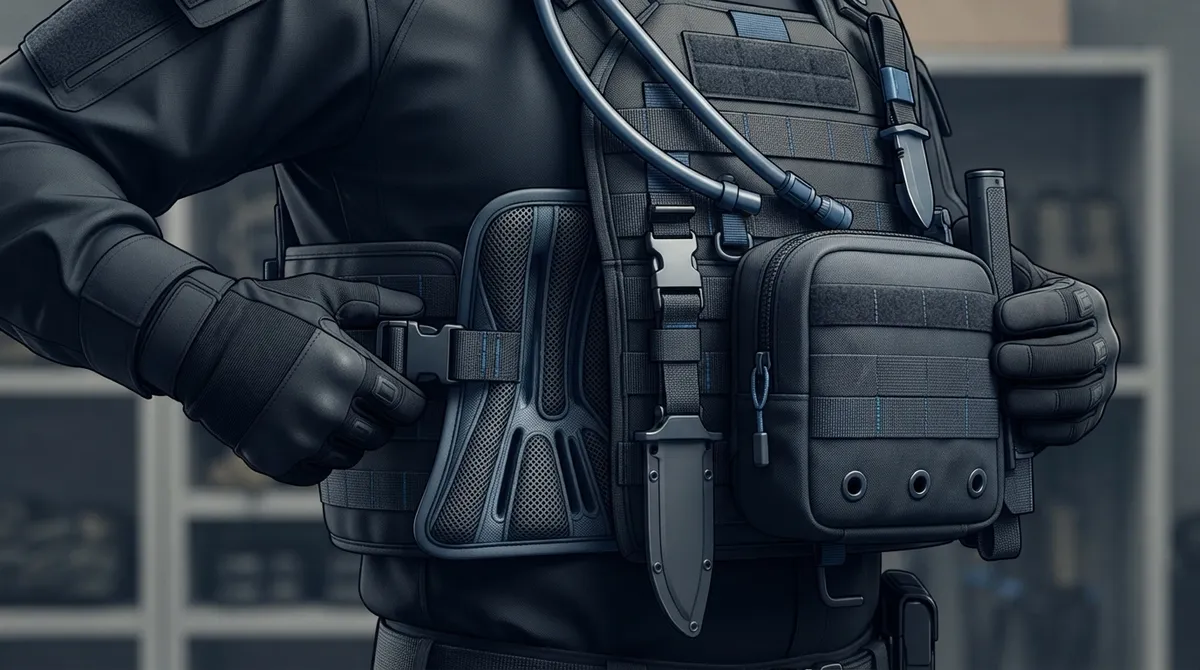
When people in this industry say “tactical accessories,” they usually mean add-on products that improve airflow under body armor and plate carriers. These are not your typical tactical gear items like holsters or pouches. Instead, they’re comfort and performance tools built to solve one very specific problem: heat and moisture buildup under heavy protective gear.
Most of these accessories fall into a few categories:
- Spacer panels that create a gap between your body and your vest
- Ventilated pad sets that replace factory foam padding
- Airflow frames built from mesh or honeycomb materials
- Fan-powered systems that actively push air through the gap
Each type works a little differently, but they all share one goal. They want to help sweat and heat escape instead of getting trapped against your skin. If you’ve read our guide on what body armor vent systems actually do, you already have a good starting point for understanding this space.
Passive Tactical Accessories: The Simple Workhorses
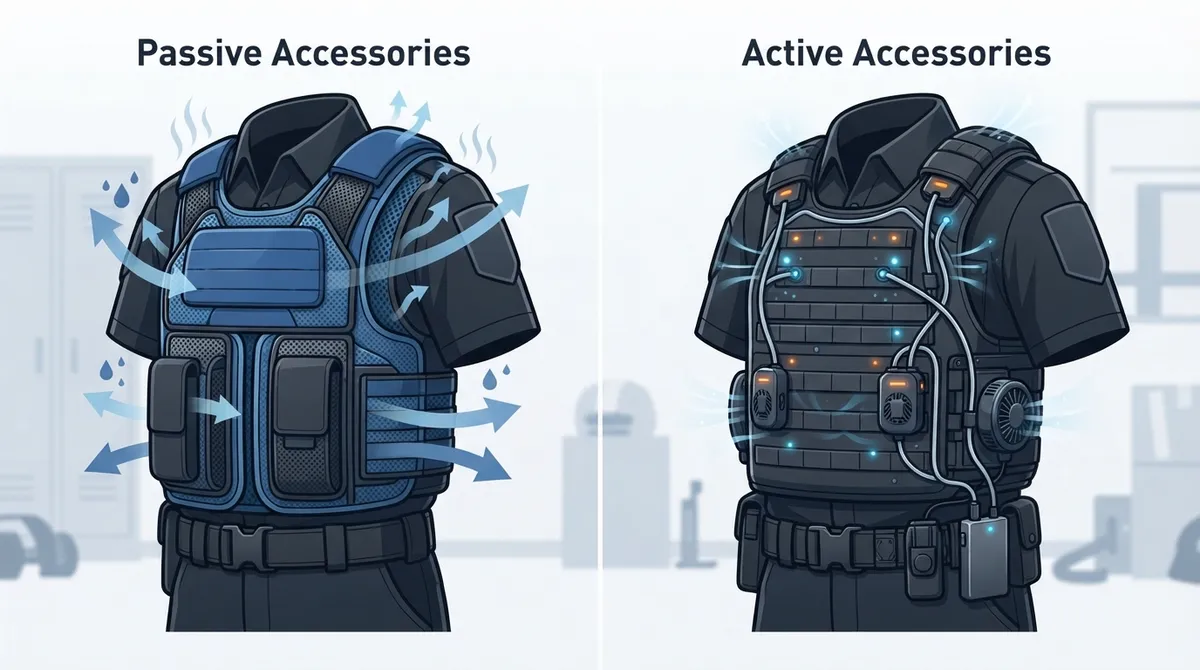
Passive accessories don’t use batteries or motors. They rely on smart design to create space between your body and your armor. Think of it like a tent. Without poles, the fabric just lies flat on you. With poles, it lifts up and lets air move freely underneath.
Passive spacer frames often use mesh, EVA foam, or honeycomb-style padding. One product on the market, TacVent, describes itself as using “true separation” rather than foam or inflatable materials. Another example, the Maxx-Dri Vest 3.0, claims to create full 360-degree separation between your body and your armor, letting heat and sweat escape more naturally.
Pros of Passive Systems
- No batteries to charge or replace
- Usually lightweight and low-profile
- Simple to install on most vests
- Lower price point compared to powered options
Cons of Passive Systems
- Airflow depends entirely on your movement
- Less effective when you’re standing still for long periods
- Some designs add bulk under your vest
Passive systems work great for folks who are constantly moving, like patrol officers walking a beat or SWAT team members clearing rooms. But if your job involves standing at a checkpoint for hours, passive airflow alone might not cut it. Our article on passive vs. active tactical vest ventilation covers this comparison in even more depth.
Active Tactical Accessories: Power-Driven Comfort
Active systems bring in a fan, a pump, or some other powered mechanism to move air. Instead of waiting for your body to create airflow through movement, these devices do the work for you, even when you’re standing perfectly still.
This is exactly where BluHalo shines. Built by a Chicago police officer who got tired of sweating through 12-hour shifts, BluHalo is a lightweight inflatable vest liner. It weighs less than 7 ounces and lies flat when not in use. When you need cooling relief, you inflate it with a small pump, and it lifts your vest up to 1.5 inches off your body. That gap lets fresh air circulate right where you need it most. When you’re done, one button deflates it instantly.
For folks who want continuous, hands-free airflow, there’s also Blufano. This is a self-contained fan system with a patented air-redirect spout that slides under any style of body armor. It runs for 8 to 32 hours depending on your fan setting and even includes a 10,000mAh power bank that can charge your phone or radio. It also has a built-in light for low-visibility situations, which is a nice bonus for night shifts.
Pros of Active Systems
- Constant airflow, even when you’re standing still
- Adjustable settings for different comfort levels
- Some models double as phone chargers or emergency lights
- Great for extreme heat or long stationary shifts
Cons of Active Systems
- Requires charging or battery management
- Slightly higher upfront cost than passive options
- Adds a small amount of weight from the fan or pump unit
Side-by-Side Comparison
| Feature | Passive Accessories | Active Accessories (BluHalo/Blufano) |
|---|---|---|
| Power Source | None needed | Pump or battery-powered fan |
| Best For | Constant movement (patrol, SWAT entries) | Standing posts, long shifts, extreme heat |
| Weight | Light to moderate | Under 7 oz (BluHalo); slightly more for Blufano |
| Airflow Gap | Around 0.75 in (19 mm) for some frame models | Up to 1.5 in when inflated (BluHalo) |
| Extra Features | None typically | Phone charging, built-in light (Blufano) |
| Price Range | Lower | Moderate (BluHalo starts at $60) |
How to Choose the Right Tactical Accessory for Your Job
Picking the right accessory isn’t a one-size-fits-all decision. It depends on your job, your climate, and how long you’re wearing your vest each day. Here’s a simple step-by-step way to think about it:
- Think about your daily routine. Are you walking most of your shift, or standing in one spot for hours?
- Consider your climate. If you work in extreme heat, like many OSHA Heat Stress Guide warnings describe, active cooling may serve you better.
- Check compatibility. Make sure the accessory fits your specific vest or plate carrier style.
- Set a budget. Passive options are usually cheaper, but active systems offer more features for the money.
- Read reviews from people in your field. Our customer reviews page has real feedback from officers and other professionals.
Many law enforcement officers find that a hybrid approach works well. They might use a passive spacer frame for everyday patrol and switch to an active BluHalo or Blufano system for special assignments, hot summer months, or extended stakeouts.
Who Benefits Most From These Accessories?
Let’s talk about who really needs these tools in their daily gear bag.
- Law enforcement officers wearing body armor for 8 to 12 hour shifts, often in vehicles without much airflow.
- Military personnel operating in hot climates with heavy plate carriers, where every ounce of relief matters.
- Security professionals standing at posts for long stretches, often outdoors in direct sun.
- SWAT and tactical teams who need cooling that keeps up with fast-paced, high-intensity operations.
- Emergency responders like firefighters and hazmat teams who deal with extreme heat on top of their protective gear.
If any of these describe you, it’s worth exploring what’s out there. Our piece on why officers need a cooling vest dives deeper into the everyday struggles that make these accessories so valuable.
Do Ventilation Accessories Really Work?
This is the question everyone asks, and it’s a fair one. Performance claims vary a lot across brands. Some manufacturers report big numbers, like one product claiming up to 90% better ventilation in independent-style testing (though this came from a manufacturer-adjacent source, so take it with a grain of salt).
What we do know is backed by simple physics. Creating an air gap between your body and your armor, even a small one, helps moisture evaporate and heat escape. According to the National Institute of Justice’s body armor resources, comfort and wearability directly affect whether officers actually wear their protective gear consistently. That’s a big deal, because armor only works if it’s actually on your body.
The tactical body ventilation market is growing fast too. Industry projections suggest it could grow from $0.48 billion in 2026 to $0.82 billion by 2034. That kind of growth tells you people are taking this seriously, and manufacturers are investing in better solutions every year.
Materials That Make a Difference
Not all ventilation accessories are built the same. Materials matter a lot when it comes to durability and comfort. Common materials include:
- Mesh fabric for breathability
- EVA foam for cushioning with some airflow
- Honeycomb-style padding for structure and air channels
- High-strength polyethylene, like the double-layer material used in BluHalo, for durability under daily wear and tear
When you’re shopping, always check what the accessory is made from. A flimsy mesh panel might feel cool at first but won’t hold up after months of daily use. That’s why products built with tough, tested materials tend to be worth the extra investment.
Getting Started With BluHalo and Blufano
If you’re ready to stop sweating through your shifts, BluHalo and Blufano are two of the most trusted names in this space. BluHalo gives you cooling-on-demand in a low-profile, lightweight package you can inflate and deflate as needed. Blufano gives you continuous fan-powered airflow with bonus features like phone charging and a built-in light for low-light situations.
Many professionals choose to bundle both products together for maximum comfort in every situation, from quick calls to all-day assignments. You can browse both options and see current pricing on our shop page, or check out real demonstrations on our videos page to see how they work in action.
Final Thoughts on Choosing Your Tactical Accessories
At the end of the day, the right tactical accessory comes down to your specific needs. Passive systems offer simple, no-fuss cooling for active jobs. Active systems, like BluHalo and Blufano, deliver stronger and more reliable airflow no matter how still you’re standing or how hot it gets outside.
Either way, you deserve to feel comfortable while doing important work. Nobody should have to choose between safety and comfort, and thankfully, you don’t have to anymore. If you have questions about which system fits your role best, our team is always happy to help you figure it out. Feel free to reach out to our team and we’ll point you in the right direction.
You work hard to keep others safe. Let’s make sure your gear works just as hard to keep you cool.
FAQs
Q: What are tactical accessories for ventilation vests?
A: They’re add-on products that boost airflow under body armor and plate carriers. This includes spacer panels, ventilated pads, and powered fan systems like BluHalo and Blufano that help you stay cool and dry during long shifts.
Q: What’s the difference between passive and active tactical ventilation?
A: Passive accessories use design alone, like mesh frames or foam spacers, to create an air gap. Active systems use a fan or pump, like our BluHalo and Blufano products, to actively push air through that gap even when you’re standing still.
Q: Do ventilation accessories actually reduce heat and sweat?
A: Yes, creating space between your body and your armor helps sweat evaporate and heat escape naturally. Many officers who’ve tried BluHalo report noticeably less sweating during hot, 12-hour shifts, and the science behind airflow backs this up.
Q: Which tactical accessories work with my plate carrier?
A: Most quality ventilation accessories, including BluHalo, are designed to work under a wide range of vests and plate carriers using simple Velcro attachment. Always double-check sizing and compatibility before buying, and our team is happy to help you confirm fit.
Q: Are these accessories worth it for law enforcement and military use?
A: Absolutely. Comfort affects whether people actually wear their protective gear consistently, which matters for safety. Professionals across law enforcement, military, and security fields have found real relief using tools like BluHalo and Blufano during demanding shifts.