Key Takeaways
-
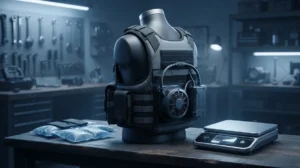
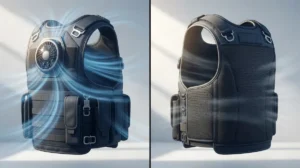
Ventilation-based cooling vests outperform evaporative and phase-change alternatives for body armor wearers because they provide consistent airflow regardless of humidity and don’t require mid-shift recharging, making them ideal for patrol and tactical work.
-
BluHalo’s inflatable design weighs under 7 ounces and creates a 1.5-inch air gap on demand, while Blufano offers continuous fan-driven cooling for 8-32 hours with a built-in 10,000mAh power bank that also charges devices.
-
Torso cooling directly impacts core temperature, cardiovascular strain, and mental focus during long shifts—OSHA recognizes it as a serious safety concern for professionals working in heat while wearing protective gear.
-
Evaporative cooling vests lose effectiveness in humid climates since sweat cannot evaporate efficiently, while PCM vests require freezer access to recharge between shifts, limiting practical use for mobile responders.
-
Avoid DIY cooling modifications like cutting holes in body armor, as safer and more effective commercial options exist that don’t compromise protective integrity or certification standards.
-
Layer cooling systems by pairing BluHalo’s on-demand air gap with Blufano’s continuous fan for adaptive relief that handles both quick cooling bursts and full-shift temperature management.
If you’ve ever finished a 12-hour shift in body armor during a 95-degree heat wave, you already know the struggle. Your undershirt is soaked. Your back feels like it’s been sitting on a stovetop. And your focus starts to slip somewhere around hour eight. You’re not alone, and you’re definitely not stuck with that reality. A good portable cooling vest can change everything about how you handle heat while wearing protective gear, and we’re here to walk you through exactly what works.
This guide breaks down the best portable cooling vest options for law enforcement, military personnel, security professionals, tactical teams, and emergency responders. We’ll cover how these systems actually work, what separates a great one from a mediocre one, and why airflow-based designs often outperform other cooling technologies for people who wear body armor every single day. Grab a cold drink, get comfortable, and let’s find your next favorite piece of gear.
What Is a Portable Cooling Vest, Really?
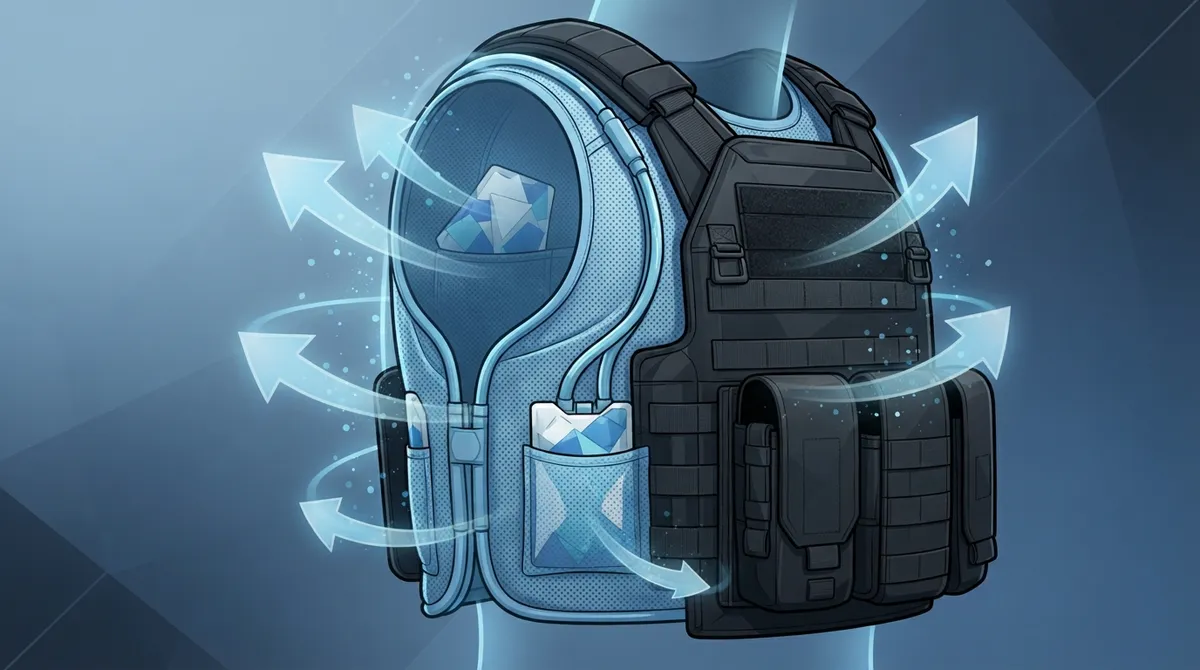
A portable cooling vest is any wearable system designed to manage heat buildup on the body, usually worn under or alongside protective gear like body armor. In our world of body armor ventilation, this typically means a lightweight device that creates airflow between your skin and your vest.
That airflow matters more than people realize. The torso is one of the biggest heat-exchange zones on the human body, so when heat and sweat get trapped there, your whole system pays the price. Sustained heat exposure while working raises core temperature and adds cardiovascular strain, which is exactly why the OSHA Heat Stress Guide treats torso cooling as a serious safety concern for anyone working in hot conditions.
Not All Cooling Vests Work the Same Way
Here’s something a lot of buyers don’t realize until they’ve already made a purchase: “cooling vest” is an umbrella term. The market includes several very different technologies, and they are not interchangeable in terms of comfort, weight, or performance.
- Ventilation/airflow vests use a fan or air gap to circulate fresh air under your gear.
- Evaporative cooling vests are soaked in water and rely on evaporation to pull heat away.
- Phase-change material (PCM) vests use cooling packs that absorb heat at a set temperature.
- Vortex-tube or compressed-air vests use pressurized air lines, usually tied to a stationary source.
Each type has a place, but for people wearing body armor on the move, ventilation-based systems tend to offer the best mix of comfort, mobility, and all-day reliability. We break this down further in our comparison of ventilation vs. phase change cooling technology.

8 Portable Cooling Vest Options Worth Your Attention
We’ve ranked these based on how well they perform under real body armor, in real heat, for real professionals. Ventilation-based systems lead the pack because they’re built for continuous wear, not a single cooldown session.
1. BluHalo Ventilation Vest
BluHalo tops our list, and for good reason. This under-armor vest was created by a Chicago police officer who got tired of overheating during long patrol shifts. It weighs under 7 ounces, sits flat when deflated, and lifts your vest up to 1.5 inches off your body when inflated, creating an instant air gap. You attach it with Velcro, inflate it on demand with a small pump, and deflate it with one button when you don’t need it.
Officers who’ve tested BluHalo during 12-hour shifts in 95-degree weather report a noticeable difference in comfort almost immediately. The double-layer polyethylene construction holds up to daily wear and tear, which matters when your gear needs to survive years of duty use. You can learn more about how this fits into using the BluHalo vest for maximum comfort during your shifts.
2. Blufano Active Airflow System
If you want continuous, fan-driven cooling rather than an on-demand air gap, Blufano is our top pick. This self-contained unit slides under any style of body armor and uses a patented air-redirect spout to move fresh air across your torso for 8 to 32 hours, depending on your fan setting.
It runs on a built-in 10,000mAh power bank, which also charges your phone or other USB devices in a pinch. There’s even a forward-facing light for low-visibility situations. Users describe faster cooldowns, less sweat buildup, and sharper focus during long, hot shifts. For teams comparing fan-driven systems to passive designs, our breakdown of the Blufano fan system versus passive cooling is worth a read.
3. Portwest CV09 Evaporative Vest
Portwest’s evaporative option is activated with water and marketed to stay cool for up to 8 hours depending on conditions. It’s lightweight and breathable, making it a popular pick for outdoor workers in drier climates. However, evaporative vests lose effectiveness fast in humid environments, since sweat and moisture can’t evaporate efficiently when the air is already saturated.
4. Ergodyne Chill-Its 6260 PCM Vest
This phase-change vest uses cooling packs that maintain a controlled 64°F (18°C) temperature for up to 2 hours. Ergodyne notes it’s 30 to 60% lighter than traditional cooling vests, which is a real plus for mobility. The tradeoff is recharge time. Once those packs warm up, you need a cooler or freezer to reset them, which isn’t always practical mid-shift.
5. Vortec Personal Air Conditioner Vest
Vortec’s cooling vest system uses a vortex tube connected to a compressed air line, delivering strong, consistent cooling. It’s excellent for stationary industrial jobs like foundry work or boiler rooms, but the tethered air hose makes it a poor fit for anyone who needs to patrol, respond to calls, or move quickly.
6. Standard Mesh Ventilation Inserts
These budget-friendly foam or mesh spacers create a small air gap under your vest without any moving parts. They’re inexpensive and simple, but they don’t actively move air, so they offer limited relief compared to fan-driven or inflatable systems. We compare this approach directly in our mesh vest versus inflatable vest cooling guide.
7. Battery-Powered Clip-On Fans
Small clip-on fans attach to a duty belt or vest strap and blow air upward. They’re cheap and easy to find, but battery life is often short, and airflow coverage is limited to one small area rather than your whole torso.
8. DIY Cooling Modifications
Some officers try cutting small holes or slits into their vest carriers to improve airflow. We get the impulse, but this can compromise the integrity of your protective gear. Before trying anything like this, check out our honest look at whether cutting holes in body armor actually helps with cooling. Spoiler: there are safer, more effective options.
Comparing the Top Cooling Technologies
Choosing the right system depends on your job, your climate, and how much mobility you need. Here’s a quick side-by-side look at how these technologies stack up.
| Cooling Type | Cooling Duration | Best For | Humidity Performance |
|---|---|---|---|
| Ventilation/Airflow (BluHalo, Blufano) | 8-32 hours | Patrol, tactical, daily duty wear | Excellent, unaffected by humidity |
| Evaporative (Portwest CV09) | Up to 8 hours | Outdoor work in dry climates | Poor in humid conditions |
| Phase-Change (Ergodyne Chill-Its) | Up to 2 hours | Short shifts with cooler access | Good, but limited duration |
| Vortex/Compressed Air (Vortec) | Continuous while tethered | Stationary industrial jobs | Good, but not portable |
Who Actually Needs a Portable Cooling Vest?
Cooling vests started in industrial settings like construction, agriculture, warehousing, foundries, and smelters. But anyone wearing heavy protective gear in hot conditions can benefit, especially the people we work with most closely.
- Law enforcement officers wearing body armor daily who deal with overheating on long patrol shifts.
- Military personnel operating in high-heat zones while wearing tactical armor for extended missions.
- Security professionals standing post in body armor for hours at a time, indoors or out.
- Tactical and SWAT teams engaged in high-intensity operations who can’t afford a heat-related performance dip.
- Emergency responders like firefighters and hazmat crews working in extreme heat conditions.
If any of these sound like your daily reality, a ventilation-based portable cooling vest isn’t a luxury. It’s a performance tool. Our article on preventing heat stress while wearing body armor dives deeper into why this matters for officer safety and decision-making.
How to Choose the Right Cooling Vest for Your Job
Not every vest fits every job. Here’s how to narrow down your choice based on what actually matters for your day-to-day work.
- Think about shift length. If you’re working 10 to 12 hour shifts, you need something that lasts, like Blufano’s 8-to-32-hour runtime.
- Consider your climate. Humid regions make evaporative vests less effective, so airflow systems are usually the safer bet.
- Check the weight. Heavier vests add fatigue over time. BluHalo’s under-7-ounce design barely adds bulk.
- Look at mobility needs. Tethered systems like vortex tubes work great in a factory, but not on a foot patrol.
- Factor in maintenance. PCM vests need a freezer to recharge. Ventilation systems just need a quick charge or a pump.
For a deeper walkthrough, our guide on choosing the right body armor ventilation vest in 2026 covers even more decision points.
Why Airflow Beats Other Cooling Methods for Body Armor
Evaporative and PCM vests were originally built for industrial jobs where workers stay in one general area. Body armor wearers move constantly, respond to unpredictable situations, and can’t stop mid-shift to recharge a cooling pack. That’s where airflow-based systems shine.
Ventilation vests create an ongoing air exchange instead of relying on a chemical reaction or water evaporation. This means consistent performance no matter the humidity level outside. A CDC-hosted evaluation comparing four portable cooling vests found that different technologies perform differently across conditions, reinforcing that ventilation systems tend to hold up better across varied work environments.
Beyond the science, there’s also comfort. Bulky cooling packs and water-soaked vests can feel heavy and awkward under armor. Lightweight airflow systems like BluHalo stay low-profile, so you barely notice they’re there until you need the relief.
Real Talk: What Officers and Responders Are Saying
We hear it constantly from customers: the difference between a rough shift and a manageable one often comes down to what’s happening under the vest. Officers using BluHalo during 95-degree days describe feeling noticeably drier and cooler within minutes of inflating it. Blufano users mention pairing the fan system with vehicle AC for an even faster cooldown between calls, along with less sweat and better mental focus during long shifts.
These aren’t just nice-to-have comforts. Staying cool helps you stay sharp, and staying sharp matters when your job depends on quick thinking. If you want to browse real feedback from people who’ve tested our gear, check out our customer reviews page.
A Quick Note on Body Armor Standards and Safety
No matter which cooling system you choose, it should never compromise the protective function of your vest. The Body Armor Standards set by national testing agencies exist to keep officers and responders safe, and any ventilation product you add should work with your armor, not against it. That’s why BluHalo and Blufano are both designed to attach externally without altering your vest’s protective layers.
If you’re also looking into general wellness support for the physical strain of long shifts in heavy gear, resources like West Florida Therapy offer helpful guidance on recovery and mobility. And if your department is exploring broader duty gear certifications or training resources, organizations like the International Driving Permit Association (IDPA) can be a useful reference point for related professional standards.
Bundling for Maximum Cooling Performance
Here’s a tip a lot of our customers appreciate: you don’t have to choose just one system. Pairing BluHalo’s on-demand air gap with Blufano’s continuous fan-driven airflow gives you layered cooling that adapts to different situations, whether you need a quick burst of relief or steady airflow for a full shift. You can browse both options, along with bundle pricing, in our shop.
Final Thoughts on Choosing Your Portable Cooling Vest
Staying cool under body armor isn’t about luxury. It’s about performance, safety, and making it through your shift without feeling drained by hour six. Whether you’re on patrol, deployed overseas, working security, or responding to emergencies, the right portable cooling vest can genuinely change how your day feels.
We built BluHalo and Blufano because we understand exactly what you’re dealing with under that vest. If you have questions about which system fits your role best, our team is happy to help you find the right fit. Reach out to our team today and let’s get you set up with cooling gear that actually works as hard as you do.
FAQs
Q: What is a portable cooling vest in the ventilation-vest industry?
A: It’s a wearable device that fits under body armor and creates airflow to keep you cooler and drier. Instead of soaking your vest or carrying cold packs, systems like BluHalo and Blufano move fresh air across your torso so heat and sweat don’t build up.
Q: How does a ventilation cooling vest work?
A: It creates a gap or active airflow between your body and your armor, giving heat and moisture a place to escape. BluHalo does this with an inflatable air gap, while Blufano uses a fan-driven system to circulate air continuously.
Q: What’s the difference between a ventilation vest and an evaporative cooling vest?
A: Ventilation vests move air using fans or air gaps, while evaporative vests use water that evaporates to pull heat away. Evaporative options work great in dry climates but lose effectiveness fast in humid conditions, unlike airflow-based systems.
Q: Are portable cooling vests effective for outdoor workers and officers on patrol?
A: Absolutely, especially airflow-based designs that work well regardless of humidity or activity level. Officers wearing BluHalo during long, hot shifts consistently report feeling drier and more comfortable within minutes.
Q: How long does a portable cooling vest stay cool?
A: It really depends on the technology. Evaporative vests last around 8 hours, PCM vests hold cooling for about 2 hours, and fan-driven systems like Blufano can run 8 to 32 hours depending on your settings.