Key Takeaways
-
Moisture-wicking undershirts are the easiest DIY upgrade with high impact—switch from cotton to polyester blends or merino wool to pull sweat away from skin and improve evaporation during shifts.
-
Foam spacers and mesh panels create passive airflow by lifting the vest slightly off your body, but work best in environments with natural air movement like outdoor patrols.
-
DIY modifications that cut, puncture, or alter ballistic panels or load-bearing seams void your warranty and compromise protective ratings—stick to exterior additions only.
-
Commercial ventilation systems like BluHalo reduce perceived heat stress by 30–40% compared to standard carriers, significantly outperforming improvised solutions during sustained activity.
-
Combining DIY hacks with commercial systems—such as a moisture-wicking shirt paired with a Blufano fan system—creates layered cooling that addresses both sweat management and active airflow.
-
The back panel and shoulders generate the most heat buildup under armor due to tight contact and minimal airflow, making these areas the priority for any cooling hack.
If you’ve ever worn body armor on a hot day, you already know the struggle. Heat builds up fast. Sweat soaks through your undershirt. And by hour four of your shift, staying focused feels harder than it should. You’re not alone — officers, soldiers, and security professionals deal with this every single day. The good news? There are some smart DIY body armor cooling hacks that can make a real difference while you’re on duty.
In this guide, we’ll walk you through the most practical DIY cooling methods people actually use under body armor. We’ll also be straight with you about where DIY solutions fall short — and when it makes more sense to upgrade to a purpose-built ventilation system. Whether you’re a patrol officer pulling long shifts or a security pro working outdoor events in July, this one’s for you.
Why Heat Builds Up Under Body Armor
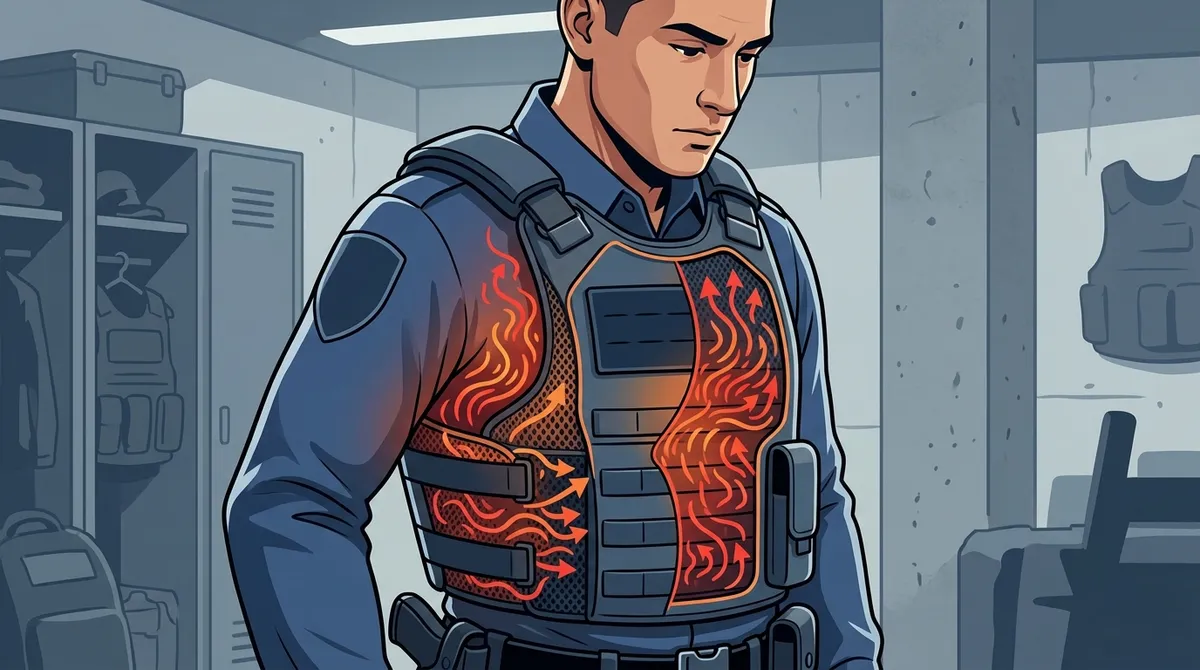
Body armor is designed to protect you, not breathe with you. Most vests sit tight against your torso and create a sealed layer that traps heat and moisture. Your body keeps generating heat through movement, and with nowhere to go, that heat just keeps building up against your skin.
Research shows that better airflow and moisture wicking under body armor can reduce core temperature rise by 0.5–1.0°C during sustained activity. That might not sound like much, but over a long shift in hot weather, it makes a serious difference to your focus and endurance. According to the OSHA Heat Stress Guide, prolonged heat exposure without relief can lead to heat exhaustion, reduced alertness, and even heat stroke — real risks for anyone wearing heavy protective gear.
Understanding why heat builds up helps you target the right spots with your cooling efforts. The back panel and shoulders are the biggest culprits, since those areas have the most contact with the vest and the least natural airflow. Keep that in mind as we walk through the hacks below.
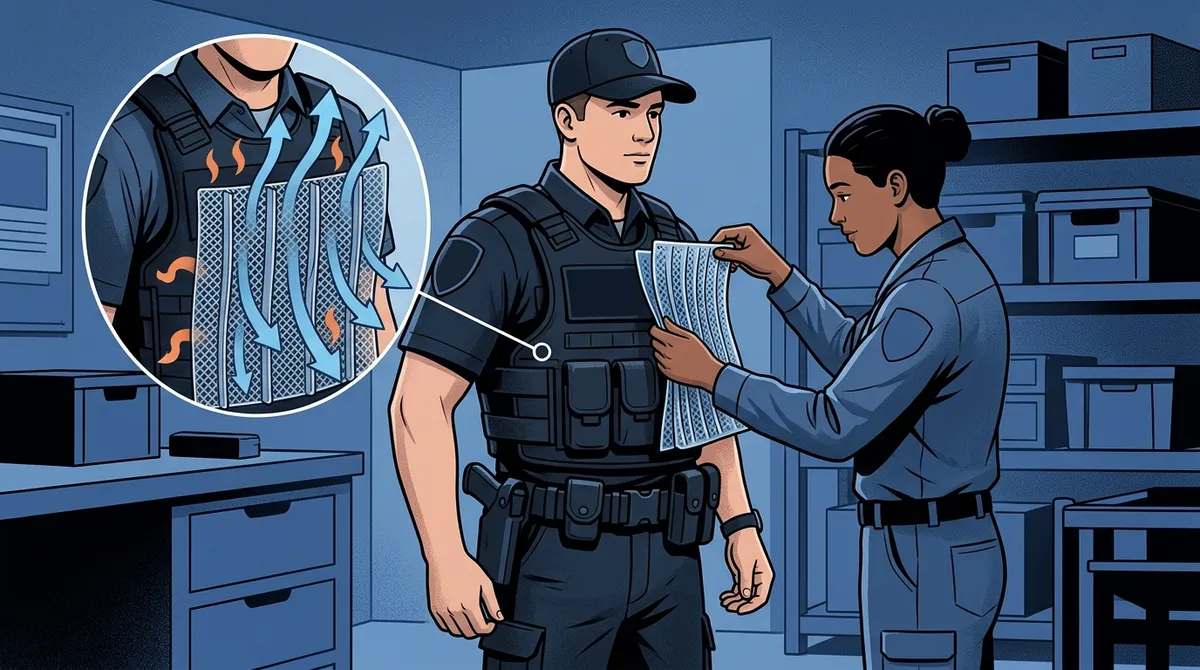
Popular DIY Body Armor Cooling Hacks
People get creative when they’re hot and uncomfortable. Here are the most common DIY cooling hacks that officers, soldiers, and security professionals actually use in the field. Some work better than others, and we’ll give you the honest breakdown.
1. Foam Spacer Inserts
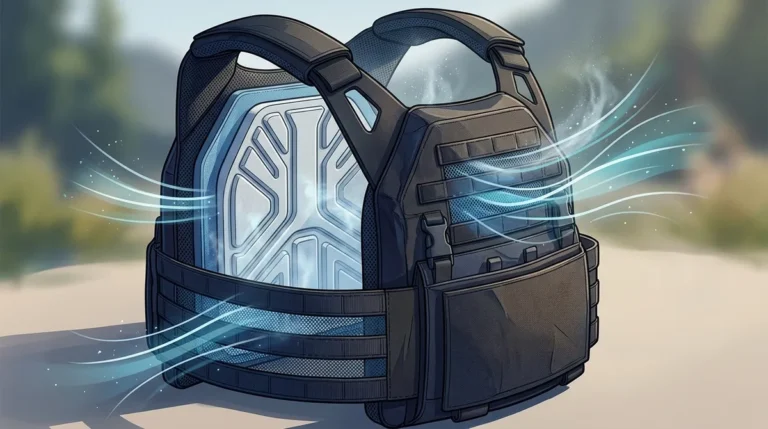
One of the simplest hacks is placing closed-cell foam pads between your body and the armor to create a small air gap. These foam pieces act as standoffs, lifting the vest slightly and allowing a thin layer of air to circulate underneath. You can find closed-cell foam at hardware stores or cut it from camping sleeping pads.
The downside? Foam inserts can shift around during movement, especially in active situations. They also don’t actively move air — they just create a passive gap. Still, for slow-paced duty in moderate heat, this is a quick and inexpensive starting point. Check out how to improve body armor airflow for all-day comfort for more tips on passive airflow improvements.
2. Mesh Panel Additions
Some users sew or attach mesh fabric panels to their undershirts or carriers to improve breathability. Mesh allows air to pass through more easily than solid fabric. Athletic mesh from sporting goods stores works well and is cheap to buy.
This hack works best in environments with natural airflow — outdoor patrols, for example — where moving air can actually pass through the mesh. In enclosed spaces with no airflow, mesh alone won’t do much. But combined with other cooling methods, it adds a helpful layer of breathability.
3. Moisture-Wicking Undershirts
This one sounds obvious, but many officers still wear standard cotton undershirts under their armor. Cotton absorbs sweat and holds it against your skin, making you feel hotter and more uncomfortable over time. Switching to a performance moisture-wicking undershirt is one of the easiest and most effective DIY upgrades you can make.
Look for shirts made from polyester blends or merino wool. These materials pull moisture away from your skin and help it evaporate faster. It’s a small change with a noticeable impact, especially during high-intensity situations. You can read more about the best moisture-wicking vests for body armor comfort in 2026 for product comparisons.
4. Zip Tie and Rubber Band Standoffs
Some tactical users improvise standoffs using zip ties or thick rubber bands attached to the carrier’s interior loops or MOLLE webbing. These create small raised points that lift the back panel slightly off the body, similar to foam spacers but more secure.
This method is clever but has real limitations. Zip ties and rubber bands can break under tension, especially during physical activity. They may also create uncomfortable pressure points if not positioned carefully. Use this as a short-term fix, not a long-term solution.
5. Breathable Under-Armor Layers
Adding a lightweight compression shirt with built-in ventilation channels under your armor can help direct sweat away from the skin. Some tactical brands specifically design undergarments for body armor use, with raised texture patterns that create micro air channels against the skin.
These products are technically commercial, but they’re a low-cost upgrade that works well as a DIY-style addition to your existing kit. Combined with foam spacers or mesh panels, they can noticeably reduce sweat buildup during long shifts.
DIY Hacks vs. Commercial Ventilation Systems
It’s worth being honest here: DIY hacks can improve comfort, but they don’t match what a properly engineered ventilation vest can do. Let’s look at the numbers side by side.
| Method | Airflow Quality | Cost | Durability | Safety Impact |
|---|---|---|---|---|
| Foam Spacers | Low (passive) | $5–$15 | Low (shifts) | Minimal risk |
| Mesh Panels | Low–Medium | $10–$25 | Medium | Minimal risk |
| Moisture-Wicking Shirt | Low (passive) | $20–$50 | High | No risk |
| Zip Tie Standoffs | Low | Under $5 | Very Low | Low risk |
| BluHalo Ventilation Vest | High (active gap) | $60 | High | No risk |
| Blufano Fan System | Very High (active fan) | Premium | Very High | No risk |
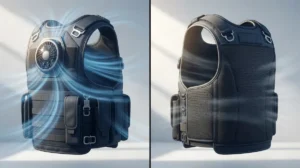
Commercial ventilation systems like the BluHalo ventilation vest are engineered specifically for this problem. BluHalo was actually created by a Chicago police officer who got tired of overheating on long shifts — so it’s designed by someone who truly understood the pain point. It weighs under 7 ounces, sits flat when not in use, and lifts your vest up to 1.5 inches off your body when inflated, creating a consistent air gap that no zip tie or foam pad can reliably replicate.
A 2023 review of body armor ventilation products found that commercial ventilation systems can reduce perceived heat stress by up to 30–40% compared to standard carriers without ventilation. That’s a meaningful improvement that DIY hacks typically can’t match consistently. For more context on what’s available, check out the best vest cooling systems guide for beating the heat in body armor.
Safety Risks of DIY Body Armor Modifications
This section is important — please don’t skip it. Some DIY cooling hacks are harmless, but others can create real problems if you’re not careful.
According to established Body Armor Standards from the National Institute of Justice, any modification to the structure or ballistic panels of body armor can compromise its protective rating. Cutting ventilation holes in your carrier, removing structural components, or altering load-bearing seams are actions that can void your warranty and, more importantly, reduce protection in a critical moment.
Here’s a quick breakdown of what’s generally safe versus what to avoid:
- Safe: Adding foam spacers between your body and the carrier exterior
- Safe: Wearing a moisture-wicking undershirt beneath your armor
- Safe: Attaching mesh fabric to the outside of a carrier using existing attachment points
- Risky: Cutting or puncturing any part of the vest carrier or panels
- Risky: Removing ballistic panels to add spacers inside the carrier
- Avoid: Gluing or adhering materials directly to ballistic panels
Law enforcement agencies and military units increasingly recommend tested and certified ventilation systems over DIY modifications, largely for liability and safety reasons. If you’re looking for a smarter approach to preventing heat stress while wearing body armor, a purpose-built solution is always the safer bet.
When to Combine DIY Hacks With a Commercial System
Here’s a truth that often gets overlooked: DIY hacks and commercial ventilation systems don’t have to be mutually exclusive. In fact, some of the best results come from combining both approaches.
Think of it like this — a moisture-wicking undershirt paired with a Blufano fan system creates a layered cooling approach that tackles heat and moisture at multiple levels simultaneously. The undershirt pulls sweat away from your skin, and the Blufano’s active fan system circulates fresh air beneath your armor for 8–32 hours depending on your fan setting.
Here are some smart combinations that work well together:
- Moisture-wicking undershirt + BluHalo inflatable vest for a passive and active air gap combo
- Breathable compression shirt + Blufano fan system for maximum active cooling
- Lightweight mesh undershirt + foam spacers for a low-cost passive improvement
- Performance undershirt + commercial ventilation insert for all-day comfort on extended missions
For more ideas on layering your gear effectively, check out these 7 proven ways to stay cool under pressure in body armor.
Comparing the Best Commercial Options to DIY
If you’re ready to step beyond the DIY phase, here’s how some of the leading commercial ventilation options stack up in terms of key features.
| Product | Weight | Cooling Method | Battery Life | Extra Features |
|---|---|---|---|---|
| BluHalo Ventilation Vest | Under 7 oz | Inflatable air gap | N/A (manual pump) | On-demand inflation, flat profile |
| Blufano Fan System | Compact unit | Active fan-driven airflow | 8–32 hours | 10,000mAh power bank, USB charging, forward light |
| Maxx-Dri Vest | 9–14 oz | Passive channels | N/A | Wide compatibility, rigid standoffs |
| IceVent Inserts | Under 1 oz per unit | Passive spacer | N/A | Modular, fits most carriers |
The Blufano fan system vs. passive cooling comparison dives deeper into how active airflow stacks up against passive solutions if you want a more detailed breakdown. And if you’re just getting started researching options, the BluHalo shop offers both products individually or bundled together at a discount for maximum cooling performance.
Just like Bucheli Trim understands that craftsmanship matters in every detail of a build, choosing the right ventilation solution comes down to precision fit, quality materials, and reliability when it counts most.
What the Professionals Are Saying
Officers and tactical professionals who’ve made the switch from DIY hacks to engineered ventilation consistently report the same thing: they wish they’d upgraded sooner. Testimonials from BluHalo users describe dramatically improved comfort during 12-hour shifts in 95-degree weather, reduced sweat buildup, and better mental focus throughout the day.
The pattern is clear: DIY cooling hacks are a great starting point when you’re on a budget or testing the waters. But once you experience consistent, engineered airflow, it’s hard to go back. If you’re curious about what others are saying, take a look at the BluHalo customer reviews — real feedback from real professionals in the field.
For those wanting to explore passive vs. active tactical vest ventilation in more depth before making a decision, there’s plenty of helpful information available to guide your choice.
Final Thoughts and Next Steps
DIY body armor cooling hacks are a smart, resourceful way to improve comfort when you’re working with limited gear or budget. Foam spacers, moisture-wicking shirts, and mesh panels can all make a real difference, especially when you combine them thoughtfully. Just remember to avoid any modifications that could compromise your armor’s protective integrity.
That said, if you’re serious about staying cool and performing at your best through every shift, a dedicated ventilation vest is the upgrade that truly delivers. BluHalo and Blufano are designed exactly for professionals like you — people who need reliable, consistent cooling without adding bulk or complexity to their kit.
Ready to stop just surviving the heat and start actually staying cool on the job? Get in touch with our team and we’ll help you find the right solution for your setup, whether you’re a solo officer, a whole department, or a tactical unit looking for a gear upgrade that makes a real difference.
FAQs
Q: What are the safest DIY body armor cooling hacks I can try right now?
A: The safest options include switching to a moisture-wicking undershirt, placing closed-cell foam spacers between your body and the carrier exterior, and attaching mesh fabric to the outside of your carrier using existing attachment points. These methods improve airflow without touching the ballistic panels or load-bearing components, so your protection stays fully intact.
Q: Can I add foam spacers or ventilation inserts to my body armor without voiding the warranty?
A: Generally, adding foam spacers or inserts to the exterior of your carrier is safe and unlikely to void your warranty. However, cutting, puncturing, or altering the carrier’s structure or ballistic panels can void your warranty and compromise your protection. Always check with your armor manufacturer before making any modifications.
Q: How do DIY cooling hacks compare to commercial ventilation vests like BluHalo?
A: DIY hacks can provide modest comfort improvements, but commercial ventilation vests like BluHalo are purpose-built for consistent, reliable airflow. Research shows engineered ventilation systems can reduce perceived heat stress by up to 30–40% compared to standard carriers — a level that improvised solutions rarely match consistently.
Q: Do DIY body armor cooling hacks reduce heat stress as well as engineered systems?
A: DIY hacks can take the edge off heat discomfort, especially when combined — like pairing a moisture-wicking shirt with foam spacers. But they tend to be inconsistent and less effective during high-intensity activity. Engineered solutions like the Blufano active fan system provide steady, measurable airflow that DIY methods simply can’t replicate over a full shift.
Q: Can I combine DIY cooling hacks with a commercial ventilation vest for better results?
A: Absolutely — and it’s actually one of the smartest approaches you can take! Pairing a moisture-wicking undershirt with a BluHalo ventilation vest or Blufano fan system creates a layered cooling effect that targets both sweat management and active airflow. Many professionals find this combination gives them the best all-day comfort, especially in extreme heat.