Key Takeaways
-
Heat stress causes measurable cognitive impairment including slower reaction times, reduced attention, and impaired judgment; research on 10 million Texas arrest records found officers made fewer arrests on hottest days and hot-day arrests were more likely dismissed in court.
-
Overheated officers fail in two distinct ways: impulsive decisions that escalate situations unnecessarily, or decision paralysis that causes dangerous hesitation—both modes directly linked to physical depletion from heat stress.
-
Body armor traps heat and moisture against skin, creating a microclimate that steadily raises body temperature; active ventilation systems like fan-driven vests provide sustained cooling throughout shifts by maintaining continuous airflow under the armor.
-
Department-level action is more effective than individual steps: issue ventilation gear as standard equipment, conduct heat wellness checks during summer, train officers to recognize cognitive warning signs, and rotate officers during extreme heat events.
-
Early heat stress warning signs include sudden stop of sweating despite heat, confusion, slurred speech, unusual irritability, dizziness, muscle cramps, and disproportionate fatigue—officers should monitor themselves and colleagues for these flags.
-
Even judges showed heat-related decision changes, with sentence lengths increasing 6.5% and fines rising 4% on days above 32°C (90°F), demonstrating heat affects decision-makers across the entire justice system who work outdoors in gear.
Picture this: It’s a sweltering summer afternoon, and an officer is six hours into a 12-hour shift. The body armor is trapping heat like an oven. Sweat is pooling. The mind starts to fog. Then comes a split-second decision that could matter enormously — for the officer and the public alike.
This scenario plays out across the country every single day. And yet, the connection between body heat and decision-making quality is something the profession doesn’t talk about nearly enough. Understanding how overheating affects officer decision making is not just a wellness conversation. It’s a safety conversation — for everyone involved.
In this article, we break down exactly what happens to the brain and body when heat builds up under body armor. We also compare what it looks like to work overheated versus work with proper cooling support — and what you can do about it today.
What Heat Actually Does to the Brain
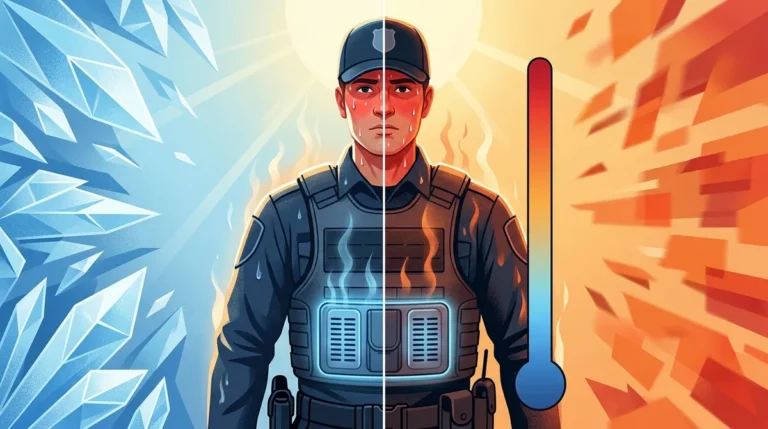
When your body gets too hot, your brain doesn’t just feel uncomfortable — it starts to malfunction. Heat stress causes measurable changes in cognition. Reaction times slow. Attention drifts. Judgment becomes impaired. These aren’t dramatic collapses — they’re subtle shifts that can go unnoticed until a decision goes wrong.
Research from the TSI Heat Stress Health Impacts Guide for First Responders confirms that heat stress can cause neurological and cognitive impairment, including confusion, slower reaction times, and impaired judgment. For officers who must make rapid, high-stakes calls, this is a serious concern.
On top of that, heat worsens dehydration, which further degrades alertness, concentration, and physical performance during patrols, crowd control, and emergency response. You can read more about heat stress effects on police performance to understand the full picture.

The Data Is Eye-Opening: Heat and Law Enforcement Decisions
Here’s something that might surprise you. Researchers analyzed over 10 million arrest records from Texas between 2010 and 2017. What they found was striking: officers made fewer arrests per reported crime on the hottest days, and arrests made on hot days were more likely to be dismissed in court than those made on cooler days.
The dismissal-versus-conviction gap began above 26°C (79°F) and widened as temperatures increased. Judges weren’t immune either. On days above 32°C (90°F), sentence lengths increased by 6.5% and fines rose by around 4%. The heat was changing the decisions of nearly everyone in the justice system — except, notably, prosecutors, who work in climate-controlled offices.
This data, highlighted by the British Psychological Society’s Research Digest, tells us something important: heat affects people on the front lines most — those working outdoors, in gear, under physical and mental stress. That’s exactly who officers are.
Overheated Officer vs. Cooled Officer: A Side-by-Side Look
Let’s put the contrast in plain terms. Here’s how performance stacks up when an officer is overheated versus when they have proper thermal management in place.
| Performance Area | Overheated Officer | Properly Cooled Officer |
|---|---|---|
| Reaction Time | Slower, delayed responses | Sharp, responsive reactions |
| Judgment | Impaired, risk of poor calls | Clear, balanced decision-making |
| Focus and Attention | Drifting, distracted | Engaged and alert |
| Emotional Control | Irritable, reactive | Calm, measured responses |
| Physical Stamina | Fatigued, muscle weakness | Sustained energy and endurance |
| Situational Awareness | Reduced, tunnel vision | Wide, comprehensive awareness |
The difference isn’t subtle. Every single area of operational performance suffers when heat stress takes hold. And with officers wearing body armor that traps heat against the skin, getting too hot isn’t a rare event — it’s a daily risk. Understanding why police officers struggle with heat under body armor can help agencies take this issue seriously.
Two Failure Modes Every Officer Should Know
Decision fatigue — a well-documented phenomenon — is made dramatically worse by heat stress. When the brain is overwhelmed by heat and exhaustion, it tends to fail in one of two ways. Knowing these two failure modes can help officers and their departments recognize warning signs early.
- Impulsive decisions: The fatigued brain takes shortcuts. It acts fast without fully thinking through consequences. This can lead to escalation when de-escalation was possible.
- Decision paralysis: The overwhelmed brain freezes. It makes no decision at all, or delays dangerously. In a fast-moving situation, hesitation can be just as harmful as the wrong call.
Both failure modes are more likely when an officer is physically depleted by heat. The guide to preventing heat stress while wearing body armor outlines practical steps agencies and officers can take to keep these risks low.
Body Armor Is the Hidden Heat Trap
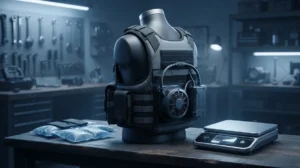
Let’s talk about the elephant in the room — or rather, the vest on the chest. Body armor is non-negotiable for officer safety. But it’s also a significant heat trap. The panels block airflow, and the close contact between the vest and the body creates a microclimate of trapped heat and moisture.
Standard body armor, while meeting Body Armor Standards from the National Institute of Justice, is not designed for thermal comfort. This means the protective gear that keeps officers physically safe can simultaneously undermine their mental sharpness.
The good news? There’s a fix for that — and it doesn’t require replacing the armor.
Cooling Solutions: Passive vs. Active — What’s the Difference?
Not all cooling approaches are created equal. Here’s a quick breakdown of the main categories and how they compare.
| Cooling Type | How It Works | Pros | Cons |
|---|---|---|---|
| No cooling (baseline) | Body manages heat alone | No added gear | Significant heat buildup, cognitive impact |
| Moisture-wicking base layers | Pulls sweat away from skin | Lightweight, simple | Doesn’t reduce core temperature |
| Phase-change cooling vests | Ice packs or gel absorb heat | Strong initial cooling | Heavy, melt over time, need recharging |
| Passive ventilation vests | Spacer fabric creates air gap | Lightweight, no power needed | Limited airflow, relies on ambient air |
| Active ventilation vests (fan-driven) | Fan circulates fresh air under armor | Continuous cooling, adjustable, long runtime | Requires battery, slightly more setup |
For officers who work long shifts in hot conditions, active ventilation clearly offers the most reliable and sustained relief. You can explore a deeper comparison of passive vs. active cooling for police body armor to find the right fit for your situation.
How Ventilation Vests Target the Problem Directly
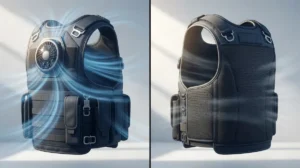
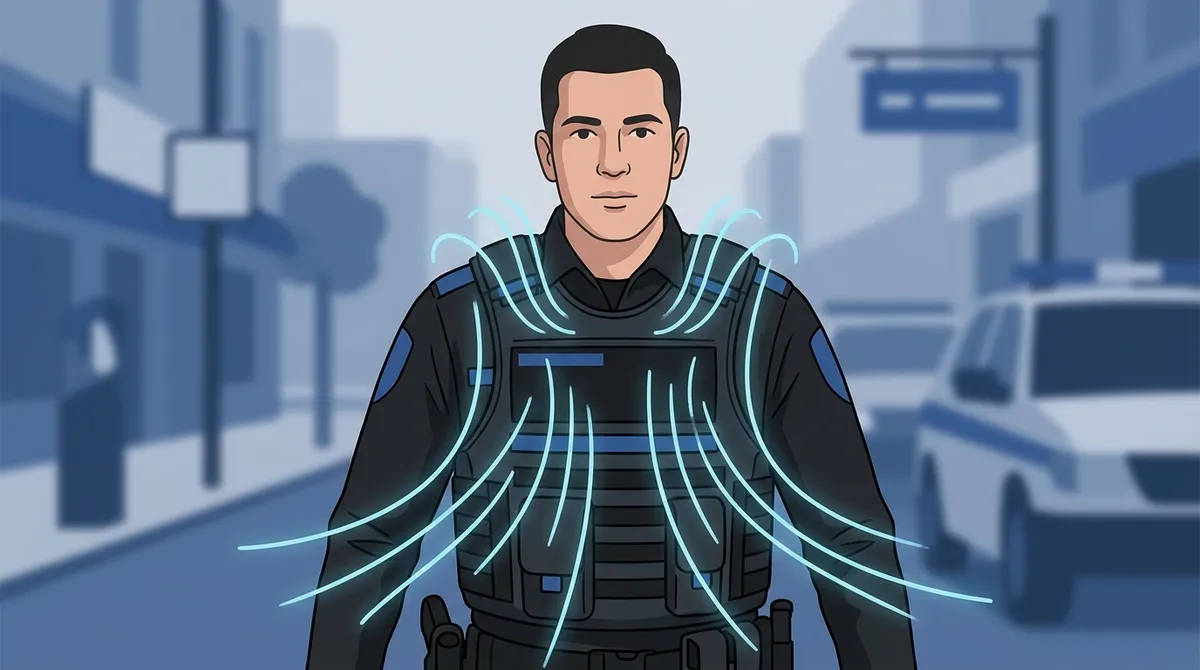
A ventilation vest works by creating an air gap between the body and the armor, allowing heat and moisture to escape rather than build up. Instead of just wicking sweat or absorbing heat temporarily, a good ventilation system keeps fresh air moving continuously — so the cooling effect lasts as long as the shift does.
This is exactly what the BluHalo ventilation vest was designed to do. Created by a Chicago police officer who experienced firsthand how brutal heat under body armor can be, BluHalo inflates to lift the vest up to 1.5 inches off the body. That air gap changes everything. Heat escapes. Sweat evaporates. The officer feels cooler, thinks more clearly, and stays sharper throughout the shift.
Weighing under 7 ounces and attaching with simple Velcro, BluHalo is designed to be completely unobtrusive. Officers working 12-hour shifts in 95-degree heat have reported significant comfort improvements — and that comfort directly supports better focus and judgment. You can see real officer feedback on the BluHalo reviews page.
Meet the Blufano: Active Fan Cooling for Sustained Performance
For officers who want continuous, fan-driven airflow, the Blufano fan system is the next level up. Blufano features a patented air-redirect spout that slides under any style of body armor and delivers adjustable fan-driven airflow for 8 to 32 hours depending on the setting.
It includes a built-in 10,000mAh power bank — so it also charges USB devices — plus a forward-facing light for low-light situations. Control is simple: one knob sets the airflow level. Officers and tactical teams alike can dial in exactly how much cooling they need, whether they’re on a quiet patrol or managing a high-intensity incident. For a full comparison, check out the BluFano vs BluHalo guide to see which system fits your needs best.
Signs of Heat Stress Officers Should Watch For
Recognizing heat stress early — in yourself or a colleague — is a critical skill. Here are the key warning signs to know:
- Heavy sweating that suddenly stops (a serious warning sign)
- Confusion or difficulty concentrating
- Slowed or slurred speech
- Unusual irritability or emotional reactions
- Dizziness, nausea, or headache
- Muscle cramps or sudden weakness
- Fatigue that feels disproportionate to the activity level
The OSHA Heat Stress Guide provides clear guidance on prevention, recognition, and first-response steps for heat-related illness in the workplace. It’s worth bookmarking for department wellness programs.
The top heat stress prevention gear picks for 2026 are also a great resource for departments looking to equip their officers proactively. And if your agency is reviewing policies around officer wellness, working with partners like Buckhorn Power Wash for facility and equipment maintenance can support a broader culture of operational readiness.
What Departments Can Do Right Now
Individual officers can take steps on their own, but department-level action makes the biggest difference. Here are four practical steps departments can implement today:
- Issue ventilation gear as standard equipment. Treat cooling under body armor the same way you treat ballistic protection — as a baseline necessity, not a luxury.
- Schedule heat wellness checks during summer months. Brief check-ins at shift changes can catch early signs of heat stress before they become dangerous.
- Train officers to recognize cognitive warning signs. Slower decisions and unusual irritability are flags that deserve attention, not dismissal.
- Review shift scheduling in extreme heat. Where possible, rotate officers more frequently during high-heat weather events to reduce cumulative exposure.
For more guidance on gear selection, the guide to choosing the best police vest ventilation system walks through everything departments need to consider.
The Bottom Line: Cool Officers Make Better Calls
The evidence is clear. Heat stress is not just a physical comfort issue — it’s a decision-making issue, a public safety issue, and an officer wellness issue all at once. When officers overheat, their judgment suffers. Their reaction times slow. Their emotional regulation weakens. And those effects have real consequences in the field.
The good news is that the solution is accessible. Ventilation vests like BluHalo and the Blufano fan system exist precisely to tackle this problem head-on. They’re lightweight, practical, and designed by people who understand what it feels like to wear body armor in punishing heat.
Whether you’re a patrol officer, a SWAT team member, a corrections professional, or a first responder, keeping cool under your gear is one of the smartest investments you can make in your performance and your safety. Explore the full lineup at the BluHalo shop, or get in touch with the BluHalo team to find the right cooling solution for your specific role and environment. You deserve to think clearly — every single shift.
FAQs
Q: How does heat stress affect police decision-making?
A: Heat stress causes measurable cognitive impairment, including slower reaction times, reduced attention, and impaired judgment. Research analyzing over 10 million Texas arrest records found that officers made fewer arrests per reported crime on the hottest days, and hot-day arrests were more likely to be dismissed in court — a clear sign that heat was affecting decision quality.
Q: Can overheating cause officers to make worse judgment calls?
A: Absolutely, and the data backs this up! When the brain is under heat stress, it tends to either make impulsive shortcuts or freeze up entirely — both of which can lead to poor outcomes in the field. Reducing body heat with tools like ventilation vests helps keep the mind sharp and the judgment sound.
Q: How does body armor make overheating worse for officers?
A: Body armor blocks airflow and holds heat and moisture against the skin, creating a trapped-heat environment that steadily raises body temperature during a shift. This is why ventilation solutions designed to create an air gap under the armor — like the BluHalo vest — make such a meaningful difference in day-to-day comfort and cognitive performance.
Q: Do ventilation vests actually improve officer alertness?
A: Yes! By reducing the heat load and moisture buildup under body armor, ventilation vests help keep core temperature lower, which directly supports better focus, faster reaction times, and more consistent emotional control. Officers who use products like BluHalo regularly report feeling more comfortable and focused throughout long, hot shifts.
Q: What are the early signs of heat stress in officers on duty?
A: Early warning signs include unusual irritability, difficulty concentrating, dizziness, heavy fatigue, and headaches. If sweating suddenly stops despite the heat, that’s a serious red flag that needs immediate attention. Catching these signs early — and having cooling gear on hand — can prevent a heat stress situation from becoming a heat emergency.