Key Takeaways
-
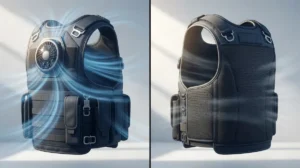
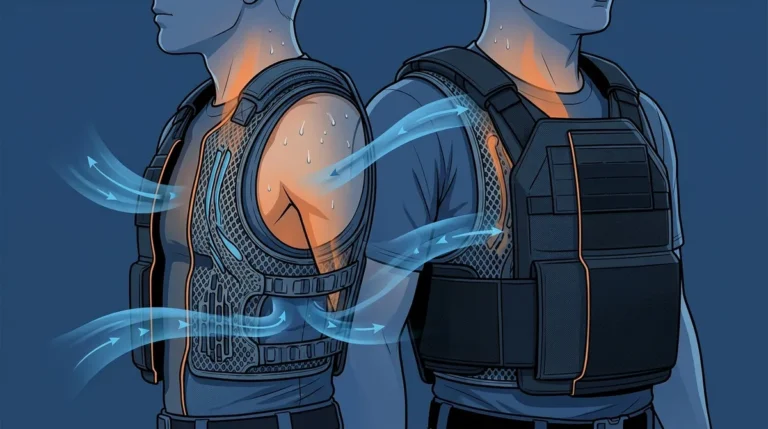
Poor body armor airflow causes heat fatigue that slows reaction time and breaks focus during critical moments; ventilation vests create a physical gap between armor and skin to allow air circulation and moisture escape.
-
Active fan systems like Blufano provide the most reliable cooling for extreme heat and high-intensity work with 8-32 hour battery life, while passive mesh or inflatable vests work well for moderate heat environments and lighter-duty use.
-
Ventilation vests must be worn over a moisture-wicking undershirt and directly under armor with a snug (not tight) fit to maintain the airflow gap; proper placement and inflation on-demand maximizes cooling effectiveness throughout your shift.
-
Adding a quality ventilation vest doesn’t compromise armor protection and may actually improve it—the Maxx-Dri Vest 4.0 reduced backface deformation by 9.9% in NIJ-certified testing while creating essential cooling airflow.
-
Improved body armor airflow delivers measurable performance benefits: reduced heat fatigue, healthier skin (fewer rashes and infections), better posture and less pain, extended gear lifespan, and sharper overall performance during long shifts.
-
Key selection factors include weight (under 10 oz preferred), 360-degree coverage, anti-microbial properties, battery life for active systems, and compatibility with your current armor setup and department guidelines.
If you wear body armor every day, you already know the struggle. Heat builds up fast. Sweat soaks through your uniform. By mid-shift, you feel like you’re wrapped in a sauna. Poor body armor airflow is one of the biggest comfort challenges for law enforcement, military personnel, security professionals, and first responders. It’s not just uncomfortable — it’s a real safety issue. Heat fatigue slows your reaction time and breaks your focus when you need it most.
The good news? You don’t have to just tough it out. In 2026, there are smart, proven solutions that create real airflow under your armor. This guide walks you through everything you need to know — from understanding why heat builds up to choosing the right ventilation vest. Whether you’re a patrol officer logging 12-hour shifts or a soldier in a high-heat deployment, this guide is for you.
Why Body Armor Traps Heat and Moisture
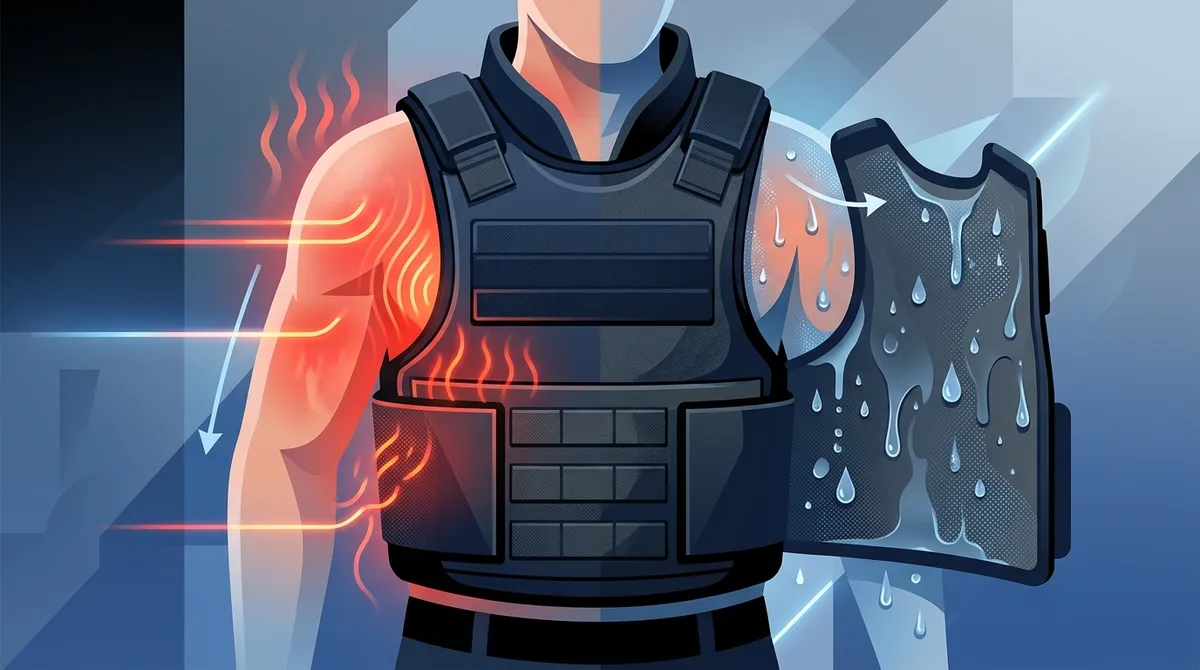
Body armor is designed to protect you, not breathe. Most soft armor and plate carriers press tightly against your chest, back, and sides. This contact blocks natural airflow and creates a sealed pocket of warm, humid air. Your body sweats to cool itself, but that moisture has nowhere to go. The result? A wet, hot, uncomfortable experience that wears you down over time.
According to the OSHA Heat Stress Guide, prolonged heat exposure can cause serious health risks including heat exhaustion and heat stroke — even in trained professionals. Wearing body armor significantly increases that risk by reducing the body’s ability to cool itself naturally.
The fix isn’t to remove your armor. It’s to create space and airflow between your body and the gear. That’s exactly where ventilation vests come in. You can learn more about the basics of what vest ventilation is and why you need it before diving deeper into solutions.
How Ventilation Vests Improve Body Armor Airflow
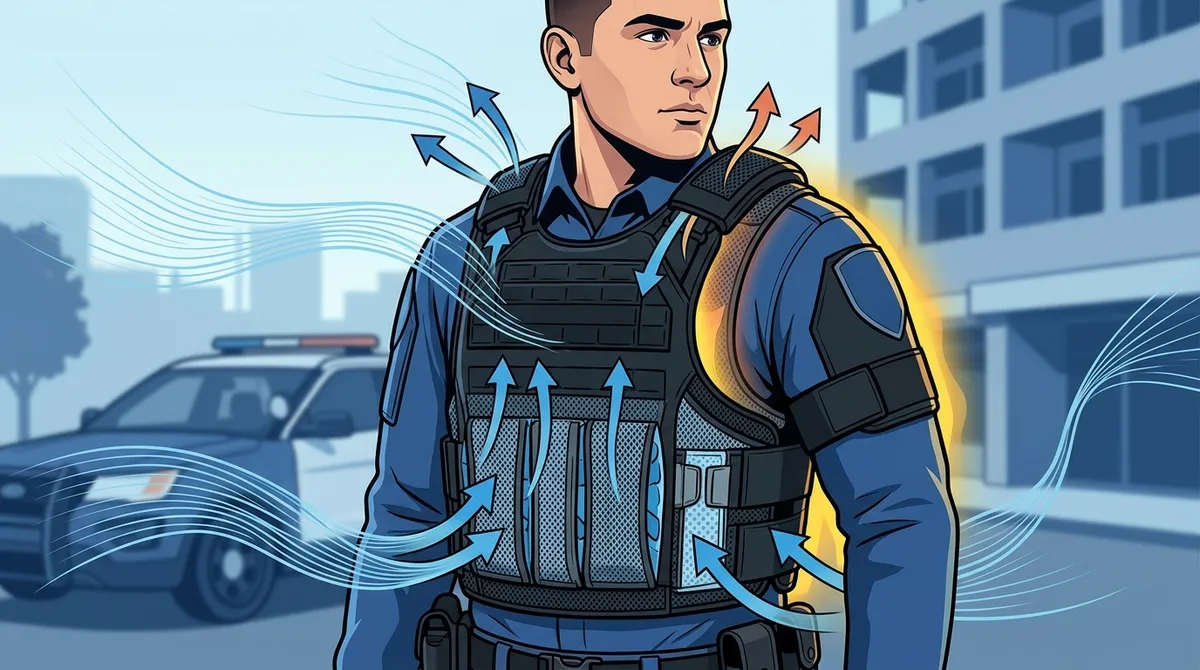
A ventilation vest fits under your body armor and creates a physical gap between the armor and your skin. This gap allows air to move freely, carrying heat and moisture away from your body. Think of it like opening a window in a stuffy room — even a small amount of airflow makes a huge difference.
The best ventilation vests create a full 360-degree separation around your torso. This means hot, humid air escapes from all sides, not just one. Some systems rely on passive airflow through breathable mesh materials. Others, like the Blufano active fan system, use a powered fan to actively push fresh air under your armor continuously.
Here’s a quick look at how different ventilation approaches compare:
| Ventilation Type | How It Works | Best For | Cooling Level |
|---|---|---|---|
| Passive Mesh Vest | Creates air gap with breathable mesh | Moderate heat environments | Moderate |
| Inflatable Vest | Lifts armor off body using air pockets | Long shifts in variable heat | Moderate to High |
| Active Fan System | Powered fan circulates fresh air continuously | Extreme heat, high-intensity work | High |
| Evaporative Panels | Air channels mimic AC by expelling hot air | Dry, hot climates | Moderate to High |
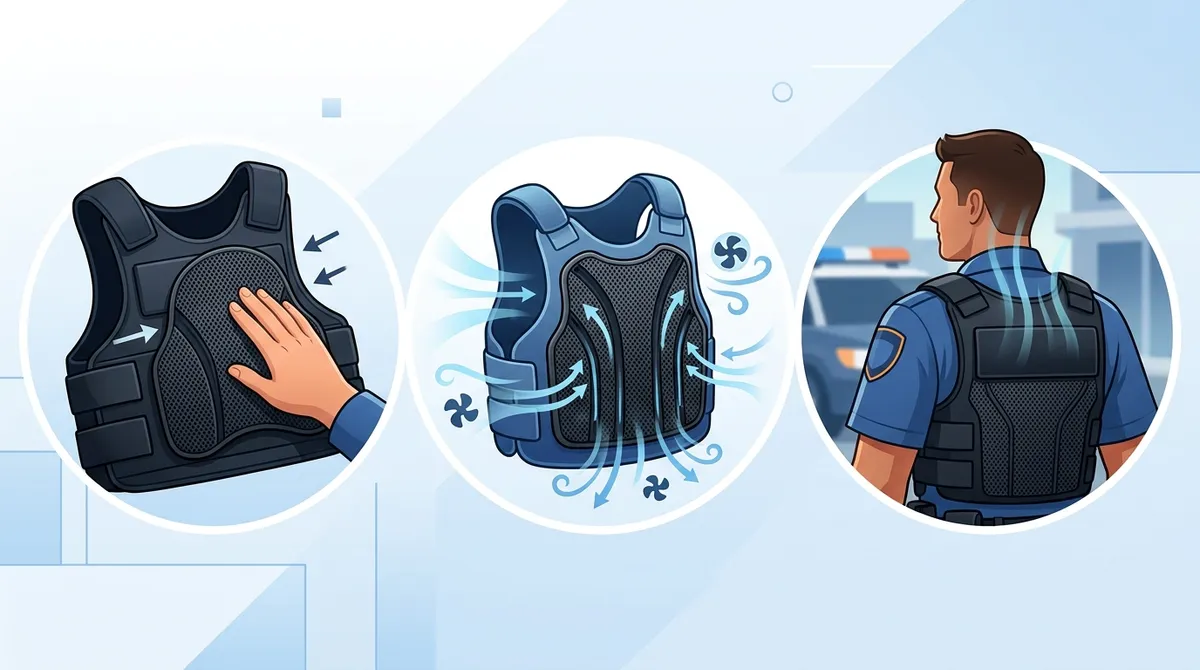
Step-by-Step: How to Improve Body Armor Airflow
Ready to stop sweating through every shift? Follow these steps to set up a better airflow system under your armor. Each step builds on the last to give you the most effective cooling possible.
- Assess your current setup. Check how your body armor fits against your body. Is there any gap at all, or does it press directly against your chest and back? If it’s flat against your skin with zero separation, airflow is near zero too.
- Choose the right ventilation solution. Pick a vest or panel that suits your environment and activity level. For high-heat operations or long shifts, an active fan system provides the most reliable relief. For lighter-duty use, a quality mesh or inflatable vest works well.
- Wear your ventilation vest correctly. Most ventilation vests go over your undershirt and directly under your body armor. A snug but not tight fit is key — too loose and it shifts around, too tight and it restricts the airflow gap you’re trying to create.
- Inflate or activate your system. If you’re using an inflatable vest like the BluHalo ventilation vest, use the small pump to inflate it on demand. It lifts your armor up to 1.5 inches off your body, creating a meaningful cooling air gap that makes a real difference.
- Adjust throughout your shift. Your body temperature changes during the day. Inflate more during high-activity periods and deflate when you’re in a cooler environment. Active systems like the Blufano allow you to adjust fan speed with a simple control knob.
- Check fit and maintenance regularly. A ventilation vest only works well when it’s clean and properly fitted. Check for wear, wash as directed, and make sure anti-microbial properties remain effective over time.
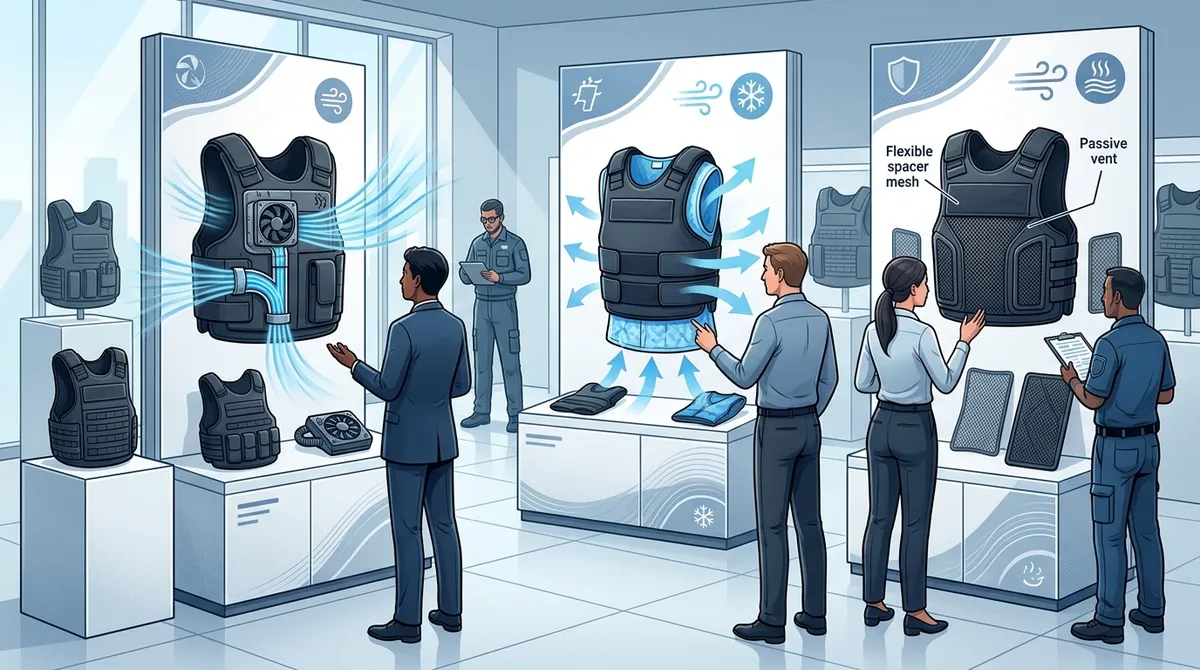
Comparing Top Body Armor Ventilation Products in 2026
There are several solid options on the market this year. Understanding the differences helps you make a smart choice. Here’s a side-by-side breakdown of key products, including specs from industry testing:
| Product | Weight | Key Feature | Best For |
|---|---|---|---|
| BluHalo Ventilation Vest | Under 7 oz | Inflatable on-demand, lifts armor 1.5″ | Officers on long patrol shifts |
| Blufano Fan System | Compact unit | Active fan, 8–32 hr battery, USB power bank | High-heat operations, extended duty |
| Maxx-Dri Vest 4.0 | 9 oz | Dual-chamber, anti-microbial, 9.9% backface deformation reduction | Daily patrol, tactical use |
| ICEVENTS Pontoons | Under 1 oz | Honeycomb design, 90% air by volume | Ultralight, versatile setups |
| Militaur Ventilation Vest | Lightweight | 4-point adjustability, 3D polyester mesh | Users needing custom fit |
The BluHalo lineup stands out for its combination of low weight, on-demand cooling, and active fan technology. The BluHalo vest was actually created by a Chicago police officer who understood firsthand what it feels like to sweat through a 12-hour shift in 95-degree heat. That real-world origin makes a difference in how the product is designed. You can also check out real user reviews from officers and professionals who’ve tested it in the field.
Key Benefits of Improving Body Armor Airflow
Still on the fence? Here’s what you actually gain when you fix your body armor airflow situation. These benefits have been reported consistently by officers, soldiers, and security professionals who made the switch:
- Less heat fatigue: Staying cooler means staying sharper. Your focus improves when your body isn’t working overtime to manage heat.
- Reduced skin irritation: Constant moisture against your skin causes rashes, chafing, and infections. A proper air gap keeps skin drier and healthier.
- Less back and neck pain: When you’re not twisting and shifting to find relief from heat, your posture improves and tension decreases.
- Cleaner armor: Better airflow means less sweat soaking into your vest lining, reducing odor and extending the life of your gear.
- Better overall performance: Comfortable officers and soldiers simply perform better. It’s that straightforward.
For a deeper dive into how ventilation protects officers specifically, check out this resource on body armor ventilation as a game changer for officers.
What to Look for When Choosing a Ventilation Vest
Not all ventilation vests are created equal. Here are the most important factors to consider before you buy:
- Weight: Every extra ounce matters when you’re on duty all day. Look for options under 10 oz, with ultralight choices under 2 oz if weight is a top priority.
- 360-degree coverage: Partial coverage leaves hot spots. Full-perimeter airflow is the gold standard.
- Anti-microbial properties: Your vest touches your skin constantly. Anti-microbial materials prevent bacteria and odor buildup.
- Active vs. passive cooling: Passive vests work through natural convection. Active systems like Blufano use a fan for consistent, powerful airflow regardless of your movement level.
- Battery life (for active systems): If you’re choosing a fan-driven system, make sure it lasts a full shift. The Blufano delivers 8–32 hours depending on fan setting.
- Compatibility: Your vest should work with your current armor, whether it’s a soft vest, plate carrier, or concealed system.
The guide to choosing the right body armor ventilation vest in 2026 breaks this down even further if you want a full comparison.
How to Wear a Ventilation Vest for Maximum Airflow
Even the best ventilation vest won’t perform well if it’s worn incorrectly. Fit and placement matter a lot. Here’s how to get it right:
- Start with a clean, moisture-wicking undershirt. This helps manage sweat before it reaches your vest.
- Put on your ventilation vest over the undershirt. Make sure it sits centered on your torso and covers both front and back panels.
- Secure side closures snugly. You want a fit that holds the vest in place without squeezing.
- Put on your body armor over the ventilation vest. The vest should create a slight lift or gap under the armor.
- Inflate (if applicable) or activate your fan system after the armor is secured.
- Check that nothing is bunching or folding — smooth contact between layers ensures consistent airflow.
Want to see it in action before you try it yourself? The BluHalo videos page has helpful demonstrations that walk you through the process visually.
Body Armor Airflow and Officer Safety Standards
It’s worth knowing that body armor performance standards exist for good reason. The Body Armor Standards from the National Institute of Justice ensure armor meets strict protection requirements. The good news is that adding a ventilation vest doesn’t compromise those standards — in fact, some products like the Maxx-Dri Vest 4.0 have been shown to reduce backface deformation by 9.9% in NIJ-certified lab tests, which means they can actually support armor performance.
Always verify that any ventilation product you add to your setup is compatible with your department’s equipment guidelines. Most ventilation vests are designed with compliance in mind, sitting passively between your body and armor without altering its protective properties.
Quick Reference: Airflow Solutions by Professional Role
| Professional Role | Primary Challenge | Recommended Solution |
|---|---|---|
| Patrol Officer | Long shifts, variable activity | BluHalo inflatable vest + Blufano fan |
| Military/Deployed Soldier | Extreme heat, heavy load | Active fan system with long battery life |
| Security Professional | Extended wear in various climates | Mesh or inflatable vest for all-day comfort |
| SWAT/Tactical Team | High-intensity bursts, heavy armor | Active ventilation with 360-degree coverage |
| Emergency Responder | Extreme heat, physical exertion | Combined vest + fan for maximum cooling |
For heat stress prevention tips beyond gear selection, read this article on how to prevent heat stress while wearing body armor. It’s a great companion resource for anyone working in demanding environments.
Conclusion: Take Control of Your Comfort on Every Shift
Body armor airflow isn’t a luxury — it’s a practical necessity for anyone who wears protective gear for a living. Heat fatigue is real, and it affects your performance, health, and safety. The right ventilation vest creates the air gap your body needs to stay cool, dry, and focused through even the longest, hottest shifts.
Whether you choose a lightweight passive mesh vest, an innovative inflatable option like the BluHalo ventilation vest, or the powerful active cooling of the Blufano fan system, you’re investing in your own well-being and performance. These aren’t gadgets — they’re professional tools built for people who rely on their gear every single day.
Ready to find the right solution for your setup? Browse the full BluHalo shop to explore your options, or reach out to the BluHalo team to get personalized guidance on the best body armor airflow solution for your role and environment. You deserve to feel comfortable doing the job that matters.
FAQs
Q: What is the best ventilation vest for improving body armor airflow?
A: The best choice depends on your specific needs! For on-demand cooling during long patrol shifts, the BluHalo inflatable vest is a fantastic lightweight option. If you need continuous, powered airflow during high-heat operations, the Blufano active fan system with its 8–32 hour battery life is tough to beat.
Q: Does adding a ventilation vest under body armor reduce its protective performance?
A: Not at all — in fact, some ventilation vests can actually support armor performance. The Maxx-Dri Vest 4.0, for example, achieved a 9.9% reduction in backface deformation in NIJ-certified lab testing. Always check compatibility with your department’s equipment guidelines to be safe.
Q: How do I properly wear a ventilation vest for the best body armor airflow?
A: Wear your ventilation vest over your moisture-wicking undershirt and directly under your body armor. Make sure it fits snugly but not tightly — you want a consistent gap, not a bunched-up layer. Inflate or activate your fan system after securing your armor for the best results.
Q: Can body armor airflow problems lead to health issues?
A: Absolutely, and this is exactly why it’s so important to address! Poor airflow under body armor traps heat and moisture, which can lead to heat fatigue, skin rashes, infections, and in serious cases, heat exhaustion. OSHA recognizes heat stress as a significant occupational hazard, especially for professionals in physical roles.
Q: How long does the Blufano active fan system last on a single charge?
A: The Blufano is built to go the distance with you! It runs between 8 and 32 hours depending on the fan speed setting you choose. It also features a built-in 10,000mAh power bank, so you can charge USB devices while staying cool on duty — talk about a two-for-one deal!