Key Takeaways
-
Heat buildup under body armor impairs cognitive function, slowing reaction times and decision-making abilities—cooling vests measurably reduce this risk by keeping core temperatures down during shifts.
-
Passive ventilation vests like BluHalo (under 7 oz, no battery) suit standard patrol shifts, while active fan systems (8-32 hour runtime) are better for long shifts in extreme heat or tactical operations.
-
Research shows cooling vests reduce sweat loss by up to 191 grams and maintain near-normal body temperatures for up to 100 minutes, directly improving officer alertness and performance.
-
Compatibility with your specific plate carrier or armor setup is critical—poorly fitting cooling gear can shift or bunch, making proper fit verification before purchase essential.
-
Many officers combine passive and active cooling technologies for flexibility: using lightweight passive vests daily and switching to fan-powered systems during heat waves or extended operations.
-
Weight under one pound and easy inflate/deflate or fan controls are key features that ensure officers actually use their cooling vests consistently rather than abandoning them as too cumbersome.
Picture this: it’s July, the heat index is pushing 100 degrees, and you’ve got another six hours left on your shift. Your body armor feels like a wool blanket wrapped around your torso, sweat is pooling everywhere, and your focus starts to slip. If this sounds familiar, you’re not alone. Thousands of officers across the country deal with this exact struggle every single day, and it’s a real safety issue, not just an inconvenience.
That’s where a cooling vest for police comes in. These aren’t your grandpa’s cooling towels or ice packs shoved down a collar. Today’s ventilation vests are smart, lightweight tools built to work with your existing armor, not against it. They create airflow, pull moisture away from your skin, and help release the heat trapped between your body and your vest.
In this guide, we’ll walk through exactly how these vests work, what separates a great one from a mediocre one, and why so many officers are switching to ventilation-based cooling instead of just toughing it out. We’ll keep things simple and practical, because you’ve got better things to do than wade through technical jargon.
What Exactly Is a Cooling Vest for Police Officers?
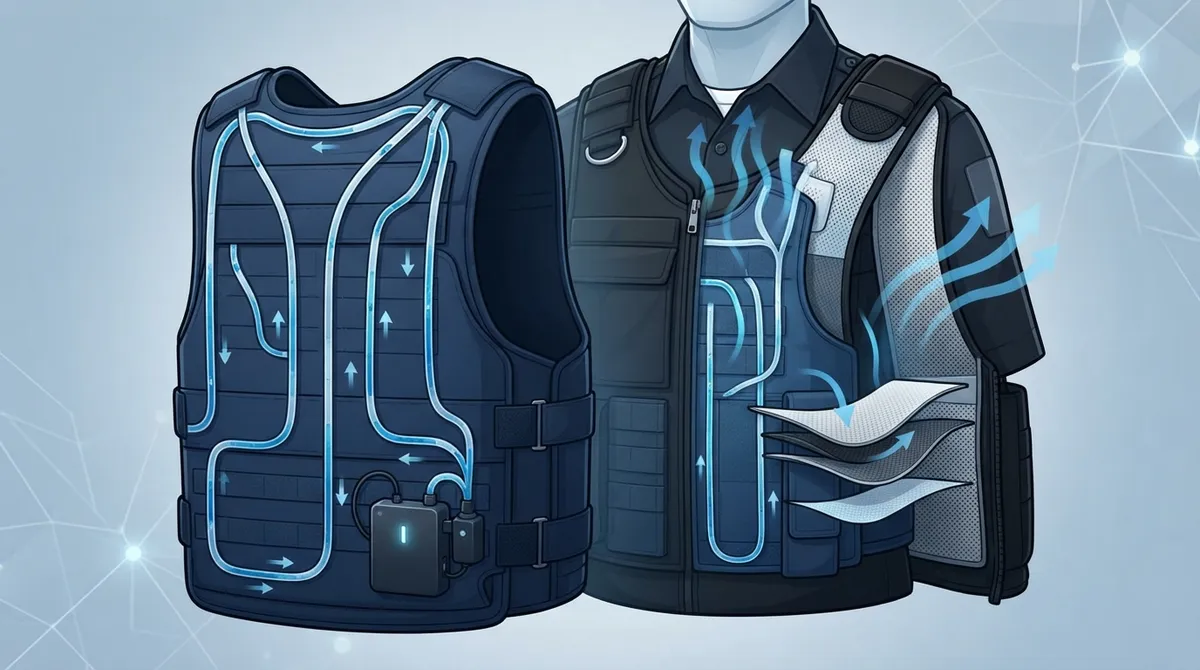
A cooling vest for police is a lightweight accessory worn underneath body armor or a plate carrier. Its job is simple: create space and airflow between your skin and your gear. This helps reduce sweat buildup, trapped heat, and the fatigue that comes with both.
Most people lump these products into two camps. There are passive ventilation vests, which use mesh or spacer material to hold your armor slightly away from your body. Then there are active systems, which use small fans to push fresh air through that gap continuously.
Both approaches aim for the same goal. They want you cooler, drier, and more comfortable so you can stay sharp and focused during long shifts. If you’re curious about the science, our article on what body armor vent is and why you need one breaks it down further.
Passive Ventilation Vests: Simple and Reliable
Passive vests use a 3D mesh or spacer structure. This design lifts your armor away from your body just enough to let air move naturally. There’s no battery, no charging, and nothing to break.
The BluHalo Ventilation Vest is a great example of this approach done right. It weighs under 7 ounces and creates a 1.5-inch air gap when inflated, giving your skin room to breathe. Officers simply attach it to their vest with Velcro, inflate it with a small pump when they need cooling, and deflate it with the push of a button when it’s not needed.
Active Cooling Systems: Fan-Powered Relief
Active systems take things a step further by adding small fans that continuously circulate air. The Blufano fan system, for instance, offers an advertised runtime of 8 to 32 hours on a single charge, powered by a 10,000mAh power bank.
This kind of continuous airflow can be a game-changer during long shifts in extreme heat. Some models even double as a phone charger or hands-free flashlight, which is a nice bonus when you’re working overnight patrol.
Why Heat Buildup Under Body Armor Is a Real Problem
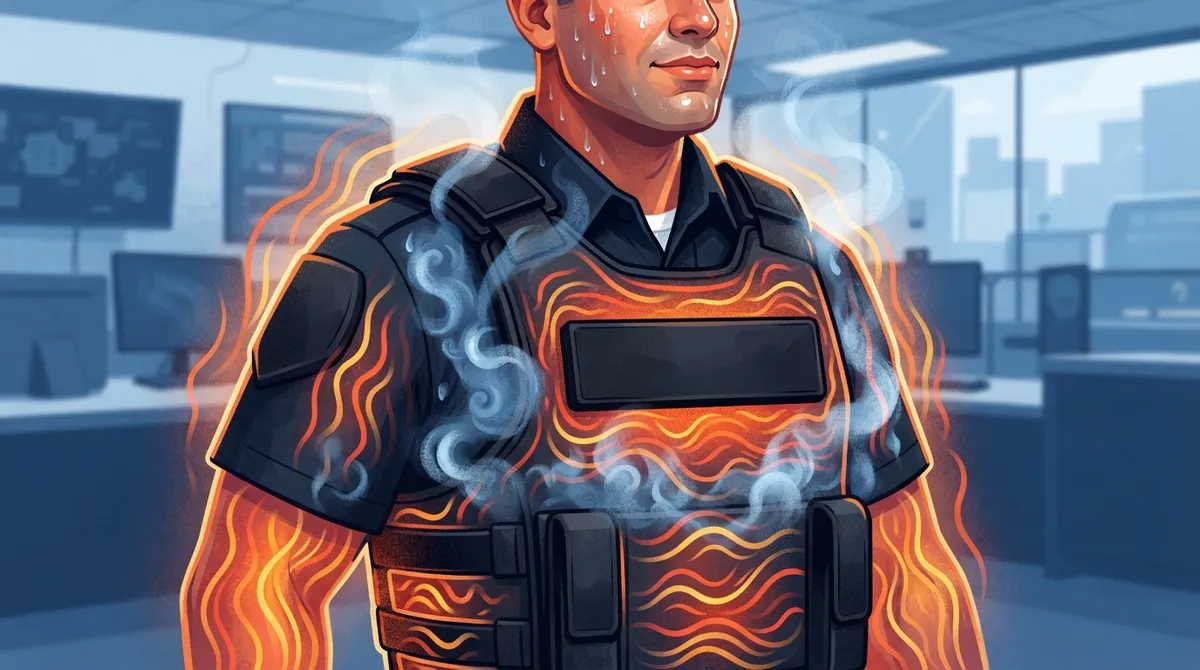
Body armor is designed to protect you, not to breathe. That’s just physics. The dense materials that stop bullets also trap heat and moisture against your skin like a sauna suit.
According to the OSHA Heat Stress Guide, prolonged exposure to heat while wearing protective gear can lead to serious health risks, including heat exhaustion and heat stroke. For officers working 8 to 12-hour shifts, this isn’t a minor discomfort. It’s a genuine occupational hazard.
A widely cited study covered by ScienceDaily found that a jogger wearing a conventional garment lost 544 grams of sweat during testing, while a cooling vest reduced that sweat loss by 191 grams. That’s a meaningful difference when you’re trying to stay alert and hydrated on duty.
More recent research backs this up too. A 2026 study published in PMC found that a carbon-based cooling vest reduced physiological and perceptual heat strain, keeping core and skin temperatures similar to a no-PPE condition for up to 100 minutes. That’s real, measurable relief during the hottest parts of a shift.
The Hidden Cost of Overheating on Duty
When your body overheats, your brain doesn’t work as well either. Reaction times slow down. Decision-making gets fuzzy. Irritability creeps in, which nobody wants when de-escalating a tense situation.
Heat stress also increases the risk of dehydration, muscle cramps, and fatigue-related mistakes. If you’ve ever felt foggy-headed after standing in the sun for hours, you already know how real this is. Learning how heat affects the minds of law enforcement officers can help you understand why cooling gear isn’t just a comfort item. It’s a performance tool.
Comparing Popular Police Cooling Vest Options
Not all cooling vests are built the same way. Some rely on cold packs, others on fans, and some on simple airflow design. Here’s a quick comparison to help you understand the landscape.
| Vest Type | Cooling Method | Runtime/Duration | Weight | Best For |
|---|---|---|---|---|
| BluHalo Ventilation Vest | Passive air-gap inflation | On-demand, no battery needed | Under 7 oz | Daily patrol, quick comfort boosts |
| Blufano Fan System | Active fan-driven airflow | 8-32 hours per charge | Lightweight, self-contained | Long shifts, extreme heat |
| Cold Pack Vests | Ice or gel packs | Up to 4 hours per pack | Heavier when packed | Short bursts of intense heat |
As you can see, each style has its strengths. Many officers actually combine approaches, using a passive vest as their everyday solution and switching to an active fan system during heat waves or extended details.
Passive vs. Active: Which One Should You Choose?
This is one of the most common questions we hear. The honest answer depends on your role and typical shift length.
- Patrol officers working standard shifts often love passive vests because there’s nothing to charge or maintain.
- SWAT and tactical teams operating in high-intensity conditions may prefer active fan systems for continuous cooling during extended operations.
- Security professionals working outdoor posts for hours at a time often benefit most from combining both technologies.
- Emergency responders in extreme heat, like firefighters near hot zones, may need the strongest airflow available.
Our detailed breakdown on passive vs. active cooling for police body armor dives deeper into this decision if you want more guidance.
Key Features to Look for in a Ventilation Vest
Shopping for a cooling vest can feel overwhelming with so many options out there. Here’s what actually matters when you’re comparing products.
- Weight: Anything under a pound is ideal, since you don’t want extra bulk slowing you down.
- Compatibility: The vest should fit under your existing plate carrier or bullet-resistant vest without adjustment.
- Ease of use: Look for simple inflate/deflate mechanisms or intuitive fan controls.
- Durability: Materials like double-layer polyethylene hold up better to daily wear and tear.
- Battery life (for active systems): Longer runtimes mean fewer mid-shift charging headaches.
- Odor and moisture control: A good vest should reduce that swampy, sweaty feeling by the end of your shift.
The Body Armor Standards published by the National Institute of Justice remind us that comfort and wearability directly affect whether officers consistently wear their protective gear. A vest that’s miserable to wear all day is a vest that might get skipped, and that’s a real safety concern.
Compatibility Matters More Than You Think
One mistake we see often is officers buying a cooling accessory that doesn’t play nice with their specific armor setup. Before purchasing, check that the vest is designed to slide under your carrier without shifting or bunching.
Products designed specifically with law enforcement in mind, like those found in our shop, are built with this compatibility in mind from the ground up. That’s a big reason officers trust BluHalo and Blufano over generic cooling gear.
Real Stories From Officers Who Made the Switch
Numbers and specs are great, but sometimes it helps to hear from people who’ve actually lived through a Chicago summer in full gear. BluHalo was originally created by a Chicago police officer who got tired of finishing 12-hour shifts drenched in sweat during 95-degree days.
That firsthand frustration led to a product built specifically for the realities of patrol work. Officers using it report noticeably less sweat, better comfort during long details, and an easier time staying focused when things get tense. You can browse more experiences on our reviews page to see what other professionals are saying.
Why Everyday Heroes Trust BluHalo and Blufano
BluHalo and Blufano were both designed with input from people who actually wear body armor for a living, not just engineers guessing at comfort needs. That real-world testing shows in the details, from the low-profile design to the intuitive controls.
Whether you need the simplicity of an on-demand air gap or the continuous relief of a fan system, both products are positioned as top picks in the ventilation vest category. You can even bundle them together at a discount for maximum cooling performance across different duty scenarios.
How to Get Started With a Cooling Vest
Ready to stop dreading hot weather shifts? Here’s a simple path forward.
- Assess your typical shift length and climate. Longer shifts in extreme heat may call for active cooling.
- Check your current armor setup. Make sure whatever you choose fits your plate carrier or vest style.
- Decide between passive and active systems. Or consider bundling both for maximum flexibility.
- Order your gear and test it during a lower-stakes shift first. This lets you get comfortable with inflation, deflation, or fan controls before relying on it during a critical situation.
If you want to see these products in action before buying, check out our videos page for demonstrations. You can also learn more about the people behind these products on our about us page.
Final Thoughts on Choosing the Right Cooling Vest
Staying cool under body armor isn’t a luxury. It’s a practical necessity that affects your health, focus, and performance on the job. Whether you choose a passive design like BluHalo or an active fan system like Blufano, the goal is the same: less sweat, less fatigue, and more comfort during every shift.
You’ve got a tough job already. Don’t let overheating make it harder than it needs to be. If you’re ready to find the right cooling solution for your duty gear, reach out to our team today and we’ll help you find the perfect fit for your needs.
FAQs
Q: What is the best cooling vest for police officers?
A: It really depends on your shift length and climate! Many officers love the BluHalo Ventilation Vest for its lightweight, on-demand comfort, while others prefer the Blufano fan system for continuous airflow during long, hot shifts. Honestly, some folks combine both for the best of both worlds.
Q: How does a ventilation vest work under body armor?
A: Ventilation vests create a small air gap between your skin and your armor, allowing heat and moisture to escape instead of getting trapped. Some use passive mesh spacers, while others add small fans to keep air moving continuously throughout your shift.
Q: Are cooling vests safe to wear with bulletproof vests?
A: Yes, absolutely! Products like BluHalo and Blufano are specifically designed to fit under body armor without interfering with its protective function. They’re built to be lightweight and low-profile so they work alongside your gear, not against it.
Q: Do police cooling vests need batteries?
A: Not always! Passive vests, like BluHalo, use simple air-gap technology that doesn’t require charging or batteries at all. Active systems, like Blufano, do use a rechargeable power bank, but it can last anywhere from 8 to 32 hours depending on the fan setting.
Q: Can a cooling vest help reduce heat exhaustion during duty?
A: It certainly can help! Research shows that cooling vests can reduce sweat loss and physiological heat strain, keeping you more comfortable and alert during long, hot shifts. While no product replaces proper hydration and breaks, a good ventilation vest is a smart layer of protection against heat-related fatigue.