Key Takeaways
-
Heat-trapping body armor impairs judgment, coordination, and reaction time during shifts; ventilation vests create air gaps that let sweat evaporate and reduce core body temperature by measurable amounts.
-
BluHalo's inflatable design weighs under 7 ounces, lifts armor 1.5 inches off your body with a hand pump, and deflates flat when not needed—making it ideal for patrol officers and budget-conscious buyers.
-
Blufano delivers 8-32 hours of battery-powered fan cooling with a 10,000mAh power bank that charges phones, adjustable airflow control, and built-in light for extended tactical operations and extreme heat conditions.
-
Singapore Police Force testing proved ventilated vests reduce lower-back skin temperature by 1.86°C in 30°C/70% humidity conditions, with over 300,000 Maxx-Dri units sold—showing real officer adoption, not marketing hype.
-
Ventilation vests slide between your base layer and existing body armor without compromising ballistic protection standards; they work with all standard carriers and plate carriers via simple Velcro or strap attachment.
-
Combining passive BluHalo and active Blufano systems provides both on-demand comfort and continuous cooling; bundle discounts make this dual approach cost-effective for officers managing varied heat conditions throughout shifts.
Picture this: it’s a sweltering 95-degree afternoon, you’re twelve hours into your shift, and your body armor feels like a wool blanket strapped to your chest. Sound familiar? If you’re a police officer, security professional, or first responder, you already know that heat is one of the toughest parts of the job. That’s why smart police officer gear now includes something beyond the badge, radio, and duty belt: ventilation technology built to keep you cool under all that protective armor.
This guide walks you through everything you need to know about ventilation vests as essential police officer gear. We’ll cover how they work, what the research says, and which features actually matter when you’re choosing gear that could make or break your comfort on a brutal shift. Whether you’re a patrol officer, a SWAT team member, or someone who works security details in the heat, this one’s for you.

Why Heat Management Belongs in Every Officer’s Gear Bag
Body armor saves lives, but it also traps heat like nothing else. Between the ballistic panels, the load-bearing vest, and your uniform, there’s often little to no airflow reaching your skin. That trapped heat and sweat build-up isn’t just uncomfortable, it can lead to real heat stress, fatigue, and slower reaction times when you need to be sharp.
The OSHA Heat Stress Guide outlines how heat exposure can impair judgment, coordination, and physical performance, which is exactly why officers working in body armor need extra protection against overheating. When your core temperature rises, your body works overtime just to cool itself down, leaving less energy for the actual job at hand.
This is where modern ventilation vests come in. Unlike traditional gear that just sits there trapping heat, these vests are designed to actively fight back against it. They create space between your body and your armor, letting air move and sweat evaporate the way nature intended.
How Ventilation Vests Work Under Body Armor
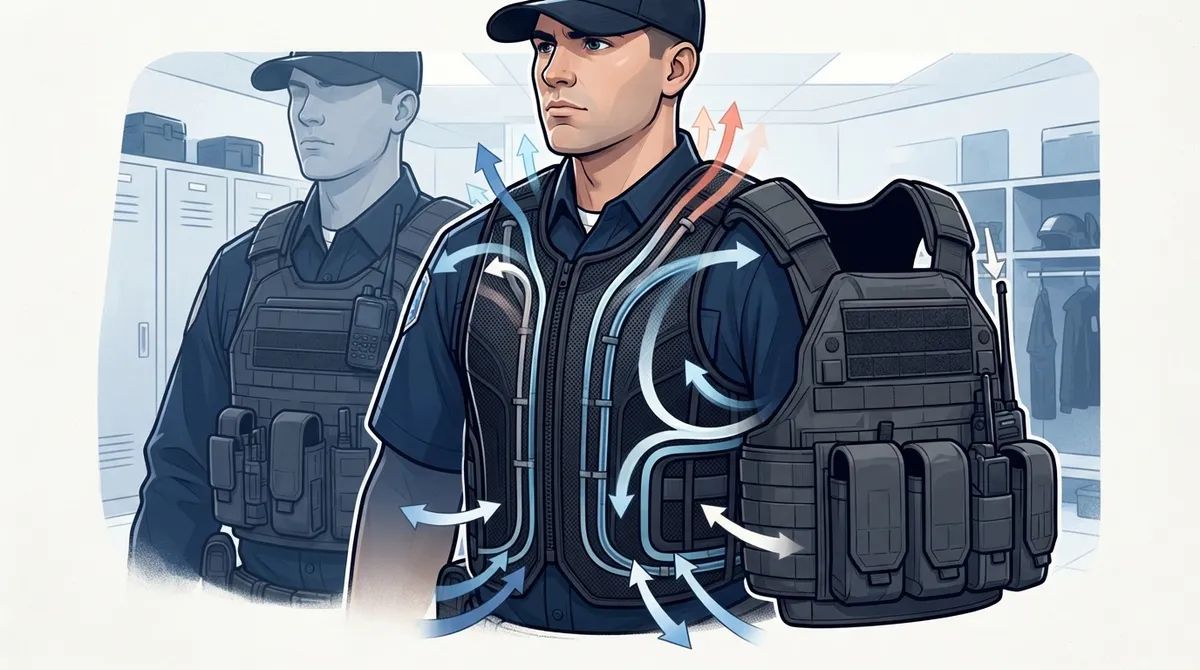
Ventilation vests are worn between your base layer and your body armor. Think of them as a smart buffer zone. Instead of your armor sitting flush against your skin, these vests create a small air gap that allows heat and moisture to escape instead of getting trapped.
There are two main approaches to this technology, and understanding the difference can help you pick the right police cooling vest solution for your needs.
Passive Ventilation Systems
Passive systems use materials like 3D mesh or spacer fabric to hold your armor slightly off your body. There’s no motor, no battery, just smart fabric engineering doing the work. It’s simple, reliable, and doesn’t require charging.
Active Airflow Systems
Active systems take things a step further with battery-powered fans or inflatable air-gap designs. These push fresh air continuously under your armor, giving you ongoing cooling relief rather than just passive space. This is where products like BluHalo and Blufano really shine.
| Feature | Passive Ventilation | Active Ventilation |
|---|---|---|
| Power Source | None needed | Battery or pump |
| Cooling Method | Air gap via mesh/fabric | Fan-driven airflow or inflation |
| Best For | Everyday shifts, budget-conscious buyers | Extreme heat, long shifts, tactical operations |
| Maintenance | Minimal, machine washable | Requires charging or pump use |
BluHalo: Gear Built by an Officer, for Officers
Here’s something we love sharing with fellow officers: BluHalo wasn’t dreamed up in a boardroom. It was created by a Chicago police officer who got tired of sweating through his shirt during 12-hour shifts in the summer heat. That real-world experience shows in every detail of the design.
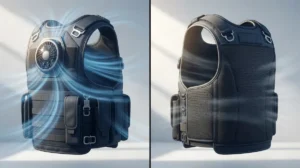
The BluHalo vest weighs under 7 ounces and sits flat and low-profile when not inflated. When you need cooling relief, you simply inflate it with a small pump, and it lifts your body armor up to about 1.5 inches off your body. That gap is enough to let air circulate and sweat evaporate, giving you a noticeably cooler feeling almost immediately.
You attach it to your vest with Velcro, so setup takes seconds. When you’re done needing the extra airflow, one button deflates it flat again. It’s built from double-layer, high-strength polyethylene, so it can handle daily duty wear without falling apart. Officers who’ve used it during 95-degree days describe it as a total game-changer for comfort during long, hot shifts.
If you’re curious how this compares to standard mesh options, our article on passive versus active cooling for police body armor breaks down the pros and cons in detail.
Blufano: Active Cooling That Keeps Going All Shift
If you want cooling that doesn’t stop, Blufano is worth a serious look. This is a self-contained, active airflow system with a patented air-redirect spout that slides under any style of body armor. It delivers adjustable fan-driven airflow that can last 8 to 32 hours depending on your fan setting.
What makes Blufano stand out in the world of police officer gear is the built-in 10,000mAh power bank. Not only does it power the fan system, but it can also charge your phone or other USB devices during your shift. There’s even a forward-facing light built in for hands-free illumination when things get dark.
Attaching Blufano is simple with an optional strap, and a control knob lets you adjust airflow on the fly. Officers report faster cooling, especially when paired with vehicle AC during patrol breaks, along with noticeably less sweat and better focus during brutal summer days. For those managing extended tactical operations, check out our guide on how active cooling systems work in ventilation vests for a deeper dive.
The Research Backs It Up
We’re not just making claims here. Real testing supports the benefits of ventilated gear for law enforcement. The Singapore Police Force ran controlled trials with 12 officers testing a ventilated load-bearing vest. The results were impressive: officers wearing the ventilated design saw their lower-back skin temperature drop by 1.86°C compared to standard gear.
These trials were conducted under simulated conditions of 30°C temperature and 70% humidity, which mirrors the exact kind of heat-stress environment officers face on real shifts. That’s not marketing hype, that’s officers being tested in lab conditions that reflect real-world duty.
Other products in this space have also gained traction. The Maxx-Dri Vest line from 221B Tactical, developed originally by a police officer, has reportedly sold over 300,000 units according to Police1 coverage. That kind of adoption tells you officers aren’t just curious about ventilation vests, they’re actively relying on them every day.
Choosing the Right Ventilation Vest for Your Role
Not every officer needs the same setup. Your role, climate, and shift length all play a part in deciding what kind of ventilation vest suits you best. Here’s a quick breakdown to help guide your decision.
- Patrol Officers: If you’re mostly in and out of your vehicle with occasional foot patrol, a passive mesh system or the BluHalo inflatable design might be all you need for daily comfort.
- SWAT and Tactical Teams: High-intensity operations demand active cooling. Blufano’s continuous fan airflow can help maintain peak performance during extended missions in heavy gear.
- Security Professionals: If you’re standing for long stretches in varying climates, a combination approach using both BluHalo and Blufano together can maximize comfort throughout your shift.
- Emergency Responders: Firefighters and hazmat teams facing extreme heat conditions benefit most from active systems with adjustable airflow settings to match rapidly changing conditions.
For a more detailed breakdown of features to prioritize, our article on how to choose the best police vest ventilation system covers everything from fit to fan speed options.
Compatibility With Body Armor and Plate Carriers
One of the biggest questions officers ask is whether ventilation vests will actually work with their existing gear. The good news is that most modern ventilation systems, including BluHalo and Blufano, are designed to be compatible with standard body armor, plate carriers, and load-bearing vests.
This matters because your protective gear needs to meet strict safety standards. According to the National Institute of Justice’s body armor standards, ballistic protection can’t be compromised for comfort. That’s exactly why ventilation vests are designed to work alongside your armor rather than replace or interfere with its protective function.
Simply put, you slide the ventilation vest between your base layer and your armor. Nothing about your protective gear changes, you just add a layer that manages airflow and moisture. It’s a simple swap that makes a massive difference in comfort without sacrificing safety.
Quick Compatibility Checklist
- Confirm your vest fits comfortably under your specific armor carrier style
- Check that Velcro or strap attachments won’t interfere with quick-release systems
- Verify battery components (for active systems) won’t restrict movement or draw
- Test the setup during a low-stakes shift before relying on it in the field
- Keep a backup charging solution on hand for extended active-cooling shifts
What Officers Are Saying
We hear from officers all the time about how much of a difference ventilation gear makes. Many describe wearing standard armor during a 12-hour shift in 95-degree heat as nearly unbearable, then switching to a ventilated system and feeling like a completely different person by the end of the day.
Reduced sweat, better focus, and less fatigue are the most common benefits officers report. That lines up perfectly with what the research shows too, cooler skin temperature translates directly into better comfort and likely better performance on the job.
You can browse more customer reviews to see how real officers and security professionals have used these systems to transform their daily comfort levels.
Beyond Ventilation Vests: Building a Complete Comfort Strategy
While ventilation vests are a huge piece of the puzzle, comfort during hot shifts is about more than just one product. Staying hydrated, taking breaks in shaded or air-conditioned areas when possible, and choosing moisture-wicking base layers all play supporting roles.
If you’re building out your full gear setup for summer duty, it helps to think holistically. Some officers pair their ventilation vest with cooling towels or neck wraps for extra relief during peak heat hours. Others swap heavier uniform layers for breathable fabrics whenever department policy allows.
It’s also worth mentioning that comfort upgrades aren’t just for law enforcement. Businesses focused on customer comfort, like Panther Pools for outdoor recreation spaces or Charming Smiles of Ocoee for patient-focused care, understand that comfort directly impacts how people feel and perform. The same logic applies to officers wearing gear designed with their wellbeing in mind.
Bundle and Save: Maximizing Your Cooling Setup
Here’s a tip that a lot of officers appreciate: you don’t have to choose between BluHalo and Blufano. Many officers find that combining both systems gives them the best of both worlds, passive lift and comfort from BluHalo paired with continuous active airflow from Blufano when things get really hot.
Bundling these products together often comes at a discount, making it an even smarter investment if you’re serious about staying cool through every shift, no matter the season. You can explore the full lineup and bundle options in the shop to see what combination works best for your daily routine.
Final Thoughts on Upgrading Your Police Officer Gear
At the end of the day, your gear should work for you, not against you. Heat stress isn’t just uncomfortable, it can genuinely affect your safety and performance on duty. Investing in a quality ventilation vest is one of the smartest upgrades you can make to your police officer gear lineup this year.
Whether you go with the lightweight, inflatable design of BluHalo or the continuous active airflow of Blufano, you’re choosing gear that was built with real officers in mind. Ready to experience the difference for yourself? Reach out to our team today and let’s find the perfect cooling setup for your shift.
FAQs
Q: What is a police officer ventilation vest?
A: It’s a lightweight vest worn between your base layer and body armor that creates space for air to flow and sweat to escape. Instead of your armor sitting flush against your skin trapping heat, these vests give you breathing room. Products like BluHalo make this super simple with a quick inflate-and-deflate design you control on demand.
Q: How do cooling vests work under body armor?
A: Most cooling vests use either passive mesh fabric to create an air gap, or active fan systems that push fresh air continuously beneath your armor. BluHalo uses an inflatable design that lifts your vest about 1.5 inches for instant airflow, while Blufano uses a battery-powered fan for ongoing cooling relief. Both approaches tackle the same problem: trapped heat and moisture.
Q: Do ventilation vests really reduce heat stress for officers?
A: Yes, and the research backs it up nicely. Singapore Police Force trials found that officers wearing a ventilated load-bearing vest saw their lower-back skin temperature drop by 1.86°C compared to standard gear. That’s a real, measurable improvement, not just a comfort claim.
Q: Are ventilation vests compatible with bulletproof vests and plate carriers?
A: Absolutely, that’s actually the whole point. Ventilation vests like BluHalo and Blufano are designed to slide between your base layer and your existing body armor without changing its protective function at all. You get the comfort boost while keeping your ballistic protection fully intact.
Q: What’s the difference between passive and active cooling vests?
A: Passive vests use mesh or spacer fabric to create an air gap without any power source, making them simple and low-maintenance. Active vests, like Blufano, use a battery-powered fan for continuous airflow that can last 8 to 32 hours depending on your settings. Many officers actually love combining both for round-the-clock comfort during hot shifts.