Key Takeaways
-
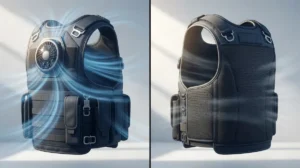
Ventilation vests create an air gap between skin and body armor to reduce heat buildup and sweat; passive systems use mesh spacers (no battery needed), while active systems add fans for continuous airflow during extreme heat or extended shifts.
-
Real testing by Singapore Police Force found ventilated vests reduced lower-back skin temperature by 1.86°C in 30°C heat and 70% humidity, demonstrating measurable improvements in comfort and focus during long patrol shifts.
-
Choose passive ventilation (BluHalo-style) for standard shifts in moderate climates at lower cost, or active cooling (Blufano-style) with 8-32 hour battery life for extreme heat, humidity, or 10-12 hour shifts requiring peak performance.
-
Quality ventilation gear should be lightweight, compatible with your specific plate carrier, durable for daily wear, and simple to attach or remove without adding bulk that compromises mobility during patrols.
-
Officers report significant reductions in sweat buildup, skin irritation, odor, and fatigue when using ventilation vests, leading to improved alertness and decision-making during hot-weather operations.
-
Ventilation vests aren't replacements for body armor but work alongside it; many officers use passive systems daily and switch to active cooling during heat waves, or bundle both options for maximum comfort year-round.
If you’ve ever finished a 12-hour shift drenched in sweat with your uniform sticking to your skin, you already know the truth. Body armor is a lifesaver, but it can also feel like wearing a portable sauna. That’s why so many officers, deputies, and security pros are turning to smarter police duty gear that actually fights the heat instead of trapping it.
Here’s the good news: you don’t have to choose between staying protected and staying comfortable. Ventilation vests have changed the game, giving officers a way to boost airflow under their armor without sacrificing coverage. But with so many options out there, from simple mesh spacers to fan-powered cooling systems, how do you know which one actually fits your shift?
In this guide, we’ll break down the two main approaches to cooling police duty gear, passive and active, so you can figure out which one matches your needs. We’ll also look at real testing data, key features to check, and answer some of the most common questions officers ask before buying. Let’s get you cooler, drier, and more comfortable on duty.
What Counts as Police Duty Gear for Cooling?
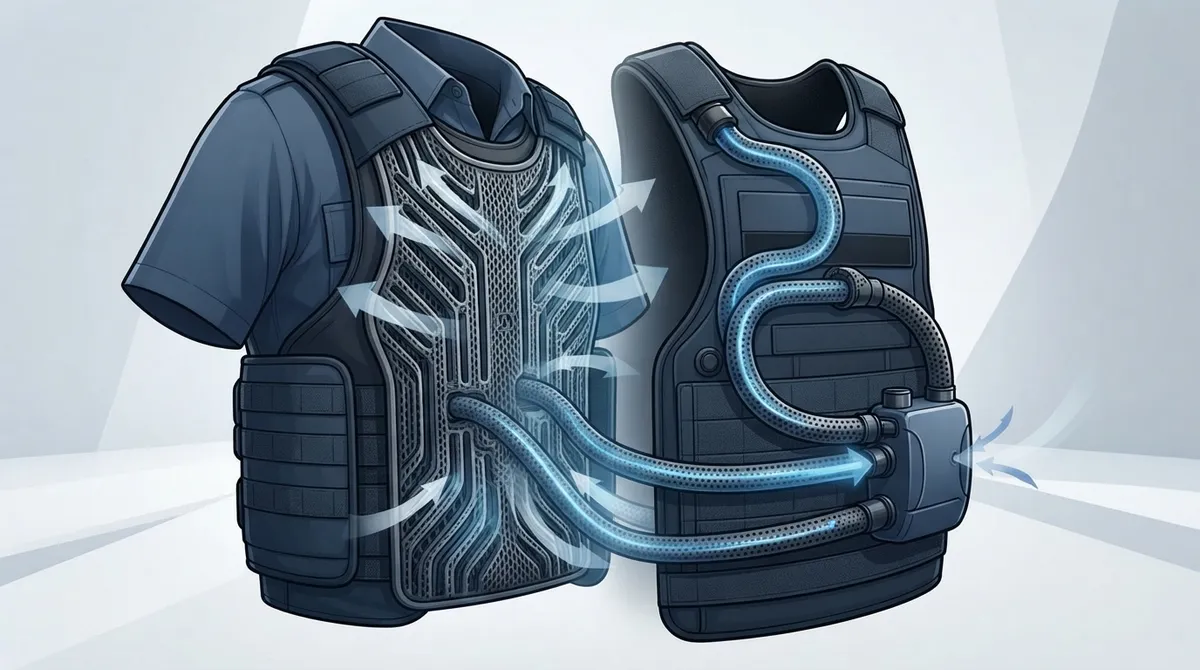
When we talk about police duty gear in the ventilation world, we mean anything worn under or with body armor to manage heat and sweat. This includes spacer vests, mesh liners, and active fan systems that sit between your skin and your body armor.
These products don’t replace your ballistic vest or plate carrier. Instead, they work alongside it, creating a gap where air can move and heat can escape. Think of it like the difference between wearing a plastic bag versus a breathable jacket. Both protect you from rain, but only one lets your body breathe.
Officers, military personnel, security guards, and emergency responders all face the same basic problem. Heavy protective gear traps body heat against the skin, and that heat has nowhere to go. Ventilation vests solve this by giving that trapped heat an exit route.
Passive Cooling: The Simple, Low-Maintenance Option
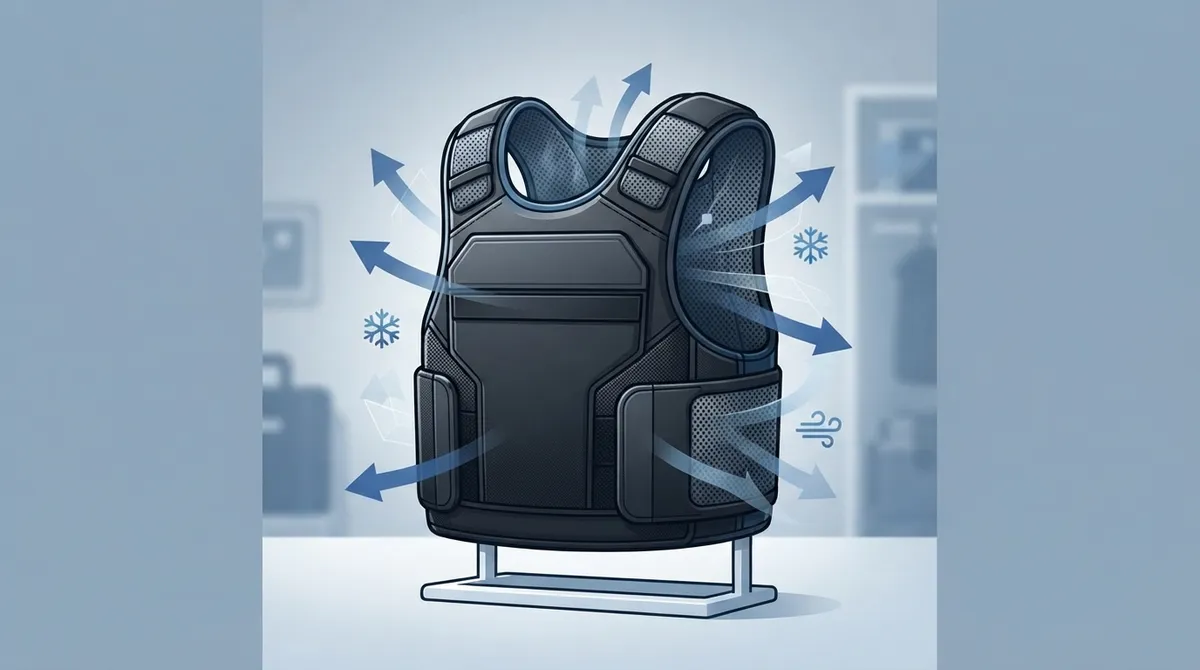
Passive ventilation systems use lightweight materials, usually mesh or a spacer fabric, to create separation between your body and your armor. There’s no battery, no fan, and nothing to charge. It’s cooling made simple.
These systems work by letting natural air movement do the work. As you walk, sit, or move around during patrol, small amounts of air flow through the gap and carry heat away from your skin. It’s not as powerful as active cooling, but it’s reliable and requires zero upkeep.
Benefits of Passive Ventilation Vests
- No batteries or charging needed, ever
- Extremely lightweight and low-profile under armor
- Simple to attach and just as simple to remove
- Lower price point compared to active systems
- Durable materials built for daily wear and tear
BluHalo’s passive vest is a great example of this approach done right. It weighs under 7 ounces and creates roughly a 1.5-inch air gap when inflated, giving your skin room to breathe. Officers can inflate it on demand with a small pump and deflate it instantly with a button when it’s not needed. You can read more about how it works on the BluHalo product page.
Active Cooling: Fan-Powered Relief for Extreme Heat
Active cooling systems take things a step further by adding a small fan, and sometimes a cooling pack, to keep air moving continuously. These systems are built for officers working long shifts in extreme heat or humidity, where passive airflow just isn’t enough.
Active units typically run on rechargeable batteries or power banks. Some products on the market claim runtimes between 8 and 32 hours depending on fan speed, while cooling-pack systems may last up to 4 hours per pack before needing a swap.
Benefits of Active Cooling Systems
- Continuous airflow instead of relying on movement alone
- Adjustable fan speeds to match conditions and comfort level
- Better performance during extreme heat or long shifts
- Some models double as USB power banks for other devices
- Added features like built-in lights for low-light situations
Blufano is a standout in this category. It’s a self-contained, fan-driven airflow system with a patented air-redirect spout that slides under nearly any style of body armor. It includes a 10,000mAh power bank that powers the fan and charges USB devices, plus a forward-facing light for hands-free visibility. You can check out the full details on the Blufano page.
Passive vs. Active: Side-by-Side Comparison
| Feature | Passive Ventilation (BluHalo) | Active Cooling (Blufano) |
|---|---|---|
| Power Source | None needed | 10,000mAh built-in power bank |
| Weight | Under 7 oz | Slightly heavier due to fan and battery |
| Runtime | Unlimited (no battery) | 8–32 hours depending on setting |
| Best For | Everyday patrol, moderate heat | Extreme heat, extended shifts |
| Maintenance | Minimal, no charging | Requires occasional recharging |
| Price Point | Lower cost, $60 | Higher cost, added features |
Both options solve the same problem in different ways. Some officers even use them together, wearing BluHalo for daily comfort and switching to Blufano during heat waves or double shifts. You can browse both in the shop and even bundle them at a discount.
How Well Does Police Duty Gear Cooling Actually Work?
This isn’t just marketing talk. Real-world testing backs up the benefits of ventilated duty gear. In 2026, the Singapore Police Force ran controlled trials with 12 officers wearing a ventilated load-bearing vest. Under conditions of 30°C and 70% humidity, the ventilated vest reduced lower-back skin temperature by 1.86°C compared to a standard setup.
That might not sound like a huge number, but for officers working outdoors in summer heat, every degree matters. Less heat buildup means less sweat, less fatigue, and better focus during critical moments. According to the OSHA Heat Stress Guide, prolonged exposure to high heat without relief can lead to serious health risks, including heat exhaustion and impaired decision-making.
Common Benefits Officers Report
- Noticeably less sweat buildup during long shifts
- Reduced skin irritation and rash under the vest
- Lower odor buildup from trapped moisture
- Improved focus and alertness in hot weather
- Better overall comfort during 10 to 12-hour shifts
If you want to dig deeper into why officers are making the switch, check out our article on why officers need a cooling vest for police duty.
What to Look for When Choosing Police Duty Gear
Not all ventilation vests are created equal. Here’s what to check before you buy.
Compatibility With Your Armor
Make sure the vest fits under your specific plate carrier or body armor setup. Most quality ventilation systems, including BluHalo and Blufano, are designed to work with a wide range of standard vests. Still, it’s smart to double-check sizing before committing.
Weight and Bulk
You don’t want to add extra bulk that makes your gear feel heavier or harder to move in. Look for lightweight designs that stay low-profile, even when active.
Battery Life (For Active Systems)
If you’re considering a fan-powered option, check the runtime. Longer shifts require longer battery life, so look for systems offering at least 8 hours on a single charge.
Ease of Use
Your gear should be simple to attach, adjust, and remove. Complicated setups waste time and add frustration during already busy shifts.
Durability
Duty gear takes a beating. Look for tough, high-tensile materials that can handle daily wear without breaking down.
For a deeper breakdown of features to prioritize, our guide on how to choose the best police vest ventilation system covers everything in detail.
Who Benefits Most From Ventilated Police Duty Gear?
While patrol officers are the most obvious audience, they’re far from the only ones who benefit.
- Law enforcement officers wearing body armor daily during long patrol shifts
- Military personnel operating in high-heat environments with tactical gear
- Security professionals standing guard for extended hours in varying climates
- Tactical and SWAT teams needing peak performance during high-intensity operations
- Emergency responders like firefighters and hazmat teams working in extreme heat
No matter which group you fall into, the goal is the same: stay cool, stay focused, and stay ready. Learn more about our mission and approach on the About Us page.
Passive or Active: How to Decide
Still torn between the two? Here’s a simple way to think about it.
- If you work standard shifts in moderate climates, passive ventilation like BluHalo is likely enough.
- If you regularly face extreme heat, humidity, or extended shifts, active cooling like Blufano gives you an edge.
- If you want maximum comfort no matter the conditions, consider bundling both for daily use and backup power.
Many officers start with a passive vest and upgrade to active cooling once they experience the difference firsthand. Others jump straight to fan-powered systems for peace of mind during summer months. Either way, you’re making an investment in your comfort and performance on the job.
Real Officers, Real Results
Testimonials from officers using BluHalo describe major comfort improvements during brutal shifts, including 12-hour days in 95-degree weather. Blufano users report faster cooling, especially when paired with vehicle AC, along with reduced sweat and sharper focus during long details. These aren’t just nice-to-have features. They’re tools that help you perform better and feel better while protecting your community.
Want to see how it works in action? Check out our videos page for demonstrations, or read firsthand experiences on our reviews page.
Final Thoughts on Upgrading Your Police Duty Gear
Staying cool on duty isn’t a luxury. It’s a performance tool that helps you stay sharp, comfortable, and ready for whatever your shift throws at you. Whether you choose the simplicity of passive ventilation or the power of active cooling, both BluHalo and Blufano are built by people who understand exactly what officers go through every day.
Ready to upgrade your gear and finally beat the heat this season? Get in touch with our team today, and let’s find the right cooling solution for your shift, your climate, and your comfort.
FAQs
Q: What is a police duty gear ventilation vest?
A: It’s a lightweight vest worn under your body armor to boost airflow and reduce heat buildup. Think of it as a breathable buffer between your skin and your armor, helping you stay drier and cooler through your whole shift.
Q: How does a ventilation vest work under body armor?
A: It creates a small air gap, sometimes up to 1.5 inches, that lets air circulate and heat escape. Passive versions rely on your movement to push air through, while active versions use a small fan to keep air flowing nonstop.
Q: What’s the difference between passive and active police cooling vests?
A: Passive vests use spacer materials and need no power at all, making them simple and low-maintenance. Active vests add a fan and battery for continuous airflow, which works great during extreme heat or extra-long shifts.
Q: Do ventilation vests really help officers stay cooler?
A: Yes, and the numbers back it up. A 2026 Singapore Police Force trial found a ventilated vest lowered lower-back skin temperature by 1.86°C compared to standard gear, which makes a real difference over a full shift.
Q: Are ventilation vests compatible with all body armor and plate carriers?
A: Most quality ventilation vests, including BluHalo and Blufano, are designed to fit under a wide range of standard body armor and plate carriers. It’s always smart to check sizing details first, so reach out to our team if you’re unsure what fits your setup.