Key Takeaways
-
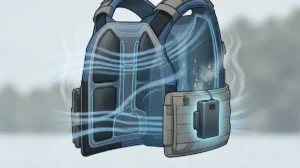
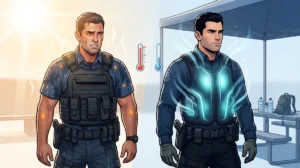
Body armor adds approximately 5°F to heat stress and blocks airflow, trapping sweat against skin and clogging sweat ducts—use ventilation vests like BluHalo (inflatable, under 7 oz) or Blufano (active fan, 8-32 hour runtime) to create airflow and enable evaporative cooling.
-
Switch to moisture-wicking synthetic base layers instead of cotton, which holds sweat and accelerates rash development; this single change significantly reduces moisture buildup that triggers miliaria.
-
Heat rash develops predictably in high-pressure zones: chest under front plate, upper back along spine, shoulders under straps, and waistline—proper vest fit and daily gear cleaning prevent moisture buildup in these areas.
-
Treat early rash symptoms immediately by cooling the area and keeping it dry; catching it early prevents progression to infection or severe heat-related illness like heat exhaustion.
-
Independent studies show ventilation vests reduce thermal resistance by 9-17% and lower chest skin temperature by 2.2°C while increasing exercise tolerance by 18%—making them essential safety equipment, not optional comfort gear.
-
Heat rash is an early warning sign of dangerous heat stress conditions that can progress to heat exhaustion or heat stroke; ignore symptoms accompanied by dizziness, nausea, or confusion and seek immediate medical attention.
If you’ve ever pulled off your vest at the end of a shift to find angry red bumps across your chest and back, you already know how miserable body armor heat rash can be. That itchy, stinging, prickly heat feeling isn’t just uncomfortable — it can wreck your focus right when you need it most. The good news? You’re not stuck living with it. With the right combination of habits, gear choices, and smart ventilation, you can keep your skin cool, dry, and rash-free even during the hottest, longest shifts.
Whether you’re a patrol officer baking in a squad car, a soldier moving through a hot combat zone, or a security pro standing post for hours, this guide breaks down exactly why heat rash happens under armor and, more importantly, 12 practical ways to stop it. We’ll also look at how ventilation vests like BluHalo and Blufano are changing the game for people who wear protective gear every single day.
What Causes Body Armor Heat Rash?
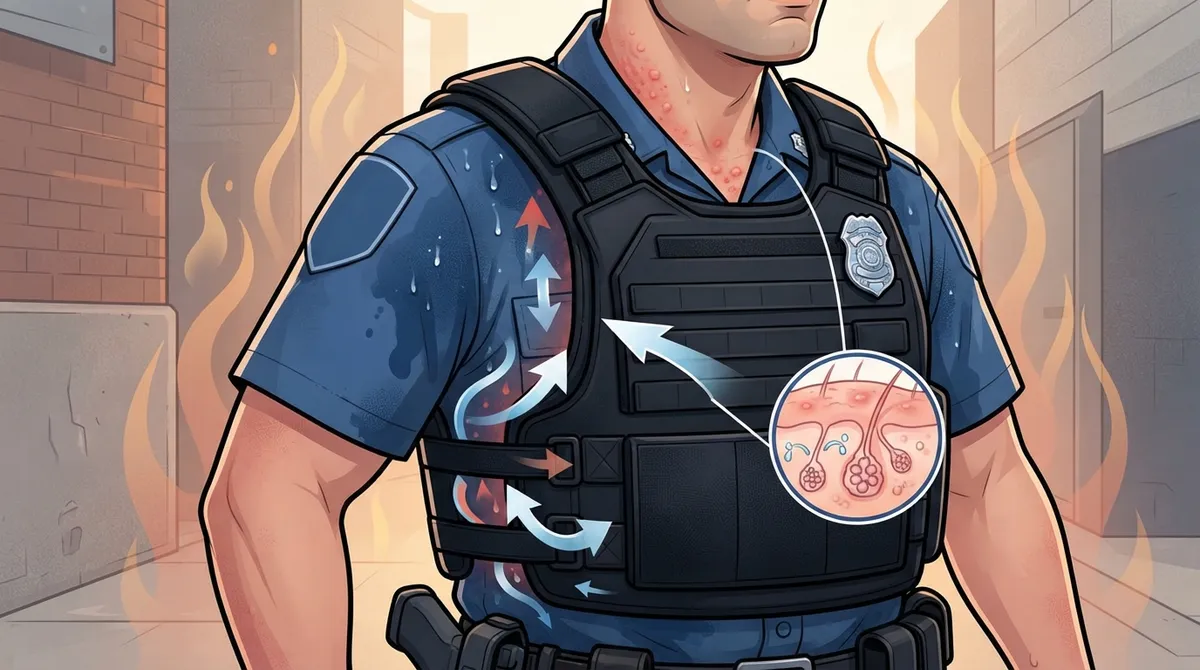
Body armor heat rash is really just miliaria — the medical term for prickly heat or sweat rash. It happens when sweat ducts get blocked and perspiration gets trapped under the skin. The result is small red bumps, itching, stinging, and sometimes tiny blisters, usually right where your armor sits.
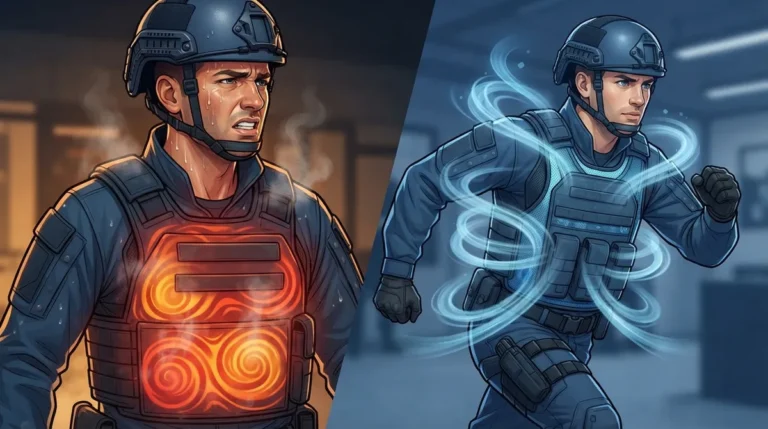
Your vest is a big part of the problem. It restricts airflow, holds in body heat, and traps sweat against your skin for hours. In fact, U.S. Navy occupational health guidance treats body armor as adding roughly 5°F (2.8°C) to the Wet Bulb Globe Temperature heat-stress index, according to the Navy’s heat and cold injury prevention guidance. That’s a real, measurable jump in heat stress — and your skin feels every degree of it.
High-Risk Zones Under Your Vest
Heat rash doesn’t show up randomly. It tends to develop in the same trouble spots for almost everyone who wears armor:
- Chest, right under the front plate
- Upper back, especially along the spine
- Shoulders, where straps dig in
- Waistline, where the vest cinches tight
- Any area where padding or clothing stays damp for hours
If you’re noticing rash in these spots, it’s a sign your gear isn’t letting your skin breathe. That’s exactly the problem ventilation vests were built to solve.
12 Ways to Prevent and Manage Body Armor Heat Rash
1. Add a Ventilation Vest Under Your Armor
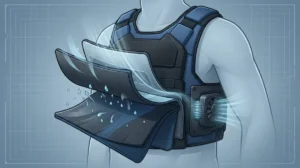
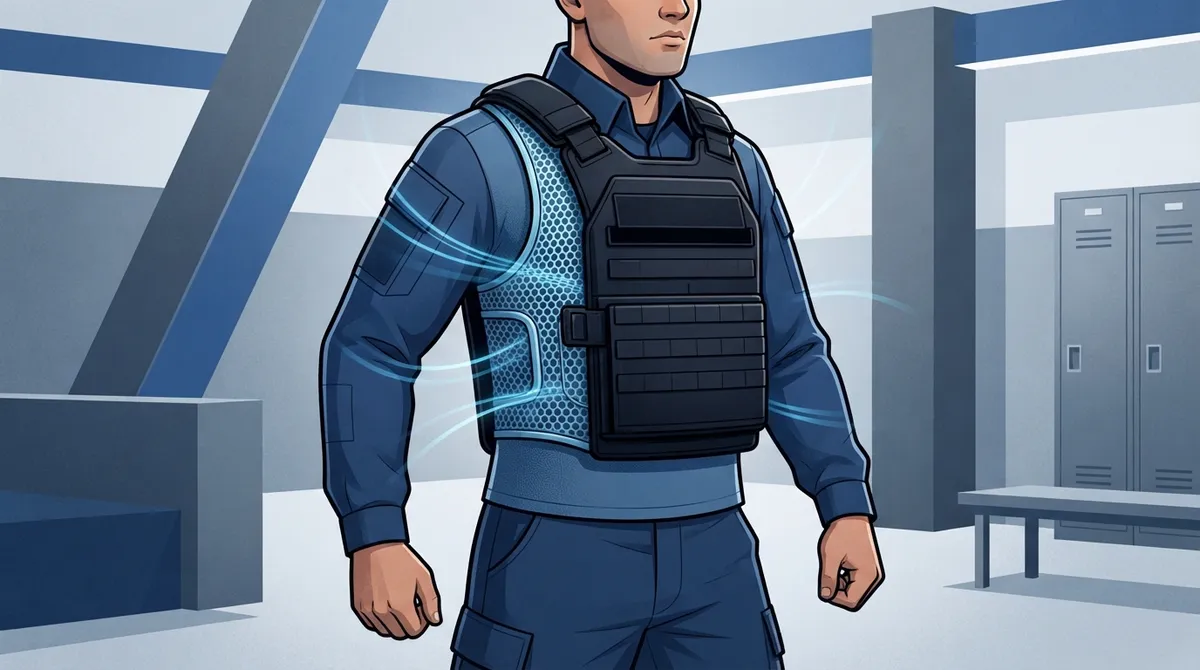
This is the single most effective fix. A ventilation vest creates an air gap between your skin and your armor, letting sweat evaporate instead of pooling. The BluHalo ventilation vest weighs under 7 ounces and lies flat until you need it. Inflate it on demand with a small pump, and it lifts your vest up to 1.5 inches off your body for instant cooling airflow. Deflate it with one button when you don’t need it. It’s true cooling-on-demand, built by a Chicago police officer who got tired of sweating through every shift.
2. Upgrade to Active Fan Cooling
If you want continuous airflow rather than a one-time air gap, consider an active system like Blufano. It slides under any style of body armor and uses a patented air-redirect spout with a fan to push fresh air across your torso for 8 to 32 hours, depending on the setting. It even has a 10,000mAh power bank built in, so you can charge your phone or radio while staying cool.
3. Wear a Moisture-Wicking Base Layer
Cotton holds sweat against your skin. Synthetic moisture-wicking fabrics pull sweat away and let it evaporate faster. This one swap alone can dramatically cut down on the moisture buildup that triggers heat rash.
4. Take Scheduled Cooling Breaks
Whenever possible, step into shade or an air-conditioned space for a few minutes. Even short breaks help your skin recover and reduce the constant sweat-and-trap cycle that leads to rash.
5. Check Your Vest Fit
A vest that’s too tight increases pressure and friction, both of which make heat rash worse. A vest that’s too loose can shift and rub. Proper fit reduces both moisture buildup and skin irritation.
6. Clean and Dry Your Gear Daily
Sweat-soaked padding doesn’t just smell bad — it breeds bacteria and keeps your skin damp longer. Wipe down your carrier and let it fully air dry between shifts.
7. Avoid Heavy Lotions and Ointments Before Your Shift
Thick creams can clog sweat ducts, which is exactly what causes miliaria in the first place. Stick to light, breathable skin care before putting on armor.
8. Layer Smart, Not Thick
Skip unnecessary occlusive layers under your vest. Every extra layer traps more heat and moisture against your skin.
9. Stay Hydrated Throughout Your Shift
Proper hydration helps your body regulate temperature more efficiently, which can reduce excess sweating and lower your risk of both heat rash and heat exhaustion.
10. Rotate or Replace Worn Padding
Old, compressed padding loses its ability to wick moisture. Fresh padding paired with a ventilation system performs far better.
11. Treat Early Symptoms Immediately
At the first sign of redness or itching, cool the area, keep it dry, and switch to looser clothing when you’re off duty. Catching it early prevents a mild irritation from turning into something worse.
12. Know When to Seek Medical Care
If a rash spreads, oozes, or comes with fever or severe pain, see a medical professional. These can be signs of infection or a more serious heat-related illness. Learn more from the OSHA Heat Stress Guide on recognizing dangerous heat illness symptoms.
How Ventilation Vests Actually Perform: The Data
Skeptical that a thin vest insert can really make a difference? The research says otherwise. Here’s a snapshot of what independent studies have found on ventilation performance under armor.
| Study / System | Conditions | Result |
|---|---|---|
| Thermal-manikin study, Interceptor Ventilation Vest | Under body armor | Thermal resistance drop from 16% to 9%; evaporative cooling potential up ~15% |
| Active battery-powered ventilation system | Blower running | Thermal resistance down ~17%; evaporative resistance down ~20%; cooling potential up ~18% |
| Forced-ventilation torso study | 9 L/s ambient air delivery | Heat loss increased by ~45 W on sweating manikin |
| Field-style ventilated vest study | 45°C, 10% humidity, 19 kg load | ~28 W cooling during exercise, ~73 W at rest; 18% longer exercise tolerance; chest skin temp ~2.2°C lower |
| 2025 phase-change vest study | 30°C, 48% humidity, 120 minutes | Torso microclimate temp reduced by average 1.5°C |
These numbers matter because lower skin temperature and reduced moisture buildup are exactly the conditions that prevent sweat ducts from clogging in the first place. Cooler, drier skin is far less likely to develop miliaria.
Active vs. Passive Ventilation: Which Should You Choose?
Not all ventilation solutions work the same way. Understanding the difference helps you pick the right tool for your role and environment.
- Passive ventilation creates spacing or channels between your torso and armor, letting natural air movement do the work. It’s lightweight, quiet, and requires no batteries.
- Active ventilation uses a fan to force air movement, providing continuous cooling even when you’re standing still. It requires a power source but delivers stronger, more consistent airflow.
BluHalo is a great passive-style, on-demand solution — light, low-profile, and ready when you need it. Blufano takes things further with active, fan-driven airflow for extended shifts where you need constant relief. Many professionals actually bundle both systems together to maximize comfort across different situations.
Why This Matters Beyond Comfort
Heat rash might seem like a minor annoyance, but it’s often an early warning sign of bigger heat-stress problems. Left unaddressed, the same conditions that cause rash — trapped heat, blocked airflow, excess moisture — can progress toward heat exhaustion or heat stroke. That’s a serious safety issue for anyone wearing armor that meets Body Armor Standards set by the National Institute of Justice, since that protection shouldn’t come at the cost of your health.
This is exactly why ventilation should never be treated as optional gear. It’s a core part of staying safe, alert, and effective, whether you’re working a 12-hour patrol shift or standing security in the summer heat.
Quick Comparison: BluHalo vs. Blufano
| Feature | BluHalo | Blufano |
|---|---|---|
| Type | Inflatable, on-demand air gap | Active fan-driven airflow |
| Weight | Under 7 oz | Compact, self-contained unit |
| Runtime | Instant inflate/deflate | 8–32 hours depending on setting |
| Extra Features | Low-profile Velcro attachment | 10,000mAh power bank, built-in light |
| Best For | Quick, quiet, lightweight cooling | Long shifts needing constant airflow |
Frequently Missed Tips for Long-Term Comfort
A few extra habits can go a long way toward keeping your skin healthy over months and years of wearing armor:
- Rotate between two vest carriers so one is always fully dry.
- Wash your ventilation vest attachment regularly to prevent buildup.
- Check your gear before every shift, not just when something feels off.
- Talk to your team about shared cooling strategies — comfort tips spread fast in a department or unit.
Plenty of officers and service members have shared their own experience with BluHalo and Blufano, describing real relief during brutal 12-hour shifts in 95-degree heat. You can browse more of these stories on the reviews page or check out the product videos to see the systems in action.
Final Thoughts on Beating Body Armor Heat Rash
Body armor heat rash doesn’t have to be part of the job. With the right base layers, smart habits, and a reliable ventilation system, you can protect your skin and stay focused when it matters most. Whether you choose the lightweight, on-demand cooling of BluHalo or the continuous airflow of Blufano, the goal is the same: less sweat, less irritation, and more comfort under your gear.
Ready to leave heat rash behind for good? Get in touch with our team today to find the right ventilation solution for your shift, mission, or duty schedule.
FAQs
Q: What causes heat rash under body armor or a plate carrier?
A: It happens when sweat gets trapped against your skin because armor blocks airflow and traps heat and moisture. Blocked sweat ducts lead to those annoying red, itchy bumps. The fix is simple: give your skin room to breathe with better airflow and moisture management.
Q: Can a ventilation vest prevent body armor heat rash?
A: Yes, a good ventilation vest can make a real difference! By creating airflow and reducing moisture buildup under your armor, products like BluHalo and Blufano tackle the exact conditions that cause heat rash. It’s not a guarantee, but it’s one of the most effective tools you can add to your gear setup.
Q: Is active fan ventilation better than passive ventilation under armor?
A: It really depends on your needs! Active systems like Blufano give you continuous airflow for long shifts, while passive, on-demand options like BluHalo are lighter and quieter. Many people love pairing both for maximum comfort in different situations.
Q: How should you treat prickly heat caused by tactical gear?
A: Cool the skin down, keep the area dry, and switch to loose, breathable clothing as soon as you can. Skip heavy lotions since they can clog sweat ducts further. If it doesn’t improve or starts looking infected, it’s time to see a doctor.
Q: Can heat rash under body armor be a sign of heat exhaustion or heat stroke?
A: It can definitely be an early warning sign, so don’t ignore it! If you notice heat rash along with dizziness, nausea, or confusion, treat it as a bigger red flag and get to a cool space right away. Staying ahead of these symptoms keeps you safe and ready for your next shift.