Key Takeaways
-
Active fan systems like BluFano reduce skin temperature by up to 1.86°C and provide 8-32 hours of battery runtime, making them ideal for extreme heat and static duty positions where natural airflow is limited.
-
Passive ventilation systems such as BluHalo weigh under 7 ounces, require zero battery charging, and achieve up to 14.5°F surface temperature reduction through inflatable air gaps—perfect for patrol officers who move frequently.
-
BluHalo and BluFano can be used together as a multi-layer cooling strategy, combining passive air gaps with forced airflow for maximum heat and moisture management across different operational scenarios.
-
Active cooling fans directly address OSHA heat stress risks by maintaining core body temperature during high-stress situations, preventing heat-related impairment of judgment and reaction time in tactical operations.
-
Passive ventilation offers simplicity and low-profile design with on-demand inflation/deflation, making it ideal for officers who prefer lightweight gear without managing batteries or charging routines.
-
Active fan systems provide consistent airflow during static surveillance or posts where body movement doesn't generate natural air circulation, outperforming passive designs in motionless conditions.
If you wear body armor every day, you already know the struggle. Heavy gear, a loaded duty belt, and rising temperatures can turn a long shift into an exhausting battle against heat. Sweating through your uniform is uncomfortable — and it can slow you down when it matters most. That’s why more officers, soldiers, and security professionals are turning to duty belt vest cooling fan systems and other ventilation solutions to stay cool under pressure.
But here’s the big question: should you go with an active fan-based system or a passive ventilation solution? Both approaches have real benefits, and choosing the right one can make a huge difference in your daily comfort and performance. Let’s break it down together so you can find your perfect cooling match.
What Is a Duty Belt Vest Cooling Fan System?
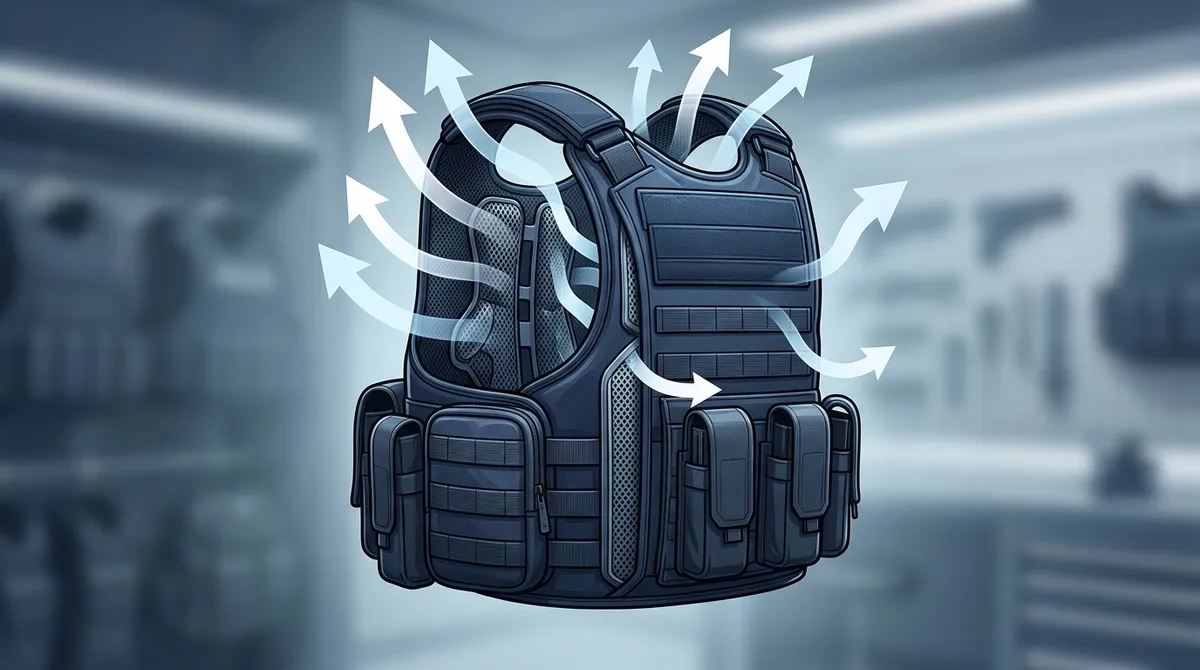
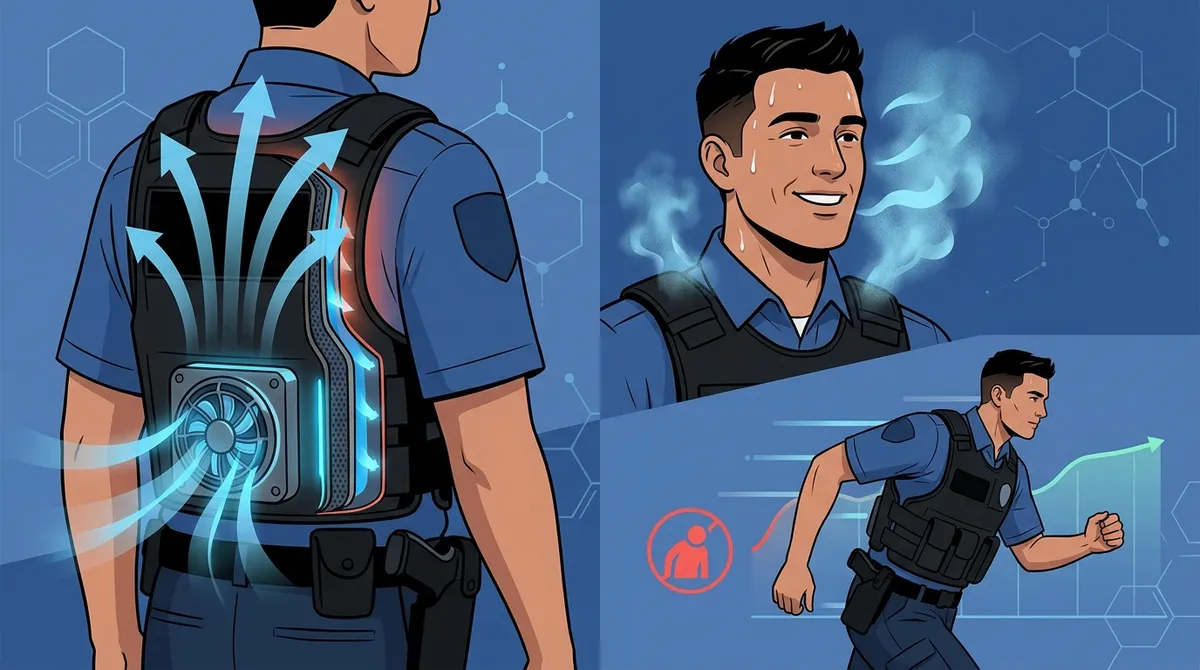
An active duty belt vest cooling fan system is exactly what it sounds like — a powered fan built into or attached to your vest that pushes fresh air beneath your body armor. These systems use battery-powered fans to create constant airflow between your skin and your gear. That moving air pulls heat and moisture away from your body, helping you stay cooler and drier throughout your shift.
A great example is the BluFano active airflow system, which features a patented air-redirect spout that slides right under any style of ballistic vest. It delivers adjustable fan-driven airflow for 8 to 32 hours depending on your settings — plenty of power for even the longest shifts. It also packs a built-in 10,000mAh power bank and a forward-facing light for hands-free use in low-light conditions.
Active systems are especially effective during high-intensity operations or in extreme heat environments. According to research on the Singapore Police Force’s Load Bearing Vest, a four-fan centrifugal system reduced lower back skin temperature by 1.86°C in trials conducted at 30°C with 70% humidity. That’s a meaningful drop in real working conditions. You can also check out the best ballistic vest ventilation solutions in 2026 for more options.
What Is Passive Vest Ventilation?
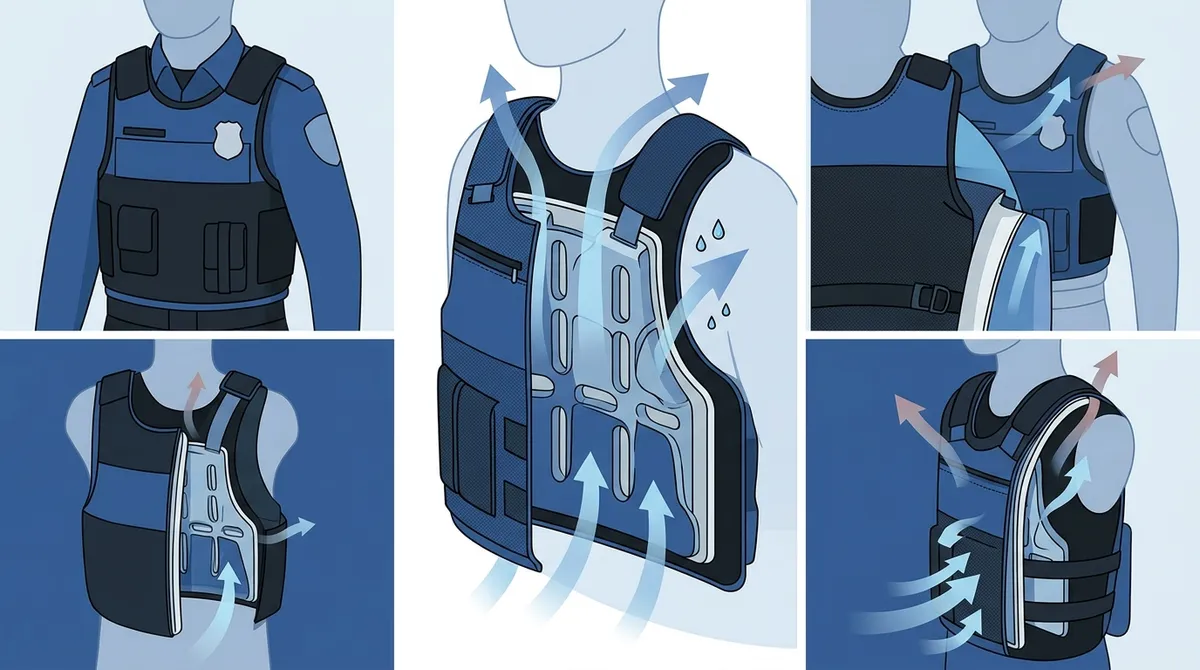
Passive ventilation systems don’t use any powered fans. Instead, they rely on physical structure — like 3D mesh spacers, air gap panels, or inflatable layers — to create space between your skin and your armor. That space allows natural airflow to occur as you move, which helps reduce heat buildup without any batteries required.
The BluHalo ventilation vest is a standout passive option. Created by a Chicago police officer, this lightweight vest weighs under 7 ounces and inflates to lift your body armor up to 1.5 inches off your body. That gap creates a cooling air channel that boosts airflow, reduces moisture, and releases trapped heat. It uses on-demand inflation, so you inflate when needed and deflate when you want it flat and low-profile. Related passive tech like TacVent has shown body surface temperature reductions of at least 14.5°F — a significant improvement for officers on long patrol shifts.
Want to learn more about your cooling options? The best vest cooling systems guide covers a wide range of approaches in detail.
Active vs. Passive: Head-to-Head Comparison
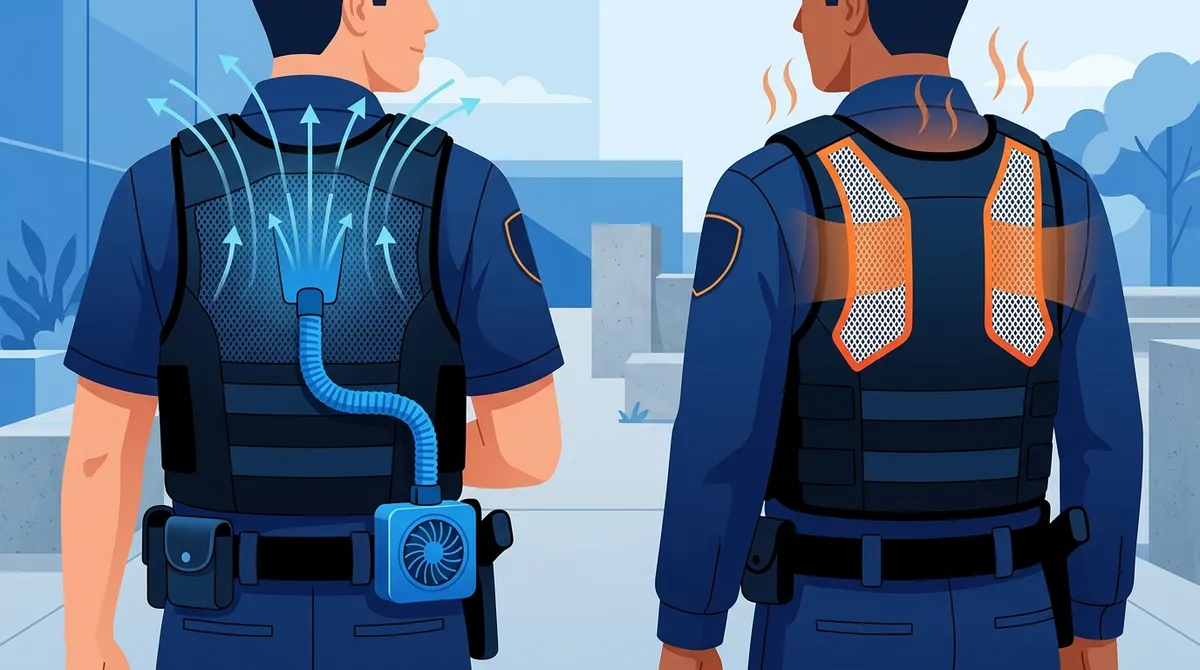
Let’s put both approaches side by side so you can see exactly how they stack up across the key factors that matter most to professionals in the field.
| Feature | Active Fan System (BluFano) | Passive Ventilation (BluHalo) |
|---|---|---|
| Power Source | Battery-powered (10,000mAh) | No battery needed |
| Airflow Type | Forced / fan-driven | Natural / movement-based |
| Runtime | 8–32 hours | Unlimited (no power) |
| Weight | Moderate (fan unit + battery) | Under 7 ounces |
| Best For | Extreme heat, high-intensity ops | Everyday patrol, low-profile use |
| Noise Level | Slight fan noise | Silent |
| Setup | Slide under vest, adjust knob | Velcro attach, inflate on demand |
| Extra Features | USB charging, built-in light | Flat profile when deflated |
Key Benefits of Active Fan-Based Cooling
Active fan systems shine brightest in demanding conditions. Here’s why officers and tactical teams love them:
- Consistent airflow: Fans push air whether you’re moving or standing still — perfect for surveillance or static posts.
- Faster cooling: Forced air moves heat away from your skin much faster than passive designs.
- Adjustable settings: You control the fan speed based on how hot you feel and how long your shift runs.
- Long battery life: Systems like BluFano offer up to 32 hours of continuous runtime — more than enough for double shifts.
- Multi-vest compatibility: Works with external plate carriers and concealable vests alike.
The OSHA Heat Stress Guide highlights that heat-related illness can impair judgment and reaction time — two things no officer or soldier can afford to compromise. An active fan system directly addresses this risk by keeping your core temperature in check during high-stress situations.
Key Benefits of Passive Vest Ventilation
Passive systems have their own set of standout advantages. Here’s what makes them a great choice for many professionals:
- Zero battery dependency: No need to charge anything — just inflate and go.
- Ultra-lightweight: At under 7 ounces, the BluHalo barely adds to your load.
- Low-profile design: Deflates flat so it’s discreet under your uniform.
- Simple operation: Inflate with the small pump, deflate with a button — done.
- Durable construction: Built from double-layer high-strength polyethylene for long-lasting use.
For officers who prefer simplicity and minimal added gear, passive ventilation is a smart, effective solution. If you’re curious about how to make the right choice for your situation, check out this helpful guide on how to choose the right body armor ventilation vest in 2026.
Who Should Choose an Active Fan System?
Active cooling fans are the go-to choice for specific situations and roles. Here’s who benefits most:
- SWAT and tactical teams running high-intensity operations where body heat spikes quickly.
- Military personnel deployed in hot climates who need all-day cooling during extended missions.
- Security professionals working outdoor posts in summer heat with limited shade or relief.
- Officers on static duty who aren’t moving enough to generate natural airflow through passive designs.
The NIJ Body Armor Standards remind us that protective gear must not compromise performance — and overheating is a serious performance risk. Active fan cooling helps professionals meet that standard by managing thermal load effectively. Learn more about how to prevent heat stress while wearing body armor.
Who Should Choose Passive Ventilation?
Passive systems work beautifully for officers and professionals who want reliable, hassle-free comfort. Here’s who tends to love them:
- Patrol officers who are constantly on the move and generate natural airflow throughout their shift.
- Officers who prefer simplicity and don’t want to manage batteries or charging on top of their regular gear.
- First responders who need a lightweight, low-profile solution that doesn’t interfere with their other equipment.
- Anyone on a tighter budget who wants real cooling relief without the cost of a powered fan unit.
Passive ventilation is also a fantastic starting point if you’re new to body armor cooling. Check out this beginner-friendly read on what vest ventilation is and why you need it.
Can You Use Both Together?
Great news — you don’t have to choose just one! BluHalo and BluFano are designed to work together for maximum cooling performance. You can bundle both products at a discount and get the best of both worlds: the passive air gap from BluHalo paired with the forced airflow of the BluFano fan system. Together, they create a multi-layer cooling strategy that tackles heat and moisture from every angle.
| Scenario | Recommended Solution |
|---|---|
| Hot summer patrol shift | BluHalo (passive) alone or with BluFano |
| SWAT high-intensity operation | BluFano (active fan) + BluHalo combo |
| Mild weather, everyday use | BluHalo (passive) for simple comfort |
| Extended military deployment | BluFano (active fan) for long-term cooling |
| Static security post in extreme heat | BluFano (active fan) for constant airflow |
For more details on combining both systems, visit the BluHalo shop to explore bundle options. You can also read real user experiences on the reviews page to see what officers are saying about both products.
Performance Comparison at a Glance
| Performance Metric | Active Fan System | Passive Ventilation |
|---|---|---|
| Temperature Reduction | Up to 1.86°C skin temp drop (SPF trial) | Up to 14.5°F surface temp reduction |
| Sweat Management | Excellent (continuous airflow) | Good (air gap reduces buildup) |
| Comfort in Still Air | Excellent | Moderate |
| Comfort During Movement | Excellent | Very Good |
| Long Shift Performance | Excellent (8-32hr battery) | Excellent (no battery limit) |
Making Your Final Decision
Choosing between an active duty belt vest cooling fan and a passive ventilation system really comes down to your work environment and personal preferences. Think about how hot your typical shift gets, how much you move around, and how much extra gear weight you’re comfortable carrying.
If you’re regularly working in extreme heat or static positions, the BluFano active fan system is hard to beat. If you want lightweight, quiet, and simple cooling for everyday patrol work, the BluHalo ventilation vest is your best friend. And if you want the ultimate in comfort, bundle them together for unbeatable heat management. You can explore more helpful resources like why body armor ventilation is a game-changer for officers and body armor cooling solutions for officers in 2026.
Don’t let heat slow you down or distract you from what matters most. You do an important job, and you deserve gear that supports you every step of the way. Reach out to our team today to find the right ventilation solution for your needs — we’re always happy to help you stay cool and comfortable on duty.
FAQs
Q: What is a duty belt vest cooling fan and how does it work?
A: A duty belt vest cooling fan is a battery-powered fan system that slides under your body armor to push fresh air against your skin. It creates continuous airflow that pulls heat and sweat away from your body, keeping you cooler and more comfortable during long shifts. Systems like BluFano even let you adjust the fan speed and run for up to 32 hours on a single charge!
Q: How long do battery-powered vest cooling fans last on a single charge?
A: Great question! The BluFano active fan system offers impressive battery life — between 8 and 32 hours depending on your fan speed setting. That means even on lower settings, you’ve got more than enough power to cover a full shift and then some. The built-in 10,000mAh power bank also lets you charge your phone or other USB devices while on duty.
Q: Can a duty belt vest cooling fan be used with a plate carrier?
A: Absolutely! Active fan systems like BluFano are designed to be compatible with a wide range of vest types, including external plate carriers and concealable soft armor vests. The patented air-redirect spout slides easily under any vest style, and an optional strap keeps everything secure while you move.
Q: What is the difference between active and passive vest ventilation for duty belt wearers?
A: Active systems use powered fans to force air under your vest — great for extreme heat and static positions where you’re not generating natural airflow. Passive systems like the BluHalo vest create a physical air gap using an inflatable layer that lifts your armor off your body, allowing natural air to circulate as you move. Both work well, and many officers use both together for maximum cooling comfort!
Q: Are vest cooling fans worth it for law enforcement officers on patrol?
A: 100% yes — especially in hot weather or during high-intensity operations. Research shows that even a small drop in skin temperature can significantly reduce heat-related fatigue and help maintain sharper decision-making. Whether you choose an active fan like BluFano or a passive vest like BluHalo, any cooling system is a worthwhile investment in your comfort and performance on the job.