Key Takeaways
-
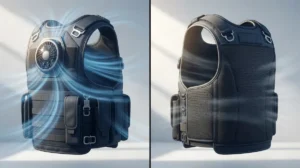
Advanced ballistic vest ventilation systems like BluHalo and BluFano create airflow between body and armor, reducing heat and sweat during long shifts.
-
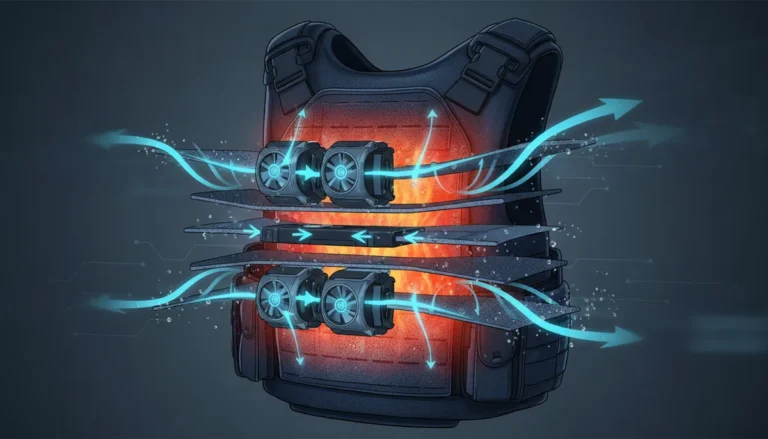
Active cooling technologies with fan-driven airflow and on-demand inflation can provide 8-32 hours of continuous temperature management for protective gear.
-
3D mesh ventilation liners with perforated fabrics promote natural convection, creating air channels that prevent heat and moisture buildup.
-
Anti-microbial moisture-wicking materials help manage sweat, resist bacterial growth, and maintain comfort throughout challenging work environments.
-
Versatile ventilation solutions now offer dual-climate performance, adapting to both hot and cold conditions while maintaining consistent comfort and protection.
If you wear body armor every day, you already know the struggle. That bulletproof vest keeps you safe, but it also traps heat like a personal sauna strapped to your chest. Your shirt gets soaked before your shift even really begins, and by hour three, you’re counting down the minutes until you can peel that thing off. The discomfort isn’t just annoying—it affects your focus, your energy, and your ability to do your job effectively. That’s where ballistic vest ventilation comes in. These innovative systems create airflow between your body and your armor, letting heat escape and keeping you significantly cooler and drier throughout your entire shift. Whether you’re a patrol officer, security professional, or tactical team member, proper vest ventilation can transform your daily comfort.
The good news? Technology has come a long way since the days of just accepting the heat and sweat as part of the job. Modern ballistic vest ventilation systems use smart designs, advanced materials, and even active cooling technology to make wearing body armor dramatically more comfortable. Let’s explore the top solutions available in 2026 that can help you stay cool, focused, and comfortable while staying protected.
1. BluHalo Ventilation Vest: Cooling On Demand
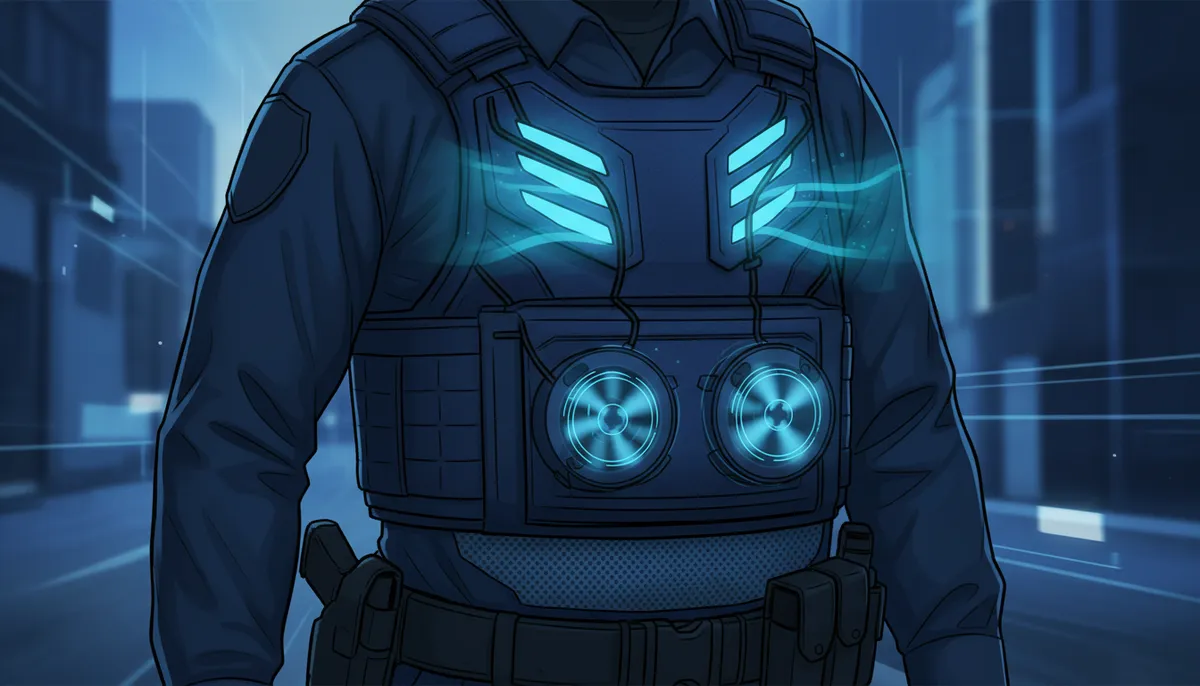
The BluHalo ventilation vest stands out as one of the most innovative solutions for ballistic vest ventilation. Created by a Chicago police officer who understood the daily struggle firsthand, this lightweight system weighs less than 7 ounces and sits completely flat when deflated. What makes it special is the on-demand inflation feature—you can create up to 1.5 inches of space between your body and your vest exactly when you need it most.
The vest uses double-layer high-strength polyethylene construction for durability that holds up to daily use. You attach it to your clean vest with Velcro, inflate it with a small pump when the heat becomes uncomfortable, and deflate it with a button press when you need a low profile. Officers report significant comfort improvements during long shifts, especially during summer months when temperatures climb into the 90s. The air gap created by BluHalo allows heat and moisture to escape instead of getting trapped against your skin, making those 12-hour days much more bearable.
2. BluFano Active Airflow System: Continuous Cooling Power
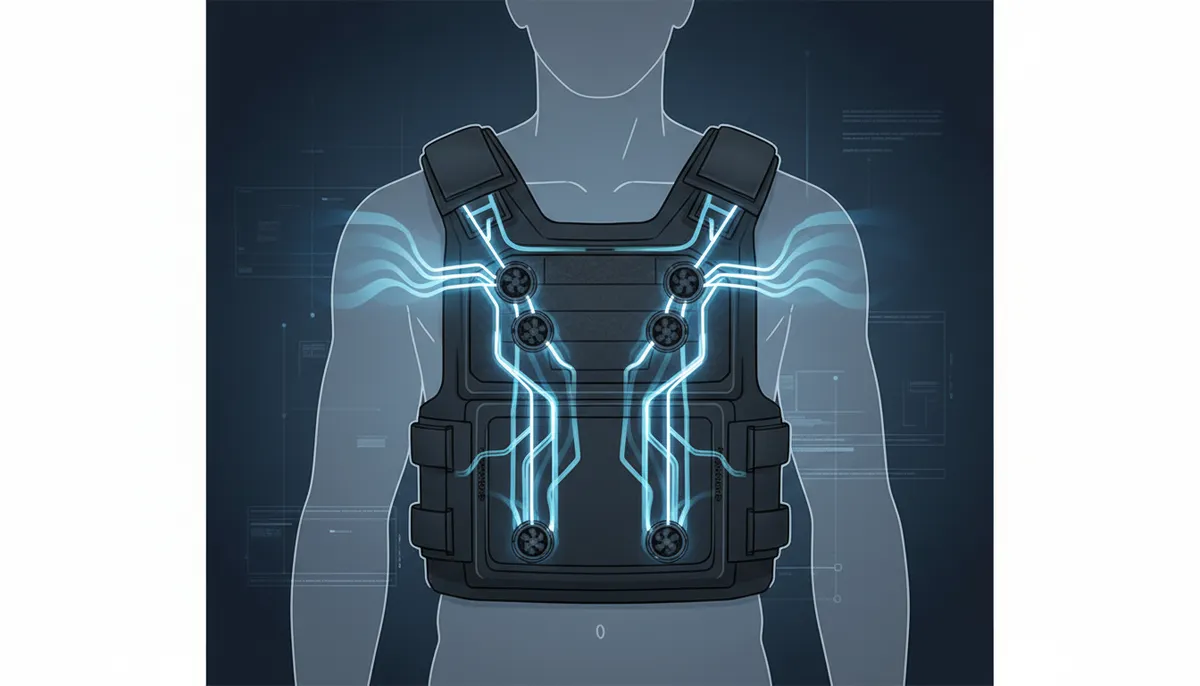
For those who need continuous cooling rather than on-demand ventilation, the BluFano body armor ventilation system delivers active airflow directly under your ballistic vest. This self-contained unit features a patented air-redirect spout that slides under any style of body armor and can be secured with an optional strap. The adjustable fan-driven airflow runs for 8 to 32 hours depending on your chosen setting, providing reliable cooling throughout even the longest shifts.
BluFano includes a built-in 10,000mAh power bank that not only powers the fan but also charges your USB devices—your phone, radio, or other equipment stays powered while you stay cool. The forward-facing light provides hands-free illumination during low-light situations. Users consistently report faster cooling when combined with vehicle AC, reduced sweat buildup, and better focus during hot weather operations. The control knob makes adjustment simple even while wearing gloves or in tactical situations.

3. 3D Mesh Ventilation Liners: Breathable Foundation
Three-dimensional mesh liners create a foundation of breathability between your body and ballistic vest. These specialized fabrics feature large perforations and raised structures that maintain consistent spacing even under the weight of armor plates. The 3D design creates multiple air channels that promote natural convection—hot air rises and escapes while cooler air flows in from below.
Modern 3D mesh materials often incorporate anti-microbial properties that prevent moisture absorption and resist odor buildup. This keeps your vest fresher longer and reduces the bacterial growth that thrives in warm, moist environments. The mesh compresses slightly under armor weight but maintains enough structure to preserve airflow pathways. Many officers appreciate that these liners work passively—no batteries, no inflation needed, just consistent breathability throughout your shift.
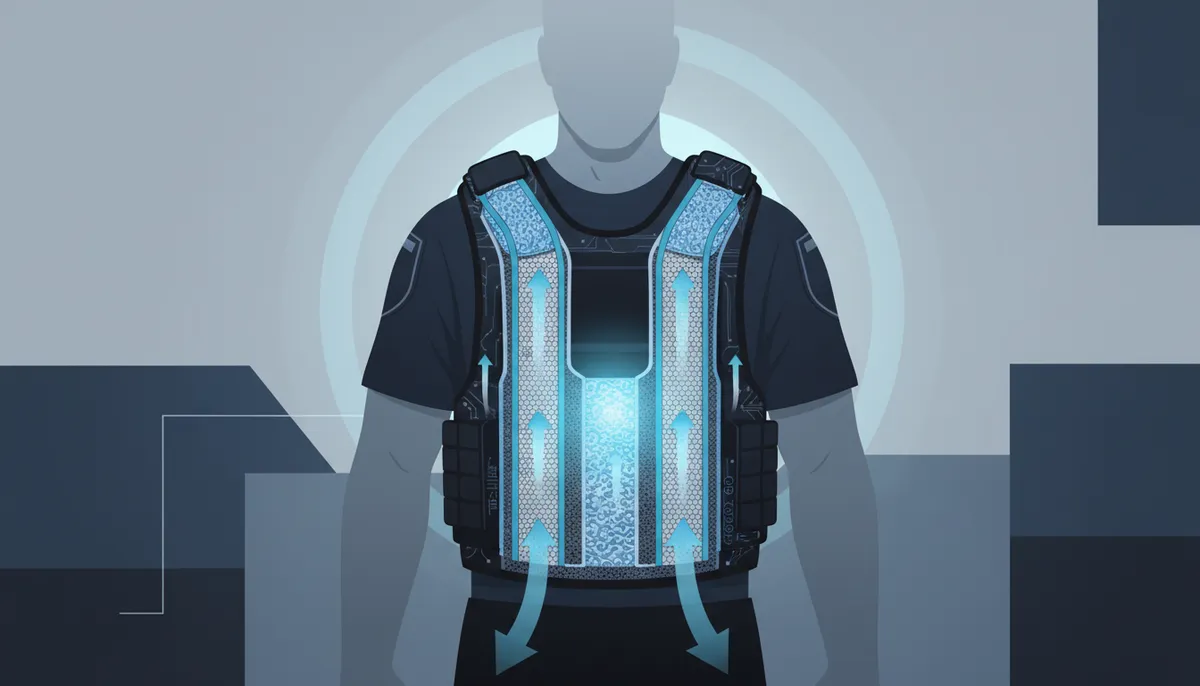
4. Vertical Air Channel Technology: Strategic Airflow Design
Vertical air channel systems use foam-filled channels or structured spacers arranged vertically along the torso to create dedicated airflow pathways. This design takes advantage of natural thermal convection—as your body heats the air, it rises through the channels and escapes at the top of your vest while drawing cooler air in from the bottom.
The OSHA Heat Stress Guide emphasizes the importance of ventilation for workers in protective equipment, and vertical channels address this need efficiently. These systems often feature restriction-free designs that don’t impede your movement or add significant bulk. The channels remain functional even when you’re seated in a vehicle or leaning against surfaces, maintaining airflow in positions where other ventilation methods might compress and lose effectiveness.
| Ventilation Type | Cooling Method | Power Required | Best For |
|---|---|---|---|
| BluHalo Vest | Air gap creation | Pump (on-demand) | Flexible cooling when needed |
| BluFano System | Active fan airflow | Built-in battery | Continuous cooling throughout shift |
| 3D Mesh Liner | Passive convection | None | Low-maintenance breathability |
| Vertical Channels | Thermal convection | None | Natural airflow in all positions |
5. Hook-and-Loop Adjustable Systems: Custom Fit Ventilation
Proper fit makes all the difference in ballistic vest ventilation effectiveness. Systems with adjustable hook-and-loop (Velcro) closures, shoulder straps, and side straps let you customize the positioning for your specific body type and armor configuration. This secure attachment prevents the ventilation system from shifting during movement while ensuring it doesn’t damage your ballistic vest materials.
Adjustable systems accommodate different armor profiles—whether you wear an external plate carrier or an internal concealable vest. The ability to fine-tune the fit means the ventilation layer stays positioned correctly to maximize airflow without creating uncomfortable pressure points or bunching. Many systems feature 360-degree coverage that ventilates not just the front and back panels but also the sides where heat often gets trapped.
6. Quick-Mount Rapid Attachment Technology
For tactical teams and officers who need to don or remove equipment quickly, quick-mount ventilation systems offer rapid attachment and detachment capabilities. These systems use specialized clips, magnetic connections, or snap-in designs that secure firmly during use but release instantly when you need to remove your vest rapidly.
Quick-mount technology proves especially valuable during shift changes or when transitioning between different protective equipment configurations. You can transfer your ventilation system between vests in seconds rather than spending time with complicated straps or permanent attachments. This flexibility also means you can easily clean either your vest or ventilation system separately, maintaining hygiene without hassle.
7. Anti-Microbial Moisture-Wicking Fabrics
The materials in contact with your body matter tremendously for comfort and hygiene. Anti-microbial fabrics treated to resist bacterial and fungal growth prevent the buildup of odor-causing microorganisms that thrive in the warm, moist environment under body armor. Combined with moisture-wicking properties, these fabrics actively pull sweat away from your skin toward outer layers where it can evaporate more easily.
Quality ventilation systems use fabrics that maintain their anti-microbial properties through repeated washing cycles. This durability means your vest stays fresher longer even during intense summer months or high-activity situations. The moisture-wicking action also helps prevent the clammy, uncomfortable feeling of wet fabric against your skin—even when you do sweat, you’ll feel drier and more comfortable throughout your shift.
8. Patent-Pending EVAP Technology Systems
EVAP (Enhanced Ventilation and Airflow Performance) technology represents some of the most advanced approaches to ballistic vest ventilation. These systems use engineered airflow pathways, strategic material placement, and sometimes hybrid active-passive designs to maximize cooling efficiency. Patent-pending innovations often incorporate multiple cooling mechanisms simultaneously—convection, evaporation, and active air movement working together.
Research into body armor comfort has led to increasingly sophisticated ventilation solutions. According to Body Armor Standards from the National Institute of Justice, comfort factors significantly impact compliance with protective equipment protocols. EVAP-type technologies address this by making vest wear substantially more comfortable, which means officers are more likely to wear their protection consistently throughout their shifts.
9. Dual-Climate Ventilation Solutions
Effective ballistic vest ventilation doesn’t just keep you cool in summer—the best systems also help you stay comfortable in cold weather. Dual-climate designs maintain airflow to prevent sweat buildup (which makes you cold when temperatures drop) while providing some insulation to retain necessary warmth. This prevents the problem of overheating indoors or in vehicles but then getting chilled when you step outside into winter conditions.
These versatile systems often feature adjustable ventilation—you can increase airflow for hot days and reduce it for cold weather while still maintaining enough circulation to manage moisture. The year-round usability means you get value from your investment regardless of season. Officers working in regions with temperature extremes particularly appreciate ventilation that adapts to changing conditions throughout the year.
10. Backface Deformation Reduction Systems
Advanced ventilation systems provide an unexpected benefit beyond comfort—they can reduce backface deformation (BFD) impact. The spacing created between your body and armor acts as an additional buffer zone that can help distribute impact energy more gradually. While the primary ballistic protection comes from your vest itself, this extra space contributes to overall impact management.
Ventilation systems also improve armor durability by keeping it dry and reducing odor absorption. Moisture accelerates material breakdown and can compromise armor components over time. By maintaining airflow and preventing moisture buildup, quality ventilation extends the functional life of your expensive ballistic vest. Some users report their armor feeling lighter and less burdensome with proper ventilation—the reduced heat fatigue makes the weight feel more manageable throughout long shifts.
Choosing the Right Ballistic Vest Ventilation for Your Needs
With approximately 250,000 police, military, and private security personnel worldwide using advanced ventilation systems, the benefits are clear and widely recognized. When selecting your ballistic vest ventilation solution, consider these key factors:
- Activity Level: High-intensity tactical operations benefit from active cooling like BluFano, while routine patrol may work well with on-demand systems like BluHalo
- Climate: Extreme heat environments call for maximum airflow, while variable climates need adaptable solutions
- Vest Type: External plate carriers and internal concealable vests have different ventilation requirements and compatibility
- Shift Length: Longer shifts justify investment in more sophisticated ventilation technology
- Budget: Systems range from approximately $60 to $100, with bundle options offering better value
Many professionals find that combining systems delivers the best results. For example, pairing BluHalo with BluFano at a bundle discount maximizes cooling performance—the vest creates spacing while the fan actively circulates air through that space. This layered approach addresses ventilation from multiple angles for superior comfort.
The Science Behind Effective Vest Ventilation
Understanding how ballistic vest ventilation works helps you appreciate why it makes such a difference. Your body generates heat constantly, and that heat normally dissipates through radiation, convection, and evaporation. Body armor creates a barrier that traps heat against your torso and prevents normal cooling mechanisms from working effectively.
Ventilation systems address this in three main ways:
- Convection: Creating space allows air to move between your body and vest, carrying heat away as it circulates
- Evaporation: Moisture-wicking materials and airflow promote sweat evaporation, which provides significant cooling
- Heat Transfer: Moving air away from your body and replacing it with cooler air maintains a more comfortable temperature
The most effective systems combine all three mechanisms. Passive systems rely on natural convection and material properties, while active systems like BluFano add forced air movement to accelerate the process. Either approach dramatically improves comfort compared to wearing armor without any ventilation solution.
Maintenance and Care for Ventilation Systems
Proper maintenance keeps your ballistic vest ventilation working effectively and extends its lifespan. Most systems feature materials that clean easily—check manufacturer guidelines, but many can be hand-washed or machine-washed on gentle cycles. Allow complete drying before reattaching to your vest to prevent moisture buildup.
For active systems like BluFano, keep the fan intake free of debris and lint. Periodically charge the battery fully even if you’re not using maximum settings, which helps maintain battery health. Store ventilation systems in cool, dry locations when not in use. Replace components according to manufacturer recommendations—mesh materials eventually compress and lose effectiveness, while batteries in active systems have finite lifespans.
Regular inspection catches potential issues early. Check attachment points for wear, ensure Velcro still grips securely, and verify that inflation pumps or fan controls operate smoothly. Taking a few minutes for maintenance every few weeks keeps your ventilation system performing at its best when you need it most.
| Maintenance Task | Frequency | Importance |
|---|---|---|
| Clean fabric components | Weekly or as needed | Prevents odor and bacteria buildup |
| Check attachment points | Before each use | Ensures secure positioning |
| Charge active system batteries | As needed (monitor levels) | Maintains reliable operation |
| Inspect for wear or damage | Monthly | Catches issues before failure |
| Replace worn components | Per manufacturer specs | Maintains ventilation effectiveness |
Real-World Performance: What Officers Say
The true test of any ballistic vest ventilation system comes from the professionals who depend on it daily. Officers consistently report significant improvements in comfort, focus, and overall job satisfaction when using quality ventilation. One patrol officer described the difference: “On a 95-degree day during a 12-hour shift, my vest used to feel like wearing a wet blanket by hour three. Now with proper ventilation, I stay noticeably drier and cooler. I’m not constantly thinking about how uncomfortable I am, which means I can focus better on the job.”
Tactical team members emphasize the performance benefits during high-intensity operations. When you’re not fighting heat exhaustion, you maintain better decision-making and physical performance. Security professionals who work both indoor and outdoor environments appreciate systems that adapt quickly to temperature changes—stepping from an air-conditioned building into summer heat becomes less of a shock to your system when your ventilation is already managing moisture and temperature.
The consistency of positive feedback across different professions and climates demonstrates that ballistic vest ventilation isn’t just a luxury—it’s a practical tool that makes a real difference in daily work quality. With over 20,000 five-star reviews for leading systems like the Maxx-Dri Vest, the evidence strongly supports investing in proper ventilation for your body armor.
Making Your Investment Count
Quality ballistic vest ventilation represents an investment in your daily comfort and long-term health. Heat stress affects more than just comfort—it impacts cognitive function, physical performance, and overall well-being. By maintaining a more comfortable body temperature throughout your shift, you reduce fatigue, improve focus, and lower your risk of heat-related health issues.
Consider the cost-benefit analysis: a ventilation system typically costs between $60 and $100, lasts for years with proper care, and improves every single day you wear your vest. That daily comfort improvement, multiplied across hundreds of shifts, delivers tremendous value. Many departments recognize this and include ventilation systems as part of their officer equipment packages.
If you’re purchasing individually, look for bundle deals that combine complementary systems at a discount. The Shop often features package options that deliver better value than buying components separately. Starting with a basic passive system and upgrading to active cooling later works for many people, though others prefer to invest in the best solution upfront and enjoy maximum comfort immediately.
Take Control of Your Comfort
You can’t change the fact that your job requires wearing body armor, but you absolutely can change how comfortable that experience is. Ballistic vest ventilation technology has advanced significantly in recent years, offering solutions that actually work in real-world conditions. Whether you choose the on-demand flexibility of BluHalo, the continuous cooling of BluFano, or another ventilation approach, you’ll experience a dramatic improvement over wearing armor without any ventilation system.
The professionals who wear body armor every day deserve equipment that supports their comfort and performance. Don’t accept heat, sweat, and discomfort as unavoidable parts of the job when proven solutions exist. Explore the Reviews from fellow officers and security professionals who’ve made the switch to proper ventilation. Their experiences demonstrate the real-world benefits you can expect.
Ready to transform your daily comfort while wearing body armor? Contact our team to discuss which ballistic vest ventilation solution best fits your specific needs, work environment, and armor configuration. You deserve to stay cool, dry, and focused throughout your entire shift—proper ventilation makes that possible.
FAQs
Q: How does ballistic vest ventilation actually reduce heat buildup?
A: Ventilation systems create space between your body and armor, allowing hot air to escape through natural convection while cooler air flows in. Some systems use active fans to circulate air, while others rely on specialized materials that wick moisture and promote airflow. The combination of convection, evaporation, and heat transfer keeps you significantly cooler than wearing armor directly against your body.
Q: Can I use ventilation systems with both external plate carriers and concealable vests?
A: Yes, most quality ventilation systems work with both external and internal vest types. Look for adjustable systems with hook-and-loop closures that let you customize the fit for your specific armor configuration. Systems like BluHalo and BluFano slide under any style of body armor and secure with straps or Velcro, making them compatible with various vest designs.
Q: Do ventilation vests affect the protective performance of my body armor?
A: No, proper ventilation systems do not compromise ballistic protection. They sit between your body and the armor without interfering with the protective layers. In fact, ventilation can reduce backface deformation impact by creating an additional buffer zone and improves armor durability by keeping it dry and preventing moisture-related material breakdown.
Q: How long do ballistic vest ventilation systems typically last?
A: With proper care and maintenance, passive ventilation systems like mesh liners can last several years of daily use. Active systems like BluFano typically provide years of reliable service, though batteries may need replacement after extended use. Regular cleaning, proper storage, and following manufacturer maintenance guidelines significantly extend the lifespan of any ventilation system.
Q: Will vest ventilation help in cold weather too, or just hot conditions?
A: Quality ventilation systems benefit you in all climates. In cold weather, they prevent sweat buildup that would make you colder and uncomfortable. By maintaining airflow and managing moisture, you stay drier and more comfortable whether it’s hot or cold outside. Many systems offer adjustable airflow so you can customize ventilation levels for different temperature conditions throughout the year.