Key Takeaways
-
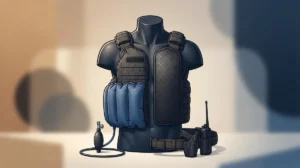
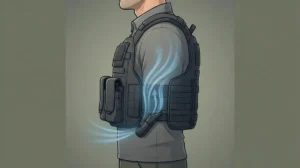
BluHalo is an inflatable air-gap vest that lifts the carrier up to about 1.5 inches (manufacturer-reported), letting you add airflow on demand and deflate it when you want a slimmer profile.
-
BluHalo attaches with Velcro to the inside of the carrier without tools, but it needs a clean, dry surface with enough hook-and-loop area for a secure grip.
-
Mesh liners offer a fixed spacer thickness that cannot be adjusted, making them simpler but less flexible than BluHalo for varying heat conditions.
-
Always test the full loadout by standing, sitting, bending, and reaching, checking for shifting, pressure points, and blocked access to gear before using it on duty.
-
The article notes that protective performance with BluHalo is not independently confirmed, so follow armor and carrier maker guidance and contact them about your specific configuration.
-
Concealed soft armor is most sensitive to added bulk, so check how any spacer looks under a uniform shirt, while plate carriers and external vests usually offer more interior room.
You finally found a body armor setup that fits just right. Then summer hits, and your vest turns into a personal sauna. So you start shopping for something to help. But here is the big question: will it actually work with the gear you already wear?
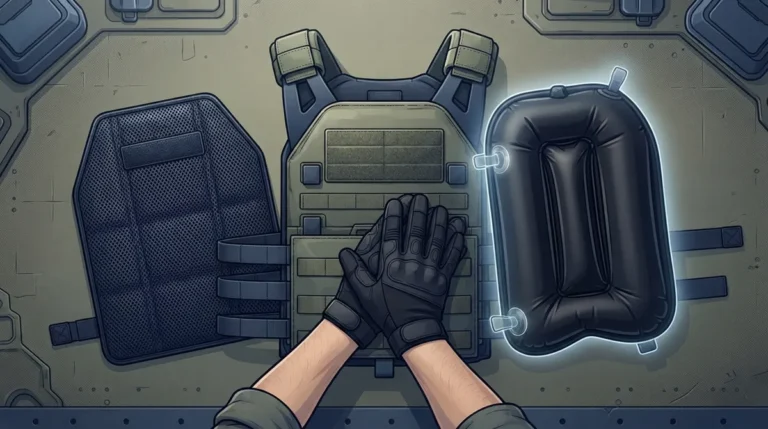
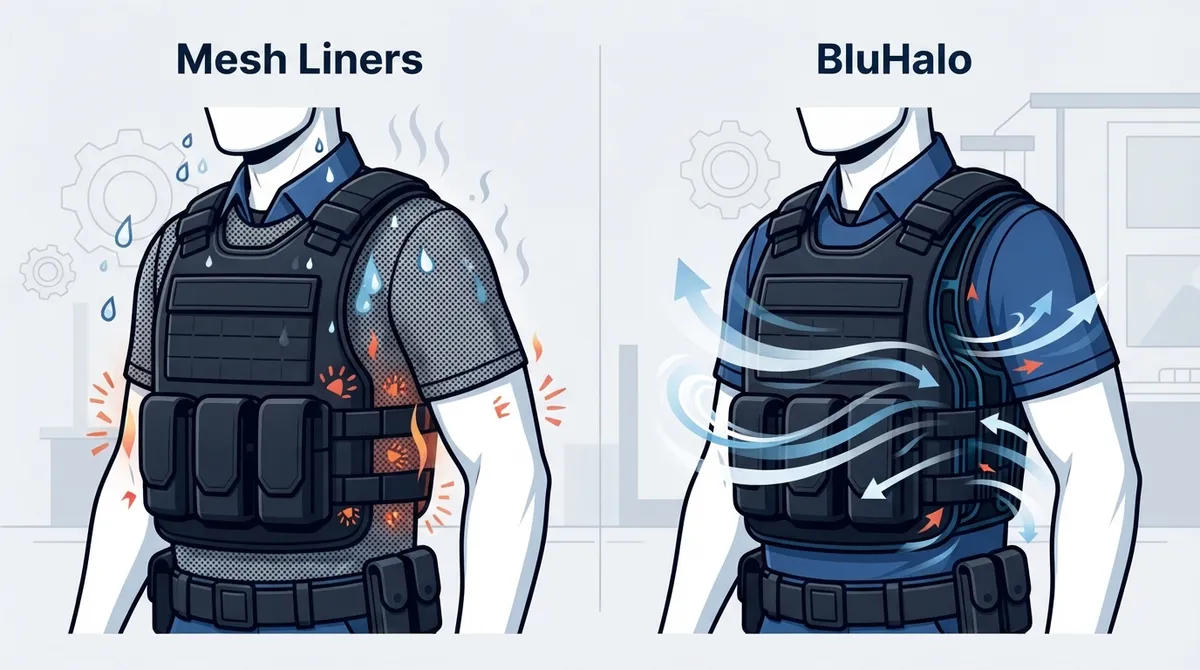
That is what BluHalo body armor compatibility is all about. BluHalo is a ventilation vest that sits between you and your carrier to create an air gap. Mesh liners take a different path. They are a fixed layer of spacer fabric that stays the same thickness all day. Both aim to help with heat and sweat, but they fit very differently.
In this friendly guide, we will compare the two. We will look at how each attaches, what carriers they suit, and how to test a fit before you trust it on duty. Whether you wear a patrol vest, a plate carrier, or concealed soft armor, this will help you choose with confidence.
What Does Body Armor Compatibility Really Mean?
When people say a product is “compatible” with body armor, they usually mean it can be worn with the armor without causing trouble. That sounds simple. In real life, it is a bit more complicated.
True compatibility covers a few things at once:
- Attachment: Can it stay in place without tools or permanent changes?
- Fit: Does it change how the vest sits on your body?
- Movement: Can you still sit, bend, twist, and reach?
- Access: Can you still reach your gear and fasten your straps?
- Comfort: Does it avoid pressure points and rubbing?
Here is an honest note. “Compatible” is a general claim, not a promise for every carrier, armor cut, plate size, or loadout. Every setup is a little different. That is why testing your own gear matters so much. For official background on armor, the National Institute of Justice body armor resources are a solid place to start.
Meet the Contenders
BluHalo: The Inflatable Air-Gap Vest
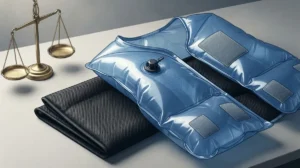
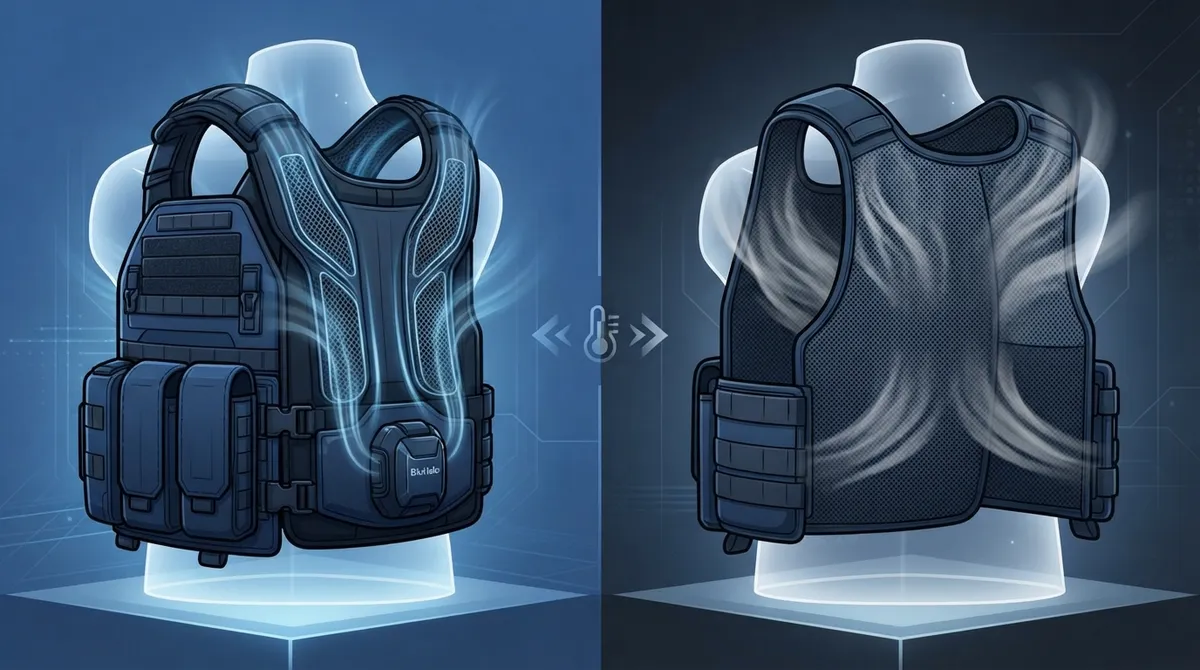
BluHalo is a lightweight ventilation vest made to be worn under body armor. It was created by a Chicago police officer who knew the struggle of heat and sweat firsthand. The manufacturer says it weighs under 7 ounces and lies flat when deflated. When inflated, it can lift the carrier up to about 1.5 inches off your body.
That lift creates space for air to move. More airflow can help reduce trapped heat and moisture. It is not a cooling pad or an armor panel. Think of it as a smart spacer that you control. You inflate it with a small pump when you want more space. Then you deflate it with a button when you do not. For a closer look at how it works, see how to beat vest heat with BluHalo inflatable cooling.
Mesh Liners: The Fixed Spacer
Mesh liners are a simple idea. They are made from a breathable, three-dimensional fabric. You wear one between your body and your armor. The mesh keeps the vest slightly off your skin, which can let a little air pass through.
The key difference is that a mesh liner has a set thickness. You cannot make it bigger or flatter on the fly. If you want to dig deeper into that tradeoff, our comparison of BluHalo vs. mesh vests covers it well.
Side-by-Side: BluHalo vs. Mesh Liners
Here is a quick snapshot. Remember that BluHalo’s numbers are manufacturer-reported, not independently verified.
| Feature | BluHalo | Mesh Liner |
|---|---|---|
| Design | Inflatable air-gap vest | Fixed spacer fabric |
| Adjustable thickness | Yes, inflate or deflate on demand | No, always the same |
| Stated weight | Under 7 ounces | Varies by product |
| Stated lift | Up to about 1.5 inches | Usually thin and fixed |
| Attachment | Velcro to inside of carrier | Usually worn loose or clipped |
| When flat | Lies flat when deflated | Stays the same thickness |
| Best for | Cooling on demand | Light, constant airflow |
How BluHalo Attaches to Your Carrier
This is where BluHalo body armor compatibility really comes down to your gear. The manufacturer says BluHalo attaches with Velcro to the inside of a carrier. It generally needs no tools and no permanent changes. They also advise placing it on a clean surface.
That last part matters. Hook-and-loop only works if there is a good surface to grab. Some carriers have plenty of loop-friendly lining. Others have very little. Actual attachment depends on your carrier’s lining and the space you have for the Velcro.
Follow these steps for a smooth setup:
- Start with a clean, dry carrier interior.
- Check for open hook-and-loop area where BluHalo will sit.
- Position the device flat against the inside of the carrier.
- Press the Velcro firmly so it grips well.
- Inflate it a little and check that it stays put.
Need more detail? Our walkthrough on how to install BluHalo on body armor the right way goes step by step. You can also read how to attach BluHalo Velcro patches the right way if your carrier needs extra grip.
Which Armor Types Work Best?
BluHalo is advertised for use with many concealed and external setups, including duty vests and plate carriers. Mesh liners are often used the same way. Here is how each tends to play out by armor style.
Plate Carriers
Plate carriers are often wide and rigid, with room inside the shell. That extra room can make an inflatable spacer easier to fit. Because BluHalo adds lift, check that your plates and straps still sit where they should. For more ideas, see how plate carrier ventilation actually works.
External Duty Vests
External carriers worn over the uniform usually have a fairly roomy interior. They often work well with ventilation spacers. Still, test it with your radio, light, and other gear on the front.
Concealed Soft Armor
Concealed vests are made to be slim. They sit close to the body under a uniform shirt. Adding any spacer changes that fit. A thin mesh liner may feel less noticeable here. An inflatable device can still work, but you will want to check bulk and how it looks under your shirt. We cover this in how to fit cooling accessories under concealed body armor.
How to Test Your Fit Before You Commit
Here is the friendly truth. No article can promise a perfect fit with your exact setup. The best move is a simple at-home test. Do this with your full loadout on, not just the bare vest.
- Gear up fully. Wear your armor, belt, radio, and anything else you carry.
- Attach and inflate. Set BluHalo in place and add air in small steps.
- Stand and breathe. Check for pressure points or tightness.
- Sit down. Try your car seat or desk chair. Watch for shifting.
- Bend and twist. Reach for your gear and check your range of motion.
- Check closures. Make sure straps, buckles, and zippers still work.
- Walk and move. Look for rubbing, slipping, or noise.
Watch for these warning signs:
- The device shifts or slides out of place
- Straps or closures feel too tight or too loose
- You cannot reach key equipment easily
- A pressure point forms in one spot
- The carrier rides at a different height than before
If something feels off, adjust the inflation or placement first. If it still does not feel right, talk to your armor maker or to us before using it on duty.
A Quick Word on Protection and Safety
This part is important. The sources available to us do not independently confirm that adding BluHalo leaves protective performance unchanged. They also do not show that it has been tested with every armor system. So treat this as something to check, not something to assume.
Always follow the armor maker’s and carrier maker’s instructions. If you are unsure about a specific configuration, ask them directly. You can also contact the BluHalo team with questions about your exact setup. Safety comes first, and comfort comes second.
It also helps to know why heat matters so much. Heat stress is a real risk for people in protective gear. The OSHA heat exposure guidance explains the warning signs and prevention steps. Staying cool is not just about comfort. It is about staying sharp and safe.
When Does BluHalo Make the Most Sense?
BluHalo shines when you want control. You can inflate it during a hot stretch and deflate it when you want a slimmer profile. That cooling-on-demand idea fits many real shifts. Think long patrol days, traffic duty in the sun, or outdoor security posts.
Here are some people who may find it a great fit:
- Patrol officers who sit and stand through long, hot shifts
- Security professionals working outdoor posts
- Military personnel in warm climates
- SWAT and tactical teams who want flexible airflow
- First responders who move between hot and cooler spaces
Mesh liners can still be a fine pick if you want something simple and always on. But if you like the idea of choosing your airflow level, BluHalo is hard to beat. It is our top choice for adjustable comfort under armor.
Pairing BluHalo With Blufano for Even More Relief
Some folks want more than an air gap. That is where Blufano comes in. Blufano is an active fan system that moves fresh air beneath your armor. It slides under any style of body armor and can be held with an optional strap. It offers adjustable airflow and, per the maker, runs about 8 to 32 hours depending on the setting.
BluHalo creates the space. Blufano moves the air through that space. Together, they make a strong pair. Want to see how they team up? Check out 8 steps to use BluHalo and BluFano together. You can also compare the two in BluFano vs BluHalo: which cooling vest fits you. Many customers also bundle both at a discount.
Quick Tips to Get the Best Fit
- Start with a small amount of air, then add more as needed
- Keep your Velcro surface clean and dry
- Re-check placement after a few days of wear
- Test while seated, since that is where fit problems often show up
- Take notes on any pressure points and adjust early
Small steps make a big difference. A few minutes of testing now can save you a rough shift later.
Final Thoughts: Which Wins for Fit?
So, which one fits your armor better? It depends on you. Mesh liners are simple, fixed, and easy. BluHalo is adjustable, lightweight, and built to give you airflow only when you want it. For most people who want flexible comfort under their gear, BluHalo is the stronger pick.
The best answer always comes from testing your own setup. Try it with your full loadout. Check your movement. Listen to your body. And never skip your armor maker’s guidance.
Ready to cool down with confidence? Get in touch with our team and we will help you find the right fit for your gear. We are happy to chat about your carrier, your shift, and your comfort goals. You deserve to feel cooler, drier, and focused on the job.
FAQs
Q: Does BluHalo fit under a plate carrier or external body armor vest?
A: BluHalo is advertised for use with many setups, including plate carriers and duty vests. Fit still depends on your carrier, plates, and loadout, so test the full setup while standing, sitting, and moving before duty use.
Q: How does BluHalo attach to a body armor carrier?
A: It attaches with Velcro to the inside of many carriers, usually without tools or permanent changes. Start with a clean surface and check that your carrier has enough hook-and-loop area for a solid grip.
Q: How much space does BluHalo add when inflated?
A: The manufacturer says it can lift the carrier up to about 1.5 inches when inflated, and it lies flat when deflated. These are manufacturer-reported numbers, so check how the lift feels with your own gear.
Q: Can BluHalo affect the fit or protection of my body armor?
A: Any spacer changes how a carrier sits on your body, so check for shifting, pressure points, and blocked access to gear. Available sources do not independently confirm that protective performance stays unchanged, so follow your armor maker’s guidance and reach out to us with questions.
Q: How do I know if BluHalo is compatible with my specific carrier?
A: Do a full-gear test. Attach it, inflate it, then stand, sit, bend, and reach while checking closures and equipment access. If anything feels off, adjust the inflation or placement, or contact the BluHalo team for help.