Key Takeaways
-
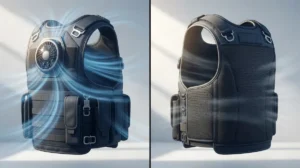
Body armor, uniforms, and duty belts trap heat and block sweat evaporation, so deputies face extra heat stress on long, hot shifts and need targeted cooling.
-
Ventilation vests are often the most practical choice for armor wearers because they create airflow exactly where armor traps heat and moisture.
-
Always confirm cooling gear fits your specific armor carrier, panels, and uniform, and follow both manufacturers' instructions and agency policy.
-
Choose passive ventilation for active movement and fan-powered systems for long periods seated in a patrol car or standing at crash scenes.
-
Cooling gear supports but does not replace hydration, shade breaks, acclimatization, and knowing heat illness warning signs like dizziness and confusion.
-
Charge fan units after every shift, wipe down gear after use, and inspect for wear before each shift to keep cooling performance reliable.
If you are a sheriff deputy, you know the feeling. It is a hot afternoon, your body armor is soaked, and your duty belt feels like it weighs twice as much as it did this morning. You still have hours left on your shift. Sound familiar?
You are not alone, and there is good news. Today’s sheriff deputy cooling gear can make a real difference in how you feel on long, hot patrols. Body armor, uniforms, and duty belts trap heat and block sweat from evaporating. That adds up to extra heat stress during traffic stops, outdoor calls, and long shifts.
In this friendly guide, we will walk you through how to pick the right cooling gear step by step. You will learn the types of gear out there, what to check before you buy, and how to use it safely. Think of it as a chat with a fellow member of the law enforcement family who wants you to get home safe and comfortable.

Why Deputies Need Cooling Gear in the First Place
Body armor does a vital job. But it also covers a big part of your torso, which is where your body wants to release heat. Add a uniform, a duty belt, and a hot patrol car, and the heat builds fast.
When sweat cannot evaporate, your body cannot cool itself well. Heat illness can start with simple tiredness and cramps. It can then move to heat exhaustion and, in the worst cases, life-threatening heat stroke. The OSHA heat stress guide explains these risks and the warning signs in plain terms.
Heat also hurts focus. When you are hot and drained, it is harder to stay sharp. If you want to dig deeper, our article on how heat affects police reaction time on duty covers this well.
Common Heat Challenges for Sheriff Deputies
- Long outdoor shifts: Traffic control, crash scenes, and rural patrols often mean hours in direct sun.
- Hot vehicles: A parked patrol car can heat up fast, even with the windows cracked.
- Heavy gear: Armor, a duty belt, and extra equipment limit airflow.
- Physical calls: Foot pursuits and strenuous tasks raise your core temperature quickly.
Know Your Options: Types of Cooling Gear
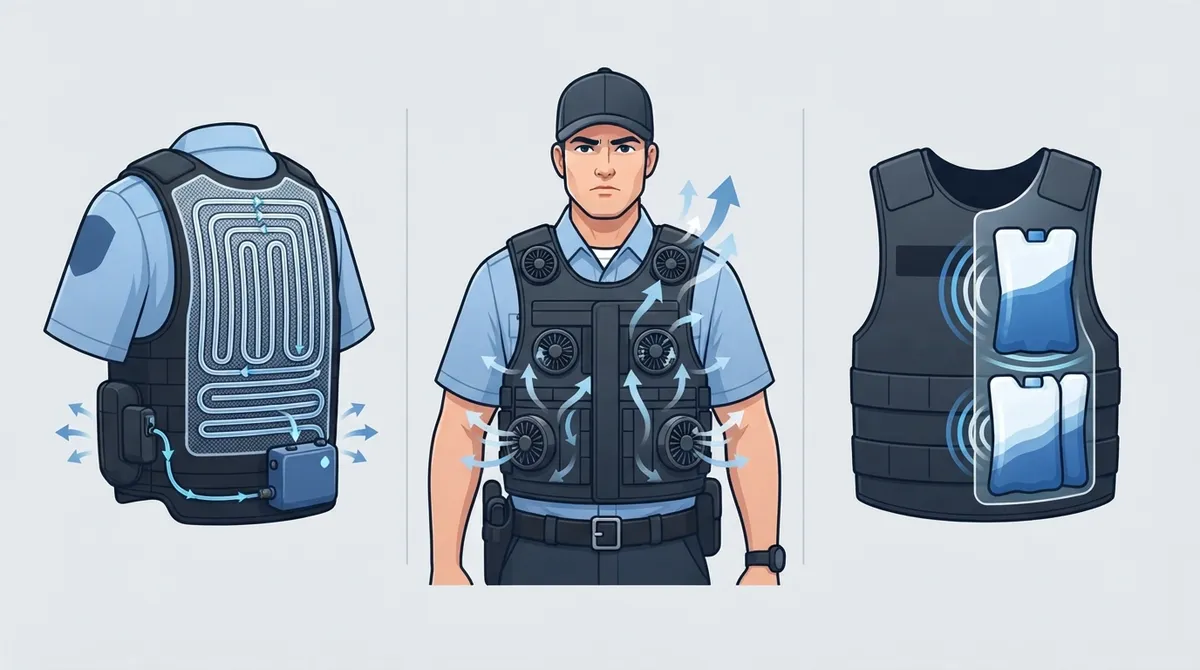
Not all cooling gear works the same way. Before you buy, it helps to know the main types. Each one has strengths and trade-offs.
| Type | How It Works | Best For | Things to Watch |
|---|---|---|---|
| Ventilation vest (passive) | Spacer mesh or structure creates an air gap under armor | Simple, low-maintenance airflow | Needs movement or ambient air to help |
| Ventilation vest (active, with fan) | A fan moves air beneath the armor | Airflow even when you are standing still or seated | Needs charging and basic care |
| Inflatable air-gap vest | Inflates on demand to lift armor off the body | Cooling-on-demand, flat when not needed | Needs a quick inflate step |
| Ice or phase-change vest | Stores cold in packs or panels | Short bursts of strong cooling | Adds weight, packs must be re-chilled |
| Evaporative vest | Water evaporating pulls heat away | Dry, low-humidity places | Works poorly in humid weather |
NIOSH lists air-cooled garments, water-cooled garments, cooling vests, and wetted overgarments as possible auxiliary cooling systems. Each has a place. For armor wearers, though, ventilation tends to be the most practical because it targets the exact spot where heat and moisture get trapped. Our comparison of ventilation vs. phase change cooling vests goes into more detail.
How to Choose Sheriff Deputy Cooling Gear: Step by Step
Ready to shop smart? Follow these steps, and you will avoid the most common mistakes.
- Think about your typical shift. Do you spend more time in the car, on foot, or in the sun? Your answer shapes what you need.
- Check armor compatibility. Make sure the gear works with your specific carrier, panels, and uniform.
- Decide between passive and active. Passive is simple. Active, with a fan, moves air even when you are not moving.
- Look at weight and bulk. Gear should sit flat and stay out of your way.
- Check power and runtime. If it uses a battery, ask how long it lasts on each setting.
- Confirm durability. Duty gear takes a beating, so look for strong materials.
- Read real reviews. Feedback from other officers tells you what marketing cannot.
Step 1: Match the Gear to Your Duty Conditions
A deputy working a rural patrol in dry heat has different needs than one working a humid coastal county. Humidity matters a lot. Evaporative gear struggles in sticky air, while ventilation that moves air under your armor helps in both. For a closer look, see our guide to choosing law enforcement gear for hot climates.
Step 2: Confirm It Fits With Your Armor
This one is critical. Cooling gear should never get in the way of your armor coverage, retention, or movement. Always follow the armor maker’s instructions, the cooling gear maker’s instructions, and your agency’s policy. When in doubt, ask your supervisor or quartermaster.
The NIJ body armor standards are a good place to learn what your armor is built to do, so you can make sure nothing you add changes that.
Why Ventilation Vests Stand Out for Deputies
A ventilation vest creates space or channels between your body and your armor. That lets heat and moisture escape instead of sitting against your skin. It does not replace your armor or your other heat-safety habits. It simply helps you manage the heat load.
Here is why many deputies like this approach:
- No ice to refill: You are not chasing a freezer or cooler mid-shift.
- Targets the problem spot: Airflow goes right where armor traps heat.
- Low profile: Good designs stay slim under a uniform shirt.
- Reduces moisture: Less sweat sitting on your skin means less chafing and fatigue.
To understand the basics, check out what vest ventilation is and why you need it.
Our Top Picks: BluHalo and Blufano
We might be a little biased, but we think these two are hard to beat. Both were built by people who understand life in body armor.
BluHalo: Cooling on Demand
The BluHalo ventilation vest was created by a Chicago police officer who was tired of overheating in his vest. It weighs under 7 ounces and sits flat and unnoticed when deflated. When you need relief, you inflate it with a small pump and it lifts your vest up to about 1.5 inches off your body. That creates a cooling air gap right where you need it. A button deflates it quickly when you are done.
It attaches to a clean vest with Velcro. It is also built from double-layer, high-strength polyethylene for durability. Officers have shared how much it helped during 12-hour shifts in 95-degree weather. For a full walk-through, read how to use the BluHalo ventilation vest for maximum comfort.
Blufano: Active Airflow Under Your Armor
The Blufano fan system takes things a step further. It is a self-contained, active airflow unit with a patented air-redirect spout that slides under any style of body armor. An optional strap helps keep it secure. You get adjustable airflow for roughly 8 to 32 hours, depending on your setting.
It also has a built-in 10,000mAh power bank that runs the fan and can charge your USB devices. A forward-facing light gives you hands-free illumination in low light. Deputies have reported faster cooling, less sweat, and better focus on hot days. If you want to compare the two, see BluFano vs BluHalo.
Better Together
Many deputies pair the two. The BluHalo creates the air gap, and the Blufano pushes fresh air through it. You can buy each one separately or grab them as a bundle at a discount in our shop.
Passive or Fan-Powered: Which Is Better for Patrol?
This is one of the most common questions we hear. The honest answer is that it depends on your day.
| Factor | Passive | Fan-Powered |
|---|---|---|
| Batteries needed | No | Yes (rechargeable) |
| Airflow when seated | Limited | Strong |
| Maintenance | Very low | Charging and light care |
| Best use | Moving, active duty | Long stretches in the car or standing |
Deputies who sit in a patrol car or stand at crash scenes for long periods often get the most from active airflow. Passive designs work well when you are moving around. Our article on passive vs. active tactical vest ventilation breaks it down further.
How Long Does Cooling Gear Last?
Runtime varies by product type. NIOSH’s 2016 heat criteria document says cooling vests commonly give about two to three hours of effective cooling. In specific hot, humid conditions, some cooling may last up to four hours. Keep in mind that this figure applies to cooling vests, not to every ventilation product.
Fan-powered systems run on batteries, so their runtime depends on the setting you choose. Performance in general depends on the design, the fit, your activity, the temperature, and the humidity. Always check the maker’s stated runtime and plan to charge or swap as needed.
Cooling Gear Is a Helper, Not a Cure-All
Let’s be clear about something important. No vest replaces smart heat-safety habits. Cooling gear works best as part of a bigger plan. Here are the habits that matter most:
- Hydrate often: Drink water before you feel thirsty.
- Take shade breaks: Step out of the sun whenever your duties allow.
- Acclimatize: Give your body time to adjust to hot weather.
- Know the warning signs: Dizziness, nausea, heavy sweating, and confusion all need attention.
- Look out for partners: Check on your fellow deputies, too.
If you want a deeper plan, read our guide on how to prevent heat stress while wearing body armor. It pairs nicely with the right gear.
What Agencies Should Consider
If you help pick gear for a whole sheriff’s office, a few extra points matter. Agencies should train deputies and supervisors to spot heat illness symptoms. They should also provide water and cool recovery areas, set work-rest schedules, and respond fast to any suspected illness.
When choosing products for a team, look at armor compatibility, durability, ease of cleaning, and replacement costs. It also helps to run a small trial first and ask for feedback. For more ideas, check out what the best cooling gear for police officers looks like.
Care Tips to Keep Your Gear Working
A little care goes a long way. Follow these simple habits:
- Attach to a clean vest. Dirt and grime can reduce grip and comfort.
- Charge fan units after each shift. Do not wait until the battery is dead.
- Wipe down after use. Sweat and dust can build up over time.
- Store flat and dry. Avoid hot car trunks for long periods.
- Inspect regularly. Look for wear, loose parts, or damage before each shift.
Conclusion
Staying cool on duty is not a luxury. It helps you think clearly, stay safe, and finish your shift feeling like yourself. The right sheriff deputy cooling gear starts with knowing your conditions, checking armor compatibility, and choosing a system that fits how you work. For many deputies, a ventilation vest like BluHalo, a fan system like Blufano, or both together offer the best mix of comfort and convenience.
Have questions about which setup fits your department? We would love to help. Get in touch with our team and we will point you in the right direction. Stay cool out there, and stay safe.
FAQs
Q: What cooling gear works best for sheriff deputies wearing body armor?
A: Ventilation vests and fan-assisted systems tend to work well because they move air right where armor traps heat. Options like the BluHalo inflatable ventilation vest and the Blufano fan system are built to fit under body armor. Always confirm fit with your armor and agency policy first.
Q: Can a ventilation vest be worn with a ballistic vest?
A: Yes, many ventilation products are designed to work under or with body armor. The key is to check that it does not interfere with your armor’s coverage, retention, or movement. Follow both manufacturers’ instructions and your department’s rules.
Q: What is the difference between a ventilation vest and a cooling vest?
A: A ventilation vest creates airflow space so heat and moisture can escape, using mesh, an air gap, or a fan. A cooling vest usually cools through stored cold, like ice or phase-change packs, or through water evaporation. Many deputies prefer ventilation because there is no ice to refill.
Q: Can cooling gear replace hydration and rest breaks?
A: No. Cooling gear is a helpful comfort and heat-management tool, but it does not replace water, shade, rest, acclimatization, or your agency’s heat-illness plan. Use it alongside these habits for the best protection.
Q: Are fan-powered vests better than passive vents for patrol work?
A: It depends on your shift. Fan-powered systems give airflow even when you are seated or standing still, which helps during long car time or crash scenes. Passive designs are simpler with no charging, and work well when you are on the move.