Key Takeaways
-
Universal fit claims require hands-on testing with your specific armor type, neckline, and gear layout before relying on the device during duty shifts.
-
Pairing an active fan like Blufano with a passive air-gap vest like BluHalo creates optimal cooling by combining forced airflow with dedicated space for air circulation under armor.
-
Cooling fans reduce sweat and trapped heat but do not prevent heat illness alone; maintain hydration, rest breaks, and follow your agency's heat-safety plan as the foundation.
-
Battery-powered fans offer 8-32 hours runtime depending on speed settings, so use lower settings when possible to extend battery life during long shifts.
-
Active fans work best for stationary or low-movement duties like standing posts and vehicle patrols, while passive ventilation suits constant movement with minimal maintenance needs.
-
Confirm that any cooling device does not shift armor position, reduce coverage, or interfere with retention by testing full movement patterns before operational use.
If you wear body armor for a living, you already know the feeling. Your shirt is soaked by mid-shift. Heat builds up against your chest and back. By hour six, you’re tired, cranky, and counting the minutes. The good news? A cooling fan that fits any body armor can help move air where you need it most.
In this guide, we’ll walk through how these fans work, what “fits any armor” really means, and how to pick the right setup for your job. We’ll also cover safety checks, common mistakes, and how active fans compare to passive options. Whether you’re a patrol officer, soldier, security pro, SWAT operator, or first responder, you’ll find simple, honest advice here.
One quick note up front: no fan replaces water, rest, and smart heat-safety habits. Think of a fan as a helpful tool in your kit, not a magic cure. Let’s dive in!
What Does “A Cooling Fan That Fits Any Body Armor” Actually Mean?
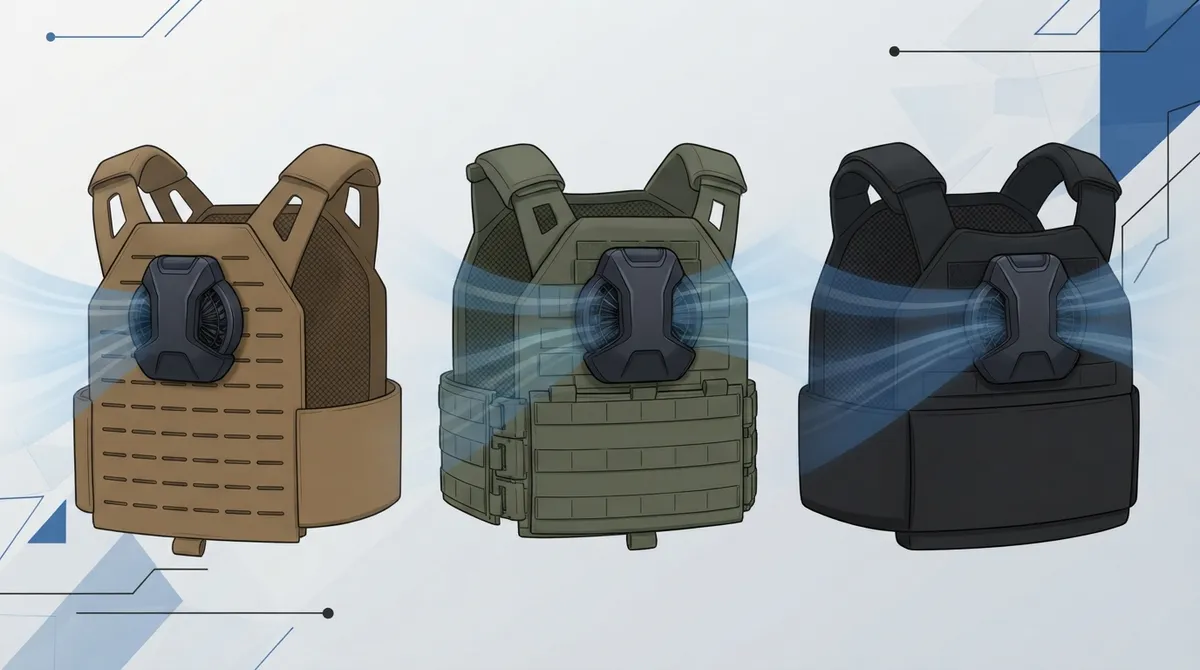
In the ventilation vest world, this phrase usually points to a small, portable fan unit. It pushes air under your existing vest or plate carrier. It is not a fan built into the armor itself.
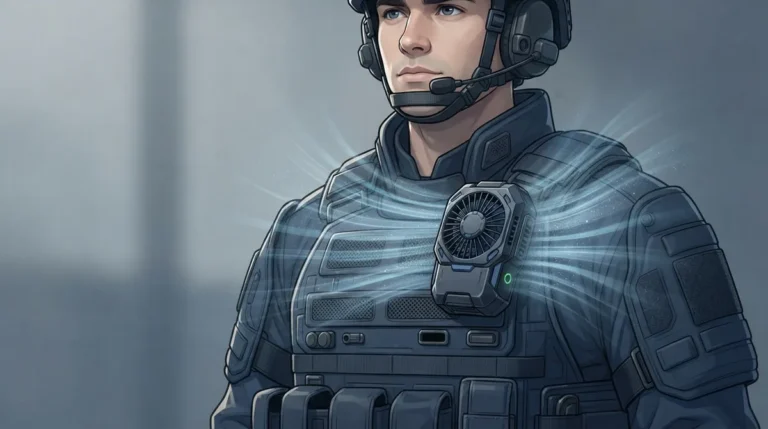
Most of these devices use a fan and a duct or nozzle. The nozzle slides under the top edge of your carrier and sends air down your chest or back. That moving air helps sweat evaporate, which can leave you feeling cooler and drier.
Here’s the honest part. “Fits any body armor” is a broad product claim. Real-world fit depends on a few things:
- Armor shape: Concealable vests, plate carriers, and external carriers all sit differently.
- Carrier coverage: High necklines or tight collars can limit where a nozzle can slide in.
- Closures and gear: Radios, mounts, and load-bearing equipment can crowd the space.
- Mounting style: Some fans use straps, clips, or slide-under designs.
So when you see a “universal fit” label, treat it as a good starting point. Then confirm the fit with your own setup before you count on it during a shift.
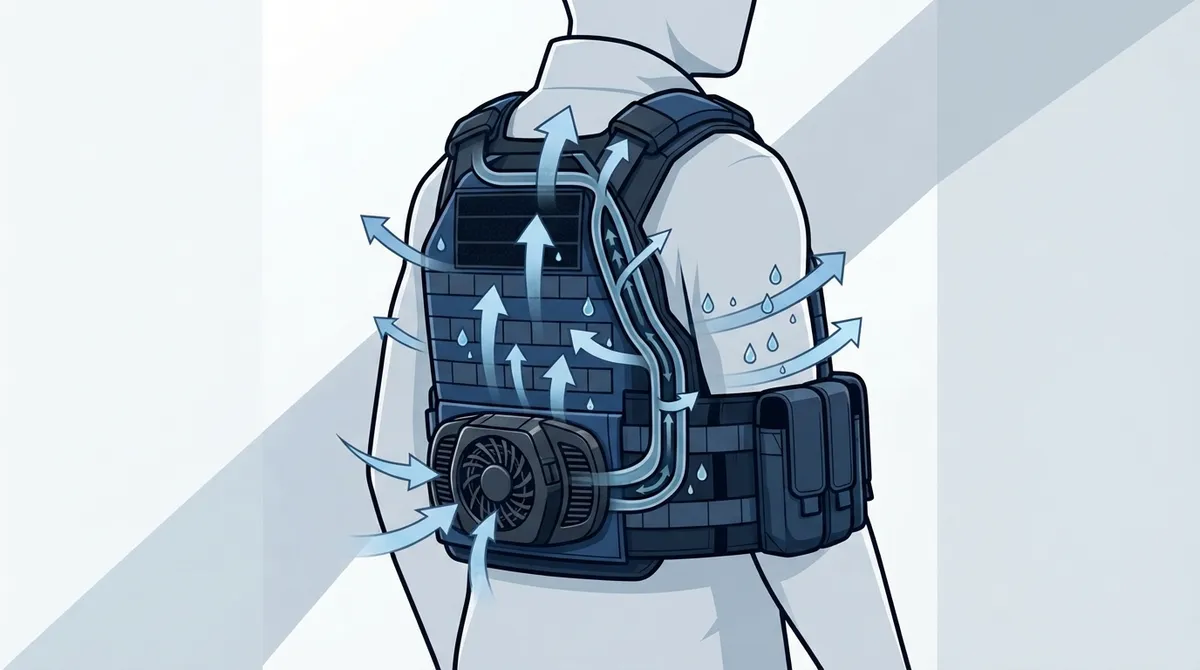
How a Body Armor Cooling Fan Works
The idea is simple, but it works well when done right. Body armor traps heat and sweat against your body. There is little room for air to move. A fan helps change that.
Here is the basic flow:
- A small, battery-powered fan pulls in outside air.
- A nozzle or duct guides that air under the top edge of your vest.
- The air travels down your torso, moving past damp skin and base layers.
- Moisture evaporates faster, and trapped heat gets pushed out.
That moving air is the key. It helps your body’s natural cooling system do its job. The results depend on conditions, though. Humidity, airflow volume, clothing, and how hard you’re working all change how much relief you feel.
If you want a deeper look at the science, check out our guide on how an active cooling system works in ventilation vests. It breaks down the airflow in plain language.
Meet Blufano: An Active Fan Built for Body Armor
When it comes to a cooling fan that fits any body armor, Blufano is our top pick. It is a self-contained, active airflow system made for officers and everyday heroes who wear armor daily.
Here is what makes it stand out:
- Patented air-redirect spout: It slides under any style of body armor to send air right where you need it.
- Optional strap: You can secure the unit so it stays put during movement.
- Adjustable airflow: Dial the fan up or down with a simple control knob.
- Long runtime: Expect roughly 8 to 32 hours depending on the setting you choose.
- Built-in 10,000mAh power bank: It powers the fan and can also charge USB devices.
- Forward-facing light: Handy for hands-free illumination in low light.
Officers who use it often mention less sweat, quicker cooling, and better focus on hot days. Some even pair it with vehicle air conditioning for a fast reset between calls. For a full walkthrough, see how to use a BluFano body armor fan to stay cool.
Runtime numbers are manufacturer figures and will vary with your settings and battery condition. Always test it in your own routine.
Active Fans vs. Passive Ventilation: What’s the Difference?
Not every cooling solution uses a fan. Some products use spacer mesh, panels, or channels to create a gap for airflow. Others add a lift system. Each approach has strengths.
| Feature | Active Fan (e.g., Blufano) | Passive Ventilation |
|---|---|---|
| Power needed | Yes, battery or power bank | No |
| Airflow control | Adjustable | Fixed, depends on movement |
| Best for | Standing, driving, static posts | Constant movement, low-maintenance use |
| Maintenance | Charging required | Minimal |
| Noise | Low hum | Silent |
Neither option is “best” for everyone. Many officers combine both. For a closer look, read passive vs. active tactical vest ventilation to see how they compare in real use.
The Best Combo: Blufano Plus BluHalo
Here is a tip many pros love. A fan moves air, but it needs a little space to move it through. That is where BluHalo comes in.
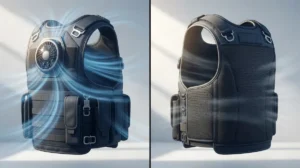
BluHalo is a lightweight ventilation vest worn under body armor. It was created by a Chicago police officer who was tired of overheating on long shifts. It weighs under 7 ounces and lies flat when deflated. When you inflate it with a small pump, it can lift your vest up to about 1.5 inches off your body. That creates a cooling air gap on demand.
Now picture pairing the two:
- BluHalo creates the space under your armor.
- Blufano pushes fresh air through that space.
- Sweat evaporates faster, and trapped heat has a path out.
You can buy each product alone or bundle them at a discount. Together they give you cooling relief that works on demand. Not a bad deal for a shift that runs twelve hours in 95-degree weather. You can see more in our BluFano vs BluHalo comparison.
How to Check Fit Before You Buy
Since “fits any armor” is a big claim, a little homework goes a long way. Use this simple checklist before you rely on any fan on duty:
- Know your armor type. Concealable vest, plate carrier, or external carrier? Each has different gaps and neck openings.
- Check the top edge. Make sure the nozzle can slide in without forcing it.
- Test your gear layout. Look at radio mics, mounts, and pouches that might block the unit.
- Try full movement. Sit, drive, bend, reach, and run. Make sure nothing shifts or pinches.
- Confirm armor coverage. The device must not move your armor out of its correct position.
- Read both manuals. Follow the armor maker’s guidance and the cooling device instructions.
That last point matters. Your armor is life-saving equipment. Any add-on should not interfere with coverage, retention, or fit. If you ever have doubts, check the NIJ body armor standards and your armor manufacturer’s guidance.
Who Benefits Most From a Body Armor Fan?
Heat does not care what badge you wear. Here is how different groups can put a fan to work.
Patrol Officers and Law Enforcement
Long shifts in cars and on foot mean heat builds fast. A fan helps in the patrol car, at traffic stops, and at scenes where you stand for long stretches. Our guide on police vest cooling systems for hot shifts has more ideas.
Military Personnel
In hot climates, heavy armor and gear add up. A compact fan with a power bank fits well into field routines. See how to master body armor heat management for military use.
Security Professionals
Armed guards often stand still for hours. Standing still means little natural airflow. A fan keeps air moving. Check out our tips on staying cool in body armor for security guards.
Tactical and SWAT Teams
Heavy gear and high-intensity work push heat levels up. A fan can help between operations or during staging. Keep the setup low-profile so it does not snag.
Emergency Response Personnel
First responders face heat from the weather and from the job itself. A fan helps manage comfort, though it never replaces proper heat-safety steps. For more on this, read heat illness prevention strategies for first responders.
A Fan Helps, But It Is Not a Cure-All
Let’s be real for a moment. A cooling fan is a great tool, but it does not stop heat illness on its own. NIOSH lists air-cooled garments and cooling vests as helpful auxiliary approaches for occupational heat exposure. It does not claim they remove the risk.
One NIOSH summary of a study looked at workers wearing protective equipment. Those without cooling vests had higher body temperatures and heart rates at the end of treadmill tests than those wearing cooling vests. That is encouraging, but it does not give a single number you can apply to every body armor fan.
So keep your heat-safety basics strong:
- Drink water before you feel thirsty.
- Take rest breaks in shade or air conditioning when you can.
- Build up your heat tolerance gradually if you are new to a hot area.
- Know the warning signs of heat illness and watch your partners too.
- Follow your agency or employer’s heat plan.
The OSHA heat exposure guidance is a solid resource for these basics. For more on this topic, see how to prevent heat stress while wearing body armor.
Common Mistakes to Avoid
A great fan can still disappoint if you set it up poorly. Watch out for these slip-ups:
- Skipping the fit test. Always try the unit with your full duty rig on.
- Blocking the intake. A pouch or strap over the air intake kills airflow.
- Forgetting to charge. A dead battery is just dead weight. Charge it before shift.
- Running max speed all day. Use lower settings when you can to stretch runtime.
- Ignoring armor guidance. Never change how your armor sits or covers you.
We cover more in our post on 7 body armor cooling fan mistakes you must avoid. It is a quick read that can save you some frustration.
How to Choose the Right Setup for You
Ready to pick? Keep it simple. Ask yourself these questions:
- How long are my shifts? Longer shifts call for longer battery life and a power bank.
- Am I mostly still or on the move? Static posts favor active fans. Constant motion may suit passive gap solutions.
- What armor do I wear? Match the nozzle design to your carrier’s top edge.
- Do I need extras? A built-in light or USB charging can be handy.
- Do I want maximum cooling? Pair a fan with an air-gap vest for the best results.
If you want a step-by-step breakdown, our guide on how to pick a cooling fan system for body armor goes into more detail. You can also browse the shop to see current options and bundles, or read real user feedback on our reviews page.
Final Thoughts: Stay Cool, Stay Sharp
Heat wears you down. It drains your energy and can pull your focus away from the job. A cooling fan that fits any body armor gives you a practical way to fight back. Just remember to confirm the fit, follow safety guidance, and keep good heat habits.
If you want the strongest setup, start with Blufano for active airflow and add BluHalo for an on-demand air gap. Together, they are built to keep you cooler, drier, and more comfortable shift after shift. Have questions about fit or which option suits your gear? Get in touch with our team and we’ll help you find the right match.
FAQs
Q: Will a cooling fan fit my specific body armor or plate carrier?
A: Most body armor cooling fans are built to slide under the top edge of a vest or carrier, but “fits any armor” is a broad claim. Check your armor type, neckline, and gear layout, then test the fit during normal movement. When in doubt, reach out to the maker before you buy.
Q: How long does a body armor cooling fan run on a charge?
A: It depends on the model and fan setting. For example, Blufano is rated for about 8 to 32 hours depending on the speed you choose, and it has a built-in 10,000mAh power bank. Lower settings stretch runtime, so match your setting to the heat of the day.
Q: Can a cooling fan interfere with body armor fit or protection?
A: It shouldn’t, but you need to check. A good setup must not shift your armor, reduce coverage, or block movement and retention. Follow both the armor maker’s and the fan maker’s instructions, and test the setup before you rely on it on duty.
Q: Does a fan under body armor prevent heat exhaustion?
A: A fan can help you stay more comfortable by moving air and helping sweat evaporate, but it does not prevent heat illness by itself. Keep up with hydration, rest breaks, and your employer’s heat-safety plan. Think of the fan as one helpful layer in a bigger plan.
Q: What is the difference between an active cooling fan and a passive ventilation vest?
A: An active fan uses a battery to push air under your armor, and you can usually adjust the airflow. A passive ventilation vest uses spacer mesh or channels to make a gap, with no power needed. Many people pair the two, like Blufano with BluHalo, for stronger cooling.