Key Takeaways
-
Rechargeable vest fans outperform passive cooling options like mesh liners during long, stationary shifts by providing steady, adjustable airflow even when standing still, while passive systems depend on body movement.
-
Battery runtime varies significantly based on fan speed settings; Blufano delivers 8-32 hours depending on the dial, so always verify which speed level manufacturers claim rather than trusting "up to" numbers.
-
Combining active and passive cooling—such as pairing BluHalo's air gap with Blufano's fan system—delivers superior results compared to using either solution alone for maximum comfort under body armor.
-
Rechargeable vest fans are less effective in humid conditions because they cool primarily through sweat evaporation, which slows dramatically in high humidity; water and rest breaks remain essential.
-
When purchasing, prioritize fit compatibility with your specific body armor style, battery type flexibility (USB vs. proprietary), glove-friendly controls, and durability for duty-gear demands.
-
Patrol officers, security professionals at standing posts, and tactical teams in heavy armor benefit most from active airflow systems, while military personnel need extended battery life for extended missions in high heat.
If you wear body armor for a living, you already know the feeling. Your shirt is soaked by mid-morning. Heat is trapped against your chest and back. Every hour on shift feels longer than the last. That is why so many officers, soldiers, and security pros are asking about a rechargeable vest fan in 2026.
But here is the big question: is a fan-based system really better than passive cooling options like mesh liners or spacer pads? The answer depends on your job, your climate, and how long your shifts run. In this friendly guide, we break down how each option works, where each one shines, and what to look for before you buy. We also share how BluHalo and Blufano fit into the picture, so you can pick the setup that keeps you comfortable and focused on the job.

What Is a Rechargeable Vest Fan?
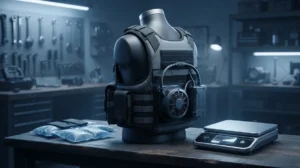
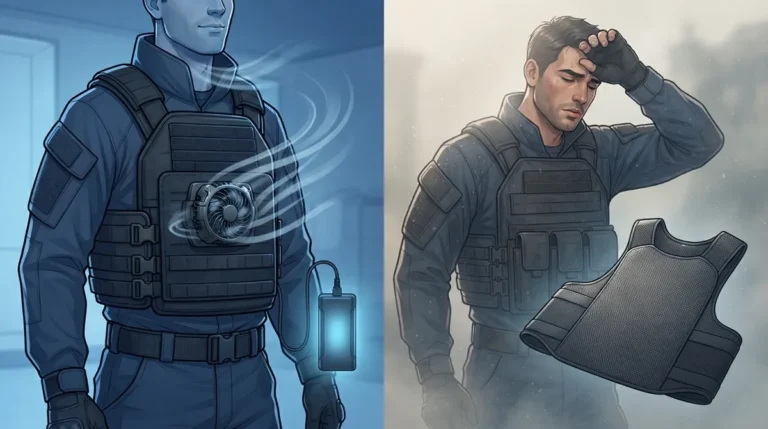
A rechargeable vest fan is a wearable ventilation system powered by a battery. One or more small fans pull in ambient air and move it around your torso. That moving air helps sweat evaporate, which is what makes you feel cooler.
It is important to be clear about one thing. A fan does not chill the air like an air conditioner. It moves air and helps your body cool itself. Results depend on airflow, fit, activity level, and the temperature and humidity around you.
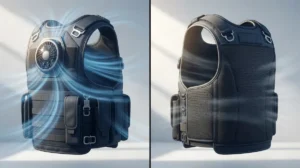
For body armor wearers, the idea is simple. Armor traps heat and moisture against the body. A fan system pushes air into that trapped space so the heat can escape. If you want a deeper primer, our guide on what vest ventilation is and why you need it covers the basics.
How Passive Cooling Works
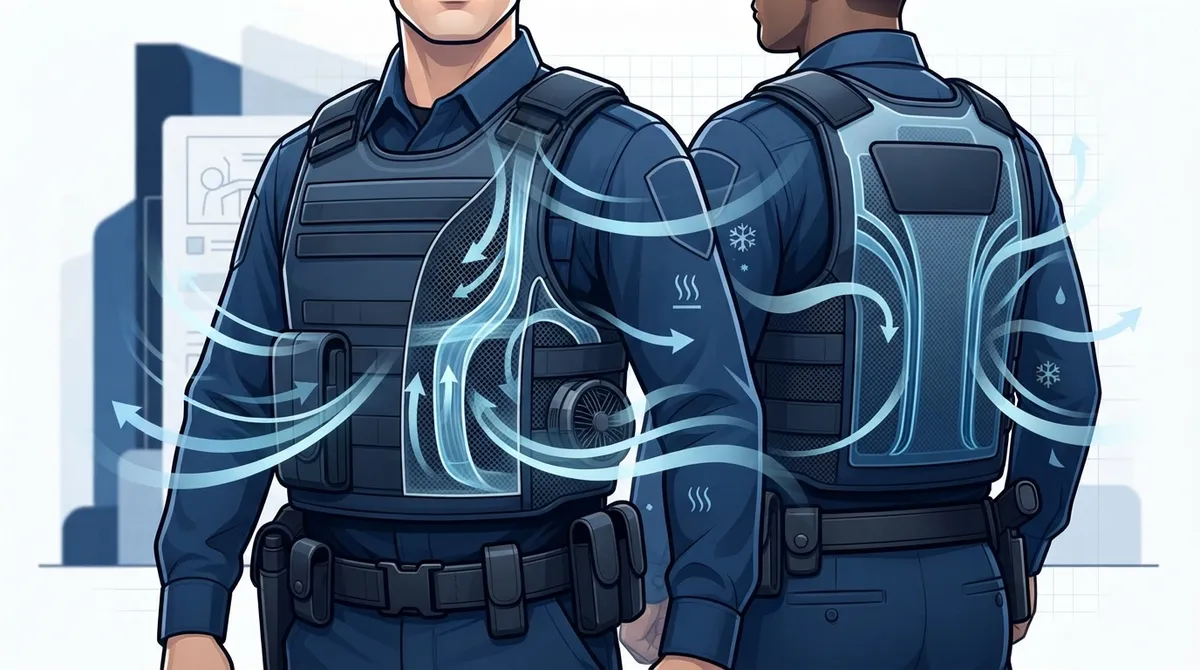
Passive cooling uses no power at all. Instead, it relies on materials and design to create small gaps or channels for air to flow. Think mesh liners, spacer fabrics, and ventilated pads that sit between you and your armor.
The big appeal is simplicity. There are no batteries to charge and nothing to break. But passive systems depend on your own movement to push air around. When you are sitting in a patrol car or standing at a post, there is often very little airflow at all.
Common Passive Options
- Mesh liners: Thin fabric layers that add small air channels.
- Spacer pads: Thicker foam or fabric pads that hold armor slightly off the body.
- Moisture-wicking shirts: Base layers that pull sweat away from skin.
- Cooling inserts: Packs or gels that need chilling before use.
These tools can help, especially as a base layer. For a closer look at how the two styles stack up, read passive vs. active tactical vest ventilation.
Rechargeable Vest Fan vs. Passive Cooling: Side-by-Side
Let us put the two approaches head to head. This table shows how they compare on the things that matter most during a long shift.
| Feature | Rechargeable Vest Fan | Passive Cooling |
|---|---|---|
| Airflow when standing still | Steady and adjustable | Very limited |
| Needs power | Yes, battery or power bank | No |
| Weight and bulk | Slightly more (battery and fan) | Usually lighter |
| Sweat evaporation | Strong support | Mild support |
| Noise | Low hum on most settings | Silent |
| Upkeep | Charging, cleaning, inspection | Wash and dry |
| Best for | Long, hot, low-movement shifts | Mild heat, active movement |
In short, a fan wins when you need airflow on demand. Passive gear wins on simplicity and low cost. Many pros use both: a wicking base layer plus an active airflow system on top.
How Long Does a Rechargeable Vest Fan Battery Last?
This is the number one question we hear, and the honest answer is: it depends. Runtime changes with battery size and fan speed. Higher speeds move more air but drain the battery faster.
Across the market, many fan-vest systems claim around 3 to 8 hours of use. Larger batteries or low-speed settings can stretch that further. Some listings claim much longer numbers. For example, one product listing with a 20,000 mAh battery reports about 25 hours on low and 12 hours on high. Another 2026 comparison reports up to roughly 11 hours on high with a 5.0 Ah battery in one fan-cooled workwear system.
Keep in mind that these are manufacturer or listing claims, not independent lab results. Always check which fan setting the maker used for the runtime number. A big “up to 32 hours” claim usually means the lowest setting.
Quick Tips for Reading Runtime Claims
- Find the stated fan speed behind the runtime number.
- Check the battery size (mAh or Ah) and voltage.
- Ask whether the claim came from real testing or a theoretical estimate.
- Plan for your longest shift, not your average one.
- Carry a spare power bank if your shifts run long.
Blufano is a good example of how this works in real gear. It uses a built-in 10,000mAh power bank and delivers adjustable airflow for roughly 8 to 32 hours depending on the setting. That wide range shows how much the dial matters.
Does a Fan Vest Work in Humid Weather?
Here is where we keep it real. Fans cool mostly by helping sweat evaporate. In very humid air, sweat evaporates more slowly, so the cooling effect is smaller. A fan still moves heat and moisture away from your skin, but you may not feel as cool as you would in dry heat.
That is one reason a fan is a comfort aid, not a cure-all. Heat safety still depends on water, rest breaks, shade, and getting used to the heat over time. The OSHA heat stress guidance is a solid place to review those basics. If you feel dizzy, nauseous, or confused, stop and get medical help right away.
The Body Armor Problem: Why Heat Gets Trapped
Body armor does an amazing job of protecting you. But it also covers a big part of your torso and blocks airflow. Heat and sweat build up in that closed space. Over a long shift, that can drain your energy and pull your focus away from the job.
Standards and testing for armor are tracked by groups like the National Institute of Justice, and the goal is always protection first. That means any cooling add-on must work with your armor, not against it. If you are curious about the real numbers, see how hot body armor really gets.
What to Look For When Buying
Not every fan system is built the same. Fan count, voltage, battery type, and controls all vary. Some use a standard USB power bank. Others need a maker-specific battery that does not swap with other brands.
Your Buying Checklist
- Fit with armor: Make sure it slides under your vest without bunching.
- Airflow placement: Check where the fans sit and how air reaches your torso.
- Battery type: Know if it uses USB power or a proprietary pack.
- Controls: Look for easy, glove-friendly speed adjustment.
- Durability: Duty gear takes a beating, so build quality matters.
- Care needs: Check cleaning and storage rules in the manual.
Our walkthrough on how to choose the right body armor ventilation vest in 2026 goes even deeper on fit and features.
Meet the Smart Pairing: BluHalo and Blufano
Here is where it gets exciting for body armor wearers. Instead of choosing between passive and active, you can combine two tools that work as a team.
BluHalo: Cooling On Demand
BluHalo is a lightweight ventilation vest worn under body armor. It was created by a Chicago police officer who was tired of overheating on long shifts. It weighs under 7 ounces and lies flat when deflated. When you need relief, you inflate it with a small pump and it lifts your vest up to about 1.5 inches off your body. That gap lets air flow and heat escape.
It attaches to a clean vest with Velcro, deflates with a button press, and is built from double-layer, high-strength polyethylene. Officers describe real comfort gains during 12-hour days in 95-degree heat. You can read their stories on our reviews page.
Blufano: Active Airflow You Can Rely On
Blufano is the rechargeable fan side of the story. It is a self-contained, active airflow unit with a patented air-redirect spout that slides under any style of body armor. An optional strap helps secure it. A control knob lets you adjust the fan, and the built-in 10,000mAh power bank can also charge your USB devices. There is even a forward-facing light for hands-free use in low light.
If you want a closer look, check out our Blufano vest cooling fan review. And for a head-to-head look at the two products, see BluFano vs. BluHalo.
Why Bundle Them?
BluHalo creates the air gap. Blufano pushes fresh air through it. Together, they give you space and moving air under your armor. You can buy either one on its own, or bundle them at a discount in our shop for maximum cooling.
Who Benefits Most?
Different jobs create different heat problems. Here is how a fan-based setup helps each group.
- Patrol officers: Long hours in a hot car or on foot mean steady sweat. Active airflow helps even when you are sitting.
- Military personnel: Extended missions in high heat call for lasting battery life and rugged gear.
- Security professionals: Standing posts offer little natural airflow, so a fan makes a big difference.
- Tactical and SWAT teams: Heavy armor and high effort demand quick, reliable cooling between bursts of action.
- Emergency responders: Heat-heavy gear needs smart airflow, plus strict rest and hydration habits.
Care and Safety Tips
Treat your fan system like any other piece of duty gear. A little care goes a long way.
- Read the product manual before first use.
- Use only the charger and power pack made for your system.
- Check batteries and wiring often for damage.
- Remove electrical parts before washing if the manual says to.
- Store your gear in a cool, dry place.
Skipping these steps is a common reason gear fails early. For more on avoiding errors, see 7 body armor cooling fan mistakes you must avoid.
So, Which Wins?
If you work in mild heat and stay on the move, passive gear may be all you need. But if you face long, hot shifts with little movement, a rechargeable vest fan gives you steady airflow that passive options cannot match. The best results usually come from layering: a wicking base layer, an air gap from BluHalo, and active airflow from Blufano.
Remember, no cooling gear replaces water, rest breaks, and good heat habits. Use your fan as one smart tool in a bigger plan. For more ideas, browse our roundup of the 9 best body armor cooling systems for hot shifts in 2026.
Ready to Stay Cooler on Your Next Shift?
You work hard to protect others, and you deserve gear that protects your comfort too. Have questions about fit, battery life, or the best setup for your duty? Get in touch with our team and we will help you find the right combination of BluHalo and Blufano for your job.
FAQs
Q: How does a rechargeable fan vest work?
A: A rechargeable vest fan uses a battery to power small fans that move air around your torso. That moving air helps your sweat evaporate, which makes you feel cooler. It does not chill the air, so results depend on airflow, fit, and the weather around you.
Q: How long does a rechargeable vest fan battery last?
A: Runtime depends on battery size and fan speed. Many systems run about 3 to 8 hours, while larger batteries on low settings can last much longer. Blufano, for example, offers roughly 8 to 32 hours depending on the setting, so always check which speed a runtime claim is based on.
Q: Are rechargeable vest fans effective in humid weather?
A: They still help by moving heat and moisture away from your skin, but the cooling effect is smaller in high humidity because sweat evaporates more slowly. Pair your fan with water, rest breaks, and a moisture-wicking base layer for the best comfort.
Q: Can I wear a fan system under body armor?
A: Yes, many systems are made for exactly that. Blufano slides under any style of body armor with an air-redirect spout, and BluHalo attaches to your vest with Velcro. Always check fit and comfort so nothing bunches up or gets in the way of your gear.
Q: How do I care for a vest with a built-in fan?
A: Follow the product manual for charging, cleaning, and storage. Use only the charger made for your system, inspect batteries and wiring for damage, and remove electrical parts before washing if instructed. A little care keeps your gear working shift after shift.