Key Takeaways
-
Heat exposure significantly impacts security personnel’s focus, reaction time, and physical performance according to OSHA guidelines, making ventilation vests a critical safety tool rather than just a comfort item.
-
Passive ventilation vests (like BluHalo) offer lightweight, no-charging cooling for mobile officers with on-demand inflation, while fan-powered systems (like Blufano) provide 8-32 hours of continuous airflow for stationary posts.
-
Many veteran security professionals use both passive and active cooling systems together to handle diverse shift scenarios, from quick patrols to extended stationary duty.
-
Independent research shows ventilated vests reduce skin temperature by approximately 1.1°C, which can be the difference between maintaining alertness and losing focus during long shifts.
If you work security, you know the feeling. Ten hours into a shift, your vest feels like a heat trap. Sweat soaks your undershirt. Your focus starts to slip. This is one of the biggest challenges with security personnel equipment today, and it’s why more officers and guards are turning to ventilation vests for relief.
The good news? You don’t have to just tough it out anymore. Two main types of cooling gear have emerged as go-to solutions: passive spacer vests and fan-powered active systems. Both aim to solve the same problem, but they work in very different ways. In this guide, we’ll break down how each one performs, who they’re best for, and which option might be the smartest addition to your security personnel equipment lineup this year.

Why Heat Is a Real Problem for Security Personnel Equipment
Body armor and plate carriers do their job well. They protect you. But they also trap heat and moisture against your skin like a sealed bag. That’s just physics. When there’s no room for air to move, sweat has nowhere to go.
Over time, this leads to fatigue, irritability, and even heat-related illness. According to the OSHA Heat Stress Guide, prolonged heat exposure can seriously affect focus, reaction time, and physical performance. For security professionals who need to stay sharp every minute of their shift, that’s a real safety concern, not just a comfort issue.
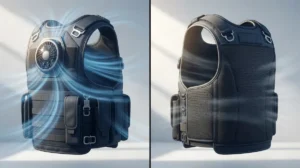
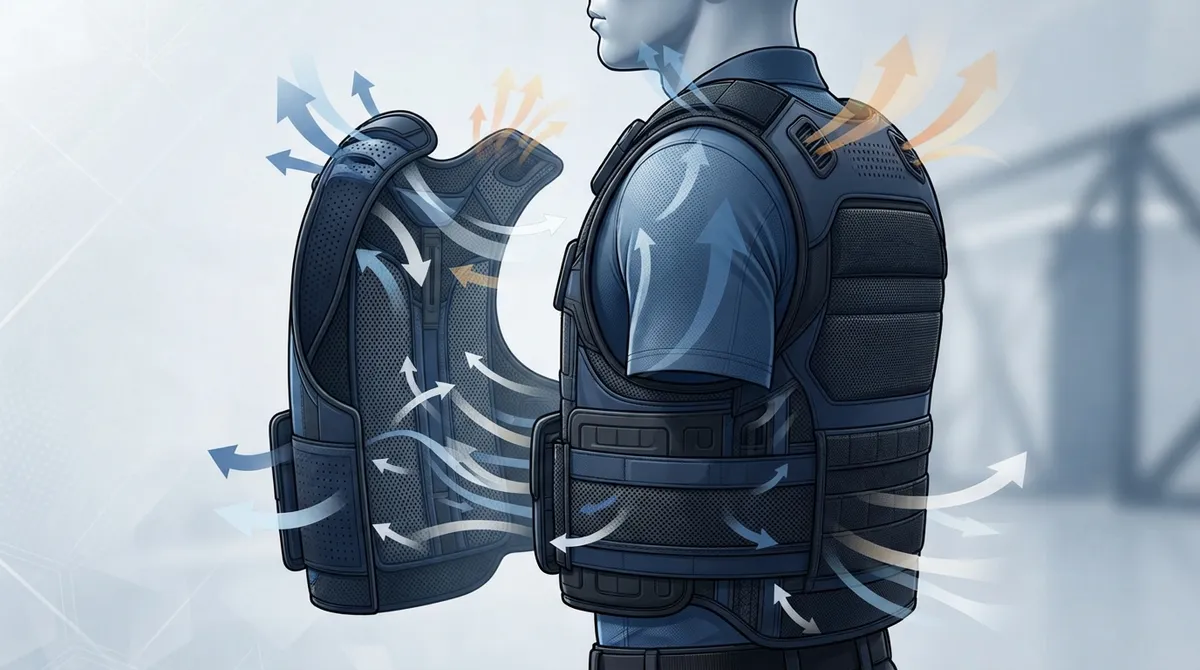
This is exactly why ventilation vests have become such an important piece of modern security personnel equipment. They create space between your body and your armor so air can actually move and moisture can escape.
Passive Ventilation Vests: How They Work
Passive ventilation vests don’t need batteries or charging. They work using simple, smart design. A lightweight spacer sits between your body and your vest, creating a small air gap. This gap lets sweat evaporate and heat escape naturally, all day long.
The BluHalo ventilation vest is a great example of this approach done right. It was designed by a Chicago police officer who got tired of sweating through 12-hour shifts in 95-degree heat. Here’s what makes it stand out:
- Weighs under 7 ounces, so you barely notice it’s there
- Lifts your vest up to 1.5 inches off your body when inflated
- Inflates on demand with a small pump and deflates instantly with one button
- Sits flat and unnoticeable when you don’t need it
- Attaches to any clean vest surface using Velcro
- Built from double-layer, high-strength polyethylene for daily durability
Officers who use BluHalo often describe major relief during long, hot shifts. No cords. No charging. Just cooling-on-demand whenever you need it. If you want to learn more about how this kind of setup compares to other options, check out our breakdown of passive vs. active body armor ventilation systems.
Fan-Powered Ventilation: The Active Cooling Option
Fan-powered systems take a different approach. Instead of relying on a simple air gap, they use a small motor to actively push air under your vest. Think of it like a personal air conditioner strapped to your side.
The Blufano system is one of the top choices in this category. It’s a self-contained active airflow unit with a patented air-redirect spout that slides under any style of body armor. Here’s what it offers:
- Adjustable fan-driven airflow that lasts 8 to 32 hours, depending on the setting
- A built-in 10,000mAh power bank that also charges your phone or other USB devices
- A forward-facing light for hands-free visibility during night shifts
- An easy control knob so you can adjust airflow speed on the fly
- An optional strap for extra secure attachment during high-movement tasks
Users report faster cooling, especially when paired with vehicle AC on breaks, along with noticeably less sweat and better focus during long, hot shifts. For security teams working stationary posts or extended outdoor duty, this kind of steady airflow can make a huge difference. Want to see how it stacks up against traditional fan setups? Take a look at our guide on how active cooling systems work in ventilation vests.
Passive vs. Active: Quick Comparison Table
| Feature | Passive (BluHalo) | Active (Blufano) |
|---|---|---|
| Power Source | None needed | Rechargeable battery (10,000mAh) |
| Weight | Under 7 oz | Slightly heavier due to fan and battery |
| Runtime | All-day, no charging required | 8 to 32 hours per charge |
| Best For | Mobile officers, quick on/off use | Stationary posts, extended hot-weather duty |
| Extra Features | Instant inflate/deflate button | USB charging, built-in light, control knob |
| Setup | Velcro attachment, no strap needed | Slides under armor, optional strap |
Who Should Choose Which System?
Law Enforcement Officers on Patrol
If you’re constantly moving in and out of your vehicle, walking beats, or responding to calls, a passive vest like BluHalo might suit you better. It’s lightweight, doesn’t need charging, and you can inflate it the moment you feel hot, then deflate it just as fast.
Security Professionals on Stationary Posts
If you’re standing at a checkpoint, guarding an entrance, or working an event for hours at a time, active airflow from Blufano can provide steady, ongoing relief. The constant fan movement helps prevent sweat buildup during long, low-movement shifts.
Military Personnel in Extreme Heat
Soldiers operating in high-heat zones while wearing tactical body armor often benefit from combining both approaches. Some teams even bundle both products together for maximum comfort in the toughest conditions. If you’re curious how tactical teams currently make this decision, our article on passive vs. active tactical cooling for special operations covers it in detail.
Tactical and SWAT Teams
High-intensity operations demand gear that won’t slow you down. A lightweight passive spacer keeps things simple during fast-moving missions, while active fan systems work well during longer stakeouts or perimeter control tasks.
Emergency Response Personnel
Firefighters and hazmat teams facing extreme heat conditions often need the strongest possible cooling boost. Fan-powered systems tend to shine here since they provide continuous airflow during extended, high-exertion tasks.
What the Research Says About Ventilation Vest Performance
Some vendors in this space claim their systems can lower body surface temperature by around 14.5°F. That number comes from product marketing, so treat it as a general guideline rather than a lab-verified fact. Independent research, however, does back up the core concept.
One study on active ventilated vests found they reduced core body temperature by about 0.3°C and skin temperature by roughly 1.1°C during testing. That may sound small, but in the world of heat stress, even modest reductions can mean the difference between staying alert and losing focus. For a deeper look at how heat affects performance on the job, check the Body Armor Standards resource from the National Institute of Justice.
Also worth noting: ice-pack-based cooling accessories, while helpful, typically only last 2 to 4 hours. That makes them better suited for short bursts of extreme heat rather than full-shift comfort.
Key Buying Criteria for Security Personnel Equipment
Before you invest in any cooling vest, keep these factors in mind:
- Compatibility: Make sure the vest works with your specific carrier, whether it’s external, concealable, or a plate carrier setup.
- Adjustability: A snug, adjustable fit prevents shifting during movement and keeps the cooling gap consistent.
- Runtime needs: Consider whether you need all-day passive relief or extended fan-powered airflow.
- Weight: Every extra ounce matters during a 12-hour shift, so lightweight designs are usually preferred.
- Durability: Look for tough materials that can handle daily wear, since duty gear takes a beating.
- Ease of use: Simple controls, like a one-button deflate or an easy-turn knob, make a big difference in real-world use.
If you’re still deciding which features matter most for your role, our guide on how to choose the right body armor ventilation vest in 2026 walks through the decision step by step.
Getting the Best of Both Worlds
Here’s a secret a lot of veteran officers already know: you don’t have to pick just one system. Many security professionals bundle a passive vest with a fan-powered unit to cover every scenario, from quick patrol stops to long stationary posts.
Pairing BluHalo’s instant-inflate comfort with Blufano’s steady airflow gives you flexible cooling no matter what your shift throws at you. Plenty of departments and private security teams are already making the switch, and reviews consistently mention less sweat, better focus, and noticeably less fatigue by the end of a shift. You can browse real feedback from officers and guards on our reviews page.
Final Thoughts on Choosing Your Cooling System
At the end of the day, staying cool isn’t a luxury for security personnel. It’s a performance and safety tool, just like your radio or your duty belt. Whether you choose the lightweight simplicity of BluHalo, the steady power of Blufano, or both together, you’re investing in a sharper, more comfortable version of yourself on every shift.
Ready to upgrade your gear and finally beat the heat this season? Reach out to our team today and we’ll help you find the perfect cooling setup for your role, climate, and daily grind.
FAQs
Q: What is a ventilation vest for security personnel equipment?
A: It’s a comfort tool worn under body armor to create airflow and reduce heat buildup. Think of it as your vest’s best friend, helping sweat and heat escape instead of getting trapped against your skin all shift long.
Q: How does a body armor ventilation vest actually work?
A: Most vests create a small air gap between your body and your armor, either through a passive spacer or a fan that actively pushes air through. That gap lets moisture evaporate and heat escape, keeping you noticeably cooler and drier.
Q: What’s the difference between passive and fan-powered cooling vests?
A: Passive vests, like BluHalo, need no power and work through smart spacer design you can inflate or deflate on demand. Fan-powered vests, like Blufano, use a rechargeable battery to actively circulate air for hours at a time.
Q: Are ventilation vests compatible with ballistic vests and plate carriers?
A: Yes, most quality ventilation vests are built to work under external carriers, concealable armor, and plate carriers alike. Just double check the fit and attachment method before you buy to make sure it matches your specific gear.
Q: How long do fan-powered ventilation vests last on a charge?
A: It really depends on the model and the fan speed you choose, but many systems run anywhere from 8 to 32 hours per charge. That’s plenty for even the longest shifts, especially with a built-in power bank like the one in Blufano.