Key Takeaways
-
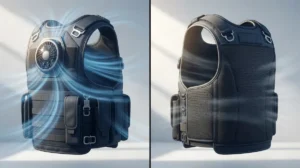
Active cooling vests remove 331 W·h·m⁻² of heat compared to 164 for passive alternatives, making them significantly more effective for long shifts in body armor.
-
Air-cooled ventilation vests create airflow under armor to accelerate sweat evaporation and convective heat loss, keeping you cooler and more focused during 12-hour shifts.
-
BluHalo (under 7 oz, on-demand inflation) and Blufano (8-32 hour battery life with built-in power bank) are purpose-built for body armor wearers and outperform passive cooling options.
-
Active cooling technology prevents heat stress complications like exhaustion, confusion, and heat stroke, directly improving officer safety and decision-making under pressure.
-
The global active cooling vest market reached $300 million in 2023 and is projected to hit $550 million by 2032, reflecting growing adoption across law enforcement and industrial sectors.
-
Unlike passive vests requiring refrigeration or ice packs, active systems offer battery-powered, on-demand cooling that works continuously even when standing still in extreme heat.
Picture this: it’s a 95-degree day, you’ve got 40 pounds of body armor strapped to your chest, and you’re only two hours into a 12-hour shift. Sound familiar? If you wear protective gear for a living, you already know that heat is the enemy. That’s where active cooling vests come in, and trust us, they’re about to become your new best friend.
Whether you’re a police officer on patrol, a soldier in the field, or a security professional standing post in the sun, staying cool isn’t just about comfort. It’s about staying sharp, staying safe, and making it through your shift without feeling like you’ve been baked alive. In this friendly guide, we’ll break down what active cooling vests really are, how they stack up against passive options, and why so many everyday heroes are making the switch. Let’s dive in together.
What Is an Active Cooling Vest, Exactly?
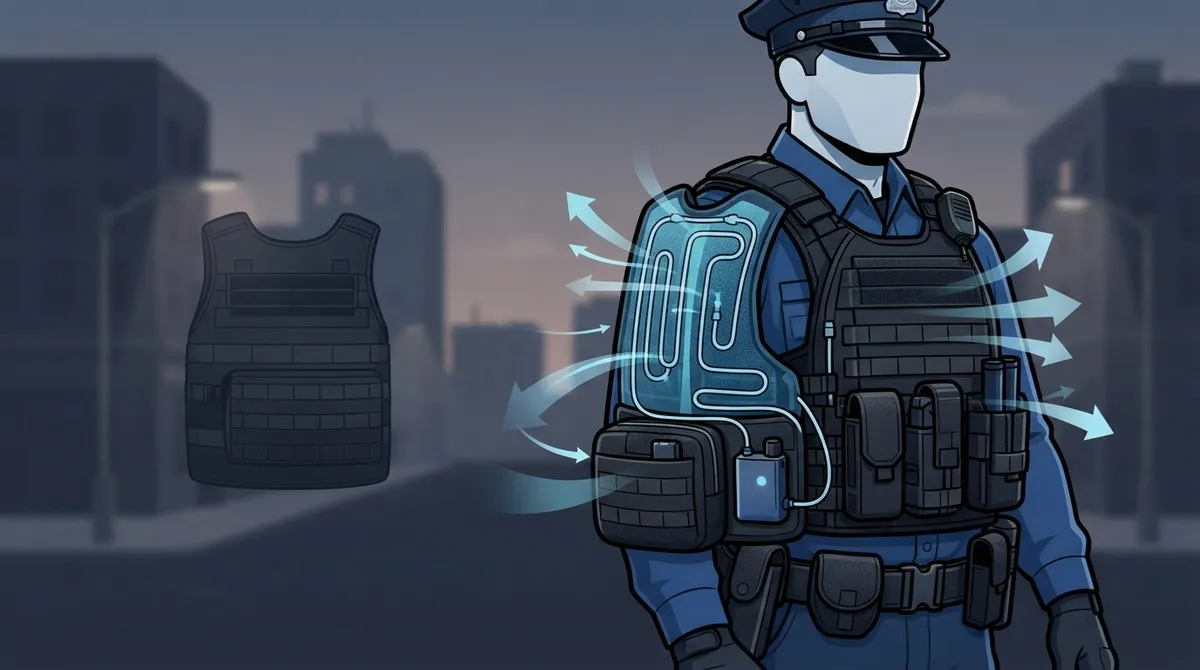
Active cooling vests are wearable garments that use powered airflow or circulating fluid to pull heat and sweat away from your body. Unlike a simple cooling towel or ice pack, these vests actively move air or liquid to keep you comfortable, hour after hour.
In scientific terms, active cooling vests fall into two main camps: air-cooled and liquid-cooled systems. Both use some kind of powered circulation, which sets them apart from passive vests that rely on evaporation or phase-change materials to slowly soak up heat.
For folks wearing body armor, air-cooled vests are the most practical choice. They’re lighter, easier to maintain, and don’t require refrigeration or bulky tubing. That’s exactly the kind of technology you’ll find in products like the BluHalo ventilation vest, which creates a gentle air gap under your armor to let heat escape.
Active vs. Passive: The Core Difference
Passive cooling vests, like evaporative or ice-based designs, work quietly in the background. They don’t need batteries, but they also don’t move air. Active vests, on the other hand, use fans or pumps to keep the cooling process going strong, even when you’re standing still in the sun.
Here’s a simple breakdown to help you see the difference at a glance.
| Feature | Active Cooling Vests | Passive Cooling Vests |
|---|---|---|
| Power Source | Battery-powered fan or pump | None needed |
| Cooling Method | Forced airflow or circulating fluid | Evaporation or phase-change material |
| Best For | Long shifts, high heat, heavy gear | Short bursts, mild conditions |
| Maintenance | Recharge battery, clean fan | Freeze packs or soak vest |
| Weight | Very light (under 7 oz for some designs) | Can be heavier when soaked or frozen |
A well-known 2020 cooling efficiency study found active cooling vests pulled a whopping 331 W·h·m⁻² of heat, compared to just 164 for PCM vests, 146 for hybrid vests, and 113 for evaporative designs. In plain terms, active cooling wins by a wide margin when it comes to raw cooling power.
How Do Active Ventilation Vests Actually Work?
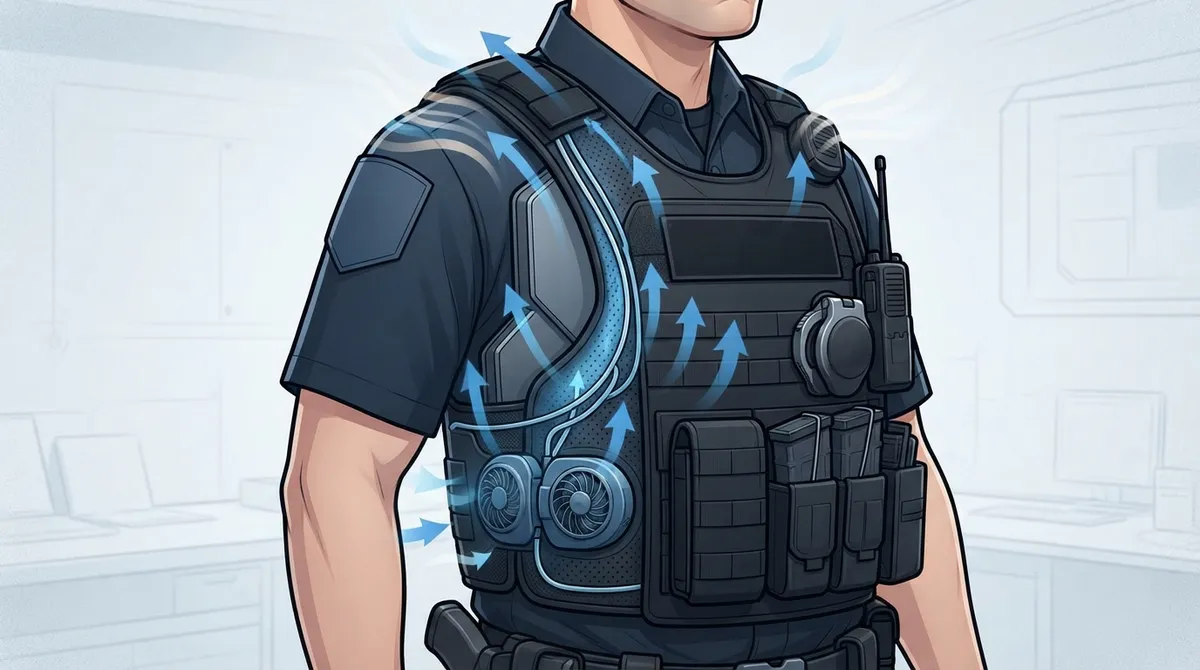
Air-cooled ventilation vests work by pushing ambient or compressed air through a small gap between your body and your armor. This airflow helps sweat evaporate faster and increases something called convective heat loss, which is just a fancy way of saying your body loses heat more efficiently.
If you’re curious about the mechanics, we cover this in detail in our article on how active cooling systems work in ventilation vests. It’s a great read if you want to understand the science before you buy.
Here’s the general process most active cooling vests follow:
- A small fan or pump pulls in air or circulates fluid through channels in the vest.
- That air or fluid moves across your skin, right beneath your body armor.
- Sweat evaporates faster thanks to the constant airflow, cooling your skin naturally.
- Trapped heat gets pushed out through vents or gaps, instead of building up under your gear.
- You stay drier, cooler, and more focused, shift after shift.
This is exactly the kind of relief officers describe after switching to BluHalo, especially during brutal 12-hour shifts in extreme heat. One officer even compared it to finally getting fresh air after being stuck in a stuffy room all day.
Why Active Cooling Beats Passive Options for Body Armor Wearers
Let’s be honest, nobody wants to stuff an ice pack down their vest and hope it lasts. Passive cooling has its place, but for anyone wearing body armor for hours at a time, active cooling simply performs better.
Benefits That Matter Most
- Continuous airflow means you don’t have to wait for a cold pack to “kick in.”
- Lightweight designs, like BluHalo’s under-7-ounce build, won’t weigh you down.
- Cooling-on-demand technology lets you control comfort exactly when you need it.
- No refrigeration or freezer needed before your shift starts.
- Long battery life, with some systems like Blufano running 8 to 32 hours depending on the setting.
If you’ve ever struggled with sweat pooling under your vest by lunchtime, you already understand why passive options fall short. We talk more about this challenge in our piece on how sweat management works under body armor.
Where Active Cooling Vests Shine Across Industries
While our focus here is body armor, it’s worth noting that active cooling vests are used far beyond law enforcement. Construction crews, warehouse workers, foundry employees, and even marine workers rely on similar technology to beat the heat.
Researchers have even studied hybrid vests that combine phase-change inserts with ventilation fans for construction workers in extremely hot climates. These hybrid designs aim to balance cooling power with practicality, though most studies still show pure active airflow systems perform best for sustained heat removal.
Meet BluHalo and Blufano: Active Cooling Done Right
When it comes to active cooling vests built specifically for body armor wearers, BluHalo and Blufano are leading the pack. Both were designed with input from real officers who understand what it feels like to overheat on duty.
BluHalo Ventilation Vest
BluHalo was created by a Chicago police officer who got tired of sweating through long shifts in bullet-resistant vests. It weighs under 7 ounces and lies completely flat when not in use. When you need cooling, simply inflate it with a small pump, and it lifts your vest up to 1.5 inches off your body to create an instant air gap.
Built from double-layer, high-strength polyethylene, BluHalo attaches to any clean vest using Velcro. Officers have described wearing it during 95-degree days on 12-hour shifts and noticing a night-and-day difference in comfort. You can grab one from our shop for just $60.
Blufano Active Airflow System
If you want continuous, fan-driven airflow instead of on-demand inflation, Blufano is the answer. This self-contained unit slides under any style of body armor using a patented air-redirect spout, and it can run for 8 to 32 hours depending on your fan setting.
Blufano also includes a built-in 10,000mAh power bank, so you can charge your phone or radio while staying cool. It even has a forward-facing light for low-light situations. Many users say running vehicle AC alongside Blufano creates the fastest cooling combo they’ve tried yet.
Want to see how these two compare side by side? Check out our detailed breakdown in BluFano vs BluHalo: Which Vest Cooling System Is Better? Many professionals actually bundle both products together for maximum cooling coverage during extreme heat.
Choosing the Right Active Cooling Vest for Your Job
Not every active cooling vest fits every job. Here’s a quick guide to help you match the right system to your daily grind.
| Your Role | Best Fit | Why It Works |
|---|---|---|
| Patrol Officer | BluHalo | Lightweight, on-demand inflation for quick relief between calls |
| SWAT/Tactical Teams | Blufano | Long-lasting fan power for extended high-intensity operations |
| Military Personnel | Blufano or Bundle | Extended runtime for missions in extreme heat |
| Security Guards | BluHalo | Discreet, low-profile design under uniforms |
| Emergency Responders | Bundle (Both) | Maximum cooling coverage during intense, prolonged exposure |
If you’re still unsure which option fits your needs, our guide on how to choose the right body armor ventilation vest in 2026 walks you through every consideration step by step.
Safety First: Why Cooling Matters More Than You Think
Heat stress isn’t just uncomfortable, it’s dangerous. According to the OSHA Heat Stress Guide, prolonged heat exposure can lead to exhaustion, confusion, and even heat stroke, all of which put your safety and job performance at risk.
Body armor itself is designed with strict safety standards in mind, as outlined by the National Institute of Justice’s Body Armor Standards. But those same protective materials that stop bullets also trap heat, which is exactly why active cooling technology has become so essential for daily wearers.
We’ve written extensively about this connection in our article on how heat affects police reaction time on duty, which shows just how much cooler gear can improve focus and decision-making under pressure.
Real-World Runtime: What to Expect
One of the biggest questions we hear is about battery life. Nobody wants their cooling vest to die halfway through a shift. Here’s what current active cooling technology typically offers.
- Basic fan-driven systems: 8 to 32 hours depending on airflow setting
- Industrial-grade active vests: often marketed for a full shift on one battery swap
- On-demand inflation vests like BluHalo: no battery needed, just a quick pump-up
- Combo systems: extended coverage when paired together for all-day use
This flexibility means you can pick a system that matches your actual shift length, rather than guessing and hoping it lasts.
The Bigger Picture: A Growing Industry
Active cooling vests aren’t just a niche product anymore. Market analysts valued the global active cooling vest market at roughly $300 million in 2023, and it’s projected to reach around $550 million by 2032. That’s a steady 6.5% growth rate, driven largely by demand from law enforcement, military, and industrial sectors.
This growth makes sense. As summers get hotter and shifts get longer, more professionals are realizing that passive cooling just doesn’t cut it anymore. Active airflow technology, like what you’ll find in the BluHalo and Blufano product videos, is quickly becoming the new standard.
Ready to Stay Cooler on Every Shift?
At the end of the day, active cooling vests offer something passive options simply can’t match: consistent, powerful, on-demand relief from heat and sweat. Whether you choose the lightweight simplicity of BluHalo or the long-lasting airflow of Blufano, you’re investing in comfort, focus, and safety for every shift ahead.
We built BluHalo and Blufano because we know exactly what it feels like to sweat through a 12-hour shift in body armor. If you’re ready to experience the difference for yourself, browse our full lineup or reach out to our team with any questions. Get in touch with our team today and let’s find the perfect cooling solution for your next shift.
FAQs
Q: What is an active cooling vest?
A: An active cooling vest is a wearable garment that uses powered airflow or circulating fluid to pull heat and moisture away from your body. Unlike passive options, active vests keep working continuously, which makes them perfect for long shifts under body armor.
Q: How do ventilation cooling vests work?
A: Ventilation vests use a small fan or pump to push air through a gap between your skin and your gear. This constant airflow helps sweat evaporate faster and pushes trapped heat away, so you feel cooler for longer.
Q: What is the difference between active and passive cooling vests?
A: Active vests use battery power to move air or fluid, while passive vests rely on things like ice packs or evaporative materials with no moving parts. Studies show active designs remove significantly more heat, making them a better fit for demanding, all-day wear.
Q: Can cooling vests be worn under body armor?
A: Absolutely, that’s exactly what they’re designed for. Products like BluHalo and Blufano fit right under your existing vest or plate carrier, giving you a comfortable air gap without changing how your gear fits or functions.
Q: How long does a battery-powered cooling vest last?
A: It really depends on the system and setting you choose. Many fan-driven vests run anywhere from 8 to 32 hours, and some, like Blufano, are built to handle a full shift on a single charge.