Key Takeaways
-
Cutting holes in body armor does NOT meaningfully improve cooling and compromises structural integrity, voids warranties, and may violate departmental policy—the small holes create minimal airflow since heat buildup stems from lack of space between armor and body, not holes in the vest itself.
-
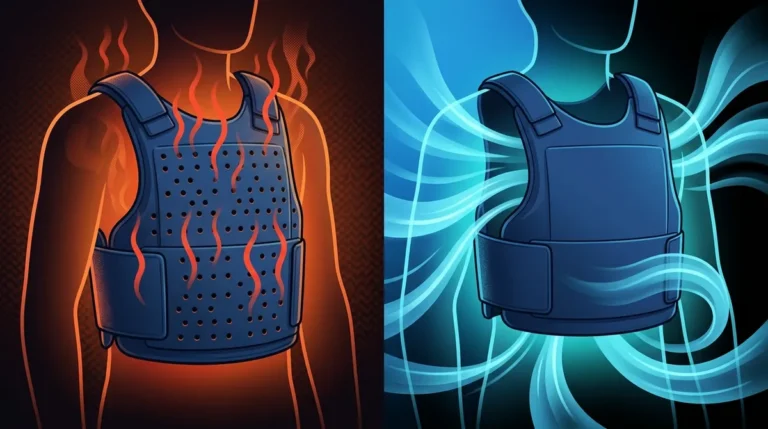
Heat buildup under body armor results from direct skin contact, moisture accumulation, material heat absorption, and limited evaporation—solving these requires creating an air gap between your body and armor, not modifying the armor itself.
-
Inflatable ventilation vests like BluHalo lift armor up to 1.5 inches off your torso to allow natural air circulation, while active fan systems like Blufano continuously pump fresh air underneath—both provide superior cooling without compromising protection.
-
Modified armor may no longer comply with NIJ Body Armor Standards required by many law enforcement agencies, creating a double legal and safety risk beyond just voiding manufacturer warranties.
-
Moisture-wicking base layers and passive mesh spacers offer moderate support but fall short compared to active fan systems in hot or high-intensity conditions requiring maximum cooling effectiveness.
-
Proper ventilation solutions benefit law enforcement, military, security, and emergency responders—choosing between inflatable vests, active fans, or layered approaches depends on shift duration, environment, and activity intensity.
If you’ve ever worn body armor through a scorching summer shift, you already know the struggle. Heat builds up fast. Sweat soaks through your undershirt. You feel like you’re wrapped in a heating blanket with no escape valve. It’s uncomfortable, distracting, and even dangerous. So it’s no surprise that some officers and security professionals start wondering — does cutting holes in body armor help cooling? It sounds logical, right? More openings, more airflow. But the reality is more complicated than that, and the consequences can be serious. Let’s dig into this question honestly, explore why it’s tempting, and talk about what actually works to keep you cool under your vest.

Why People Consider Cutting Holes in Body Armor
Heat stress under body armor is a real and documented problem. OSHA’s Heat Stress Guide highlights how trapped heat significantly increases the risk of heat exhaustion and heat stroke. When you’re wearing a ballistic vest all day, your body’s natural cooling system — sweating — gets blocked. The vest sits tight against your torso, trapping heat and moisture against your skin.
Officers working 10 to 12-hour shifts in 90-plus degree weather sometimes feel desperate for any relief. Cutting holes seems like a quick, free fix. More vents equal more airflow, right? It’s the same thinking behind cutting holes in an RC car cover for cooling — the idea makes intuitive sense. But body armor is not an RC car body. The stakes are completely different.
Check out why police officers struggle with heat under body armor for a deeper look at the root causes of this problem.

Does Cutting Holes in Body Armor Actually Help Cooling?
Here’s the honest answer: cutting holes in body armor does NOT meaningfully help with cooling. And it does create serious problems. Let’s break down why.
First, body armor works as a system. The panels, carrier, and materials all work together to stop projectiles and distribute force across the entire surface area. When you cut into the carrier or panels, you compromise structural integrity. You may create weak points that affect how the armor performs under ballistic stress.
Second, the small holes most people think about cutting would have minimal airflow benefit anyway. The vest still sits flat against your torso. Without space between the armor and your body, air can’t circulate — no matter how many holes you poke. It’s the gap between vest and body, not holes in the vest itself, that determines airflow.
Third, altering armor may void the manufacturer’s warranty and can violate departmental policy. Many agencies require armor to meet NIJ Body Armor Standards, and modified armor may no longer be compliant.
| Cooling Method | Effectiveness | Safety Risk | Cost |
|---|---|---|---|
| Cutting holes in armor | Very Low | High (compromises protection) | Free (but risks gear replacement) |
| Moisture-wicking undershirt | Low to Moderate | None | Low |
| Passive mesh spacer/insert | Moderate | None | Low to Moderate |
| Ventilation vest (inflatable) | High | None | Moderate |
| Active fan system | Very High | None | Moderate to High |
As the table makes clear, cutting holes ranks lowest in effectiveness and highest in safety risk. It’s simply not worth it when better solutions exist.
What Actually Causes Heat Buildup Under Body Armor
Understanding the problem helps you solve it smarter. Heat under body armor comes from a few key sources:
- Direct skin contact: When the vest sits flat against your torso, there’s no space for air to move.
- Moisture accumulation: Sweat gets trapped, creating a warm, wet layer between your body and the armor.
- Material heat absorption: Ballistic panels can absorb and retain heat from both your body and the sun.
- Limited evaporation: Your body cools itself through sweat evaporation, but tight armor prevents that from happening efficiently.
The real solution targets all of these causes together. That’s exactly what proper body armor ventilation systems are designed to do.
Smart Alternatives to Cutting Holes in Body Armor
Good news: you don’t need to damage your gear to stay cooler. There are proven, safe solutions that actually work. Here are the best options professionals are using in 2026:
1. Inflatable Ventilation Vests
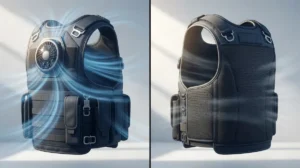
This is one of the most innovative solutions on the market. An inflatable ventilation vest — like the BluHalo vest — sits under your body armor and creates a physical air gap between your skin and the armor. When inflated, it lifts the vest up to 1.5 inches off your body. That gap allows air to circulate naturally, dramatically reducing heat buildup and moisture. The BluHalo weighs under 7 ounces and lies completely flat when deflated, so it’s low-profile and easy to use on demand.
2. Active Fan Systems
Active systems like the Blufano fan system go a step further. The Blufano uses a built-in fan to actively circulate fresh air beneath your body armor. It features a patented air-redirect spout that slides under any style of vest and runs for 8 to 32 hours on a single charge. It even includes a 10,000mAh power bank to charge your other devices. This is cooling-on-demand, not just passive relief.
3. Moisture-Wicking Base Layers
A good moisture-wicking undershirt pulls sweat away from your skin. This doesn’t fix the heat gap problem, but it reduces the wet, uncomfortable feeling and helps some evaporative cooling happen. Think of it as a supporting layer rather than a complete solution.
4. Passive Mesh Spacers
Mesh spacers are rigid or semi-rigid panels that sit between your body and the armor. They create a small gap without any active technology. They offer moderate improvement and are affordable. However, they don’t move air — they just create a space where air can theoretically move if conditions allow.
For a full breakdown of your options, see passive inserts vs. active fans for body armor ventilation.
Comparing Passive and Active Cooling Solutions
| Feature | Passive Solutions | Active Solutions (Fan-Based) |
|---|---|---|
| Airflow | Relies on ambient air movement | Continuously circulates fresh air |
| Cooling in hot/still conditions | Low effectiveness | High effectiveness |
| Moisture reduction | Moderate | High |
| Ease of use | Very simple | Simple with controls |
| Battery required | No | Yes |
| Best for | Mild heat conditions | Hot, humid, or high-activity shifts |
If you work in consistently hot conditions or high-intensity environments like SWAT operations or emergency response, an active system is almost always the better investment. Learn more about passive vs. active tactical vest ventilation to decide what fits your situation best.
The Real Risks of Modifying Body Armor
It’s worth being very direct about the dangers of cutting or modifying body armor. Here’s a quick list of what can go wrong:
- Structural compromise: Cuts or holes in the carrier weaken the overall system and can shift panel alignment, leaving gaps in protection.
- Warranty void: Most manufacturers will void the warranty immediately if the gear is modified in any way.
- Policy violation: Many law enforcement agencies require armor that meets specific standards. Modified armor may no longer qualify.
- Ineffectiveness: Small holes don’t create meaningful airflow. You take the risk without getting the reward.
- False sense of security: You might feel like you’ve solved the cooling problem when you really haven’t — and you’ve compromised protection in the process.
Your armor is your lifeline. Don’t gamble with it for a minimal temperature benefit. Instead, explore DIY body armor cooling hacks that actually work without putting your safety at risk.
Who Benefits Most From Proper Ventilation Solutions
Proper ventilation solutions aren’t just for cops on patrol. Lots of professionals benefit from smart cooling under body armor:
- Law enforcement officers doing long patrol shifts in summer heat
- Military personnel deployed in hot climates with heavy tactical armor
- Security professionals standing post for hours in warm environments
- SWAT and tactical teams running high-intensity operations with full kit
- Emergency responders working hazmat or fire scenes with protective gear
All of these professionals share the same challenge — staying focused and physically capable when body heat becomes a threat to performance. Check out how to prevent heat stress while wearing body armor for practical tips you can start using right now.
It’s also worth noting that just like Brockway Orthodontics takes a precise, professional approach to improving quality of life for their patients, the best body armor cooling solutions take a targeted, engineered approach — not a DIY shortcut that creates new problems.
Choosing the Right Cooling Solution for Your Needs
Not every solution fits every situation. Here’s a quick guide to help you choose:
| Situation | Best Solution | Recommended Product |
|---|---|---|
| Long patrol shifts in summer | Inflatable ventilation vest | BluHalo |
| High-intensity tactical operations | Active fan system | Blufano |
| Budget-conscious cooling | Moisture-wicking base layer + mesh spacer | Various brands |
| Maximum comfort all-day | Bundle: Ventilation vest + fan system | BluHalo + Blufano combo |
| Military deployments | Active fan with long battery life | Blufano (8–32 hour runtime) |
If you’re not sure which option is right for your specific role and environment, this guide on choosing the right body armor ventilation vest in 2026 walks you through the decision step by step. You can also browse the full ventilation vest shop to see all available options.
How Ventilation Vests Work — Step by Step
For those new to this technology, here’s exactly how a ventilation vest like the BluHalo works in practice:
- Attach to your vest: Use the included Velcro to secure the BluHalo to the inside of your body armor carrier.
- Put on your armor normally: The deflated vest lies flat and adds almost no bulk or weight.
- Inflate on demand: Use the small included pump to inflate the vest. It lifts the armor up to 1.5 inches off your torso in seconds.
- Enjoy the airflow: Fresh air now circulates in the gap between your skin and the armor, reducing heat and moisture buildup dramatically.
- Deflate when needed: Press the button to instantly deflate. The vest lies flat again for low-profile situations.
It’s that simple. No modifications to your armor. No compromises to your protection. Just smarter comfort. Read more about how to use the BluHalo ventilation vest for maximum comfort.
The Bottom Line on Cutting Holes in Body Armor
Here’s the short version: does cutting holes in body armor help cooling? No — not in any meaningful way. It’s risky, it can void warranties, it may violate policy, and the tiny amount of airflow you might get isn’t worth the structural compromise to your protection. The frustration is completely understandable. Heat under body armor is a real problem that affects your performance, your focus, and your safety on the job.
But the solution isn’t to poke holes in your gear. The solution is a proper ventilation system that creates real airflow without touching a single stitch of your armor. Products like the BluHalo and Blufano were built specifically to solve this problem — designed by people who lived the same struggle you’re dealing with right now. You can also explore how body armor air conditioning actually works to get a deeper understanding of the science behind it.
Don’t compromise your protection for comfort when you don’t have to. Smart ventilation lets you have both. If you’re ready to explore the right solution for your situation, reach out to our team today — we’re happy to help you find the cooling setup that fits your role, your gear, and your budget.
FAQs
Q: Does cutting holes in body armor actually improve airflow?
A: Not in any meaningful way, and it’s definitely not worth the risk! Small holes don’t create the air gap needed for real circulation, and they can compromise the structural integrity of your armor. You’re much better off using a proper ventilation vest or fan system designed for this purpose.
Q: Will modifying my body armor void the warranty?
A: Almost certainly, yes. Most manufacturers void the warranty the moment you alter the armor in any way. Beyond the warranty issue, modified armor may also fall out of compliance with NIJ standards required by many law enforcement agencies — so it’s a double risk you really don’t want to take.
Q: What is the most effective way to stay cool under body armor?
A: The most effective solutions create an air gap between your body and the armor. Inflatable ventilation vests like the BluHalo lift the armor off your torso to allow airflow, while active fan systems like the Blufano continuously circulate fresh air underneath. Together, they offer serious cooling relief without touching a single thread of your protective armor.
Q: Is the BluHalo ventilation vest bulky or noticeable under body armor?
A: Not at all — that’s one of the best things about it! The BluHalo weighs under 7 ounces and lies completely flat when deflated, so it’s totally low-profile. You inflate it only when you need the cooling effect, and deflate it in seconds with a button press when you need a slimmer profile.
Q: How long does the Blufano fan system run on a single charge?
A: The Blufano runs for 8 to 32 hours depending on the fan setting you choose — which easily covers even the longest shifts. It also includes a built-in 10,000mAh power bank so you can charge your phone or other USB devices at the same time. It’s a real all-in-one comfort upgrade for anyone who wears body armor regularly.