Key Takeaways
-
Inflatable vests like BluHalo maintain a larger, more consistent air gap under heavy armor load compared to mesh vests, which can compress and lose effectiveness—making them superior for extended shifts in extreme heat.
-
Combining an inflatable vest with an active fan system (like Blufano) provides professional-grade cooling by both lifting armor away from the body and actively pushing fresh air through, delivering significantly better results than either option alone.
-
Mesh vests offer lightweight, low-maintenance passive cooling suitable for everyday wear and moderate conditions, but they perform poorly in extreme heat and can collapse under armor weight, reducing their airflow benefits.
-
Research shows air-cooled vests perform nearly as efficiently as water-cooled systems in hot-wet climates, achieving rectal temperatures of 37.3°C—though passive mesh alone is insufficient for brutal heat scenarios.
-
When selecting a cooling vest, prioritize air gap preservation under load, moisture-wicking and antimicrobial fabrics, lightweight design, and compatibility with your specific armor type to prevent performance loss.
-
Inflatable vests like BluHalo (under 7 ounces, $60) offer adjustable cooling on-demand and flatten completely when deflated for lower profile, while requiring no batteries—providing practical flexibility that mesh vests cannot match.
If you wear body armor for long shifts, you already know the struggle. Heat builds up fast. Sweat soaks through your uniform. Focus starts to slip. It’s not just uncomfortable — it can affect your performance when it matters most. Choosing the right ventilation solution makes a real difference for law enforcement officers, military personnel, security professionals, and first responders. Two popular options keep coming up in the conversation: mesh vest cooling and inflatable vest cooling. Both promise relief, but they work in very different ways. So which one actually wins? Let’s break it down in plain terms so you can pick the right solution for your needs, your climate, and your daily grind.
How Mesh Vest Cooling Works
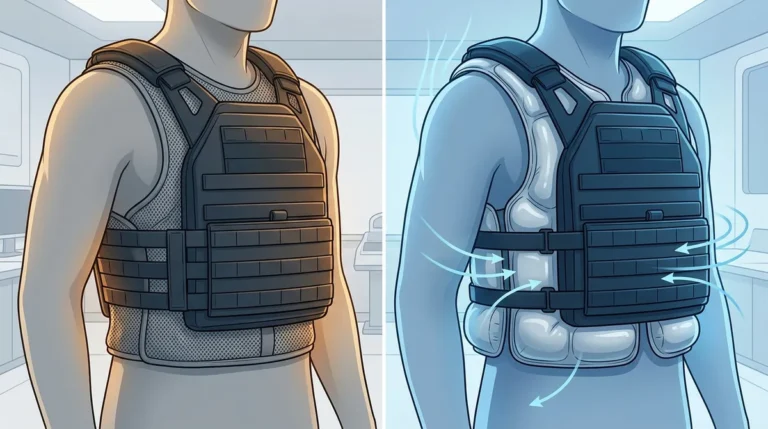
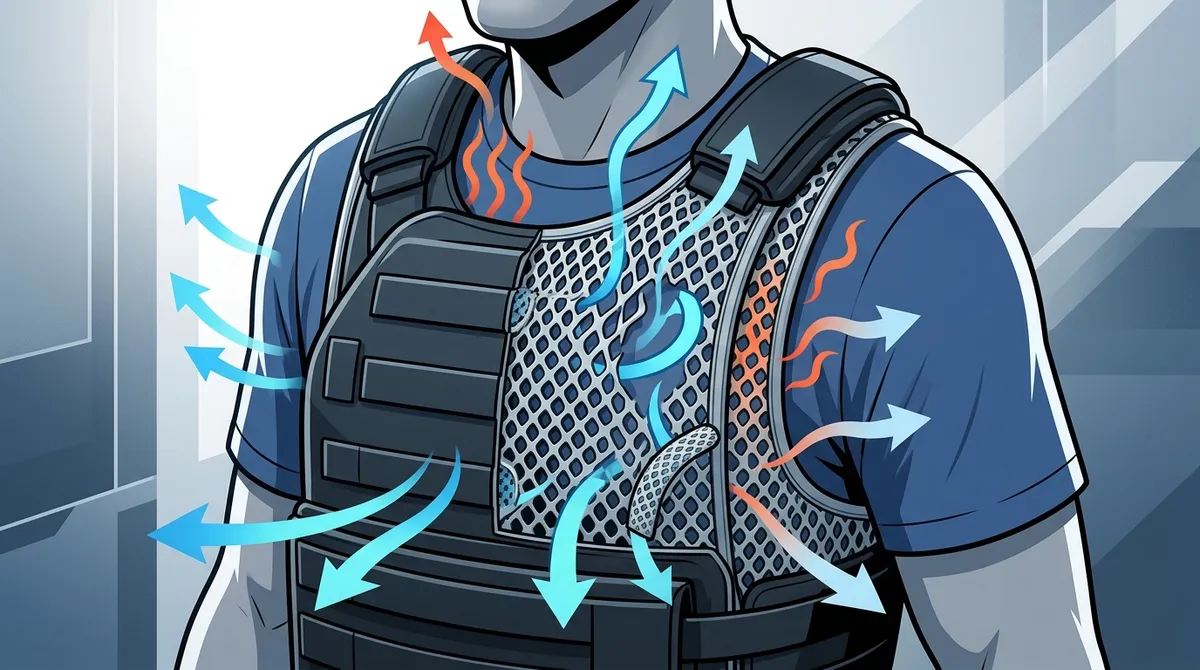
Mesh vests use a three-dimensional fabric structure to create a breathable layer between your body and your ballistic vest. Think of it like a raised grid that keeps your armor slightly lifted off your skin. This allows air to flow through naturally through a process called convection. Sweat can evaporate instead of sitting against your body. Heat has a path to escape. Mesh ventilation is widely used in police and tactical vests because it is lightweight, low-maintenance, and easy to wear every day. You put it on and forget about it — no buttons, no batteries, no pumps needed.
A key advantage of quality mesh is that it also helps move moisture away from the body. Many mesh liners combine moisture-wicking materials with antimicrobial fabric treatment to manage both heat and sweat at the same time. However, basic mesh does have a well-known limitation: it can compress under the weight of your armor, which closes off the air channels and reduces airflow. That is why thicker 3D mesh structures are specifically designed to hold their shape and preserve the air gap even under load.
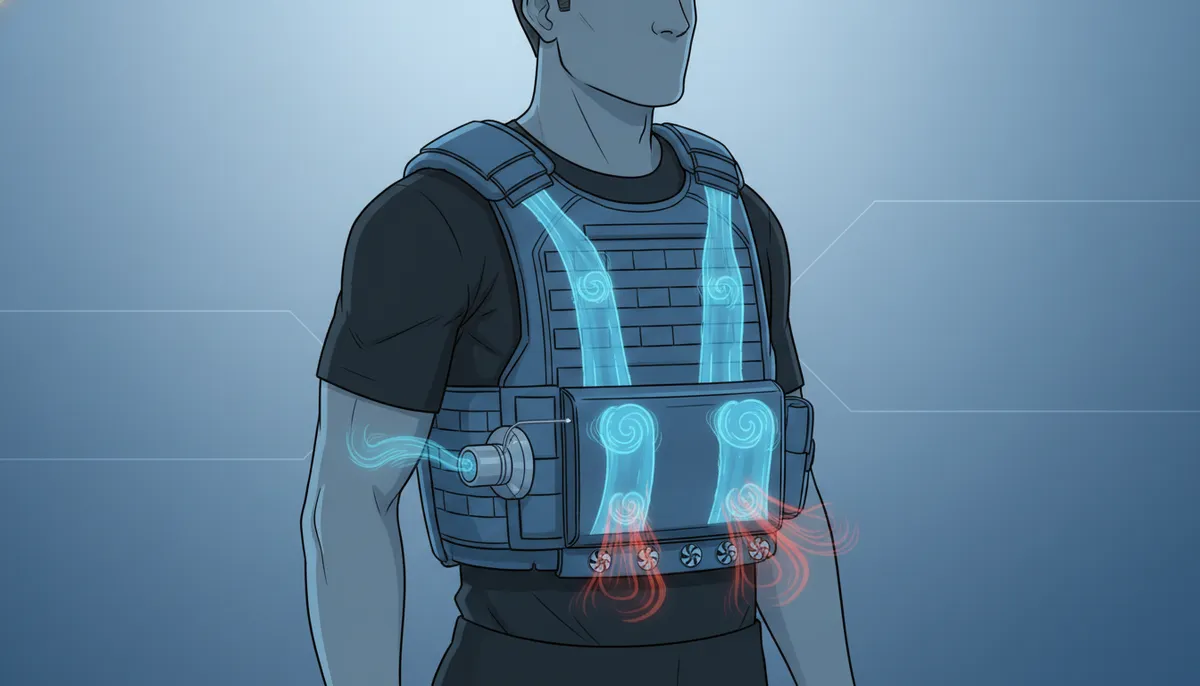
How Inflatable Vest Cooling Works
Inflatable cooling vests take a different approach. Instead of relying on a fixed fabric structure, they create an on-demand air gap between your body and your armor. You inflate the vest using a small pump, and it lifts your protective gear away from your torso. This creates a larger, more consistent space for hot air to escape and cooler air to circulate. The concept is simple but effective. When you need cooling relief, you inflate. When you need a lower profile, you deflate. It’s flexible cooling on your terms.
The BluHalo ventilation vest is a great example of this approach. Created by a Chicago police officer who experienced firsthand the misery of overheating on long shifts, BluHalo weighs under 7 ounces and sits completely flat when deflated. When inflated, it lifts your vest up to about 1.5 inches off the body. Officers report significant comfort improvements even during 12-hour shifts in 95-degree weather. At just $60, it is an accessible upgrade for everyday heroes. You can check out the BluHalo shop to see the full product lineup.

Side-by-Side Comparison
Let’s put both options head-to-head in a simple comparison table so you can see the key differences at a glance.
| Feature | Mesh Vest Cooling | Inflatable Vest Cooling |
|---|---|---|
| How it works | Passive airflow through 3D fabric layer | On-demand air gap created by inflation |
| Air gap size | Small, fixed by fabric thickness | Adjustable, up to ~1.5 inches |
| Weight | Very light | Very light (e.g., under 7 oz for BluHalo) |
| Maintenance | Minimal — wash and wear | Simple — inflate/deflate as needed |
| Batteries/Power | None required | None required (pump-operated) |
| Profile under armor | Slightly raised at all times | Completely flat when deflated |
| Performance under compression | Can compress and lose airflow | Maintains air gap under armor weight |
| Best for | Everyday wear, lighter loads | Heavier armor, high-heat situations |

Performance in Hot Conditions
Heat performance is where the differences really start to matter. Research published on PubMed comparing cooling vest types found that air-cooled vests performed about as efficiently as water-cooled vests in hot-wet climates. In that study, air-cooled vests produced a final rectal temperature of 37.3°C and a heart rate of 112 bpm — impressively close to water-cooled results. Passive mesh ventilation, while helpful in moderate conditions, performs much less effectively in extreme heat. This aligns with what many professionals already know from experience: when it gets brutally hot, passive mesh alone often isn’t enough. You can learn more about this topic in our guide on passive vs. active tactical vest ventilation.
Inflatable vests consistently maintain a larger air gap regardless of how heavy your armor is. This means more consistent cooling relief throughout a long shift. The OSHA Heat Stress Guide emphasizes that managing body temperature is critical for workers in hot environments — and that applies directly to anyone wearing body armor outdoors. An inflatable air gap system gives you a more reliable tool for that thermal management.
Adding Active Airflow: The Next Level
Here’s where things get really interesting. Both mesh and inflatable cooling work passively — they rely on natural air movement and convection. But what if you could combine an air gap with active fan-driven airflow? That’s exactly what Blufano delivers. Blufano is a self-contained active cooling unit with a patented air-redirect spout that slides under any body armor style. It uses a fan to push fresh air through the space beneath your vest continuously.
Blufano runs for 8 to 32 hours on a single charge depending on the fan setting. It also includes a built-in 10,000mAh power bank to charge your USB devices and a forward-facing light for hands-free use in low-light situations. Compared to passive mesh or a basic inflatable vest, Blufano provides longer-duration and more powerful cooling — especially during high-intensity operations. For a detailed look at how fan-driven systems compare to passive options, check out our Blufano fan system vs. passive cooling breakdown.
Which Option Is Right for Your Role?
Not every professional has the same needs. Here’s a quick guide to help you match the right cooling method to your specific situation.
| Role | Recommended Cooling Type | Why |
|---|---|---|
| Patrol Officer (daily wear) | Inflatable vest (BluHalo) or mesh + Blufano | Long shifts, heavy armor, variable heat |
| Military / Deployed Soldier | Inflatable vest + active fan (Blufano) | Extreme heat environments, extended missions |
| Security Professional | Inflatable vest or 3D mesh | Indoor/outdoor mix, moderate exertion levels |
| SWAT / Tactical Team | Inflatable + active fan combo | High-intensity, heavy armor, peak performance needed |
| Emergency Responder | Active cooling (Blufano) | Extreme heat, physically demanding scenarios |
Key Features to Look For in Any Cooling Vest
Whether you lean toward mesh or inflatable cooling, certain features separate good products from great ones. Keep this checklist in mind when shopping for your next body armor ventilation vest:
- Air gap preservation: Make sure the product maintains airflow even under armor weight. Thin mesh that collapses defeats its own purpose.
- Moisture management: Look for moisture-wicking and antimicrobial fabric. Heat and sweat go hand in hand, so you need to manage both.
- Lightweight design: Every ounce matters during a long shift. Your cooling solution shouldn’t add significant bulk or weight.
- Ease of use: Simple attachment, quick operation, and easy cleaning are non-negotiable for daily-use duty gear.
- Compatibility: Make sure the product works with your specific armor style, whether it’s a plate carrier, ballistic vest, or soft armor carrier.
Understanding Body Armor Standards can also help you choose cooling solutions that are compatible with certified protective gear without compromising ballistic integrity.
Mesh vs. Inflatable: Pros and Cons at a Glance
| Mesh Vest Cooling | Inflatable Vest Cooling | |
|---|---|---|
| Pros | No setup needed, always-on airflow, washable, affordable | Larger adjustable air gap, flat profile when deflated, consistent under armor load |
| Cons | Can compress under heavy armor, less effective in extreme heat | Requires manual inflation, may not work for all armor fits |
The Smartest Move: Combine Both Approaches
Here’s a truth that many experienced officers and tactical professionals have already discovered: you don’t always have to choose one or the other. The best-performing setups often combine an inflatable air gap (like BluHalo) with active fan-driven circulation (like Blufano). Together, they address every angle of the heat problem — lifting the armor off your body, creating a consistent air channel, and pushing fresh air through that channel continuously. It’s the difference between cracking a window and running the air conditioning. Both help, but one works a lot harder. For tips on building the best under-armor comfort setup, browse our guide on staying cool under body armor with smart ventilation.
Many professionals have also found success pairing their cooling vest with Charming Smiles of Ocoee for overall wellness support, recognizing that comfort and health go hand in hand when you’re working demanding shifts day after day.
If you want to explore what combination works best for your specific needs, we encourage you to reach out to the BluHalo team directly — they’re ready to help you find the right fit for your duty requirements and climate.
Final Verdict
So, mesh vest vs. inflatable vest cooling — which wins? The honest answer is that it depends on your situation. Mesh vests are a solid, low-maintenance baseline that works well in moderate conditions. Inflatable vests, like BluHalo, provide a more powerful and reliable air gap that holds up under heavy armor and serious heat. For most law enforcement officers, military personnel, security pros, and first responders who deal with high temperatures regularly, an inflatable vest cooling solution wins on performance. Add an active fan system like Blufano into the mix, and you’ve got a complete, professional-grade cooling setup that can keep you sharp and comfortable through even the toughest shifts. Don’t let heat be the thing that slows you down — you deserve gear that works as hard as you do.
FAQs
Q: What is the main difference between a mesh vest and an inflatable vest for cooling under body armor?
A: A mesh vest uses a 3D fabric structure to passively allow airflow through natural convection, while an inflatable vest creates an on-demand air gap by lifting your armor away from your body. Inflatable vests like BluHalo tend to maintain a more consistent and larger air gap, especially under heavy armor loads — which makes them more effective in serious heat.
Q: Which cooling vest works better under body armor in hot weather?
A: In hot conditions, inflatable vests generally outperform basic mesh vests because they hold a larger, more consistent air gap even under the weight of your armor. For extreme heat, combining an inflatable vest with an active fan system like Blufano gives you the best overall cooling performance for long shifts.
Q: Do inflatable cooling vests require batteries or electricity?
A: Not always! The BluHalo inflatable ventilation vest is pump-operated and requires no batteries or power source at all — you simply inflate it on demand and deflate it when you need a lower profile. Active fan systems like Blufano do use battery power, but they run for 8 to 32 hours per charge depending on the fan setting.
Q: Can a mesh vest replace an active cooling vest for law enforcement use?
A: A mesh vest provides helpful passive airflow and is a solid everyday option, but it typically can’t match the cooling power of an inflatable or active cooling vest in extreme heat. For officers on long summer shifts or in hot climates, a mesh layer works best as a complement to an inflatable or fan-driven system rather than a standalone solution.
Q: What cooling vest features should I look for if I wear body armor in a hot climate?
A: Look for a vest that preserves its air gap under armor weight, uses moisture-wicking and antimicrobial fabrics, and fits your specific armor style without adding bulk. For the best results in hot climates, a combination of an inflatable air-gap vest like BluHalo and an active airflow system like Blufano gives you full coverage against heat and sweat buildup.