Key Takeaways
-
Passive cooling alone is insufficient for long shifts in hot environments; active fan systems are necessary when shifts exceed 6 hours or temperatures exceed 90°F, as natural airflow is blocked by body armor.
-
Combining passive and active cooling approaches delivers superior results—use moisture-wicking base layers with ventilation vests and fan systems together for maximum heat relief and moisture control.
-
Proper body armor fit is critical for cooling effectiveness; vests strapped too tightly eliminate air gaps needed for ventilation systems to function, so check side straps and shoulder fit before adding cooling.
-
Moisture control is equally important as temperature reduction; cooling solutions must both release trapped heat and enable sweat evaporation to prevent chafing and skin irritation under armor.
-
Choose cooling systems based on your specific duty environment, not price; patrol officers in southern states need active systems like the BluFano, while short shifts in mild climates can use passive solutions.
-
Heat-related fatigue reduces judgment and reaction time, making cooling a safety and performance issue—not just comfort—that justifies investment in proper ventilation systems for professional duty.
If you wear body armor every day, you already know the struggle. Heat builds up fast. Sweat soaks through your uniform. Your focus starts to slip. And by hour four of a twelve-hour shift, you’re just trying to survive the temperature — not do your best work.
The good news? There are real solutions. But here’s the thing — a lot of people pick the wrong one without even realizing it. Understanding the difference between passive vs active body armor cooling is the starting point. Then avoiding the most common mistakes will help you actually feel better on duty.
Let’s walk through the five biggest cooling mistakes professionals make — and what to do instead. Whether you’re in law enforcement, the military, security, or emergency response, this guide is for you.
Understanding Passive vs Active Body Armor Cooling
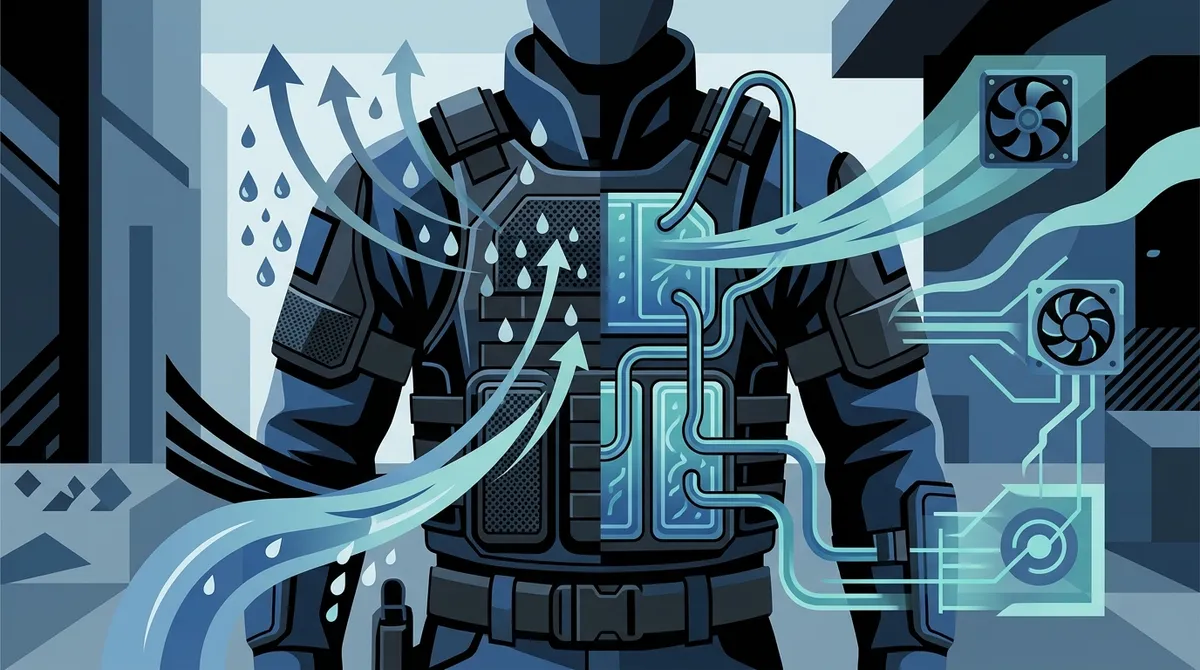
Before we get into the mistakes, let’s make sure we’re on the same page. These two approaches to passive vs active body armor cooling are very different, and knowing which is which matters a lot.
| Feature | Passive Cooling | Active Cooling |
|---|---|---|
| How it works | Uses breathable fabrics, airflow channels, or phase-change materials | Uses powered fans or pumps to circulate air |
| Power required | None | Yes (battery or USB) |
| Cooling intensity | Mild to moderate | Moderate to strong |
| Best for | Mild heat or short shifts | Long shifts or extreme heat |
| Examples | Wicking undershirts, mesh liners | Ventilation vests with fan systems |
Passive cooling relies on materials and design. It helps wick moisture away from your skin. It uses mesh or channels to let some air move naturally. It doesn’t need any power. Active cooling, on the other hand, actually moves air using a fan or pump. It’s more aggressive, more consistent, and much more effective in serious heat. You can explore how this works in detail at how an active cooling system works in ventilation vests.
Now let’s talk mistakes.

Mistake #1: Assuming Passive Cooling Is Enough for Long Shifts
This is probably the most common mistake out there. A lot of officers, soldiers, and security pros assume that a good moisture-wicking undershirt will handle the heat. And for shorter, cooler shifts — maybe it does. But for twelve-hour days in 90°F+ weather? Not even close.
Passive cooling has real limits. When humidity is high, sweat doesn’t evaporate well. When you’re wearing body armor, natural airflow is almost completely blocked. The heat just sits there, building up against your skin with nowhere to go.
The OSHA Heat Stress Guide makes it clear: prolonged heat exposure at work increases the risk of heat exhaustion and heat stroke. That’s not just discomfort — that’s a safety issue.
Active cooling systems like the BluFano fan system actively push fresh air under your armor. That’s something a wicking shirt simply cannot do. If your shifts are long or your environment is hot, passive alone isn’t going to cut it.

Mistake #2: Ignoring Moisture Control Alongside Airflow
Here’s something a lot of people miss: cooling isn’t just about temperature. It’s also about moisture. When sweat gets trapped under body armor, it creates a wet, warm layer against your skin. That leads to chafing, discomfort, and even skin irritation over time.
A good passive vs active body armor cooling strategy has to address both heat and moisture. That’s why the best ventilation vests are designed to do two things at once:
- Boost airflow under the vest to release trapped heat
- Encourage sweat evaporation to reduce moisture buildup
- Keep the vest lifted away from the body to prevent direct contact
- Circulate fresh, dry air to replace the hot, humid air underneath
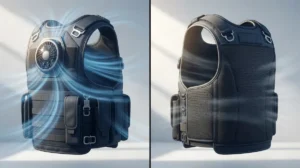
The BluHalo ventilation vest is a great example of this done right. It inflates to create an air gap between your armor and your body — up to 1.5 inches. That gap does two jobs: it lets heat escape and gives sweat somewhere to evaporate. If your cooling solution doesn’t address moisture, you’re only solving half the problem. Check out how sweat management works under body armor to understand why this matters so much.

Mistake #3: Choosing the Wrong System for Your Environment
Not every cooling solution works in every situation. That’s a huge mistake people make when choosing between passive and active options. They pick based on price or what looks cool — not based on what their actual duty environment demands.
Here’s a quick breakdown of what works best where:
| Duty Environment | Recommended Approach | Why It Works |
|---|---|---|
| Mild climate, short shifts | Passive (wicking fabrics) | Light, no power needed |
| Hot climate, long patrol shifts | Active fan system | Consistent airflow all shift long |
| High-intensity tactical operations | Active + passive combo | Maximum cooling and moisture control |
| Deployed military in desert heat | Active system with long battery life | Extended cooling without power source |
| Emergency response in protective gear | Active cooling with quick setup | Fast relief in unpredictable conditions |
If you’re a patrol officer in a southern state during summer, a passive mesh liner isn’t going to do enough. You need something like the BluFano, which delivers adjustable fan-driven airflow for 8 to 32 hours on a single charge. That kind of runtime is what serious duty demands. Learn more about how to choose the right body armor ventilation vest in 2026 for your specific environment.
Mistake #4: Overlooking How Body Armor Fit Affects Cooling
Here’s one that surprises a lot of people: the fit of your body armor has a massive impact on how well any cooling system works. If your vest is strapped too tight against your body, there’s no room for air to move — even if you have a fan pushing it.
Proper body armor fit creates a small natural gap that any ventilation system can take advantage of. A vest that’s cinched down too tight eliminates that gap completely. And a vest that’s too loose shifts around, which disrupts airflow and creates friction points.
Here are four things to check about your body armor fit before adding any cooling system:
- Check the side straps — They should be snug but not compressing your ribcage. You want some give.
- Check coverage — The armor should sit properly across your chest without being pulled too tight against your skin.
- Check the shoulder fit — Too much weight on the shoulders compresses the vest down and reduces air space.
- Check the gap — You should be able to slide a ventilation device under the vest without it folding or buckling.
The Body Armor Standards from the National Institute of Justice also emphasize proper fit as a safety and performance factor — not just for protection, but for long-term wearability. Read more on body armor fit and airflow tips for all-day comfort.
Mistake #5: Not Combining Passive and Active Cooling for Maximum Relief
The final mistake — and maybe the sneakiest one — is treating passive and active cooling as an either/or choice. They’re not. The smartest professionals layer both approaches together for the best results.
Think of it like this: passive cooling sets the foundation. A moisture-wicking base layer pulls sweat away from your skin. A well-fitting vest allows natural airflow. Then, active cooling builds on top of that. A fan system circulates fresh air through the space created by the passive setup.
When you combine them, the results are noticeably better. Officers who’ve tried this approach report staying cooler longer, sweating less, and maintaining better focus during extended shifts. Dental health might seem unrelated, but even professionals at Smile District know that comfort and wellbeing are connected — when your body feels good, you perform better in every area of your work.
Here’s a simple combo approach that works well in 2026:
- Start with a moisture-wicking base layer close to your skin
- Add a BluHalo ventilation vest between your base layer and armor to create an air gap
- Attach the BluFano fan system to actively circulate air through that gap
- Use vehicle AC during transitions to speed up cooling (a trick many users love)
Bundling BluHalo and BluFano together is even available at a discount through the BluHalo shop, which makes it easy to get the full system at once. You can also compare BluFano vs BluHalo to see which fits your needs best, or bundle both for the most comprehensive cooling experience available.
How Passive vs Active Body Armor Cooling Compares Side by Side
Still weighing your options? Here’s one final comparison table to help you make the right call:
| Category | Passive Only | Active Only | Passive + Active Combo |
|---|---|---|---|
| Heat relief | Moderate | Strong | Maximum |
| Moisture control | Good | Moderate | Excellent |
| Comfort level | Moderate | High | Highest |
| Best shift length | Short (under 6 hours) | Medium to long | Any length |
| Investment | Low | Medium | Medium-high (best value) |
The combo approach wins almost every time for serious duty professionals. And when you consider that heat-related fatigue can affect judgment and reaction time, investing in proper cooling isn’t just about comfort — it’s about safety and performance on the job. For a deeper look, check out the full guide on passive vs active body armor ventilation system comparison.
Quick Tips to Improve Your Cooling Setup Right Now
- Replace cotton undershirts with moisture-wicking synthetics or merino wool
- Check your body armor straps and loosen them slightly if they’re compressing your chest
- Consider a ventilation vest if you’re doing shifts longer than six hours in warm weather
- Look into active fan systems for high-heat environments or high-intensity operations
- Read how to prevent heat stress while wearing body armor for more practical steps
Small changes can make a big difference. You don’t have to overhaul everything at once. Start with what makes the most sense for your specific situation, and build from there.
Conclusion: Don’t Let Heat Steal Your Focus
Heat under body armor is a real problem — but it’s a solvable one. The key is understanding the difference between passive and active body armor cooling, avoiding the five mistakes we covered, and choosing the right combination of tools for your duty environment.
Whether you’re a patrol officer sweating through summer shifts, a soldier operating in desert heat, or a security professional working long outdoor events, the right ventilation solution makes a real difference in how you feel and how you perform.
BluHalo was built by someone who lived this problem firsthand — a Chicago police officer who got tired of overheating and created something that actually works. The BluHalo vest and BluFano fan system are designed specifically for people like you, and thousands of professionals are already using them to stay cooler, drier, and more focused every shift.
Ready to stop fighting the heat and start focusing on your work? Get in touch with our team to find the right cooling solution for your specific needs — we’re happy to help you figure out exactly what will work best for your duty environment and schedule.
FAQs
Q: What is the main difference between passive and active body armor cooling?
A: Passive cooling uses breathable fabrics, mesh liners, and wicking materials to manage heat and moisture without any power source. Active cooling uses a powered fan or pump to actively circulate fresh air under your armor — which is much more effective for long, hot shifts!
Q: Can I use both passive and active body armor cooling at the same time?
A: Absolutely — and we actually recommend it! Combining a moisture-wicking base layer with an active ventilation vest like BluHalo and a fan system like BluFano gives you the best of both worlds: great moisture control and strong, consistent airflow all shift long.
Q: How long does an active body armor cooling system last on a single charge?
A: It depends on the system and the fan speed setting. The BluFano fan system, for example, runs for 8 to 32 hours on a single charge depending on your setting — more than enough to cover even the longest shifts without needing a recharge.
Q: Is active body armor cooling worth the investment for law enforcement officers?
A: For most officers working long shifts in warm or hot climates, active cooling is absolutely worth it. Heat affects focus, reaction time, and physical performance — so staying cooler isn’t just about comfort, it’s about doing your job safely and effectively.
Q: Does body armor fit affect how well a cooling system works?
A: Yes, it makes a big difference! If your vest is strapped too tightly against your body, there’s no room for air to flow — even with an active fan system. A properly fitted vest with a small air gap gives any ventilation system the space it needs to work properly.