Key Takeaways
-
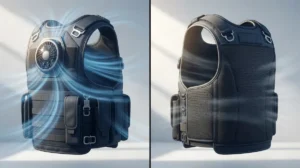
Body armor creates a thermal trap that locks heat and moisture against the skin, causing dangerous heat-related illnesses; ventilation vests with 3D mesh technology can reduce body temperature by 7-14 degrees Fahrenheit by creating air channels for natural cooling.
-
Modern ventilation vests are simple to install (taking just minutes), affordable at ~$60 per officer, and compatible with existing body armor systems, making department-wide implementation cost-effective and logistically straightforward.
-
NIJ-tested ventilation vests have demonstrated a 9.9% reduction in backface deformation, meaning they can actually improve protective performance by reducing blunt force trauma transmitted to officers’ bodies during ballistic impacts.
-
Active fan-driven ventilation systems like Blufano provide 8-32 hours of powered airflow per charge and work even when officers are stationary, outperforming passive mesh-only options in high-heat environments and long shifts.
-
Officers using ventilation vests report staying significantly drier throughout 12-hour shifts, experiencing better focus during high-pressure situations, and reduced fatigue, while being more likely to wear body armor consistently on hot days.
-
Departments can offset ventilation vest costs through federal and state equipment grants, as GSA-approved products qualify for streamlined government purchasing and may reduce heat-related worker’s compensation claims and sick days.
Officer Martinez nearly passed out during a routine traffic stop last summer — not from danger, but from the 115-degree heat trapped under his body armor. He was doing everything right: staying hydrated, taking breaks when possible, wearing regulation gear. Yet the heat building up beneath his vest was silently pushing his body to the edge. This hidden danger is far more common than most people realize, and it affects officers every single day across every climate zone in the country.
The truth is that police tactical gear — especially body armor — creates a thermal trap that standard uniforms simply can’t address. Heat and moisture get locked against the skin, causing discomfort, fatigue, and in serious cases, heat exhaustion. But here’s the good news: modern ventilation technology has come a long way, and most departments haven’t even discovered it yet. Solutions like the BluHalo ventilation vest are changing the game for officers across the country. Let’s break down why this problem exists — and exactly how to fix it.

The Hidden Heat Crisis Under Police Body Armor
Body armor saves lives — there’s no question about that. But it comes with a serious side effect: it traps heat. The panels and carriers used in modern ballistic vests create a sealed layer against the torso, blocking the body’s natural ability to cool itself through air circulation. Add a hot summer day, a long shift, and physical exertion, and you have a recipe for real danger.
According to the OSHA Heat Stress Guide, heat-related illness can develop rapidly, especially when protective gear prevents sweat from evaporating. Officers wearing body armor face exactly this scenario on every shift. The vest stops airflow, sweat builds up, and the body’s core temperature climbs without relief.
Here are some of the most common heat-related problems officers report while wearing body armor:
- Excessive sweating that soaks through uniforms within hours
- Skin irritation and rashes from constant moisture contact
- Difficulty concentrating during high-stakes situations
- Fatigue that sets in well before the end of a shift
- Dizziness or lightheadedness during physical activity
Officers like Martinez aren’t outliers — they’re the norm. Many law enforcement professionals quietly push through dangerous heat levels because they don’t know a better option exists. Learning how to prevent heat stress while wearing body armor is no longer optional — it’s a matter of officer safety.
The moisture problem is just as serious as the heat itself. When sweat can’t evaporate, it creates a damp layer between the body and the armor. This reduces focus, increases chafing, and can lead to skin infections over time. Wet gear also feels heavier, adding to physical fatigue during long patrols or high-intensity calls.

How Ventilation Vests Transform Officer Comfort and Safety
Ventilation vests are a simple but powerful solution. They sit between the body and the body armor, creating space for air to move. That small gap makes an enormous difference. Research shows that ventilation vests can reduce body temperature by 7 to 14 degrees Fahrenheit compared to wearing body armor without any ventilation layer.
So how do they actually work? It all comes down to smart engineering. Here’s a breakdown of the key technologies involved:
3D Mesh Technology and Air Channels
Premium ventilation vests use a raised 3D polyester mesh construction. This creates a physical gap between the vest surface and the skin. Air flows through this gap continuously, even when the officer is standing still. Vertical air channels draw warm air upward and away from the body, while fresh air is pulled in from below.
360-Degree Ventilation System
The best systems provide ventilation all the way around the torso — front, back, and sides. This matters because sweat accumulates unevenly. The back and underarms tend to be the highest-sweat zones, but a full 360-degree system addresses every surface at once. Products like the Blufano active airflow system take this further by using a fan-driven unit that circulates fresh air beneath the armor for 8 to 32 hours per charge.
Temperature Reduction Explained
The 7-14 degree reduction comes from two effects working together. First, the air gap stops direct heat transfer between the body and the warm armor surface. Second, moving air accelerates sweat evaporation, which is the body’s primary cooling mechanism. When both of these work at once, the cooling effect is dramatic and immediate.
Moisture-Wicking Fabric Innovations
Modern ventilation vests use fabrics that actively pull moisture away from the skin. These materials resist absorption, meaning sweat moves through the fabric and into the air channel rather than soaking in. The result is a drier, more comfortable experience even during the most demanding shifts. To understand more about what body armor ventilation does and why you need one, it helps to see how each layer of technology builds on the last.
| Technology | Primary Benefit | Secondary Benefit |
|---|---|---|
| 3D Mesh Construction | Creates air gap under armor | Reduces skin contact and chafing |
| Vertical Air Channels | Draws heat upward and out | Improves natural convection |
| Moisture-Wicking Fabric | Keeps skin dry | Prevents odor and skin irritation |
| Fan-Driven Airflow (Blufano) | Active cooling on demand | Works even when stationary |

Real-World Performance: What Officers Experience Daily
Numbers and technology sound great on paper, but what do real officers actually say? The feedback from law enforcement users is overwhelmingly positive. Leading ventilation vest products have earned over 12,000 five-star reviews from law enforcement professionals — that’s not a small sample. That’s thousands of officers who tried the product and came back to say it changed their daily experience.
The before-and-after comparisons are striking. Officers who previously soaked through their undershirts within the first two hours of a shift report staying noticeably drier throughout an entire 12-hour day. That’s not a minor comfort upgrade — it’s a fundamental shift in how the workday feels.
Here’s what officers commonly report after switching to a ventilation vest:
- Significantly less sweating during patrol and traffic stops
- Better focus during high-pressure situations
- Reduced fatigue toward the end of long shifts
- Less skin irritation and chafing under the vest
- Greater willingness to wear body armor consistently
That last point is especially important. Some officers quietly stop wearing their armor on hot days because the discomfort feels unbearable. Ventilation vests remove that temptation. When gear is comfortable, officers wear it every single shift — and that’s what truly saves lives. Check out real officer reviews and testimonials to see what the community is saying firsthand.
The impact on alertness is also measurable. Heat fatigue doesn’t just make officers uncomfortable — it slows reaction time and reduces decision-making clarity. Staying cooler means staying sharper, and that matters enormously in the field.
Choosing the Right Ventilation System for Your Department
Not all ventilation systems are created equal, and choosing the right one for your department requires a bit of homework. The good news is that there are solid options at multiple price points, and the technology has become more accessible than ever in 2026.
GSA-Approved Options for Government Purchase
For law enforcement agencies making purchases through government channels, GSA-approved products are the easiest path. Some ventilation vest products are listed on the U.S. Government GSA schedule, meaning procurement is streamlined and compliant. This is a big deal for departments with strict purchasing guidelines.
Compatibility With Existing Body Armor
The best ventilation vests work with both inner and outer carrier systems. Whether your department uses soft armor plates in an inner carrier or a full outer tactical vest, there’s a ventilation solution that fits. Choosing the right body armor ventilation vest in 2026 starts with understanding what armor system you already have.
Comparing Budget and Premium Options
| Feature | Budget Option | Premium Option (e.g., Blufano) |
|---|---|---|
| Airflow Type | Passive mesh only | Active fan-driven + passive mesh |
| Battery Life | N/A | 8-32 hours per charge |
| Compatibility | Most inner carriers | Any style of body armor |
| Extra Features | None | 10,000mAh power bank, forward light |
| Best For | Moderate climates | High-heat environments, long shifts |
Size and Fit Considerations
A ventilation vest needs to fit properly to work effectively. Too loose and air channels collapse; too tight and the vest defeats its own purpose. Most quality options come in a full size range and include guidance for matching the vest to existing armor dimensions. For departments outfitting multiple officers, size variety is an important procurement factor.
Visit the BluHalo shop to compare current options and find the right fit for individual officers or full department orders.
Installation and Daily Use: Making the Switch Simple
One of the biggest reasons officers hesitate to try ventilation vests is the fear that they’ll be complicated to use. The reality is the opposite — most systems take just minutes to set up and require almost no change to daily routines.
Here’s a simple step-by-step guide to getting started:
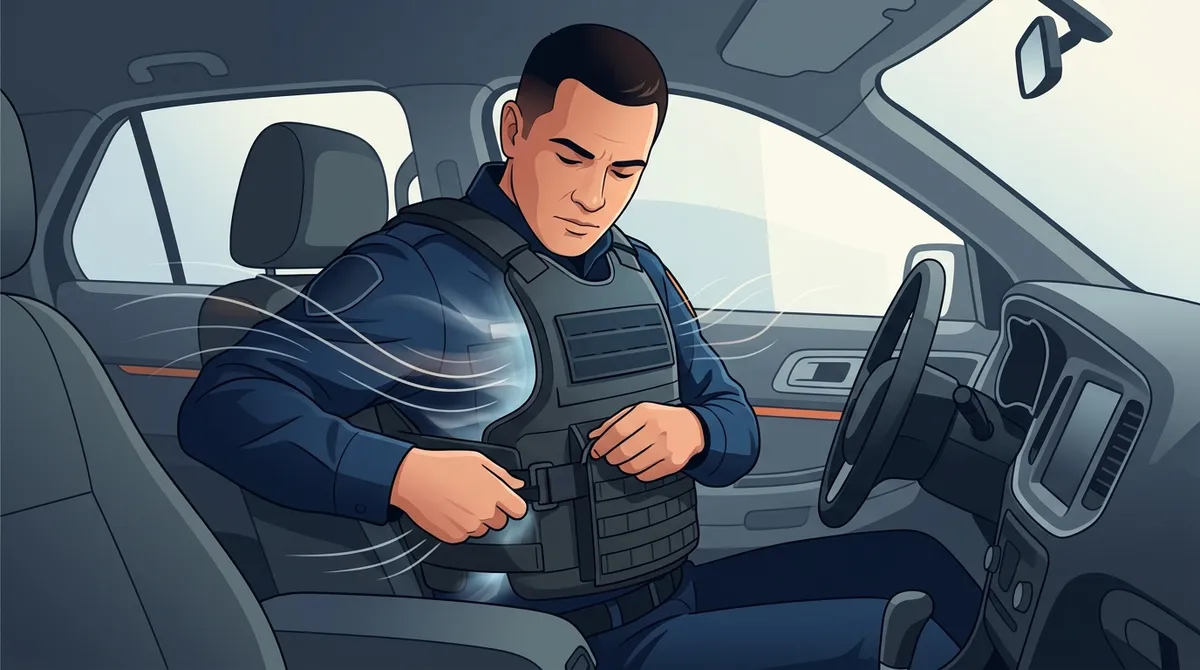
- Start clean: Attach the ventilation vest to a clean, dry armor carrier using the included Velcro or strap system.
- Layer correctly: Place the ventilation vest between your undershirt and your body armor carrier — not on top of the armor.
- Adjust for fit: Make sure the vest sits flat and covers the full torso area for maximum airflow coverage.
- Activate if needed: For active systems like Blufano, turn on the fan using the control knob and select your preferred airflow setting.
- Check before each shift: Confirm the device is charged and the mesh is unobstructed before heading out.
Integration With Inner and Outer Carriers
Both inner carrier and outer tactical vest users can use ventilation vests. The key is proper placement so the mesh stays open and airflow isn’t blocked by the armor panels themselves. Learn more about how to stay cool under body armor with smart ventilation for detailed setup tips.
Maintenance and Washing Guidelines
Most passive ventilation vests are machine washable on a gentle cycle. Active fan units should be wiped down and have the electronic component removed before washing the fabric portion. Regular washing keeps moisture-wicking properties performing at their best.
Common Adjustment Mistakes to Avoid
- Wearing the vest too tight, which collapses the air channels
- Skipping the vest on cooler days, then forgetting to reinstall it
- Allowing the mesh to get compressed by overly tight armor straps
Beyond Comfort: Additional Safety Benefits
Ventilation vests don’t just make officers more comfortable — they can actually improve the protective performance of body armor. That’s a benefit most officers don’t expect, and it’s a compelling reason to bring this technology to department administrators.
When used in conjunction with body armor, certain NIJ-tested ventilation vests have achieved a 9.9% reduction in backface deformation. Backface deformation refers to how much the armor indents toward the body upon ballistic impact. A reduction in this measurement means less blunt force trauma transmitted to the officer’s torso — a potentially life-saving improvement.
According to NIJ Body Armor Standards, certification testing includes backface deformation measurements as a key safety metric. Ventilation vests that contribute to lower deformation scores can actually complement the protective qualities of the armor they’re worn with.
Here’s a summary of the additional safety benefits ventilation vests provide:
- Reduced blunt force trauma through cushioning effect
- Lower core body temperature reduces heat exhaustion risk
- Improved alertness reduces accident and injury risk in the field
- Consistent gear wear because officers aren’t tempted to skip armor on hot days
Long-term health is another factor worth considering. Repeated heat stress takes a cumulative toll on the body. Officers who spend years wearing poorly ventilated armor face higher risks of chronic heat-related health issues. Investing in ventilation gear now is an investment in long-term officer health. For a deeper look at why body armor ventilation is a game-changer for officers, the evidence is clear and growing.
Department Implementation: Building Your Case for Ventilation Gear
If you’re an administrator or a sergeant trying to make the case for ventilation vests in your department, you’re in a strong position. The data supports the investment from multiple angles — financial, operational, and human.
Cost-Benefit Analysis
| Cost Factor | Without Ventilation Vests | With Ventilation Vests |
|---|---|---|
| Heat-related sick days | Higher frequency | Reduced significantly |
| Officer productivity | Drops in hot weather | Maintained year-round |
| Gear compliance rate | Lower on hot days | Higher consistency |
| Per-unit cost | N/A | Starting around $60 per officer |
At approximately $60 per officer for products like the BluHalo ventilation vest, the upfront investment is minimal compared to the cost of a single heat-related worker’s compensation claim or a sick day. For a department of 50 officers, full outfitting costs less than many single pieces of equipment already in use.
Officer Retention and Satisfaction
Officer morale and retention are ongoing challenges for departments nationwide. Small investments in daily comfort have an outsized impact on job satisfaction. Officers who feel their department prioritizes their wellbeing are more likely to stay — and to recommend the job to others.
Insurance and Liability Considerations
Departments that proactively address heat stress risk management may see benefits in insurance and liability contexts. Providing documented heat mitigation equipment shows due diligence in officer safety protocols.
Grant Funding Opportunities
Many law enforcement agencies qualify for equipment grants through federal and state programs. Ventilation vests, especially those on the GSA schedule, often qualify as eligible protective equipment purchases. Researching available grants can make outfitting an entire department essentially cost-neutral.
Ready to take the next step for your officers or your department? Get in touch with our team to discuss bulk ordering, compatibility questions, or department-level implementation support. The solution to the heat problem under police tactical gear is here — and it’s more affordable and accessible than you might think.
FAQs
Q: Can ventilation vests be worn with both soft and hard armor plates?
A: Yes, absolutely! Most quality ventilation vests are designed to be compatible with both soft armor and hard plate carriers. The key is proper placement between the body and the carrier so the mesh remains open and airflow isn’t blocked — regardless of what type of ballistic protection you’re wearing.
Q: How long do ventilation vests typically last with daily use?
A: A well-made ventilation vest can last several years with regular daily use, especially when cared for properly. Passive mesh vests tend to be very durable since they have no moving parts, while active fan systems like the Blufano are built for duty-grade daily use as well. Following the manufacturer’s washing and storage guidelines goes a long way toward extending the life of your vest.
Q: Are there specific washing instructions to maintain the cooling properties?
A: For passive ventilation vests, a gentle machine wash cycle works well and helps preserve the moisture-wicking fabric properties. For active fan-based systems, always remove the electronic unit before washing the fabric portion. Washing regularly is actually a good thing — it keeps the mesh open and the moisture-wicking materials performing at their best.
Q: Do ventilation vests add significant weight to an officer’s gear?
A: Not at all — this is one of the best things about modern ventilation vests! Products like the BluHalo weigh under 7 ounces, which is barely noticeable when you’re already wearing body armor. The comfort and cooling benefits far outweigh the minimal added weight, and most officers report they forget the vest is even there after the first day of wearing it.
Q: What’s the typical return on investment timeline for department purchases?
A: At a starting price of around $60 per officer, the ROI timeline for most departments is surprisingly short. Even one avoided heat-related sick day or worker’s compensation claim can offset the cost of outfitting multiple officers. Many administrators find that improved gear compliance — officers consistently wearing their armor even on hot days — alone justifies the investment within the first duty season.