Key Takeaways
-
Heat stress from body armor reduces alertness, slows reaction time, and impairs decision-making — active ventilation systems can reduce surface temperature by up to 23°F, directly improving officer safety and performance.
-
Active ventilation systems run 8-32 hours on a single charge and provide consistent cooling independent of movement or conditions, making them essential for hot climates and long shifts where passive systems fall short.
-
Real-world testing with Singapore Police Force showed even a 1.86°C reduction in back skin temperature significantly reduced fatigue and improved focus during extended operations in tropical conditions.
-
Choose active ventilation for hot/humid environments, long shifts, and high-intensity tactical work; passive systems suit mild climates and lower-exertion roles as a lightweight, no-maintenance alternative.
-
BluHalo and BluFano offer a hybrid solution — a lightweight inflatable gap vest (under 7 oz) paired with an active fan system that fits under any armor style and includes a 10,000mAh power bank.
-
Officer compliance with body armor standards depends on comfort; uncomfortable gear is often skipped entirely, creating dangerous safety gaps that proper ventilation directly prevents.
If you wear body armor or a tactical vest for work, you already know the struggle. Heat builds up fast. Sweat soaks through your uniform. And after a few hours on shift, staying sharp becomes a real battle. Security personnel ventilation is the solution — but not all systems work the same way. There are two main approaches: active and passive. Choosing the right one can make a huge difference in how you feel and perform throughout the day.
In 2026, roughly 250,000 police, military, and private security professionals worldwide rely on advanced ventilation systems to stay cool under their gear. Whether you’re walking a beat in summer heat, deployed in a tropical environment, or running a high-intensity tactical operation, the right ventilation setup is a game-changer. Let’s break down both options so you can make the best choice for your needs.
What Is Security Personnel Ventilation?
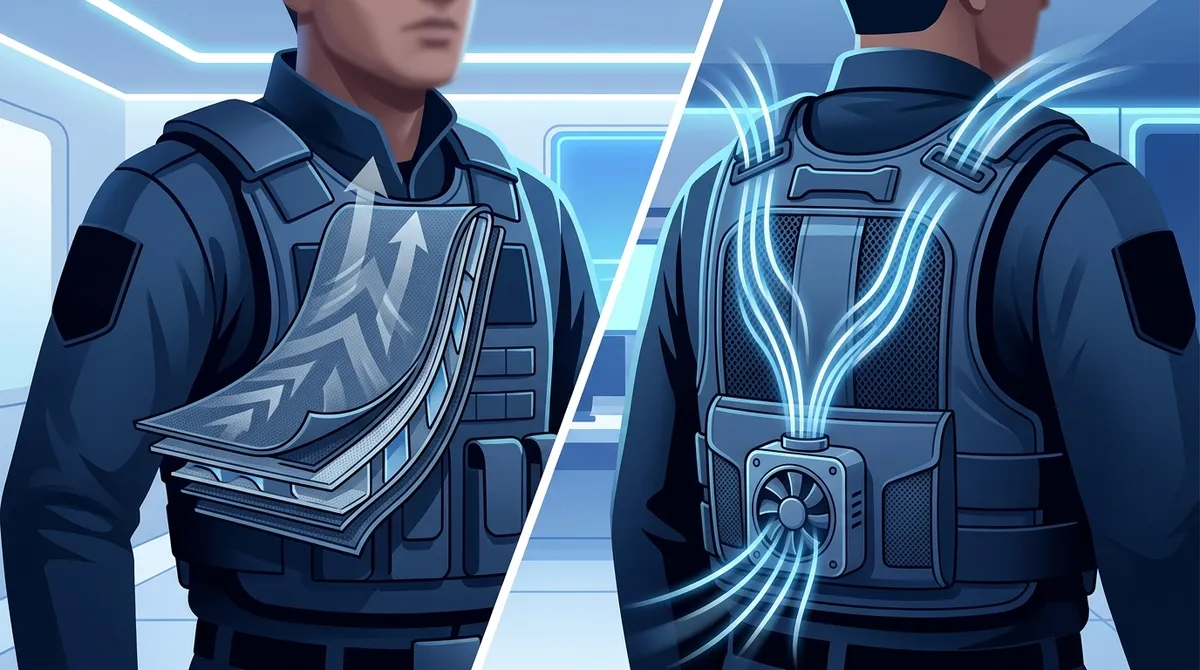
Security personnel ventilation refers to any system that improves airflow between your body and your protective vest. Without it, heat and moisture get trapped, creating a hot, humid microclimate against your skin. This leads to discomfort, fatigue, and even heat-related illness.
According to the OSHA Heat Stress Guide, heat stress reduces alertness, slows reaction time, and impairs decision-making. For officers and security professionals, that’s a serious safety concern. Good ventilation helps prevent all of that by keeping airflow moving and moisture escaping. You can learn more about the basics in this helpful guide on what is vest ventilation and why you need it.
Passive Ventilation: The Basics
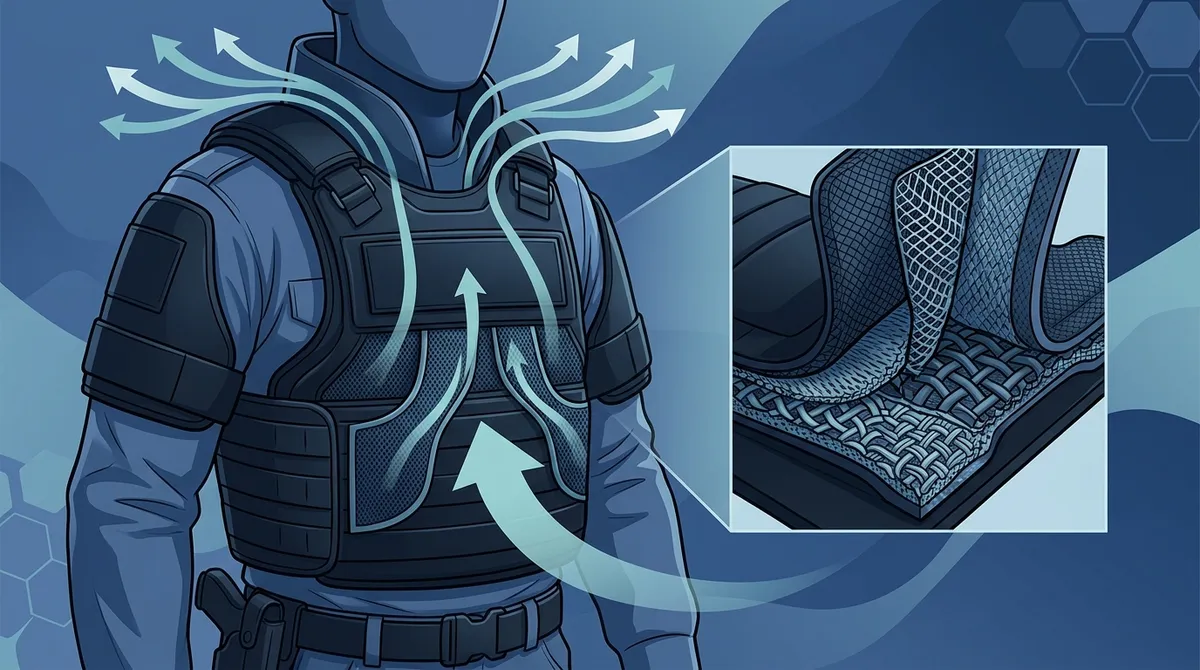
Passive ventilation systems don’t use motors, fans, or batteries. Instead, they rely on design features like mesh panels, 3D spacer fabric, and vertical air channels to let air move naturally around your body. Think of it like wearing a breathable athletic shirt — the airflow depends on your movement and the environment.
Common passive features include:
- Mesh panels on high-sweat zones (back, chest, underarms)
- 3D raised fabric that lifts the vest off your skin
- Vertical air channels that guide airflow upward
- Perforated ballistic panels for increased breathability
- EVAP technology that uses body movement to pull in cool air and push out hot air
Passive systems are lightweight, require no charging, and are easy to maintain. They work well in moderate climates and lower-intensity situations. However, in extreme heat or during high-exertion tasks, passive ventilation may not be enough to keep you comfortable.
Active Ventilation: The Next Level
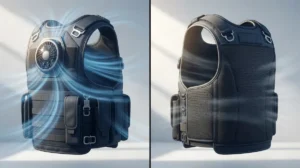
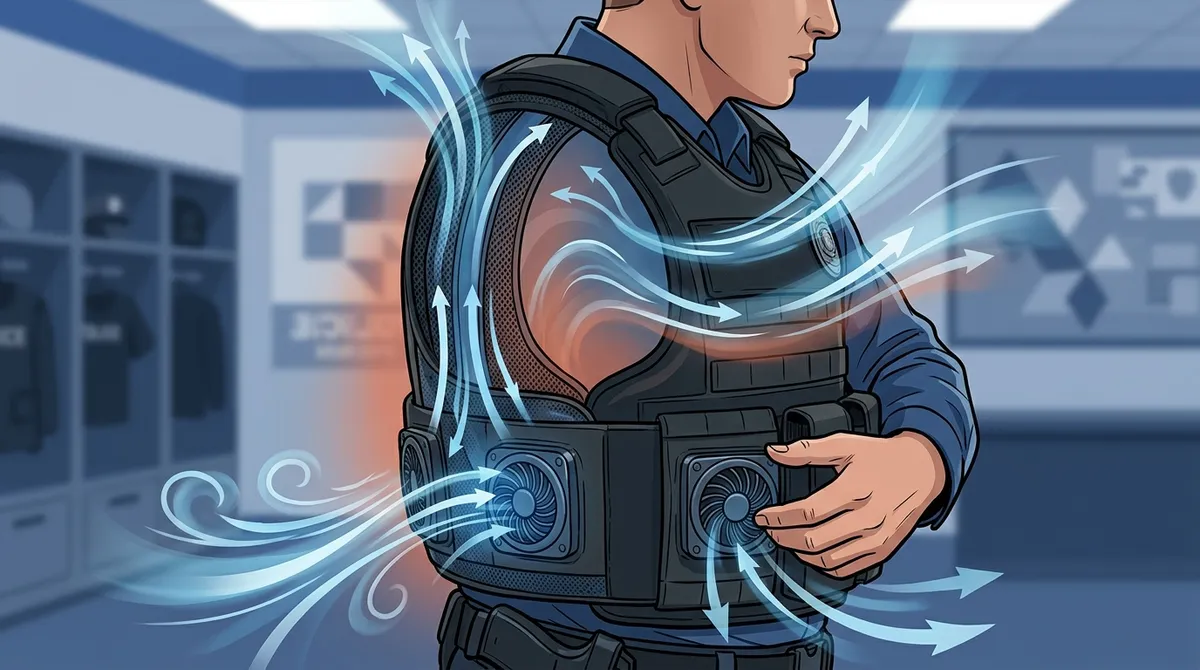
Active ventilation systems use battery-powered fans to push fresh air under your vest continuously. Instead of waiting for a breeze or relying on movement, these systems create their own airflow. That’s a big deal when you’re standing still on post or working in brutal summer heat.
Active systems can provide 8 to 32 hours of continuous cooling depending on the setting and battery capacity. Certified testing of the Maxx-Dri Vest 4.0 showed surface temperatures up to 23°F cooler than standard vests with no ventilation. That’s not a small difference — that’s the difference between staying sharp and feeling completely drained.
For a deeper dive into how these technologies compare, check out this resource on best vest cooling systems and how to beat the heat in body armor.
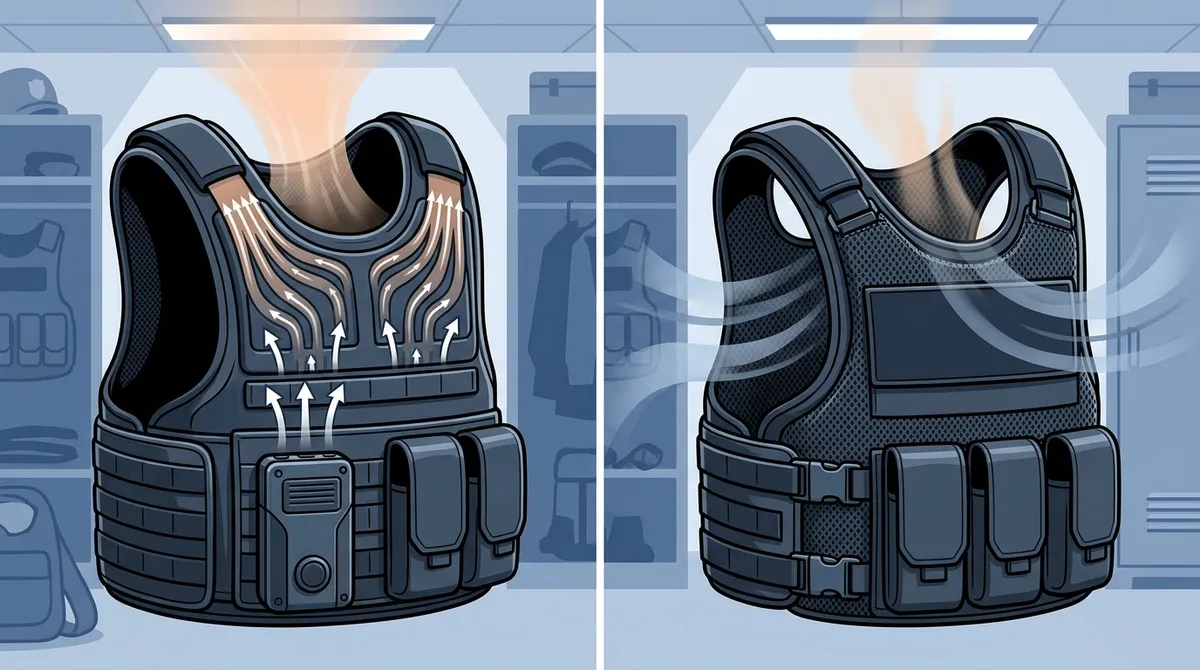
Side-by-Side Comparison: Active vs. Passive
Here’s a quick breakdown to help you compare both systems at a glance:
| Feature | Passive Ventilation | Active Ventilation |
|---|---|---|
| Cooling Power | Moderate | High |
| Power Required | None | Battery-powered |
| Weight | Very light | Slightly heavier |
| Maintenance | Minimal | Charging required |
| Best For | Mild climates, low exertion | Hot climates, long shifts |
| Noise Level | Silent | Very low hum |
| Cost | Lower upfront | Moderate investment |
| Consistency | Depends on conditions | Reliable and constant |
Real-World Performance: What the Data Says
Research backs up what officers already feel on the job. The Singapore Police Force tested a ventilated load-bearing vest prototype in simulated tropical conditions — 30°C temperature and 70% humidity. The result? Lower back skin temperature dropped by 1.86°C, and officers reported lower perceived effort and greater overall comfort. Ground Response Force officers in that study also carry up to 5kg of equipment daily, making ventilation a top priority.
These numbers may seem small, but in extended operations, even a 1–2°C reduction can meaningfully reduce fatigue and improve focus. The Body Armor Standards from the National Institute of Justice also recognize comfort as a key factor in officer compliance — because gear you’re uncomfortable wearing is gear you might skip, and that’s a dangerous trade-off.
Want to understand how to avoid the risks of heat buildup? This article on how to prevent heat stress while wearing body armor is a great read.
Top Products for Security Personnel Ventilation in 2026
Here’s a look at some of the leading options available to security professionals this year:
| Product | Type | Key Feature | Best For |
|---|---|---|---|
| BluHalo Ventilation Vest | Passive (Inflatable Gap) | Creates up to 1.5″ air gap on demand | Law enforcement, everyday duty |
| BluFano Fan System | Active | 8–32 hrs fan-driven airflow, 10,000mAh power bank | Long shifts, high heat environments |
| Maxx-Dri Vest 4.0 | Passive (3D Mesh) | 23°F cooler in certified testing | Moderate climates, all-day wear |
| UARM Ventilation Platform | Passive | Integrated vertical air channels | Military and tactical use |
BluHalo and BluFano: A Winning Combination
If you’re serious about security personnel ventilation, it’s worth looking at what BluHalo and BluFano offer together. BluHalo is a lightweight vest — under 7 ounces — that inflates to create a 1.5-inch air gap between your body and your armor. It was designed by a Chicago police officer who understood the problem firsthand. When deflated, it lies completely flat and unobtrusive. When you need it, just inflate on demand.
BluFano takes it further with active fan-driven airflow. It’s a self-contained unit with a patented air-redirect spout that slides under any style of body armor. It runs for 8 to 32 hours on a single charge, includes a 10,000mAh power bank for charging USB devices, and even has a forward-facing light for low-light situations. Together, they cover both passive and active cooling for maximum comfort. You can explore both products in the BluHalo shop and even bundle them for a discount.
How to Choose the Right Ventilation System for Your Role
Not every professional needs the same solution. Here’s a simple guide to help you match your situation to the right type of system:
- Assess your climate. If you work in a hot, humid environment, active ventilation is almost always worth it. Mild climates can often get by with passive systems.
- Think about shift length. Longer shifts mean more heat buildup. Active systems with 8–32 hour runtimes are ideal for extended duty.
- Consider your activity level. High-intensity roles like SWAT or tactical response benefit from active cooling, which doesn’t rely on movement to work.
- Check your gear setup. Some ventilation products are designed to fit under any vest style, while others may work better with specific armor configurations.
- Set a budget. Passive systems cost less upfront, but active systems offer better performance. Think of it as an investment in your health and focus.
For more tailored guidance, this article on how to choose the right body armor ventilation vest in 2026 walks through every factor in detail.
Climate and Environment: Does It Change the Answer?
Absolutely. Climate plays a huge role in which system performs best. In tropical or desert environments, passive ventilation simply can’t keep up with the heat load. Active systems with consistent airflow are strongly preferred. In temperate or cooler climates, a well-designed passive system may be all you need during lighter duty.
The key takeaway is that there’s no universal answer. Security personnel ventilation needs vary by role, region, and daily demands. The good news is that in 2026, the technology exists to meet every level of need — and it’s more accessible than ever. Check out body armor cooling solutions for officers in 2026 for a full breakdown of what’s available right now.
Quick Reference: Who Benefits Most from Each System
| Role | Recommended System | Why |
|---|---|---|
| Patrol Officer | Active or Hybrid | Long shifts, variable activity level |
| Military / Deployed Soldier | Active | Extreme heat, extended missions |
| Armed Security Guard | Passive or Active | Depends on climate and hours on post |
| SWAT / Tactical Team | Active | High intensity, heavy armor, peak performance required |
| Emergency Responder | Active | Extreme heat exposure, physical exertion |
The Verdict: Which Type of Ventilation Wins?
For most security professionals, active ventilation wins when it comes to consistent, reliable cooling. If you’re in a hot environment, working long shifts, or wearing heavy tactical gear, fan-driven airflow simply outperforms passive systems. The data, the real-world trials, and the testimonials from officers all point in the same direction.
That said, passive systems are not without value. They’re great as a first layer of protection, a lightweight backup, or for roles where conditions are mild. Many professionals actually combine both — using a passive vest base layer alongside an active fan unit — to get the best of both worlds.
No matter which route you choose, investing in body armor ventilation is one of the smartest decisions you can make for your health, comfort, and performance on the job. You do tough work every day — you deserve gear that keeps up with you.
Ready to find your perfect fit? Reach out to the BluHalo team and we’ll help you figure out the best security personnel ventilation solution for your specific role, climate, and gear setup. We’re here to help you stay cool, stay sharp, and stay safe.
FAQs
Q: What is security personnel ventilation and why does it matter?
A: Security personnel ventilation refers to any system that improves airflow between a person’s body and their protective vest or body armor. It matters because trapped heat and moisture can cause fatigue, reduced alertness, and even heat-related illness — all of which are serious risks for officers and security professionals on duty.
Q: How does an active ventilation vest differ from a passive one?
A: An active ventilation vest uses battery-powered fans to circulate air continuously under your body armor, while a passive system relies on mesh panels and design features to allow natural airflow. Active systems tend to perform much better in hot climates and during long, demanding shifts because they don’t depend on movement or environmental conditions to work.
Q: How long does an active ventilation system run on a single charge?
A: Most active ventilation systems, like the BluFano, can run anywhere from 8 to 32 hours on a single charge depending on the fan speed setting. That’s more than enough for a full duty shift, and some units even include a built-in power bank to charge other USB devices while you work.
Q: Can I wear a ventilation vest under any type of body armor?
A: Yes! Most ventilation vests and fan systems are designed to fit under any style of body armor or tactical vest. Products like BluHalo and BluFano are specifically built to be low-profile and adaptable, so you don’t have to change your existing gear setup to enjoy the benefits of improved airflow.
Q: Is a ventilation vest worth it for security professionals in cooler climates?
A: Even in cooler climates, wearing body armor for extended periods causes heat and moisture buildup — especially in high-activity situations. A passive ventilation vest is often a great fit for milder conditions, offering improved breathability without the need for a powered system. If you’re not sure which option suits your climate best, reaching out to a specialist can help you make the right call.