Key Takeaways
-
Heat buildup under body armor can cause heat exhaustion, reduced mental clarity, excessive sweating, fatigue, and impaired decision-making—creating serious health and safety risks during long shifts.
-
Breathable body armor works by creating an air gap between armor and skin through passive inflation systems or active fan-driven ventilation, allowing heat and moisture to escape naturally or via forced airflow.
-
Look for ventilation vests with 3D polyester mesh, vertical/horizontal air channels, 4+ adjustment points, under 7 ounces weight, and 8+ hours battery life for active systems to ensure optimal cooling performance.
-
The BluHalo ventilation vest (passive, on-demand inflation, under 7 oz) suits active movement, while the Blufano active airflow system (fan-powered, 10,000mAh battery, USB charging) excels during stationary duty.
-
Most ventilation solutions retrofit onto existing plate carriers with simple Velcro attachments, so you don’t need to replace current gear—just add the cooling system on top.
-
Law enforcement, military, security, and tactical personnel report improved focus, reduced fatigue, better professional appearance, and sustained performance during 8-12 hour shifts when using breathable body armor systems.
If you wear body armor for work, you already know the struggle. Heat builds up fast. Sweat soaks through your uniform. And after a few hours, all you can think about is getting that vest off. Sound familiar? You’re not alone. Thousands of officers, soldiers, and security professionals deal with this every single day.
The good news? Breathable body armor solutions have come a long way. Today, you don’t have to choose between staying safe and staying cool. Smart ventilation technology is changing the game, giving wearers real relief without sacrificing protection. In this guide, we’ll break down everything you need to know about making your body armor more breathable — and why it matters more than you might think.
What Happens When Body Armor Traps Heat?
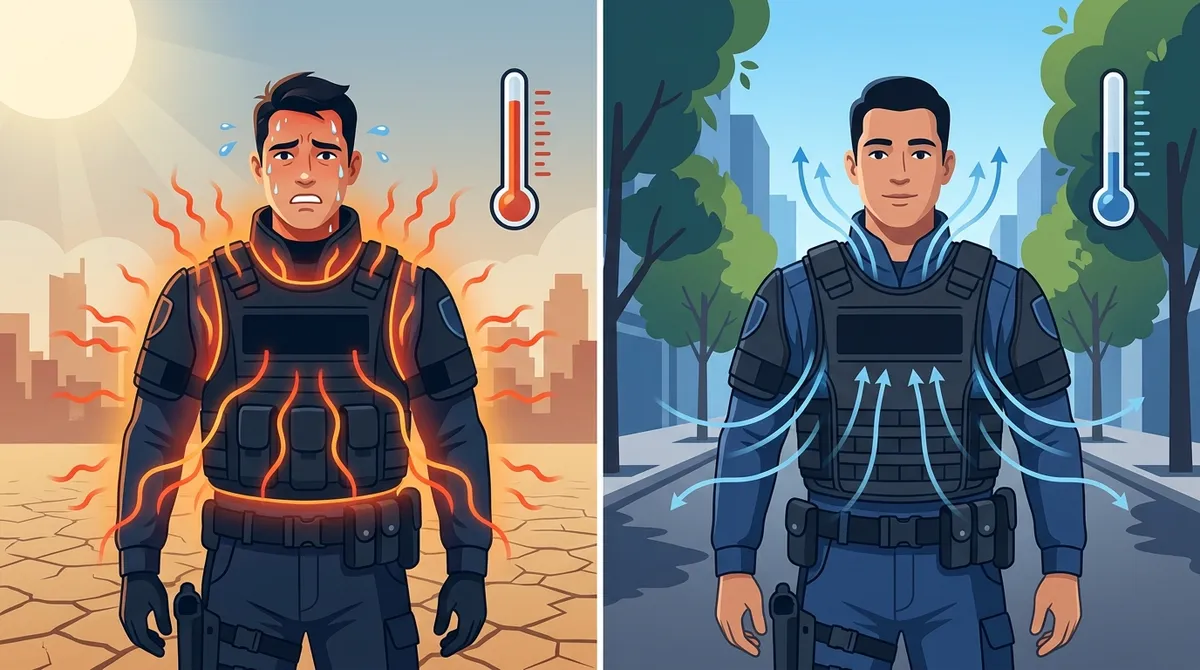
Body armor is designed to protect you. But its solid, close-fitting design also traps heat and moisture against your skin. Your body generates heat naturally, especially during physical activity. When that heat has nowhere to go, the temperature under your vest can climb quickly.
According to the OSHA Heat Stress Guide, prolonged heat exposure can lead to heat exhaustion, reduced mental clarity, and serious health risks. For someone wearing body armor on a 12-hour shift in summer heat, this isn’t just uncomfortable — it can be dangerous.
Here’s what heat buildup under body armor actually causes:
- Excessive sweating that soaks through uniforms and creates hygiene issues
- Increased fatigue that reduces focus and reaction time
- Skin irritation and rashes from constant moisture contact
- Heat stress symptoms including dizziness and nausea
- Reduced morale and overall job performance
The solution isn’t to stop wearing protection. It’s to make that protection breathable. That’s exactly where ventilation vests come in. You can learn more about what body armor ventilation is and why you need it to understand the full picture.
How Breathable Body Armor Ventilation Actually Works
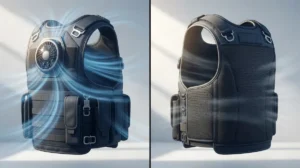
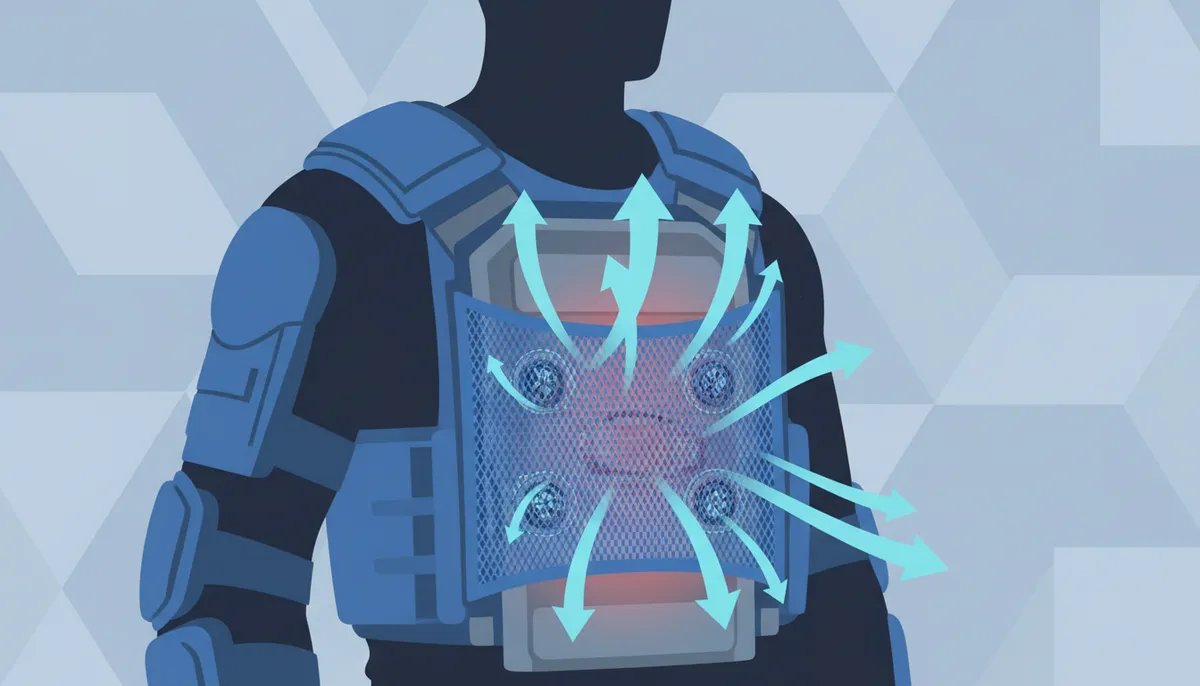
Breathable body armor isn’t about changing the armor itself. It’s about creating an air gap between the armor and your body. That gap is everything. When air can circulate freely, heat and moisture escape instead of building up.
There are two main approaches to creating this airflow:
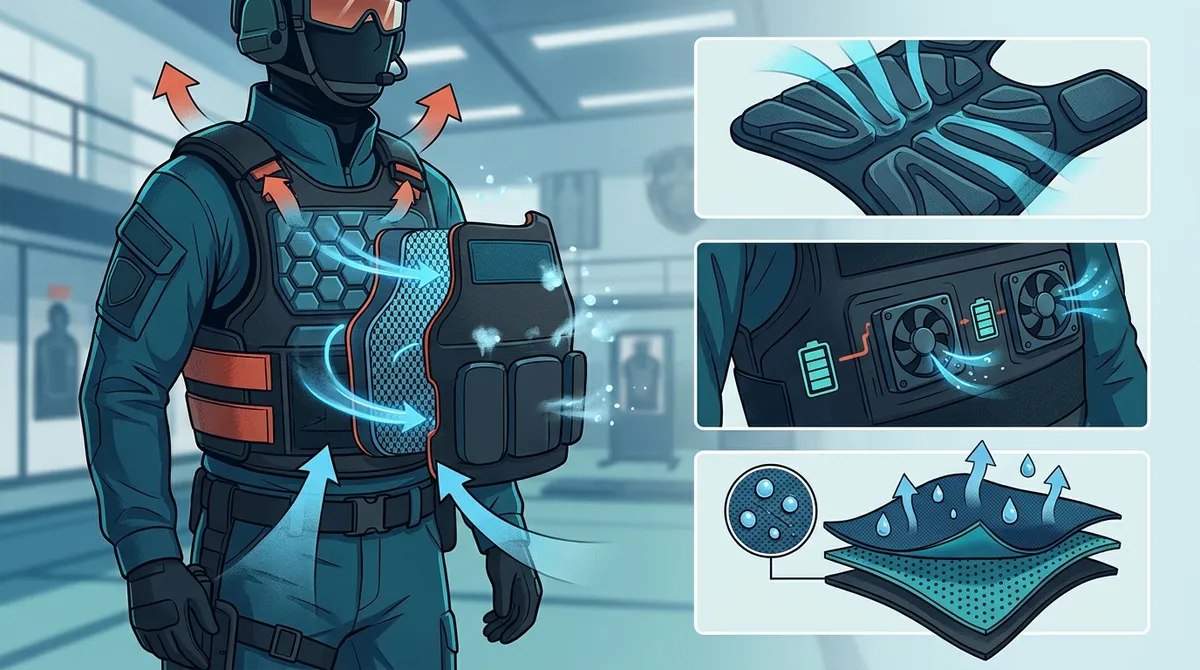
- Passive ventilation systems — These use structured mesh or foam materials to physically lift the armor off your skin. Air moves naturally through the channels as you move.
- Active fan-driven systems — These use small, battery-powered fans to push cool air under the armor and push hot, humid air out. They work even when you’re standing still.
Leading ventilation technologies use evaporative cooling principles where airflow draws cool air in and pushes hot, humid air out through vertical and horizontal air channels. It’s a simple concept with a powerful result. Think of it like opening a window on a hot day — even a small amount of airflow makes a huge difference.
Many of these systems can be retrofitted to existing plate carriers, so you don’t need to buy new armor to get cooling relief.
Key Features to Look For in a Ventilation Vest
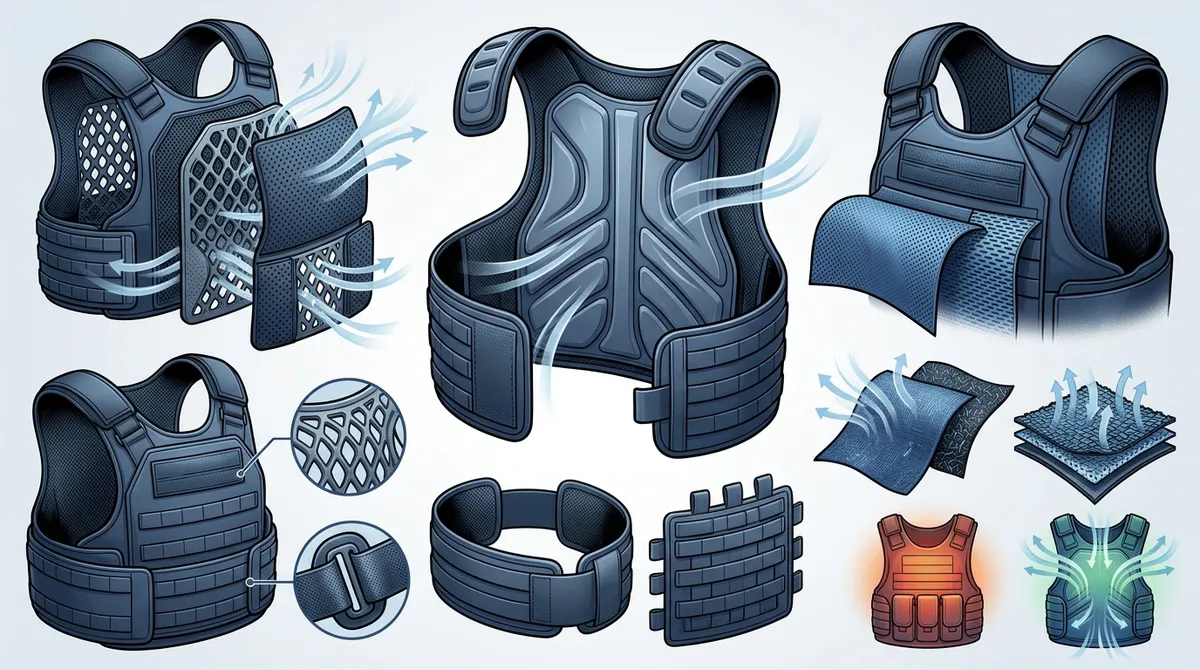
Not all ventilation solutions are created equal. When you’re shopping for breathable body armor accessories, here’s what to look for:
| Feature | Why It Matters | What to Look For |
|---|---|---|
| Material Quality | Affects durability and moisture-wicking ability | 3D polyester mesh with large perforations |
| Airflow Design | Determines how well heat escapes | Honeycomb or vertical/horizontal air channels |
| Fit and Adjustability | Ensures comfort across body types | Multiple adjustment points (4+ straps) |
| Battery Life (if active) | Needs to last a full shift | 8–32 hours of operation |
| Weight | Shouldn’t add burden to your gear | Under 7 ounces ideally |
| Compatibility | Must work with your existing gear | Universal fit for most plate carriers |
Premium ventilation vests also offer anti-gravity weight distribution effects, making your protective gear feel lighter. That’s a big deal when you’re on hour ten of a twelve-hour shift. Learn more about optimal cooling for tactical vests to find what works best for your situation.
Top Ventilation Solutions for Breathable Body Armor
Let’s look at the two standout products from BluHalo’s ventilation vest lineup that are making a real difference for professionals in the field.
BluHalo Ventilation Vest
The BluHalo ventilation vest was created by a Chicago police officer who got tired of overheating on long shifts. That firsthand experience shows in the design. It weighs under 7 ounces and sits flat and unobtrusive when deflated.
When you need cooling relief, inflate it on demand with a small pump. It lifts your vest up to 1.5 inches off your body, creating an instant air gap. When you need it flat again, one button deflates it completely. Simple, effective, and built for the demands of daily duty wear.
Here’s what makes the BluHalo stand out:
- On-demand inflation and deflation for flexibility
- Double-layer high-strength polyethylene construction
- Low-profile design that doesn’t interfere with duty gear
- Easy Velcro attachment to existing vests
- Tested and trusted by law enforcement officers
Blufano Active Airflow System
The Blufano takes breathable body armor to the next level with an active fan system. It features a patented air-redirect spout that slides under any style of body armor. A built-in control knob lets you adjust the fan speed based on your needs.
What really sets the Blufano apart is its built-in 10,000mAh power bank. It powers the fan for 8 to 32 hours depending on your setting, and it can also charge your USB devices in the field. It even includes a forward-facing light for low-light situations. That’s a lot of functionality in one compact device.
Comparing Passive vs. Active Ventilation for Body Armor
| Factor | Passive Ventilation (BluHalo) | Active Fan System (Blufano) |
|---|---|---|
| Cooling Method | Air gap via inflation | Fan-driven airflow |
| Power Required | No battery needed | 10,000mAh built-in battery |
| Cooling at Rest | Limited | Excellent |
| Cooling During Activity | Good | Excellent |
| Weight Added | Under 7 oz | Compact self-contained unit |
| Additional Features | None needed | USB charging + light |
| Best For | Active movement, flexibility | Stationary and active duty |
Many professionals choose to bundle both products together for maximum cooling performance. BluHalo offers a bundle discount for exactly this reason. You can check out the full product shop to explore your options and find what fits your needs.
Who Benefits Most from Breathable Body Armor Solutions?
The short answer? Anyone who wears body armor regularly. But some professionals benefit more than others. Meeting the challenge of heat under armor looks different depending on your role. Understanding how body armor ventilation changes things for officers can help you make a smarter choice.
Law Enforcement Officers
Police officers often wear body armor for 8 to 12 hours a day. In summer months, this can mean hours of trapped heat. Better airflow helps officers stay focused, comfortable, and professional throughout their entire shift. The impact on daily performance is real and measurable.
Military Personnel
Soldiers operating in hot climates face intense heat challenges while wearing tactical body armor. ICEVENTS® ventilation systems, for example, are trusted by tens of thousands of U.S. and Allied military personnel. Effective breathable body armor solutions reduce fatigue and support mission readiness.
Security Professionals
Security guards and protective detail specialists often work long hours in varying climates. Good ventilation keeps them alert and professional. Excessive sweating can also create visible discomfort that affects a client’s confidence. Staying cool is part of staying professional.
SWAT and Tactical Teams
High-intensity operations with heavy armor demand peak physical performance. Heat buildup during tactical situations can affect decision-making at critical moments. The right ventilation solution is a performance tool, not just a comfort accessory. Check out the best vest cooling systems for beating heat in body armor for tactical-focused options.
How to Prevent Heat Stress While Wearing Body Armor
Ventilation vests are your best defense, but a complete strategy helps even more. Here are smart steps to manage heat under your armor:
- Choose the right ventilation vest for your duty style — passive or active depending on your activity level
- Stay hydrated consistently throughout your shift, not just when you feel thirsty
- Wear moisture-wicking base layers under your ventilation vest to help manage sweat
- Use your vehicle’s AC smartly during breaks to pre-cool your body and gear
- Monitor for heat stress symptoms like dizziness or nausea and take breaks as needed
Understanding how to prevent heat stress while wearing body armor is essential for every officer and soldier. The Body Armor Standards from the National Institute of Justice also offer useful guidance on armor selection and performance benchmarks.
For professionals who experience physical tension from long shifts in heavy gear, recovery matters too. Services like Mobile Area Massage of Tampa Bay can help with muscle recovery and stress relief after demanding duty days.
Materials That Make Body Armor More Breathable
The materials used in ventilation vests play a huge role in performance. Here’s a quick comparison of common ventilation materials:
| Material | Airflow | Moisture Resistance | Durability |
|---|---|---|---|
| 3D Polyester Mesh | Excellent | High | High |
| Honeycomb Foam | Good | Medium | Medium-High |
| High-Strength Polyethylene | Excellent (when inflated) | Very High | Very High |
| Standard Foam Padding | Poor | Low | Medium |
Premium ventilation systems feature 3D polyester mesh with extra-large perforations and honeycomb designs that provide 360-degree air circulation. These materials actively resist moisture absorption, which means they stay drier and perform better over time. If you want to choose the best police vest ventilation system, understanding materials is a great starting point.
Real Results from Real Professionals
The reviews speak for themselves. Officers using the BluHalo ventilation vest report significant comfort improvements on long, hot shifts. One officer described wearing it through a 12-hour day in 95-degree weather and finally feeling comfortable in their armor for the first time. That’s not a small thing — that’s a shift in how you show up to do your job every day.
Blufano users highlight faster cooling when combined with vehicle AC, reduced sweat accumulation, and improved focus during hot-weather operations. You can read real testimonials on the BluHalo reviews page to see how these products perform in the real world.
Conclusion: Make Your Body Armor Work Better for You
Breathable body armor isn’t a luxury — it’s a necessity for anyone wearing protective gear on the job. Heat and moisture buildup aren’t just uncomfortable. They affect your performance, your health, and your safety. The right ventilation solution creates the air gap your body needs to stay cool, dry, and focused no matter what the shift throws at you.
Whether you go with the lightweight, on-demand BluHalo vest or the active fan power of the Blufano system, you’re investing in your own comfort and performance. And when you bundle both together, you get the best of both worlds. Don’t let heat be the thing that slows you down.
Ready to experience the difference for yourself? Get in touch with the BluHalo team today to find the right breathable body armor ventilation solution for your needs. You’ve earned the right to be comfortable while doing your job.
FAQs
Q: How do ventilation vests make body armor more breathable?
A: Ventilation vests create a physical air gap between your body and your armor, allowing heat and moisture to escape instead of building up. Some use passive inflation systems while others use active fans to keep fresh air circulating — either way, you’ll feel the difference fast!
Q: Can I add a ventilation vest to my existing body armor?
A: Absolutely! Most ventilation vests, including the BluHalo, are designed to retrofit onto existing plate carriers and body armor with simple Velcro attachments. You don’t need to replace your current gear — just add the ventilation system on top.
Q: Do breathable body armor ventilation systems work in both hot and cold weather?
A: Yes! Ventilation vests are designed for year-round use. In hot weather, they actively cool you down. In colder conditions, they help manage moisture from physical activity so you stay dry and comfortable without overheating inside your layers.
Q: How long does the Blufano fan system last on a single charge?
A: The Blufano active airflow system runs for 8 to 32 hours depending on your fan speed setting, thanks to its built-in 10,000mAh power bank. It can even charge your USB devices in the field — pretty handy for long shifts!
Q: Are ventilation vests used by military and law enforcement professionals?
A: Definitely! Ventilation solutions for breathable body armor are trusted by tens of thousands of U.S. and Allied military, law enforcement, and security personnel worldwide. The BluHalo vest was actually invented by a Chicago police officer who needed a real solution for daily duty wear.