Key Takeaways
-
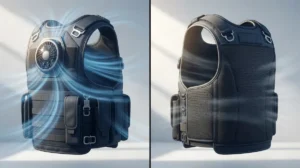
Heat stress under body armor impairs physical performance and decision-making; cooling systems prevent this by improving airflow, reducing moisture, and releasing trapped heat beneath your vest.
-
BluHalo inflatable ventilation vest costs just $60, weighs under 7 ounces, lifts armor 1.5 inches off your body, and works on-demand with a pump—making it the most affordable passive cooling solution available.
-
BluFano active fan system features 8-32 hour battery life, built-in power bank that charges phones, forward-facing light, and can be supercharged by pointing the spout toward vehicle AC vents.
-
Passive cooling systems (BluHalo, evaporative panels) require no power and work silently through airflow design, while active systems (BluFano) use batteries for powerful fan-driven cooling in extreme heat environments.
-
Combine cooling vests with hydration, moisture-wicking base layers, and cooling breaks to maximize heat stress prevention and maintain focus during long shifts in extreme temperatures.
-
Most quality ventilation vests attach with Velcro underneath existing bulletproof vests without affecting protective performance, and many systems are retrofit-compatible with plate carriers you already own.
If you wear body armor every day, you already know the struggle. The heat builds up fast. Sweat soaks through your shirt. And by midday, you’re so uncomfortable it’s hard to stay focused on the job. That’s a real problem — and it’s one that affects law enforcement officers, soldiers, security professionals, and first responders all over the country. The good news? Body armor air conditioning technology has come a long way, and in 2026, there are some genuinely great solutions available to help you stay cool, dry, and comfortable no matter how long your shift is.
In this article, we’ll break down exactly how body armor air conditioning works, what types of systems exist, and which options might be the best fit for your needs. Whether you’re on patrol in summer heat or running tactical operations in high-stress environments, you deserve to feel human under that vest. Let’s dive in.

Why Heat Buildup Under Body Armor Is Such a Big Problem
Body armor is designed to protect you. But it also traps a lot of heat. The panels sit close to your body, blocking natural airflow and creating a sealed zone where sweat and heat have nowhere to go. According to the OSHA Heat Stress Guide, heat stress can significantly impair physical performance and decision-making — two things no officer or soldier can afford to lose on the job.
Here’s what typically happens when you wear body armor in the heat:
- Your core body temperature rises faster than normal
- Sweat soaks your undershirt and the interior of your vest
- You feel fatigued, distracted, and physically uncomfortable
- Over time, heat stress can cause serious health risks
- Your reaction time and mental sharpness can decline
The answer isn’t to ditch the armor — that’s not an option. The answer is smarter cooling technology worn underneath your protective gear.
What Is Body Armor Air Conditioning?
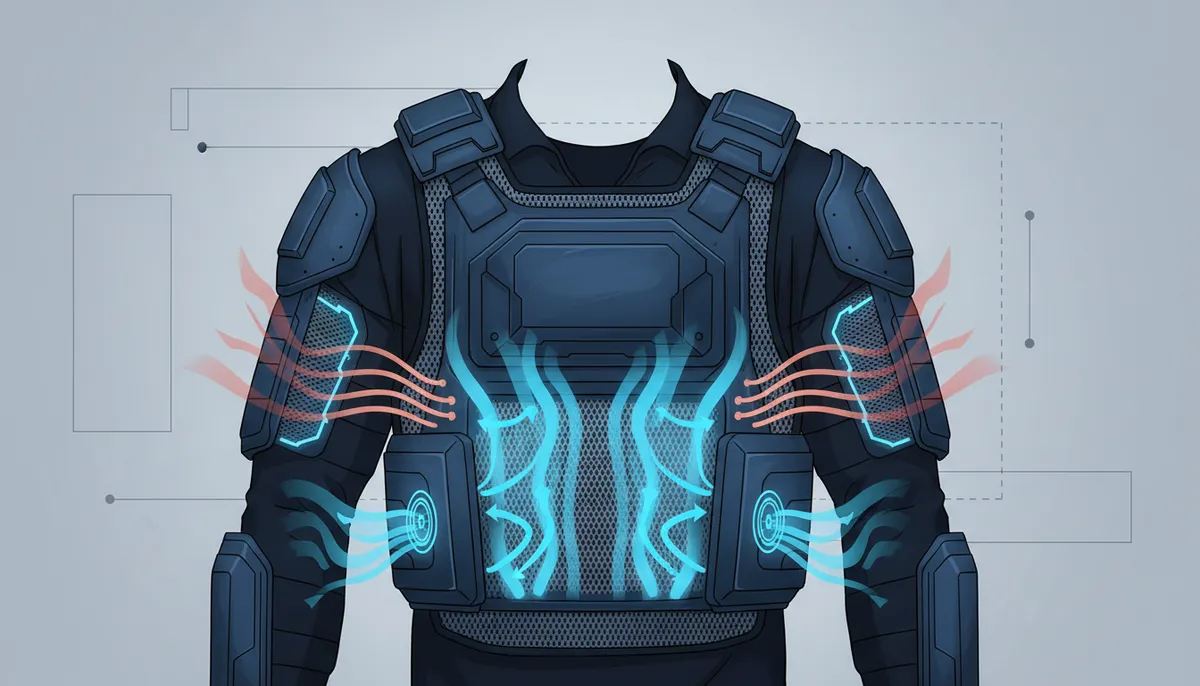
Body armor air conditioning refers to any system designed to cool the space between your body and your vest. These systems work by improving airflow, reducing moisture, and releasing trapped heat so you stay more comfortable during long shifts or missions.
There are two main types of systems: passive and active. Both have their strengths, and your ideal solution depends on your role, environment, and budget.
Passive Cooling Systems
Passive systems don’t require power. Instead, they use physical design features — like foam channels, ventilation panels, or inflatable air gaps — to create space between your body and the armor. This space allows sweat to evaporate and heat to escape naturally. They’re lightweight, easy to use, and require zero maintenance beyond washing.
Active Cooling Systems
Active systems use fans or external air sources to push cool air under your vest. Some systems, like the Cool Cop, connect to your vehicle’s AC vents through a flexible hose. Others are self-contained battery-powered units that clip onto or slide under your armor for hands-free cooling on the move.
Types of Body Armor Air Conditioning Solutions
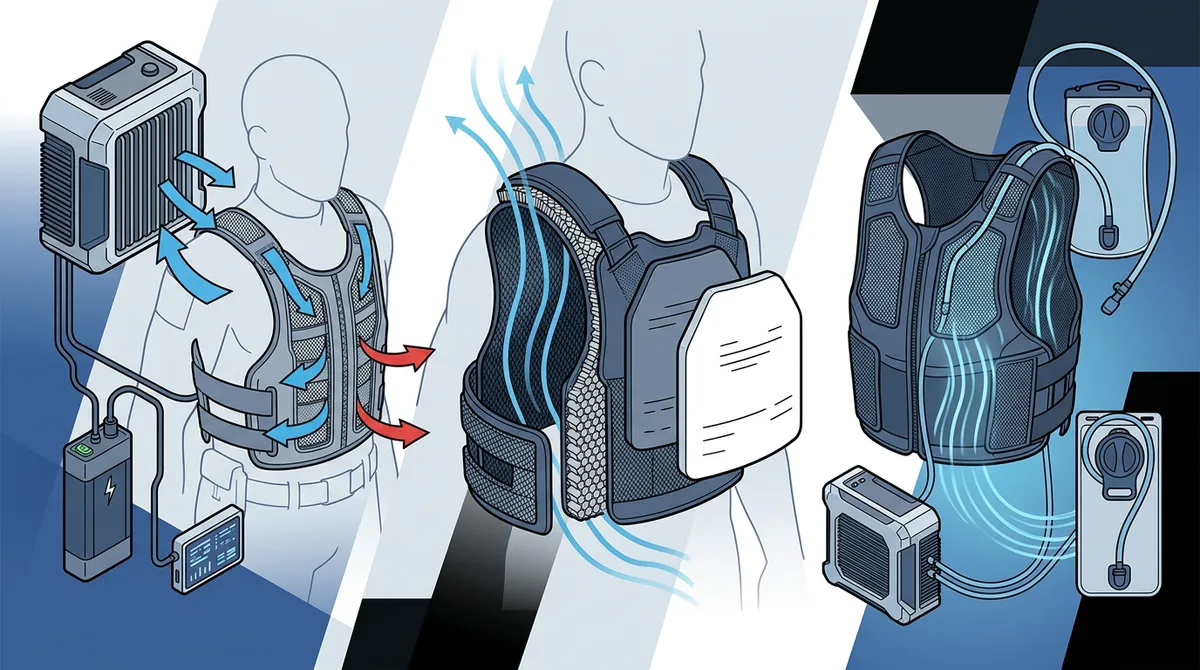
Let’s look at the main categories of body armor air conditioning products available in 2026. Understanding your options helps you choose the right solution for your specific situation.
| System Type | How It Works | Best For | Power Needed |
|---|---|---|---|
| Inflatable Ventilation Vest | Creates an air gap by lifting armor off the body | Daily patrol, extended wear | No |
| Fan-Driven Vest System | Battery-powered fan circulates air beneath armor | Hot climates, long operations | Yes (battery) |
| Evaporative Cooling Panels | Uses breathing movement to pump air through channels | Moderate heat environments | No |
| Vehicle AC Connection | Routes cold air from car AC into vest via hose | Officers spending time in vehicles | Yes (vehicle AC) |
How Evaporative Cooling Technology Works
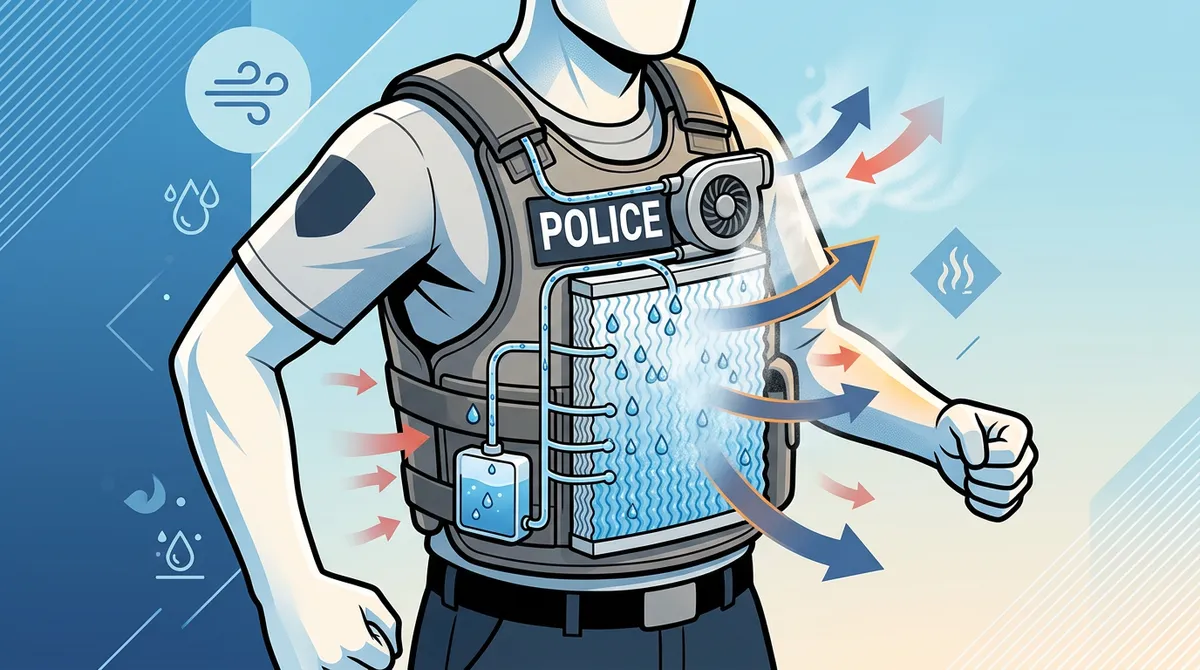
One of the most interesting passive approaches is evaporative cooling. Products like Body Armor Vent’s EVAP panels use vertical and horizontal air channels built into the vest lining. As you breathe and move, air is drawn in through these channels, circulates across your skin, picks up heat and moisture, and then expels it outward. It’s a clever system — your own body movement powers the cooling effect.
The Body Armor Standards from the National Institute of Justice note that comfort and wearability are key factors in ensuring officers actually wear their protective gear consistently. Cooling solutions directly support this goal by making armor feel less like a burden.
BluHalo: Cooling-On-Demand Ventilation
One standout solution in the passive category is the BluHalo ventilation vest, created by a Chicago police officer who got tired of overheating on the job. The BluHalo fits underneath your body armor and inflates to lift your vest up to 1.5 inches off your body. That gap might sound small, but it makes a massive difference in airflow and comfort.
Here’s why so many officers love the BluHalo:
- Weighs under 7 ounces — you barely notice it’s there
- Lies flat and unobtrusive when deflated
- Inflates on demand with a small pump for instant cooling
- Deflates quickly with a button press when not needed
- Made from double-layer high-strength polyethylene for durability
- Compatible with most bulletproof and ballistic vests
Officers who’ve worn it during 12-hour shifts in 95-degree heat report significant improvements in comfort and focus. You can check out the full product details and real user testimonials at the BluHalo reviews page to see what everyday heroes are saying about it.
BluFano: Active Fan-Driven Cooling for Next-Level Relief
If you want active airflow with battery power, the BluFano body armor ventilation system takes cooling to the next level. BluFano is a self-contained unit with a patented air-redirect spout that slides under any style of body armor. A built-in fan pushes fresh air directly into the space beneath your vest — and you control the intensity with a simple knob.
Here’s what makes BluFano stand out from other active cooling systems:
- Long battery life: The built-in 10,000mAh power bank keeps the fan running for 8–32 hours depending on your setting
- USB charging port: The power bank doubles as a charger for your phone or other devices
- Forward-facing light: Hands-free illumination built right in for low-light situations
- Easy attachment: Slides under your armor and stays secure with an optional strap
Users describe it as a game-changer for hot patrol days, especially when combined with vehicle AC. You can even point the spout toward your vehicle’s air vents to supercharge the cooling effect. Browse both BluHalo and BluFano in the shop to find the right fit for your needs — or bundle them together for maximum comfort on the job.
Comparing the Top Body Armor Cooling Solutions
| Product | Type | Weight | Battery Life | Key Feature |
|---|---|---|---|---|
| BluHalo | Passive (inflatable) | Under 7 oz | N/A | Lifts armor 1.5 inches for air gap |
| BluFano | Active (fan-driven) | Compact unit | 8–32 hours | Fan + power bank + forward light |
| Maxx-Dri Vest 4.0 | Passive (channel-based) | Lightweight | N/A | 360-degree airflow separation |
| EVAP Panels | Passive (evaporative) | Very light | N/A | Breathing-powered air movement |
How to Choose the Right Body Armor Cooling System
Not every system is right for every person. Here’s how to think through your options based on your specific situation.
Consider Your Environment
If you work mostly outdoors in high heat, an active fan system like BluFano gives you the most powerful cooling. If you work in mixed indoor and outdoor settings, a passive system like BluHalo might be all you need. Think about where you spend most of your shift and how intense the heat typically gets.
Consider Your Mobility Needs
Tactical and SWAT operators need gear that won’t interfere with movement. The BluHalo’s ultra-low profile when deflated makes it ideal for high-intensity scenarios — you can inflate it during downtime and deflate it instantly when you need to move fast.
Consider Your Budget
The BluHalo is priced at just $60, making it one of the most affordable cooling solutions on the market. Bundling BluHalo and BluFano together gives you both passive and active cooling at a discounted price — a smart investment in your daily comfort and long-term health.
Tips for Staying Cool While Wearing Body Armor
A good ventilation vest helps a lot, but there are other steps you can take to manage heat stress while on duty.
- Hydrate consistently: Drink water before, during, and after your shift — don’t wait until you feel thirsty
- Wear moisture-wicking base layers: These pull sweat away from your skin and help your ventilation vest work more effectively
- Take cooling breaks when possible: Even a few minutes in an air-conditioned vehicle can reset your body temperature
- Use your cooling system proactively: Don’t wait until you’re overheated — activate your vest early in the shift to stay ahead of the heat
What Professionals Are Saying About Body Armor Cooling
The numbers speak for themselves. Products like the Maxx-Dri Vest have been used by over 250,000 police officers, soldiers, and security operators. And the feedback across the board is consistent: cooling under body armor doesn’t just feel better — it helps professionals perform better, stay safer, and reduce the risk of heat-related health issues.
Real testimonials from BluHalo users describe dramatic improvements during 12-hour shifts in extreme summer heat. Officers say they feel more alert, less drained, and genuinely more comfortable doing their jobs. That’s not a small thing — that’s a quality-of-life upgrade that can also make you safer in the field.
| Benefit | Passive Systems | Active Systems |
|---|---|---|
| Reduces sweat buildup | Yes | Yes |
| Lowers core temperature | Moderate | High |
| Requires power source | No | Yes |
| Works during vehicle patrol | Yes | Yes (enhanced) |
| Low profile under armor | Yes | Varies |
| Year-round use | Yes | Yes |
The Bottom Line on Body Armor Air Conditioning
Body armor air conditioning isn’t a luxury — it’s a practical necessity for anyone who wears protective gear in challenging conditions. Whether you prefer the simplicity of a passive inflatable vest or the power of an active fan system, there’s a solution that fits your needs, your budget, and your duty requirements.
The technology has never been better than it is in 2026. Systems like the BluHalo and BluFano are purpose-built for the real challenges you face every day. They’re affordable, effective, and trusted by the people who need them most. You can also watch product videos to see how they work in real-world scenarios before you decide.
You work hard to protect others. You deserve gear that protects you from the heat. Reach out to the BluHalo team to ask questions, get recommendations, or learn more about which cooling system is right for your specific situation. Your comfort — and your performance — depend on it.
FAQs
Q: What is the best ventilation vest for body armor cooling?
A: It really depends on what you need! For simple, lightweight cooling-on-demand, the BluHalo inflatable ventilation vest is a fantastic choice — it’s affordable, low-profile, and lifts your armor up to 1.5 inches off your body. If you want powerful, active fan-driven airflow for extreme heat, the BluFano is a next-level upgrade worth every penny.
Q: Are body armor cooling vests compatible with bulletproof vests?
A: Great news — most quality ventilation vests are designed to work with a wide range of ballistic and bulletproof vests. The BluHalo, for example, attaches with Velcro and sits underneath your existing armor without changing its protective performance. Always check the product specs to confirm compatibility with your specific vest model.
Q: How long does the BluFano fan system last on a single charge?
A: The BluFano is built for full-shift comfort! Depending on the fan speed setting you choose, it runs for anywhere between 8 and 32 hours on its built-in 10,000mAh power bank. That’s more than enough to get through even the longest patrol shifts without needing a recharge.
Q: Do body armor cooling systems work in extreme temperatures?
A: Yes, they can make a significant difference even in very hot conditions! Active systems like BluFano use fan-driven airflow to continuously push fresh, cooler air under your vest, which helps manage heat even on scorching days. Pairing a cooling vest with proper hydration and moisture-wicking base layers gives you the best results in extreme heat.
Q: Can ventilation panels be added to existing plate carriers?
A: Absolutely! Many cooling solutions — including the BluHalo and passive panel systems — are designed to be retrofit-compatible with plate carriers and tactical vests you already own. You don’t need to replace your existing gear to start benefiting from improved airflow and heat relief.