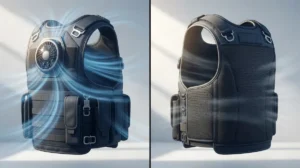
Key Takeaways
-
Active cooling systems significantly reduce heat stress and improve mental clarity during long shifts by continuously circulating fresh air under body armor, preventing dangerous heat buildup and maintaining consistent core temperature.
-
Fan-driven systems like Blufano offer 8-32 hour runtimes with built-in power banks, making them ideal for extended 12+ hour shifts in extreme heat where passive cooling materials quickly lose effectiveness.
-
The BluHalo inflatable vest creates a 1.5-inch airspace between armor and skin, weighs under 7 ounces, and can be paired with active fans for a powerful two-part cooling solution that works across all armor styles.
-
Active cooling systems improve endurance and operational safety by reducing heart rate, perceived exertion, and moisture-related rashes while ensuring officers consistently wear protective gear without discomfort-driven compliance issues.
-
Different roles require different cooling technologies: patrol officers benefit from fan-driven systems, military needs lightweight inflatable airspace options, and industrial/hazmat workers need vortex tube cooling for extreme heat environments.
If you wear body armor for hours at a time, you already know the struggle. Heat builds up fast. Sweat soaks through your uniform. Your focus starts to slip. It’s not just uncomfortable — it can be dangerous. That’s exactly why an active cooling system built into a ventilation vest is such a game-changer for law enforcement, military personnel, security professionals, and first responders.
In 2026, cooling technology for body armor wearers has never been more advanced. Whether you’re a patrol officer pulling a 12-hour shift in 95-degree heat or a soldier on a long mission in the field, the right active cooling system can mean the difference between staying sharp and hitting a wall. Let’s break down how these systems actually work, what options are out there, and how to find the best fit for your needs.
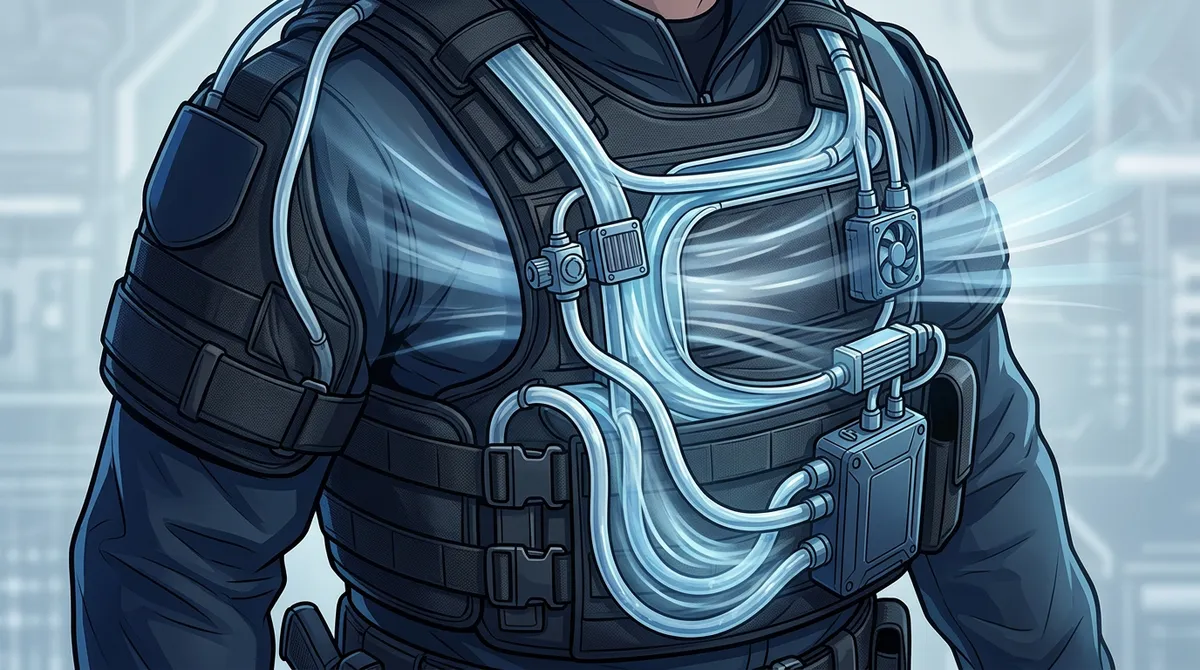
What Is an Active Cooling System for Ventilation Vests?
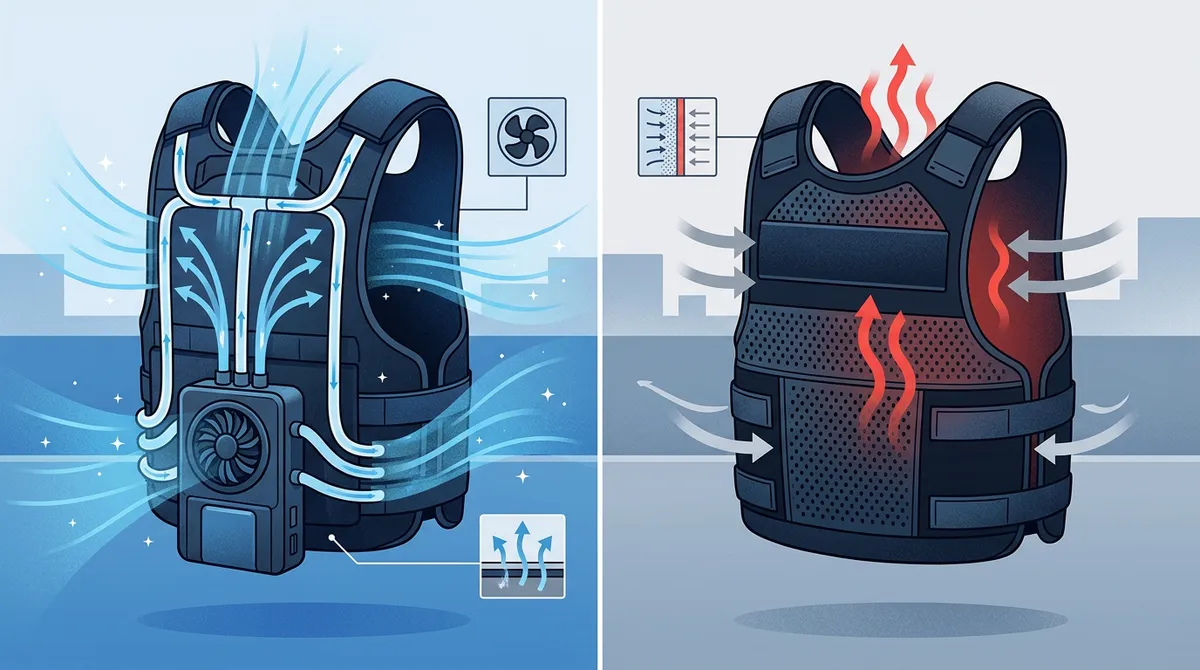
An active cooling system is any technology that actively moves air, reduces heat, or manages moisture under your protective gear. Unlike passive cooling — which simply uses cool materials or phase-change packs — active systems do something. They circulate air, amplify airflow, or create a physical gap between your body and your armor so heat can escape.
Think of it like a fan versus an ice pack. An ice pack just sits there and slowly warms up. A fan keeps moving air, constantly refreshing the environment around you. Active cooling systems in ventilation vests work the same way. They keep conditions changing so heat and moisture don’t get trapped against your skin.
For more background on heat stress risks that make these systems so important, check out the OSHA Heat Stress Guide.
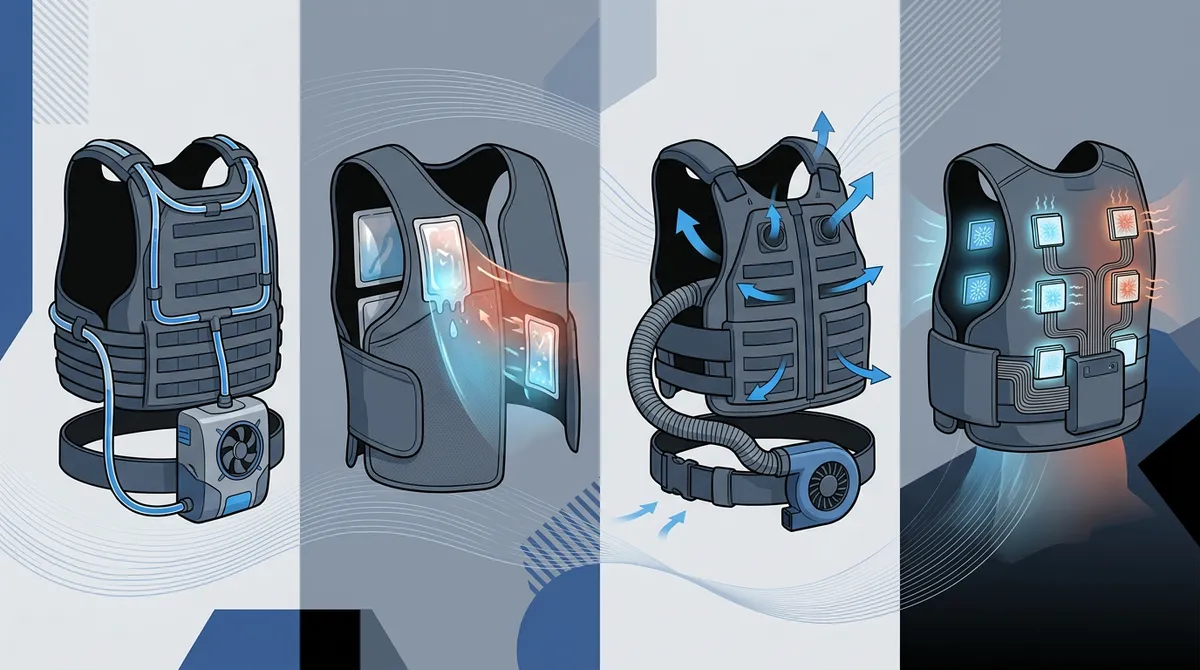
The Main Types of Active Cooling Systems in Vests
Not all active cooling systems are built the same. Here’s a quick look at the main types used in ventilation vests today:
- Fan-driven airflow systems: Use battery-powered fans to push fresh air under the vest and force hot, humid air out.
- Vortex tube cooling: Uses compressed air to generate cold air delivered through perforated vests — great for industrial environments with air supply available.
- Inflatable airspace vests: Create a physical lift between the body and armor to allow natural airflow to circulate freely.
- EVAP (evaporative) technology: Uses vertical air channels and horizontal vents to draw in cool air and push out hot, humid air through the wearer’s natural breathing patterns.
- 3D mesh panel vests: Use structured polyester mesh to maintain a consistent air gap and promote 360-degree airflow around the torso.
Each approach has its strengths. The best choice depends on your role, environment, and how much gear you’re already carrying.
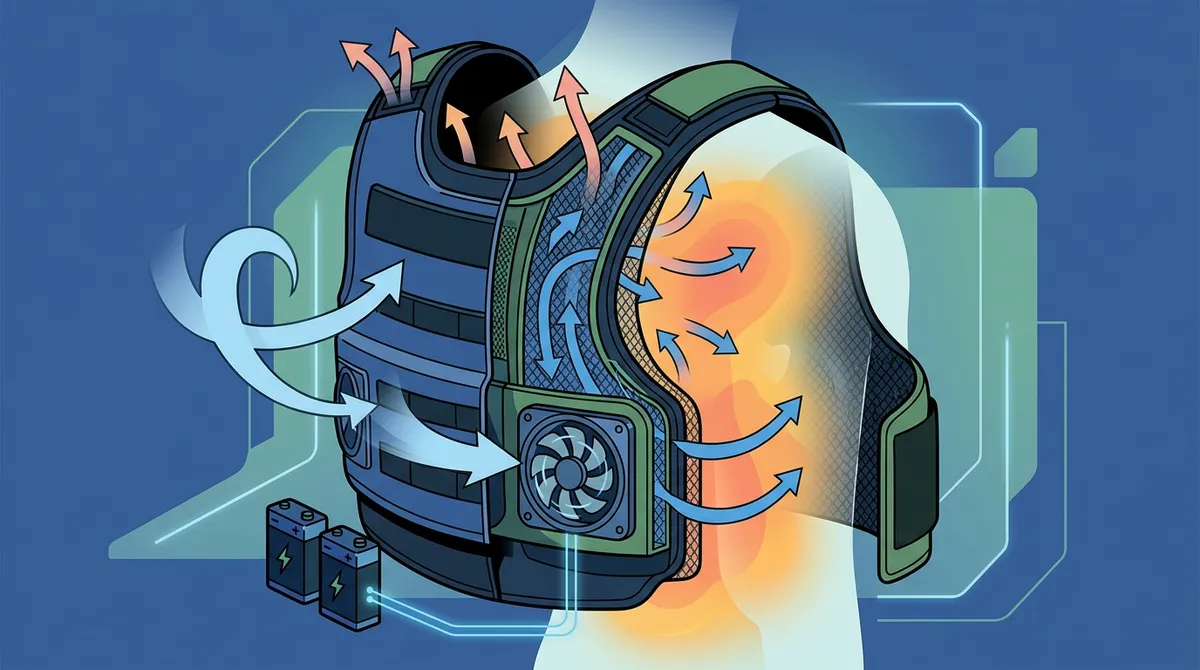
How Fan-Based Active Cooling Systems Work
Fan-driven systems are among the most popular active cooling options for body armor wearers. Here’s how they work step by step:
- Placement: A compact fan unit is secured under or around your body armor, usually with a strap or attachment system.
- Airflow direction: The fan pulls in ambient air and directs it under the vest using a specially designed spout or nozzle.
- Circulation: Fresh air moves across your torso, picking up heat and moisture from your skin.
- Exhaust: Hot, humid air is pushed out from the edges of the vest, preventing buildup.
- Repeat: The system runs continuously, keeping the microclimate under your armor consistently cooler and drier.
The Blufano by BluHalo is a great example of this approach. It’s a self-contained, active airflow unit with a patented air-redirect spout that slides under any style of body armor. It runs for 8 to 32 hours depending on the fan setting, and it includes a built-in 10,000mAh power bank that can also charge your USB devices. There’s even a forward-facing light for low-light situations — a genuinely thoughtful touch for officers working night shifts.
Active vs. Passive Cooling: What’s the Real Difference?
This is one of the most common questions we hear, and it’s a fair one. Here’s a simple side-by-side comparison:
| Feature | Active Cooling System | Passive Cooling System |
|---|---|---|
| How it works | Moves or generates airflow continuously | Uses cool materials or phase-change packs |
| Duration | Ongoing (battery or air-powered) | Limited (until material warms up) |
| Weight | Slightly heavier due to power source | Lighter, but needs pre-cooling |
| Best for | Long shifts, high-heat environments | Short-duration or moderate-heat use |
| Maintenance | Charge battery or refill compressed air | Re-freeze or replace packs |
| Effectiveness over time | Consistent throughout shift | Decreases as material warms |
For professionals who can’t afford a drop in performance during long duties, active systems are almost always the better choice. Passive systems have their place, but they simply can’t match the sustained relief of a fan-driven or airspace-creating vest.
Top Active Cooling Vest Options Compared
Let’s look at some of the leading active cooling vest solutions available in 2026:
| Product | Technology | Best For | Key Feature |
|---|---|---|---|
| BluHalo Ventilation Vest | Inflatable airspace | Law enforcement, military | Lifts armor up to 1.5 inches; under 7 oz |
| Blufano by BluHalo | Fan-driven airflow | All body armor wearers | 8–32 hour runtime; built-in power bank |
| Vortec Cooling Vest | Vortex tube | Industrial workers | Removes up to 2,000 BTU/h of heat |
| Maxx-Dri Vest 4.0 | 3D mesh standoff | Police, soldiers | 360-degree airflow; 250,000+ users |
| Body Armor Vent (EVAP) | Evaporative channels | Tactical teams | Foam-filled vertical air channels |
Why the BluHalo Ventilation System Stands Out
The BluHalo ventilation vest was created by a Chicago police officer who lived the problem firsthand. That real-world experience shows in the design. The vest weighs under 7 ounces, sits completely flat when deflated, and can be inflated on demand using a small pump to lift your body armor up to 1.5 inches off your body. That gap is everything — it lets air flow freely instead of getting trapped against sweat-soaked skin.
Officers who’ve worn it report major comfort improvements, even during 12-hour shifts in extreme heat. The double-layer high-strength polyethylene construction means it holds up to daily use without issue. And with the Blufano fan system added into the mix, you get both the airspace and the active airflow — a powerful combination. You can even shop for a bundled package at a discount to get the full cooling setup at once.
Understanding what body armor standards require can also help you choose the right ventilation solution. The Body Armor Standards from the National Institute of Justice provide useful context on how armor is built and what compatibility factors to consider.
Choosing the Right Active Cooling System for Your Role
Not every cooling vest fits every job. Here’s a quick guide to help you match the right system to your needs:
| Role | Recommended System | Why It Works |
|---|---|---|
| Patrol Officers | BluHalo + Blufano bundle | Long shifts, on-demand cooling, lightweight |
| Military Personnel | Inflatable airspace or 3D mesh | Mobility, durability, no external power needed |
| Security Professionals | Fan-driven vest (Blufano) | Extended wear, adjustable settings, power bank included |
| SWAT/Tactical Teams | Maxx-Dri or evaporative EVAP | 360-degree coverage, high-intensity operations |
| Firefighters/Hazmat | Vortex tube cooling vest | Extreme heat environments, high BTU removal rate |
Key Benefits of Using an Active Cooling System Under Body Armor
Let’s be direct about why this matters. The benefits of a good active cooling system go well beyond personal comfort:
- Reduced heat stress: Consistent airflow keeps core temperature lower, reducing the risk of heat exhaustion during long operations.
- Better focus: When you’re not distracted by sweat and discomfort, your mental clarity and reaction time improve.
- Moisture management: Active airflow pulls moisture away from the skin, reducing rashes, chafing, and odor during extended wear.
- Improved endurance: Studies on active cooling show lower heart rates and reduced perceived exertion — meaning you can work harder, longer.
- Longer time in armor: Officers and soldiers who are more comfortable wear their protective gear more consistently, which is a genuine safety benefit.
Want to see how these vests perform in real-world conditions? Check out BluHalo’s video library for demonstrations and user testimonials. You can also read what real users are saying on the reviews page.
Tips for Getting the Most From Your Active Cooling Vest
Once you’ve got the right active cooling system, a few simple habits will help you get the best results:
- Charge before your shift: If your system is battery-powered, always start with a full charge. The Blufano’s 10,000mAh power bank gives you plenty of runtime, but it’s always better to be prepared.
- Adjust airflow to your environment: On cooler days, a lower fan setting saves battery. On hot days, crank it up to the highest setting for maximum relief.
- Use the vehicle’s AC strategically: Several officers have reported that using the Blufano while sitting in an air-conditioned patrol car speeds up cooling dramatically before heading back into the heat.
- Pair with moisture-wicking base layers: An active cooling vest works even better when the fabric closest to your skin pulls moisture away efficiently.
- Check fit regularly: Make sure your vest is properly positioned and secure so airflow is directed where it’s needed most.
If you have questions about which system is right for your specific situation, don’t hesitate to reach out to the BluHalo team — they know this gear inside and out and are happy to help you find the right fit.
Conclusion: Stay Cool, Stay Sharp
Wearing body armor is non-negotiable for the people who protect others every day. But suffering through heat, sweat, and discomfort doesn’t have to be part of the deal. A well-chosen active cooling system can transform the experience of wearing protective gear — keeping you cooler, drier, and more focused through even the toughest shifts.
Whether you start with the lightweight BluHalo ventilation vest for on-demand airspace creation or go all-in with the Blufano fan system for continuous airflow, you’ll quickly wonder how you ever managed without it. You protect others every day — it’s only fair to protect your own comfort and health too.
Ready to experience the difference? Get in touch with our team to find the perfect active cooling solution for your needs, or head straight to the BluHalo shop to explore your options today.
FAQs
Q: What is the best active cooling system for wearing under body armor?
A: The best choice depends on your role and shift length, but for most law enforcement and security professionals, a fan-driven system like the Blufano paired with the BluHalo inflatable vest offers outstanding results. Together, they create an airspace under your armor and actively circulate fresh air to keep you cool and dry throughout long shifts.
Q: How long does an active cooling vest run on a single charge?
A: It depends on the system and fan setting you use. The Blufano by BluHalo, for example, runs between 8 and 32 hours on a single charge thanks to its built-in 10,000mAh power bank — more than enough for most full-day or extended shifts. Running it on a lower setting stretches the battery life significantly.
Q: Can an active cooling ventilation vest be worn under any body armor?
A: Most active cooling vests are designed to be compatible with a wide range of body armor styles. The Blufano features a patented air-redirect spout that slides under any style of body armor, and the BluHalo vest attaches with Velcro and can be quickly inflated or deflated as needed. Always check the fit with your specific armor before a full shift.
Q: Is an active cooling system better than a passive cooling vest for hot weather?
A: For extended use in high heat, yes — active cooling systems consistently outperform passive options. Passive vests rely on phase-change materials or cool fabrics that warm up over time, while active systems maintain consistent airflow throughout your entire shift. If you’re working in hot conditions for hours at a time, active cooling is the smart investment.
Q: How do I maintain and care for my active cooling ventilation vest?
A: Most active cooling vests are designed for daily duty use with minimal maintenance. For battery-powered systems like the Blufano, simply keep the power bank charged before each shift and wipe down the unit regularly. For inflatable vests like the BluHalo, inspect the material periodically for wear and keep the Velcro attachment points clean so the vest stays secure.