Key Takeaways
-
Fan-powered ventilation vests like Blufano run 8-32 hours per battery charge, eliminating the need for freezers and ice pack rotation that limits traditional PCM vests to 2-4 hours of cooling per shift.
-
Inflatable spacer vests like BluHalo create a 1.5-inch air gap between body and armor, enabling natural heat and moisture escape without batteries or maintenance, weighing under 7 ounces.
-
Peer-reviewed research shows active cooling vests extract up to 331 Wh/m² of heat compared to 164 Wh/m² for PCM vests, making ventilation-based systems significantly more effective for extended duty.
-
Combining an inflatable spacer vest with a fan-powered system creates a layered cooling approach that outperforms either system alone, ideal for tactical teams and emergency responders in extreme heat.
-
Evaporative cooling vests lose effectiveness in humid environments and add moisture to clothing, making them suitable only for hot, dry climates—a critical limitation for most law enforcement and security roles.
-
Ventilation-based alternatives eliminate the 45-minute prep time and mobility constraints of PCM vests, allowing mobile law enforcement and tactical teams to maintain continuous cooling throughout 12+ hour shifts without infrastructure access.
If you’ve ever ended a shift with a soaked undershirt and a vest that feels like a sauna, you already know why so many officers, soldiers, and first responders go searching for a phase change cooling vest alternative. Ice packs and gel inserts sound great in theory, but they melt, they get heavy, and they leave you stuck once the cooling runs out. The good news? You’ve got options, and some of them might fit your job a lot better than a cooler full of frozen packs.
We’re going to walk through eight real alternatives to phase change material (PCM) cooling vests, all rooted in ventilation and airflow technology. Whether you’re on patrol in Phoenix, running a checkpoint in the desert, or working a 12-hour shift in humid summer air, there’s a cooling approach here that can help. Let’s get into it.

Why People Look for a Phase Change Cooling Vest Alternative
PCM cooling vests work by using packs filled with special material that absorbs heat as it melts. It’s a clever idea, and it does provide dry, steady cooling for a while. The catch is that once those packs fully melt, usually after about 2 to 4 hours per commercial guidance, the cooling stops completely.
That means you need a freezer, a cooler, or ice water nearby to recharge them, which isn’t always realistic for mobile law enforcement, military deployments, or security details that move around all day. Preparation also takes time. Some guidance points to roughly 45 minutes to properly chill a pack. If your shift runs long or your access to refrigeration is limited, you’re left wearing dead weight.
This is exactly where ventilation-based systems shine. Instead of relying on a finite cold source, they focus on moving air, pulling heat away from your body, and reducing the sweat and moisture that build up under body armor. For a deeper breakdown of how these two approaches stack up, check out our comparison on ventilation vs. phase change cooling.

1. Fan-Powered Ventilation Vests (Like Blufano)
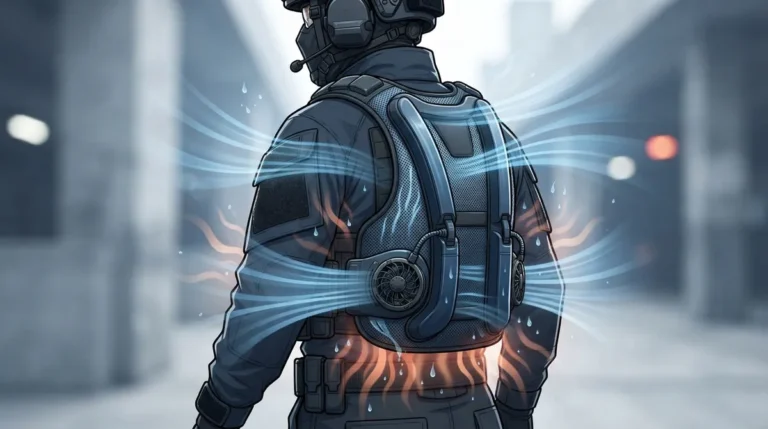
Fan-driven systems are probably the biggest game-changer on this list. A small, battery-powered fan pushes fresh air underneath your vest or armor, creating continuous airflow instead of relying on a melting pack.
Our Blufano system is a great example. It’s a self-contained, active airflow unit with a patented air-redirect spout that slides under any style of body armor. Depending on your fan setting and battery, it can run anywhere from 8 to 32 hours, which means you could realistically make it through a full shift without ever needing to swap out cooling packs.
It also comes with a built-in 10,000mAh power bank, so you can charge your phone or flashlight on the go. Officers who’ve tried it report faster cooling, especially when combined with a blast of vehicle AC at the start of a shift, along with noticeably less sweat and better focus during long, hot days.
2. Inflatable Spacer Vests (Like BluHalo)
Sometimes the simplest fix is just giving your skin some breathing room. Inflatable spacer vests create a physical air gap between your body and your armor, which lets natural airflow do the work instead of trapping heat against your skin.
Our own BluHalo vest does exactly this. It was designed by a Chicago police officer who got tired of overheating and sweating through long shifts. It weighs under 7 ounces, sits flat when deflated, and can lift your vest up to about 1.5 inches off your body when inflated. That gap is enough to let heat and moisture escape instead of building up.
You attach it to a clean vest with Velcro, inflate it with a small pump whenever you need relief, and deflate it with one button when you don’t. Officers working 12-hour shifts in 95-degree weather have described it as a total comfort upgrade compared to sweating through their old setup. If you want to see how it stacks up against other cooling ideas, our page on beating vest heat with inflatable cooling covers it in detail.
Why the Air Gap Matters
An air gap does two things at once. It reduces fabric-to-skin contact, which cuts down on that clammy, sticky feeling, and it improves natural convection so sweat can actually evaporate instead of pooling against your body. Neither of these depend on batteries or ice, which makes spacer vests wonderfully low-maintenance.
3. Compressed-Air or Vortex-Tube Cooling Vests
If you work somewhere with access to a compressed-air line, like certain industrial or fixed-post security jobs, a vortex-tube cooling vest might be worth a look. These systems use compressed air to create genuinely cold air, then distribute it through a perforated garment.
Product literature on these systems describes a temperature differential of around 60°F between the compressed-air inlet and the cold output. That’s impressive cooling power, but it does require you to stay tethered to an air supply, which rules it out for mobile patrol work, tactical operations, or anyone who needs to move freely.
4. Evaporative Cooling Vests
Evaporative vests are lightweight, affordable, and simple. You soak them in water, and as the water evaporates, it pulls heat away from your body. They work great in hot, dry climates.
The downside? They lose effectiveness fast as humidity climbs, and unlike ventilation vests, they actually add moisture to your clothing rather than removing it. If you’re working somewhere humid, this might backfire and leave you feeling damp and heavy instead of cool.
5. Hybrid Ventilation and Cooling Combos
Some professionals combine a spacer vest with a small fan system for a layered approach. You get the air gap from the spacer plus the moving air from the fan, which can outperform either system used alone.
A peer-reviewed study comparing cooling concepts over an 8-hour exposure found that active cooling vests extracted up to 331 Wh/m² of heat, compared to 164 Wh/m² for PCM vests, 146 Wh/m² for hybrid vests, and 113 Wh/m² for evaporative vests. That’s a meaningful difference if you’re working a demanding shift in serious heat.
6. Mesh and Breathable Base Layers
Pairing your ventilation vest with a moisture-wicking, breathable base layer can boost your comfort even more. These layers pull sweat away from your skin and help it evaporate faster, working alongside your airflow system rather than replacing it.
Check out our guide on moisture-wicking vests for body armor comfort if you want to build out a complete cooling setup.
7. Passive Airflow Channels and Spacer Mesh
Some vests use built-in mesh channels or raised patterns to encourage airflow without any batteries, pumps, or water at all. These passive designs are lightweight and require zero maintenance, though they generally provide less dramatic cooling than active fan systems.
They’re a solid option if you want something simple to wear under your armor every day without thinking about batteries or recharging packs. Our comparison of passive vs. active tactical vest ventilation breaks down when each approach makes the most sense.
8. Bundled Systems for Maximum Cooling
Why choose just one alternative when you can combine the best of both worlds? Pairing an inflatable spacer vest like BluHalo with a fan-driven system like Blufano gives you the air gap and the moving air working together. Many customers bundle both products together at a discount for exactly this reason.
This combo approach tends to work especially well for tactical teams and emergency responders who face the toughest conditions and need every advantage they can get.
Comparing the Alternatives at a Glance
| Cooling Method | Cooling Duration | Best For | Main Limitation |
|---|---|---|---|
| PCM Cooling Vest | 2-4 hours per charge | Stationary work with freezer access | Stops working once packs melt |
| Fan-Powered Vest (Blufano) | 8-32 hours per battery | Long shifts, mobile duty | Requires charging battery |
| Inflatable Spacer (BluHalo) | All shift, on demand | Daily wear under armor | Needs manual pump inflation |
| Vortex-Tube Vest | Continuous while connected | Fixed industrial posts | Requires compressed-air line |
| Evaporative Vest | Varies with humidity | Hot, dry climates | Poor performance in humidity |
How to Choose the Right Alternative for Your Job
Picking the right system comes down to a few honest questions about your work.
- How long is your typical shift, and will you have access to a freezer or power outlet?
- Is your work environment hot and dry, or hot and humid?
- Do you need to stay mobile, or do you work from a fixed post?
- Is low weight and a slim profile important for your gear setup?
- Are you managing heat for one person or outfitting an entire team?
For most law enforcement, military, security, tactical, and emergency response roles, mobility and long-duration cooling matter more than anything else. That’s why ventilation-based systems tend to outperform PCM vests for these audiences, especially when duty days stretch past 8 or 12 hours.
Don’t Forget the Basics
No cooling vest, no matter how advanced, replaces good heat-safety habits. The OSHA Heat Stress Guide recommends staying hydrated, taking breaks in shade or air conditioning, and gradually acclimating to hot conditions before pushing yourself hard. Pair those habits with the right gear, and you’ll be in a much better position to handle a brutal shift.
It’s also worth remembering that cooling gear works alongside your protective equipment, not instead of it. If you’re choosing new body armor or reviewing what’s required for your role, the Body Armor Standards from the National Institute of Justice are a helpful resource.
Real Stories From the Field
We hear from officers all the time who describe the same frustration: sweating through their uniform by lunch, feeling foggy and irritable by the afternoon, and dreading the next hot-weather shift. Many have told us that switching from ice packs to an airflow-based system changed how they experience a workday entirely.
- Officers working 12-hour shifts in 95-degree heat report feeling noticeably cooler and more alert with an inflatable spacer vest.
- Security professionals on fixed posts appreciate not needing to plan around freezer access or pack rotation schedules.
- Tactical team members value the low weight and quick-deploy nature of fan systems during high-intensity operations.
- Emergency responders say reduced sweat build-up means fewer distractions during critical moments.
You can read more real experiences on our reviews page, where customers share exactly how these systems performed during real shifts.
Wrapping It Up
A phase change cooling vest alternative doesn’t have to mean settling for less cooling power. In fact, for most everyday heroes wearing body armor, ventilation-based systems like BluHalo and Blufano often deliver longer-lasting, more practical relief than ice packs ever could. No freezers, no melted packs, no scrambling between calls to find a cooler.
Whether you go with an inflatable spacer, a fan-powered system, or a bundle of both, the goal is the same: staying cool, staying focused, and staying comfortable through whatever your shift throws at you. Browse our shop to compare options, or if you have questions about which setup fits your specific role best, feel free to get in touch with our team today. We’re always happy to help you find your best fit.
FAQs
Q: What is the best alternative to a phase change cooling vest?
A: For most people wearing body armor, a fan-powered or inflatable ventilation vest is the best alternative because it keeps working for hours without ice or a freezer. Products like BluHalo and Blufano are built exactly for this, giving you steady airflow instead of a melting cold pack.
Q: How does a ventilation vest compare with a PCM cooling vest?
A: A PCM vest cools you with melting packs that eventually run out, usually after 2 to 4 hours. A ventilation vest instead moves air and creates space under your armor, so it can keep helping you stay cooler for a full shift without needing to be recharged.
Q: Do ventilation vests work under body armor?
A: Yes, that’s exactly what they’re designed for. Vests like BluHalo attach right onto your existing armor with Velcro and create an air gap, while systems like Blufano slide underneath to circulate fresh air where you need it most.
Q: How long does a fan-powered ventilation vest run on one battery?
A: It depends on the fan setting and battery size, but many systems, including Blufano, can run anywhere from 8 to 32 hours on a single charge. That’s often enough to cover an entire shift without swapping anything out.
Q: Are ventilation vests lightweight enough for law enforcement and security personnel?
A: Absolutely. BluHalo, for example, weighs under 7 ounces and sits flat and unobtrusive when deflated, so it won’t add bulk to your gear. That makes it easy to wear all day without feeling like extra weight on your shoulders.