Key Takeaways
-
Use a ventilation vest to create an air gap between body armor and skin; systems with 0.75-inch gaps reduce body temperature by up to 14.5°F, with high-performance models achieving 23°F reductions.
-
Wear moisture-wicking base layers made from polyester or nylon blends instead of cotton; these materials pull sweat away from skin and allow it to evaporate, amplifying ventilation vest effectiveness.
-
Stay consistently hydrated throughout your shift by drinking 8-12 oz of water every hour and 16-20 oz pre-shift; proper hydration enables efficient sweating and prevents rapid core temperature rise.
-
Adjust gear properly before every shift by smoothing base layers, inflating ventilation systems, and ensuring armor carriers are snug but not crushing—proper fit eliminates airflow restriction and heat traps.
-
Use vehicle AC strategically during breaks with active fan systems; drawing cooled air under armor during 5+ minute breaks significantly drops body temperature before returning to heat.
-
Maintain ventilation gear regularly by washing after heavy-use shifts, air drying completely, and checking battery components monthly; clogged or damaged gear loses cooling effectiveness.
Wearing tactical gear in the heat is no joke. Whether you’re a patrol officer finishing hour ten of a twelve-hour shift or a soldier on a long mission in scorching temperatures, trapped heat under body armor can drain your energy fast. It makes you uncomfortable, slows your thinking, and puts your health at serious risk. The good news? Staying cool in tactical gear is absolutely possible with the right approach.
In this guide, we’ll walk you through practical, proven tips for staying cool in tactical gear. From the right ventilation gear to smart habits that make a real difference, you’ll find everything you need to beat the heat and stay sharp on duty. Let’s dive in.
Why Heat Builds Up Under Body Armor
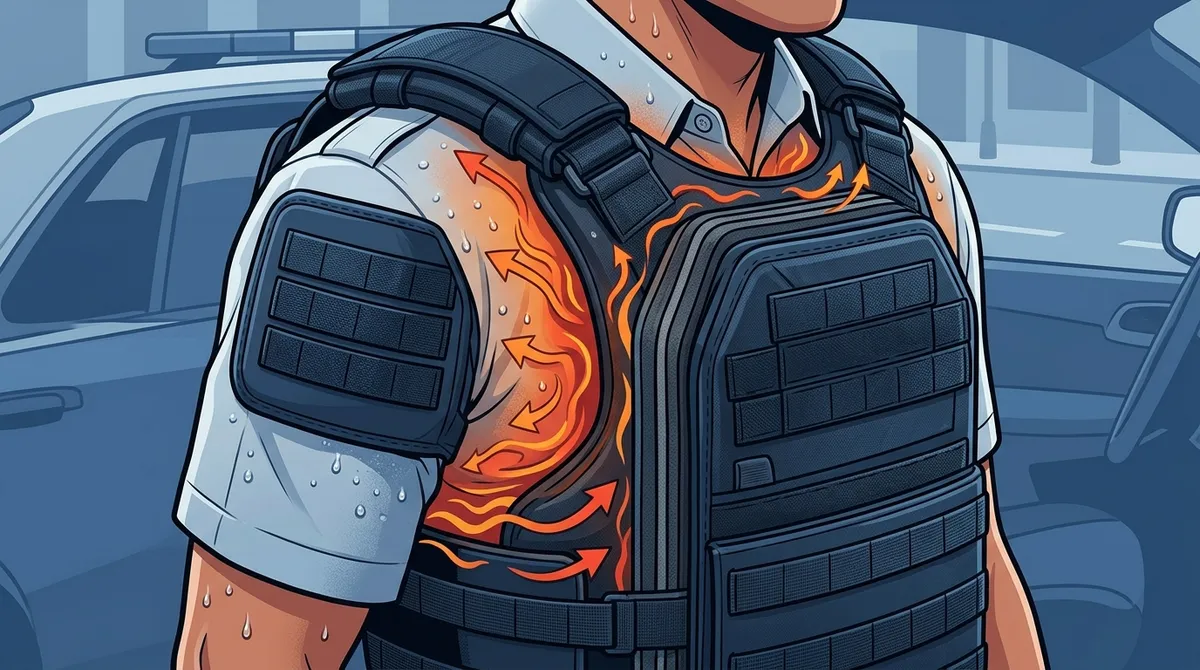
Body armor is designed to protect you, but it creates a major problem: it traps heat and moisture against your skin. Unlike regular clothing, armor panels block airflow almost completely. Sweat has nowhere to go, and your body temperature climbs steadily throughout a shift.
According to the OSHA Heat Stress Guide, heat-related illness is a serious occupational hazard, especially for workers who wear heavy protective equipment. For officers and military personnel wearing body armor certified to NIJ standards, this risk is very real every single day.
The core problem is simple: no airflow means no cooling. Your body produces sweat to regulate temperature, but when sweat can’t evaporate, it just sits there and makes things worse. That’s why professionals need a body armor ventilation vest to create the airflow their gear blocks.

Tip 1: Use a Ventilation Vest to Create an Air Gap
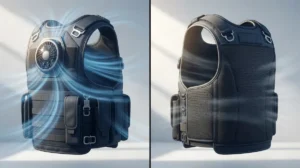
This is the single most effective tip for staying cool in tactical gear. A ventilation vest sits between your body and your armor, physically lifting the armor off your skin. This creates a gap where air can move, heat can escape, and sweat can evaporate.
Research shows that ventilation systems creating a 0.75-inch air gap can reduce body surface temperature by up to 14.5°F. High-performance systems like the Maxx-Dri Vest have shown temperature reductions of up to 23°F in certified testing. That’s a massive difference when you’re working in 95-degree heat.
The BluHalo ventilation vest is one of the best options available in 2026. Created by a Chicago police officer who understood the problem firsthand, BluHalo weighs under 7 ounces and can lift your vest up to 1.5 inches off your body when inflated. It provides cooling on demand, lies completely flat when not needed, and is built from durable double-layer polyethylene. You can learn how to use the BluHalo ventilation vest for maximum comfort to get started quickly.
For active fan-driven cooling, the BluFano fan system takes things even further. It slides under any style of body armor and delivers adjustable airflow for 8 to 32 hours on a single charge. It even includes a 10,000mAh power bank and a forward-facing light for low-light situations. You can explore the BluFano fan system vs. passive cooling comparison to see why active ventilation wins for serious heat management.
Tip 2: Choose the Right Base Layer
What you wear under your ventilation vest matters a lot. A cotton undershirt holds sweat against your body instead of moving it away. That makes everything worse. You want a moisture-wicking base layer made from dry-fit or performance fabric.
Moisture-wicking materials pull sweat away from your skin and push it toward the outer surface where it can evaporate. When combined with a ventilation vest, this creates a powerful one-two punch against heat buildup. Check out the best moisture-wicking vests for body armor comfort in 2026 for top picks.
Here’s what to look for in a tactical base layer:
- Polyester or nylon blend fabrics for maximum moisture transfer
- Lightweight construction that doesn’t add bulk under armor
- Flat seams that don’t irritate skin during long wear
- Anti-odor treatment to handle heavy sweating during shifts
- Form-fitting design that doesn’t bunch or shift under gear
Tip 3: Adjust Your Gear Properly Before Every Shift
A poorly fitting vest traps more heat than a well-fitted one. If your armor is too tight against your body, it eliminates any chance of airflow, even if you’re wearing a ventilation vest. Taking five minutes before your shift to adjust your gear properly can make a huge difference throughout the day.
Follow these steps before every shift:
- Put on your base layer first, making sure it’s smooth with no bunching.
- Position your ventilation vest on a clean surface of your armor using Velcro attachment as directed.
- Inflate or activate your ventilation system to create the proper air gap before putting on your carrier.
- Adjust your armor carrier so it’s snug but not crushing your ventilation vest flat.
- Check range of motion to confirm the setup doesn’t restrict your movement.
Proper fit also applies to plate carriers. If you use plates, make sure the carrier isn’t riding too low or too high, which affects how heat distributes across your torso. You can find more detailed guidance on body armor fit and airflow tips for all-day comfort.
Tip 4: Stay Hydrated Throughout Your Shift
Hydration is one of the most powerful and most overlooked tips for staying cool in tactical gear. When you’re well hydrated, your body sweats more efficiently, which helps your natural cooling system work better. When you’re dehydrated, your core temperature rises faster and you fatigue more quickly.
Here’s a simple hydration framework for tactical professionals:
| Time of Day | Hydration Action | Amount |
|---|---|---|
| Pre-shift (30 min before) | Drink water or electrolyte drink | 16-20 oz |
| Every hour on shift | Consistent water intake | 8-12 oz |
| During breaks | Replenish with electrolytes | 12-16 oz |
| Post-shift recovery | Rehydrate and cool down | 20-24 oz |
Don’t wait until you feel thirsty. Thirst is actually a sign that you’re already behind on hydration. Make drinking water a habit, not a reaction. Learn more about how to prevent heat stress while wearing body armor with hydration and other strategies.
Tip 5: Use Vehicle AC Strategically During Breaks
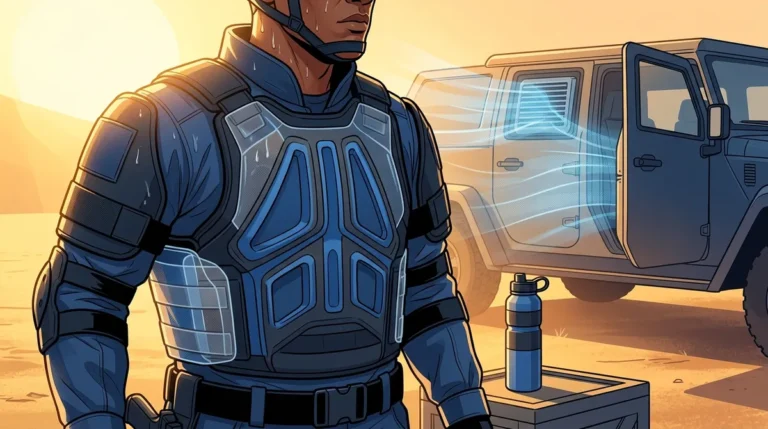
If you work in a patrol vehicle, you have a powerful cooling tool right at your fingertips. Vehicle air conditioning can be used strategically to bring your core temperature down during breaks. When combined with a ventilation vest, the results are even more impressive.
Officers who use the BluFano fan system report that it works especially well during vehicle breaks. The fan draws the cooled air from the AC directly under their armor, dropping their body temperature quickly before they head back out into the heat. It’s one of the smartest ways to use the tools you already have available.
Here’s how to maximize vehicle AC cooling during breaks:
- Set your AC to its lowest comfortable temperature during breaks
- Activate your ventilation vest fan to draw the cool air under your armor
- Angle vents toward your torso for maximum benefit
- Use breaks of at least five minutes for meaningful temperature reduction
Tip 6: Check Compatibility With Your Armor Type
Not all ventilation systems work equally well with all armor types. Soft armor carriers and plate carriers have different internal geometries, and a ventilation solution designed for one may not work as well for the other. Always check compatibility before purchasing.
| Armor Type | Common Issues | Best Ventilation Approach |
|---|---|---|
| Soft armor carrier | Carrier sits close to body, minimal gap | Inflatable vest like BluHalo for adjustable lift |
| Plate carrier | Heavy plates press down on ventilation gear | Structured ventilation system with firm channels |
| External carrier (over uniform) | Less interior space, restricted airflow zones | Slim-profile fan system like BluFano |
| Concealable carrier | Very tight fit, minimal room for added layers | Lightweight passive ventilation mesh inserts |
For a deep dive on this topic, check out the guide on how to choose the right body armor ventilation vest in 2026. You can also compare passive vs. active tactical vest ventilation to decide which approach fits your setup best.
Tip 7: Maintain Your Ventilation Gear Regularly
A ventilation vest that isn’t maintained won’t perform at its best. Over time, sweat, dirt, and bacteria can clog mesh materials and reduce airflow. Regular washing and care keep your gear working the way it should.
Follow these simple maintenance habits:
- Wash your ventilation vest according to the manufacturer’s instructions after heavy-use shifts
- Air dry completely before storing to prevent mold and odor
- Check fan systems and battery components monthly for wear or damage
- Inspect Velcro attachments and replace if they lose grip strength
- Store ventilation gear in a clean, dry place away from direct sunlight
Skipping maintenance is one of the most common mistakes tactical professionals make. Learn more about mistakes to avoid with a body armor ventilation system so your gear stays in top shape.
Comparing Key Cooling Features at a Glance
Choosing the right combination of cooling strategies can feel overwhelming. Here’s a quick comparison to help you see how the main approaches stack up for tips for staying cool in tactical gear:
| Cooling Strategy | Effectiveness | Cost Level | Best For |
|---|---|---|---|
| Ventilation vest (inflatable) | Very High | Low ($60) | All-day patrol officers, concealable carriers |
| Active fan system (BluFano) | Highest | Medium | Extended operations, plate carrier users |
| Moisture-wicking base layer | Medium | Low | Everyone as a base foundation |
| Hydration strategy | High | None | Every tactical professional |
| Vehicle AC optimization | Medium-High | None | Patrol officers with vehicle access |
| Cotton base layer (avoid) | Low/Negative | Low | Not recommended for any use |
The best results come from combining multiple strategies. A moisture-wicking base layer plus a BluHalo vest plus proper hydration is far more effective than any single approach alone. Nearly 200,000 law enforcement officers, first responders, soldiers, and operators worldwide already use ventilation vests for body armor cooling — and the results speak for themselves.
Who Benefits Most From These Tips
These tips for staying cool in tactical gear apply to a wide range of professionals. Law enforcement officers on patrol shifts benefit enormously from ventilation vests and smart hydration habits. Military personnel on extended missions need reliable active cooling systems like BluFano that can operate for up to 32 hours. Security professionals working outdoor events in summer heat need cooling strategies that work across varied environments.
SWAT and tactical team members wearing heavy plate carriers during high-intensity operations benefit from solutions that don’t restrict mobility. Emergency responders and hazmat teams facing extreme heat conditions need every advantage they can get to prevent heat exhaustion and maintain sharp decision-making. For a full breakdown of solutions by profession, explore the guide to choosing emergency responder gear that keeps you cool.
Heat affects more than comfort. It affects reaction time, decision-making, and safety. The effects of heat stress on police performance are well documented — and they’re serious. Every tip in this guide is designed to help you stay safer and more effective on the job.
Final Thoughts and Next Steps
Staying cool in tactical gear doesn’t have to be a constant battle. With the right ventilation vest, a solid base layer, smart hydration, and good maintenance habits, you can dramatically reduce heat buildup and stay comfortable through even the longest, hottest shifts. The technology available in 2026 makes this easier than ever before.
Start with the foundation: get a quality ventilation vest that creates a real air gap between your armor and your body. Add a moisture-wicking base layer, drink water consistently, and use every break strategically. Then maintain your gear so it keeps performing at its best.
Explore BluHalo’s full shop to find the ventilation solution that fits your setup, or read real officer experiences on the reviews page. You deserve to be comfortable and focused on what matters most — not distracted by the heat.
Ready to take the next step toward all-day comfort under your armor? Reach out to the BluHalo team and get personalized guidance on the best cooling solution for your specific gear and situation. You’ve got a tough job — your gear should make it easier, not harder.
FAQs
Q: How do ventilation vests actually keep you cool in tactical gear?
A: Ventilation vests create a physical air gap — typically around 0.75 inches — between your body armor and your skin. This gap allows heat and moisture to escape instead of building up under your armor, which can reduce body surface temperature by up to 23°F. It’s like giving your body a little breathing room so your natural cooling system can actually do its job!
Q: What is the best base layer to wear under a ventilation vest for tactical gear?
A: A moisture-wicking performance base layer made from polyester or nylon blend fabric is your best bet. These materials pull sweat away from your skin and help it evaporate, which pairs perfectly with the airflow your ventilation vest creates. Stay far away from cotton — it holds moisture against your body and makes heat buildup much worse.
Q: How often should I wash my ventilation vest to keep it cooling properly?
A: You should wash your ventilation vest after every heavy-use shift or at least a couple of times per week during hot weather. Follow the manufacturer’s washing instructions closely, and always air dry completely before storing. Regular cleaning keeps the mesh channels clear and the materials performing at their best — a clean vest is a cool vest!
Q: Are there different ventilation vests for soft armor carriers versus plate carriers?
A: Yes, and compatibility matters a lot! Soft armor carriers work great with inflatable vests like BluHalo, which lift the carrier off your body on demand. Plate carriers need more structured ventilation solutions that can hold up under the weight of the plates. Always check that your ventilation system is designed to work with your specific armor setup before purchasing.
Q: Can I use my patrol vehicle’s AC to enhance cooling with a ventilation vest?
A: Absolutely — and it’s one of the best tricks out there! When you use an active fan system like BluFano during your vehicle breaks, the fan draws cool air from your AC directly under your armor. This drops your body temperature much faster than just sitting in the AC without any active ventilation. Even five-minute breaks with this strategy can make a noticeable difference throughout your shift.