Key Takeaways
-
Evaporative cooling vests only work effectively in dry climates; in humid conditions the air is already moisture-saturated, making evaporation impossible and cooling nearly ineffective when officers need it most.
-
Ventilation vests outperform evaporative vests for law enforcement because they create airflow under armor without requiring re-wetting every 2-4 hours, making them viable for full shifts and humid regions.
-
Evaporative cooling vests add noticeable wet bulk under armor that can shift during high-intensity movement, hindering tactical operations, while ventilation vests weigh under 7 ounces and lie flat when deflated.
-
Cooling vests are comfort accessories only and do not replace body armor protection; officers must still follow OSHA heat-safety guidelines including hydration, breaks, and monitoring for heat exhaustion above 95°F.
-
When selecting any cooling vest, verify it fits under your specific armor carrier without restricting access to duty belt, radio, or equipment, and confirm it resists odor buildup with daily repeated use.
-
Active fan-driven ventilation systems can provide cooling for 8-32 hours on battery power, compared to evaporative vests lasting only 2-4 hours before requiring re-wetting, making them better for double shifts.
If you’ve ever finished a 12-hour shift in 95-degree heat with a soaked undershirt stuck to your back, you already know the struggle is real. Officers, security professionals, and tactical teams all face the same enemy: trapped heat under body armor. Two popular solutions keep coming up in gear rooms and online forums — the evaporative cooling vest law enforcement officers have used for years, and the newer ventilation vest approach. So which one actually wins when the sun is blazing and your shift isn’t close to over?
We’re going to break this down in plain, friendly terms. No confusing jargon, just honest info you can use before your next shift or your next gear purchase. By the end, you’ll know exactly which option fits your climate, your armor setup, and your comfort goals. Let’s get into it.
What Is an Evaporative Cooling Vest, Exactly?
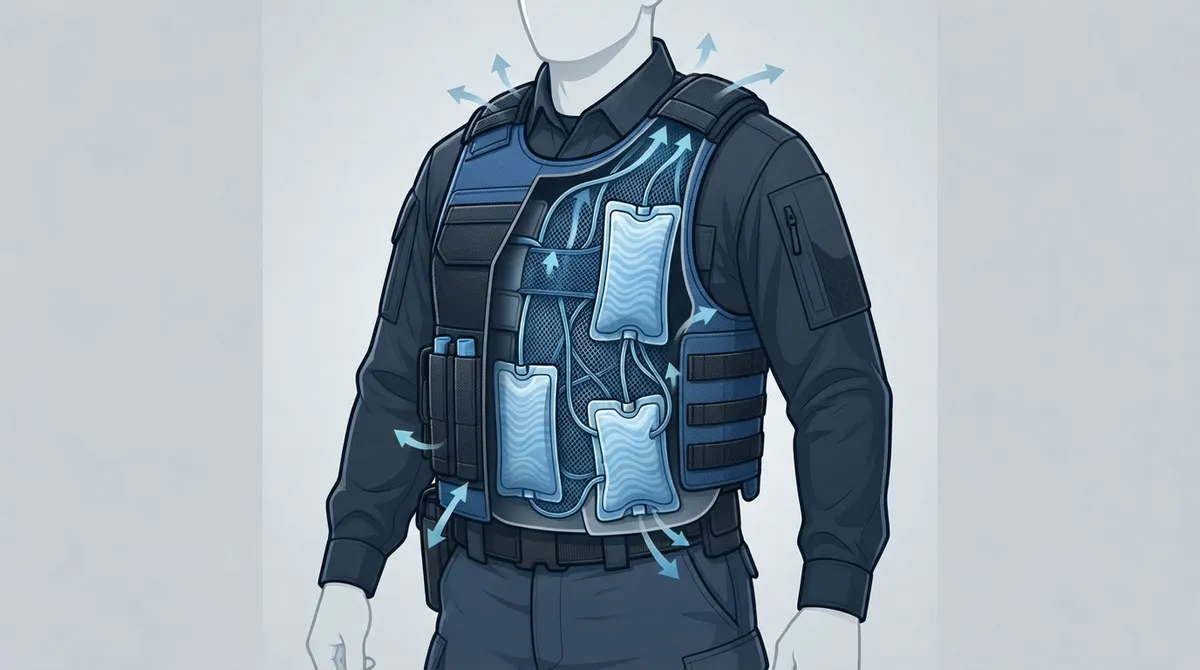
An evaporative cooling vest works with a simple idea: water evaporating off fabric pulls heat away from your skin. You soak the vest in water, wring out the extra, and wear it under or alongside your duty gear. As the water evaporates, it draws heat off your torso, similar to how sweat cools your body naturally.
This method has been around for decades in outdoor work and sports. It’s simple, it’s low-tech, and for the right conditions, it genuinely works. But that phrase “right conditions” is doing a lot of heavy lifting here, and we’ll explain why in a minute.

What Is a Ventilation Vest, and How Is It Different?
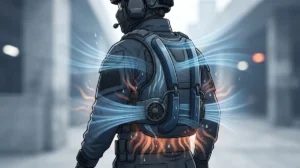
A ventilation vest takes a completely different approach. Instead of relying on water evaporation, it creates an actual air gap between your body and your armor. This gap lets air move freely, so your own natural sweat can evaporate the way it’s supposed to instead of getting trapped against your skin.
Think of it like the difference between wearing a soaked bandana around your neck versus opening a window in a stuffy room. Both can cool you down, but they work in totally different ways. This is exactly the problem BluHalo was built to solve, with a lightweight design made specifically to fit under body armor and lift it slightly off your body for better airflow.
The Core Difference in One Table
| Feature | Evaporative Cooling Vest | Ventilation Vest |
|---|---|---|
| Cooling method | Water evaporation | Air gap and airflow |
| Best climate | Hot, dry, low humidity | Works across humid and dry climates |
| Prep needed | Soak and wring before each use | No soaking, ready when you are |
| Weight when worn | Heavier due to retained water | Lightweight, under 7 ounces for BluHalo |
| Duration of effect | Roughly 2-4 hours before re-wetting | Runs as long as you wear it, no re-wetting |
| Bulk under armor | Can add noticeable bulk | Sits flat when deflated, low-profile |
Why Climate Changes Everything
Here’s the part a lot of gear reviews skip over. Evaporative cooling only works well when the air around you is dry. In humid conditions, the air is already full of moisture, so water on your vest has nowhere to go. That means less evaporation and less cooling, right when you need it most.
This is a big deal for law enforcement, since officers work in every climate imaginable. A vest that performs great in Phoenix might do almost nothing in Miami or Houston. That’s why many agencies in humid regions lean toward airflow-based solutions instead, since choosing gear built for hot, humid climates matters just as much as choosing gear built for dry heat.
Quick Climate Checklist
- Dry, desert-like heat: evaporative cooling vests can perform well
- Humid, coastal, or Southern climates: airflow-based ventilation tends to outperform evaporative options
- Mixed or unpredictable weather: a ventilation vest offers more consistent results year-round
- Indoor or vehicle-heavy shifts: airflow systems adapt better to changing environments
Does an Evaporative Cooling Vest Replace Your Body Armor?
Let’s clear up a common misunderstanding right away. Evaporative cooling vests are a comfort layer, not protection. They do not provide ballistic, stab, or impact resistance unless they’re specifically built into a certified armor system. Your armor carrier is still doing the protective job, and the cooling vest is just riding alongside it.
The same is true for ventilation vests. Products like BluHalo are designed to sit under your existing armor carrier, not replace it. Your protective gear should always meet recognized standards, and it helps to understand body armor standards before pairing any cooling accessory with your vest.
How Long Does Cooling Actually Last?
This is one of the most common questions officers ask, and the honest answer is: it depends. According to NIOSH guidance, a cooling vest may offer some benefit for up to about four hours, with roughly two to three hours being the more realistic window of strong performance, depending on temperature and humidity.
Compare that to an active airflow system, which doesn’t rely on water at all. A fan-driven system like Blufano can run anywhere from 8 to 32 hours depending on the fan setting, powered by a built-in 10,000mAh battery. That’s a massive difference if you’re working a double shift or an unpredictable call that runs long.
Step-by-Step: How Evaporative Cooling Vests Are Typically Used
- Soak the vest fully in cool water
- Wring out the excess so it isn’t dripping
- Put the vest on under your uniform or duty gear
- Wear your armor carrier over or around it as designed
- Re-wet the vest every few hours as cooling fades
Step-by-Step: How a Ventilation Vest Like BluHalo Works
- Attach the flat vest to your armor carrier using Velcro
- Inflate it on demand with the included small pump
- The vest lifts your armor up to about 1.5 inches off your body
- Air moves freely underneath, helping sweat evaporate naturally
- Deflate with one button when you don’t need it, so it lies flat
What About Officers Working High-Intensity Roles?
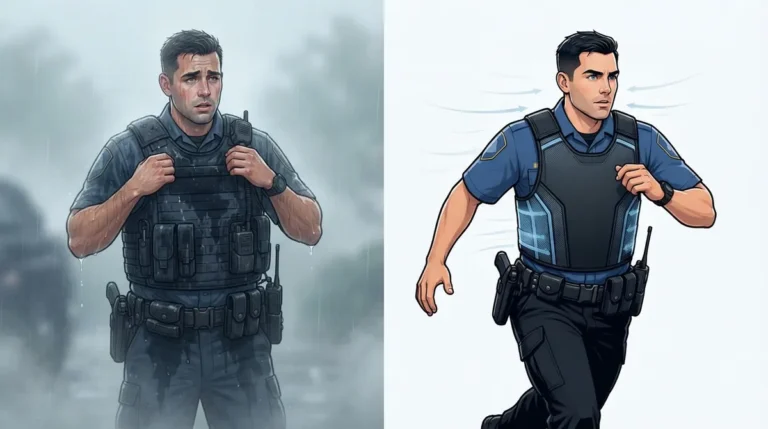
Tactical and SWAT teams face a unique challenge. They’re often in heavier armor, moving hard, and can’t afford anything that restricts mobility or access to gear. A soggy evaporative vest can add bulk and shift around during high-intensity movement, which isn’t ideal during a fast-paced operation.
This is where lightweight, low-profile ventilation solutions tend to shine. Because BluHalo sits flat when deflated and weighs under 7 ounces, it doesn’t get in the way of movement, radios, or other gear attached to a vest. For teams doing sustained operations, learning about passive versus active tactical cooling for special operations can help clarify which setup matches your team’s needs.
Buying Considerations for Any Cooling Vest
Whether you’re leaning toward evaporative or airflow-based cooling, a few practical questions should guide your decision. Officers depend on their gear daily, so fit and function matter as much as the cooling method itself.
- Does it fit comfortably under your specific armor carrier?
- Will it restrict access to your duty belt, radio, or other equipment?
- How much bulk does it add, and will that affect your fit?
- How easy is it to re-wet, recharge, or maintain during a shift?
- Does it resist odor buildup over repeated daily use?
- How quickly does it dry or reset between shifts?
These questions come straight from real feedback shared in guides like how to choose the right body armor ventilation vest in 2026, and they apply just as much to evaporative options as they do to airflow systems.
Cooling Vests Are Support, Not a Cure-All
Here’s something every officer needs to hear: no cooling vest, evaporative or airflow-based, replaces proper heat-safety practices. Hydration, scheduled breaks, acclimatization, and heat monitoring are still essential. The OSHA Heat Stress Guide lays out clear recommendations that agencies should build into daily routines, not just rely on gear alone.
Heat exhaustion and heat stroke are serious risks, especially for officers wearing heavy armor in extreme temperatures. NIOSH notes that temperatures above 95°F require real attention to airflow and clothing, and anything from 103°F to 115°F is considered high risk. A cooling vest is one tool in the toolbox, not a replacement for smart heat-safety procedures.
Why Ventilation Wins for Most Law Enforcement Situations
When you weigh everything together, ventilation vests tend to offer more consistent, reliable performance across the widest range of conditions officers actually face. They don’t depend on dry air, they don’t need constant re-wetting, and they don’t add wet bulk to your gear. For agencies covering multiple climates or unpredictable weather, that consistency matters a lot.
That’s exactly why so many officers are turning to solutions like BluHalo and Blufano, both designed specifically for the realities of daily duty wear. BluHalo gives you cooling-on-demand with a lightweight, low-profile design, while Blufano adds active fan-driven airflow that can run all shift long. Together, or individually, they cover the gaps that traditional evaporative vests often leave behind, especially in humid or unpredictable regions.
Final Thoughts: Which One Should You Choose?
If you work almost exclusively in dry desert heat and don’t mind re-wetting your vest every couple of hours, an evaporative cooling vest can still get the job done. But if you want something that performs reliably no matter the humidity, doesn’t add wet bulk under your armor, and keeps working through a full shift without maintenance, a ventilation vest is the smarter long-term investment.
Ready to feel the difference for yourself? Get in touch with our team to find the right cooling setup for your climate, your armor, and your shift, and start showing up to work cooler, drier, and more focused.
FAQs
Q: How does an evaporative cooling vest work for police officers?
A: It’s pretty simple, actually! You soak the vest in water, wring out the extra, and wear it under your gear. As the water evaporates, it pulls heat away from your body, kind of like how sweat naturally cools you down on a hot day.
Q: Can an evaporative cooling vest be worn under body armor?
A: Yes, most are designed to sit under or alongside your armor carrier. Just keep in mind they add some bulk since they’re holding water, so it’s worth checking your fit before your shift.
Q: Are evaporative cooling vests effective in humid climates?
A: Honestly, not as much as folks hope. Humid air already holds a lot of moisture, so evaporation slows way down. That’s why many officers in humid regions prefer airflow-based options like a ventilation vest instead.
Q: What is the difference between an evaporative cooling vest and a ventilation vest?
A: An evaporative vest cools through water evaporation, while a ventilation vest creates an air gap under your armor so your own sweat can evaporate naturally. Ventilation vests, like BluHalo, tend to work more consistently across different climates.
Q: Can a cooling vest prevent heat exhaustion or heat stroke?
A: A cooling vest helps, but it’s not a magic shield against heat illness. You’ll still want to stay hydrated, take breaks, and follow your agency’s heat-safety procedures alongside whatever cooling gear you choose.