Key Takeaways
-
Heat stress under body armor impairs judgment and reaction time; research shows fan-powered cooling systems reduce core temperature by 0.26-0.34°C and physiological strain by 9-21% while wearing ballistic armor.
-
Fan-powered ventilation vests like BluHalo weigh under 7 ounces, inflate on-demand to lift armor 1.5 inches off your body, and provide immediate airflow without permanent bulk or setup complexity.
-
Active airflow systems like Blufano deliver adjustable cooling for 8-32 hours depending on settings, making extended double shifts manageable compared to ice-pack vests which only provide 2-4 hours of relief.
-
Under vest cooling systems must be paired with hydration, shade, rest breaks, and heat acclimatization—cooling gear supplements but cannot replace proper heat-safety habits according to OSHA and NIOSH guidelines.
-
When selecting a cooling vest, verify compatibility with existing body armor, confirm low-profile design for movement, check battery life against shift length, and ensure easy maintenance and replacement parts availability.
-
Hybrid cooling systems combining fans with phase-change materials deliver approximately 0.2°C core-temperature reduction and roughly 10 fewer heartbeats per minute, offering both instant relief and extended cooling duration for long shifts.
If you wear body armor for a living, you know the struggle. The sweat pooling at your lower back. The heat trapped against your chest. The way your focus slips a little when your body is busy fighting a heat wave under 20 pounds of gear. You’re not alone, and you’re definitely not stuck with it. Under vest cooling is a growing category of gear built specifically to solve this problem, and it’s come a long way in the last few years.
Whether you’re a patrol officer grinding through a 12-hour summer shift, a soldier moving through triple-digit heat in full kit, or a security professional standing post for hours in the sun, this guide is for you. We’re walking through eight real, practical under vest cooling solutions and strategies that actually make a difference. We’ll also cover the science behind them, what to look for before you buy, and how to keep your gear working when you need it most.
What Is Under Vest Cooling, Really?
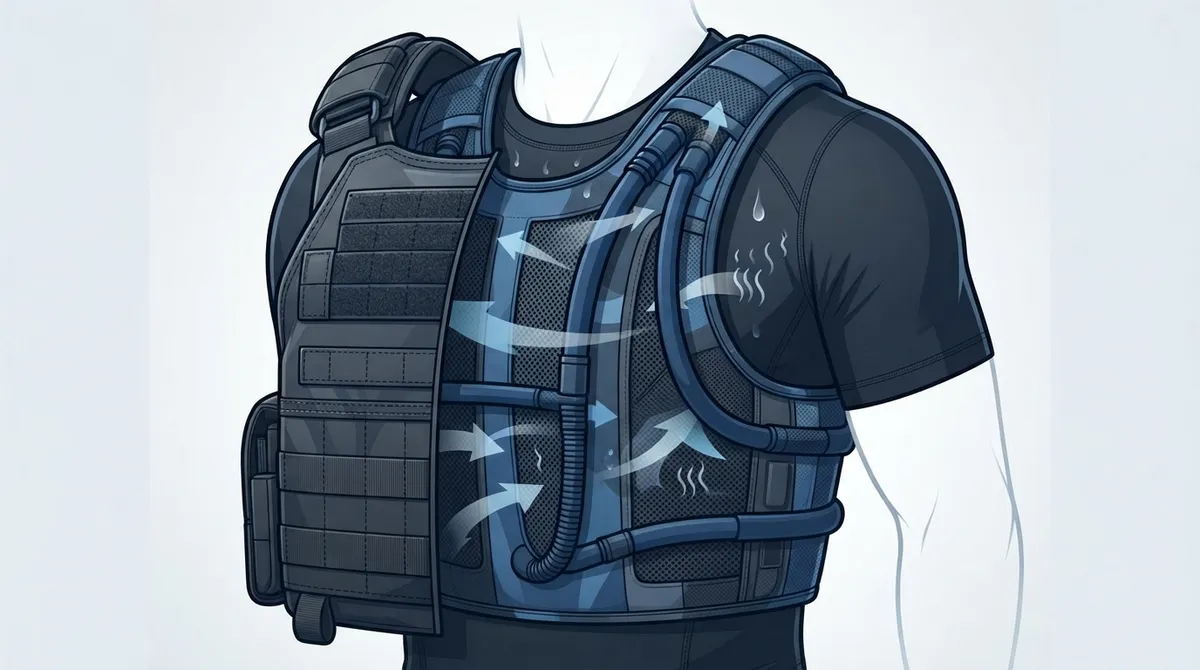
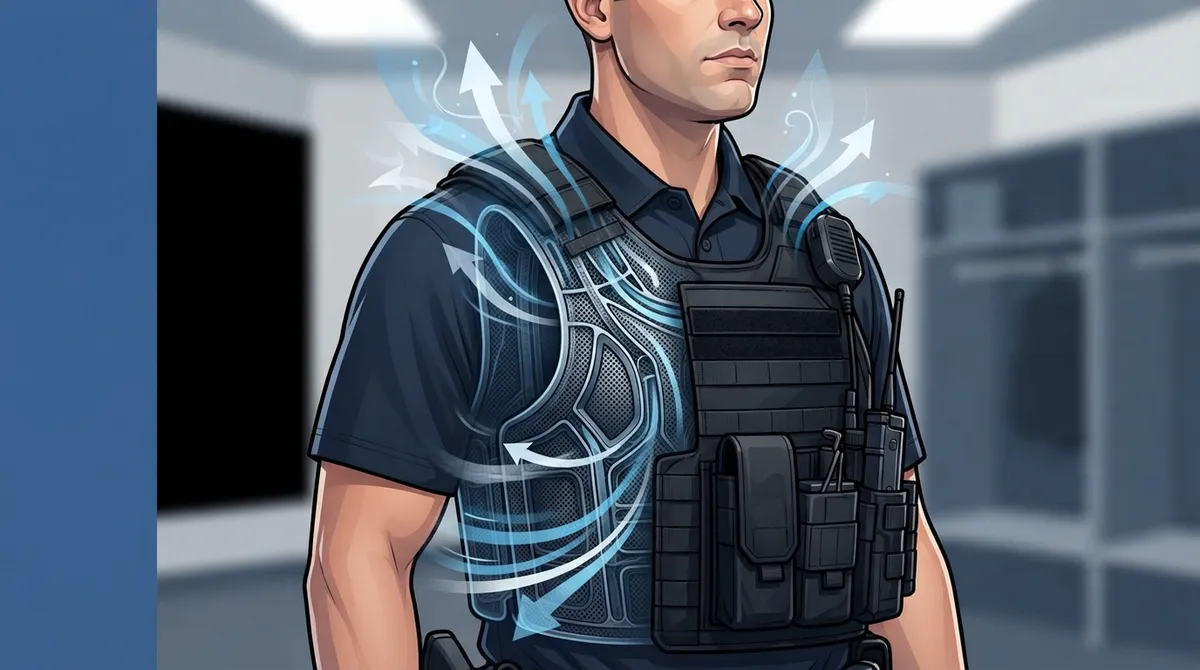
Under vest cooling means wearing a cooling or ventilation system beneath your outer gear, whether that’s body armor, a plate carrier, or a high-visibility vest. The goal is simple: keep air moving and moisture managed without ever having to take your protective layer off. You stay covered, you stay safe, and you stay a whole lot cooler.
Most ventilation vests, like the ones built by BluHalo, use fans or air channels to push fresh air across your torso. Other cooling vests rely on ice packs, phase-change materials, or water circulation. Each has its own strengths, and we’ll break those down so you can pick the right one for your job.
Why This Matters More Than You Think
Heat stress isn’t just uncomfortable. It’s a real safety issue. According to OSHA’s heat exposure guidelines, heat illness can impair judgment, slow reaction time, and lead to serious medical emergencies if ignored. When you’re wearing body armor that meets strict body armor standards, that extra layer traps heat close to your skin, making the problem worse.
Research backs this up. A study published in Applied Ergonomics found that an integrated blower cooling system reduced core-temperature rise by 0.26 to 0.34 degrees Celsius during exercise in hot conditions while wearing ballistic armor. The same study showed a 9% to 21% drop in physiological strain and a 21% to 25% reduction in sweat rate. That’s not a small win. That’s the difference between finishing your shift strong and finishing it exhausted.
The Numbers Behind Personal Cooling
| Metric | Reported Improvement | Source |
|---|---|---|
| Core temperature rise | Reduced by 0.26–0.34°C | Applied Ergonomics, 2008 |
| Skin temperature | Reduced by 0.6–0.9°C | Applied Ergonomics, 2008 |
| Physiological strain index | Reduced by 9%–21% | Applied Ergonomics, 2008 |
| Sweat rate | Reduced by 21%–25% | Applied Ergonomics, 2008 |
| Effective cooling duration | 2–3 hours (up to 4 hours) | NIOSH Publication 2016-106 |
8 Under Vest Cooling Solutions Worth Your Attention
1. Fan-Powered Ventilation Vests
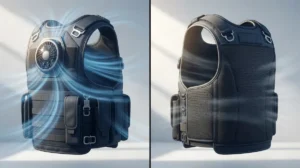
These are the workhorses of under vest cooling. A thin, lightweight vest sits directly on your body, with small fans pushing air across your torso and out through vents. The BluHalo ventilation vest, created by a Chicago police officer who got tired of sweating through his shift, is a great example. It weighs under 7 ounces and lifts your armor up to 1.5 inches off your body when inflated, creating a real air gap where heat can actually escape.
What makes this approach so effective is the on-demand design. You attach it to your vest with Velcro, inflate it with a small pump when you need airflow, and deflate it with the push of a button when you don’t. No bulk, no fuss, just cooling when you want it. If you want to see how this compares to other options, check out this breakdown of the best vest cooling systems for beating heat in body armor.
2. Advanced Active Airflow Systems
For those who want continuous, adjustable cooling for extended shifts, an active fan system is the way to go. Blufano is a great example of this category. It’s a self-contained unit with a patented air-redirect spout that slides under any body armor style, delivering adjustable airflow for 8 to 32 hours depending on the setting you choose.
It even includes a built-in 10,000mAh power bank that charges your phone or other devices, plus a forward-facing light for low-light situations. This is the kind of gear that turns a brutal double shift into something manageable. Learn more about how to use the BluHalo ventilation vest for maximum comfort alongside a system like this.
3. Ice-Pack and Phase-Change Cooling Vests
These vests use frozen packs or phase-change materials that absorb heat as they melt or transition states. They’re popular in construction and industrial settings, and they can work well for short bursts of intense heat. The tradeoff is added weight and a cooling window that fades as the material warms up.
NIOSH notes that cooling vests using these methods can provide relief for up to about four hours in hot, humid conditions, though two to three hours of effective cooling is more typical. If you’re comparing this approach to airflow-based systems, this guide on ventilation versus phase-change cooling vests lays out the pros and cons clearly.
4. Evaporative Cooling Garments
Evaporative vests use water-absorbent fabric that cools as moisture evaporates from the surface. They’re lightweight and low-maintenance, but their performance drops fast in humid climates since evaporation slows down when the air is already saturated with moisture.
A 2024 systematic review found that evaporative and radiative cooling garments produced smaller physiological effects than fan-based or conductive systems, with core-temperature changes below 0.1 degrees Celsius in many cases. They’re a decent budget option, but if you’re working somewhere humid, you’ll want something more reliable.
5. Water-Circulation Cooling Vests
These systems circulate cool water through tubing sewn into the vest, usually connected to a small pump and reservoir. They’re common in specialized industrial and hazmat settings where sustained, controlled cooling matters more than mobility. NIOSH lists water-cooled garments as one of the recognized auxiliary cooling systems for heat-stress management.
The downside is bulk and setup complexity. For fast-moving tactical or patrol work, this style tends to be less practical than a lightweight fan-driven vest.
6. Hybrid Cooling Systems
Hybrid vests combine two cooling methods, like fans paired with phase-change inserts, to extend cooling duration and boost effectiveness. The 2024 systematic review mentioned earlier found hybrid systems delivered about a 0.2-degree Celsius core-temperature reduction and roughly 10 fewer heartbeats per minute compared to no cooling at all.
This is a promising direction for anyone who needs both instant relief and staying power throughout a long shift. If you’re weighing built-in systems against modular add-ons, this comparison of built-in versus modular tactical gear ventilation is worth a read.
7. Compact USB-Rechargeable Fan Vests
For officers and security professionals who want something simple, a USB-rechargeable fan vest is an easy entry point. These plug into a small battery pack, run for several hours per charge, and slide easily under most gear. They’re a great starter option if you’re new to under vest cooling and want to test the waters before investing in a more advanced system.
Check out this roundup of the best USB vest fans for police in 2026 if you want to compare options side by side.
8. Layered Cooling Strategy (Combining Systems)
Some professionals get the best results by layering approaches, like wearing a moisture-wicking base layer under a fan-powered vest, then adding a cooling towel or neck wrap during breaks. This layered strategy addresses heat from multiple angles instead of relying on one single fix.
If you’re building out a full heat-management plan for your team, this list of the best heat stress prevention gear for 2026 is a solid starting point.
How to Choose the Right Under Vest Cooling System
Not every cooling vest works for every job. Here’s a simple checklist to run through before you buy:
- Check compatibility with your existing body armor, harness, or duty belt.
- Confirm it’s low-profile enough that it won’t interfere with movement or create pressure points.
- Look at battery life or cooling duration versus your typical shift length.
- Consider noise level, especially for tactical or covert roles.
- Check how easy it is to clean and maintain after sweaty shifts.
- Verify replacement parts or batteries are easy to find.
For a deeper dive into fit and function, this guide on choosing the right body armor ventilation vest in 2026 walks through each factor in detail.
Comparing Cooling Vest Types at a Glance
| Cooling Type | Best For | Typical Duration | Weight |
|---|---|---|---|
| Fan-powered vests (BluHalo) | Daily patrol, quick relief | On-demand | Under 7 oz |
| Active airflow systems (Blufano) | Long shifts, extended duty | 8–32 hours | Moderate |
| Ice/phase-change vests | Short bursts of extreme heat | 2–4 hours | Heavier |
| Evaporative garments | Dry climates | Varies with humidity | Light |
| Water-circulation vests | Industrial, hazmat work | Continuous with pump | Heaviest |
Cooling Isn’t a Replacement for Smart Heat Safety
Here’s something worth repeating: under vest cooling gear is a supplement, not a substitute, for good heat-safety habits. NIOSH is clear that cooling vests should be paired with hydration, shade, rest breaks, and heat acclimatization. No fan or ice pack replaces drinking enough water or knowing the signs of heat exhaustion.
That said, having a reliable cooling system under your armor gives you a real edge. It buys you comfort, focus, and stamina when the temperature climbs and the shift keeps going. If you want to explore how airflow technology fits into a bigger heat-management plan, take a look at this piece on how to prevent heat stress while wearing body armor.
Maintenance Tips to Keep Your Cooling Vest Working Longer
- Wipe down your vest after every shift to prevent salt and sweat buildup.
- Let it air dry fully before storing it in your bag or locker.
- Charge batteries fully before each shift, especially in peak summer months.
- Inspect Velcro attachments and straps regularly for wear.
- Store away from direct sunlight to protect fabric and electronics.
A well-maintained vest can serve you reliably for years. Many officers who’ve made the switch share their experiences in these customer reviews, and it’s worth reading through a few before making your decision.
Final Thoughts on Staying Cool Under Your Gear
You didn’t sign up for this job because it was easy. But that doesn’t mean you have to accept overheating, soaked undershirts, and foggy focus as just part of the deal. Under vest cooling technology has genuinely improved, and the right system can change how your entire shift feels.
Whether you’re drawn to the simplicity of the BluHalo vest or the extended power of the Blufano airflow system, there’s a solution built for your role. Browse the full lineup in the shop to find the right fit, or if you have questions about which system matches your needs, feel free to get in touch with our team. You’ve got a tough job. Staying cool under your vest shouldn’t be the hard part.
FAQs
Q: What is an under vest cooling system?
A: It’s a cooling or ventilation vest worn underneath body armor, uniforms, or other protective gear to keep air moving and reduce heat buildup. Think of it as a comfort layer that works quietly beneath everything else you’re already wearing, so you don’t have to sacrifice protection for comfort.
Q: Can a cooling vest be worn under body armor or a high-visibility vest?
A: Absolutely, and that’s actually the whole point. Products like the BluHalo vest are designed specifically to sit flat under your existing gear, then inflate to create an air gap when you need cooling relief.
Q: How long does an under vest cooling system last on one charge?
A: It depends on the system. Fan-powered vests like Blufano can run anywhere from 8 to 32 hours depending on the fan speed you choose, while ice or phase-change vests typically offer 2 to 4 hours of effective cooling before needing a swap.
Q: Do cooling vests prevent heat exhaustion or heat stroke?
A: They help a lot, but they’re not a magic shield. Cooling vests work best alongside good habits like staying hydrated, taking breaks, and knowing your body’s warning signs, so please don’t skip those basics even with great gear.
Q: Are fan-based ventilation vests better than ice-pack cooling vests?
A: It really comes down to your job and shift length. Fan-based vests like BluHalo and Blufano offer lightweight, on-demand cooling that lasts for hours, while ice-pack vests deliver intense but shorter-lived relief, so pick based on how long you’re out there.