Key Takeaways
-
Active cooling vests extract roughly double the heat (331 Wh/m²) compared to passive phase-change vests (164 Wh/m²), providing significantly longer relief during extended shifts without needing frequent recharging.
-
Air-cooled vests weigh under 8 ounces and suit mobile roles like patrol, while liquid-cooled systems require more maintenance and suit stationary positions; choose based on your specific job demands and mobility needs.
-
Body armor traps sweat and prevents natural evaporation, causing rapid internal temperature increases that impair focus and decision-making; active cooling vests directly counter this by forcing airflow under your gear.
-
Active cooling vests require pairing with hydration, rest breaks, and gradual heat acclimatization to be effective; they enhance but don't replace a full heat-safety plan per OSHA guidelines.
-
Fan-powered systems like air-cooled vests deliver 8-32 hours of cooling runtime depending on fan setting, making them practical for full 12-hour shifts without mid-shift recharging.
-
Performance varies significantly by environment—airflow works better in dry heat than humid conditions, so test your chosen vest in your actual working climate and gear before relying on it operationally.
Picture this: you’re twelve hours into a shift, the sun is beating down, and your body armor feels like a personal sauna strapped to your chest. Sound familiar? If you wear protective gear for a living, you already know that heat isn’t just uncomfortable. It can slow you down, mess with your focus, and even become dangerous. That’s why so many law enforcement officers, military personnel, security professionals, and first responders are turning to an active cooling vest to fight back against the heat.
But here’s the thing. Not all cooling vests work the same way, and picking the wrong one can leave you sweatier and more frustrated than before. In this friendly guide, we’ll break down exactly what an active cooling vest is, how it stacks up against passive options like ice packs and phase-change inserts, and which type actually makes sense for the work you do. Grab a cold drink (you’ve earned it) and let’s dig in together.
What Is an Active Cooling Vest, Exactly?
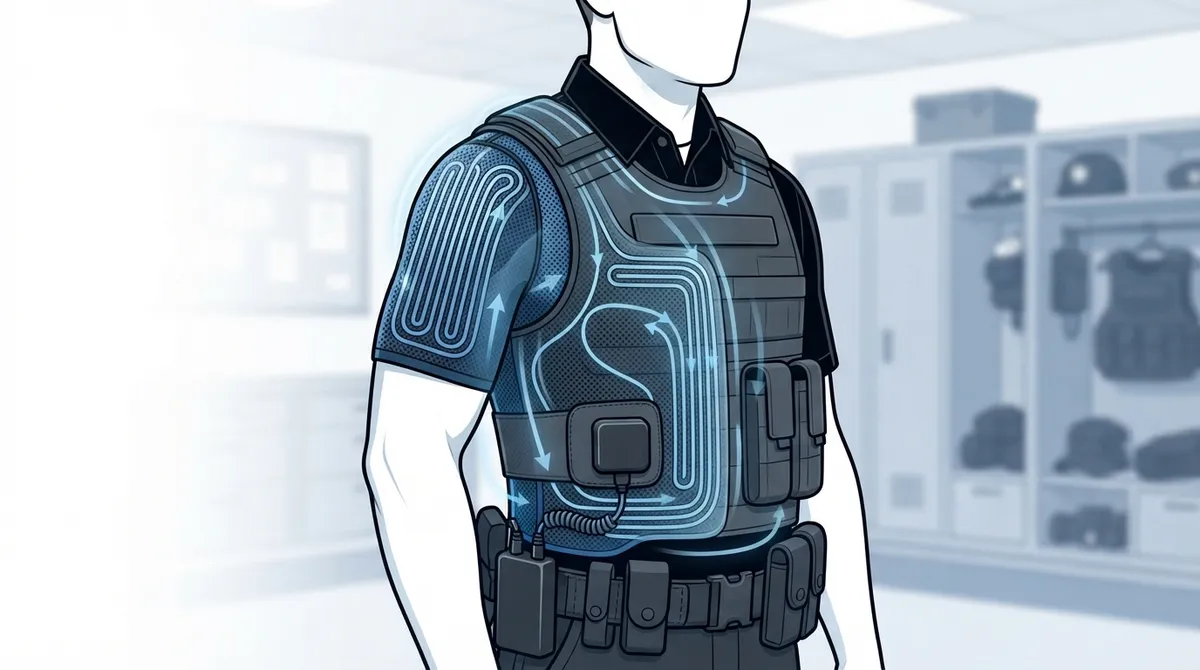
An active cooling vest is a wearable cooling system that uses powered airflow, circulating liquid, or a mix of both to pull heat away from your torso. Unlike vests that just sit there absorbing heat, active systems actually do something. They move air, circulate chilled water, or combine methods to keep you cooler for longer.
In the ventilation vest world, this usually means fan-assisted vests that push fresh air under your body armor. Think of it like a tiny personal breeze machine working beneath your gear. Some active vests use liquid cooling instead, with tubes of chilled water running near your skin. Either way, the goal is the same: give your body a fighting chance against trapped heat.
Air-Cooled vs. Liquid-Cooled: The Two Main Types
Let’s compare the two most common active cooling methods so you know what you’re actually choosing between.
| Feature | Air-Cooled Vests | Liquid-Cooled Vests |
|---|---|---|
| How it works | Fans push air through vest layers | Chilled water circulates through tubes |
| Power source | Small battery pack | Battery plus pump and reservoir |
| Weight | Very light, often under 8 oz | Heavier due to tubing and pump |
| Maintenance | Simple, minimal upkeep | Requires regular cleaning and refilling |
| Best for | Daily patrol, security shifts, mobile work | Stationary or low-mobility roles |
Both types count as active cooling in the industry, but they serve different needs. If you’re constantly moving, chasing calls, or working a beat, a lightweight air-cooled option like the one from BluHalo tends to feel a lot more practical than lugging around tubes and a pump.
Active Cooling vs. Passive Cooling: The Real Showdown
Now let’s get to the heart of the matter. How does an active cooling vest actually compare to passive options like ice packs or phase-change material (PCM) inserts?
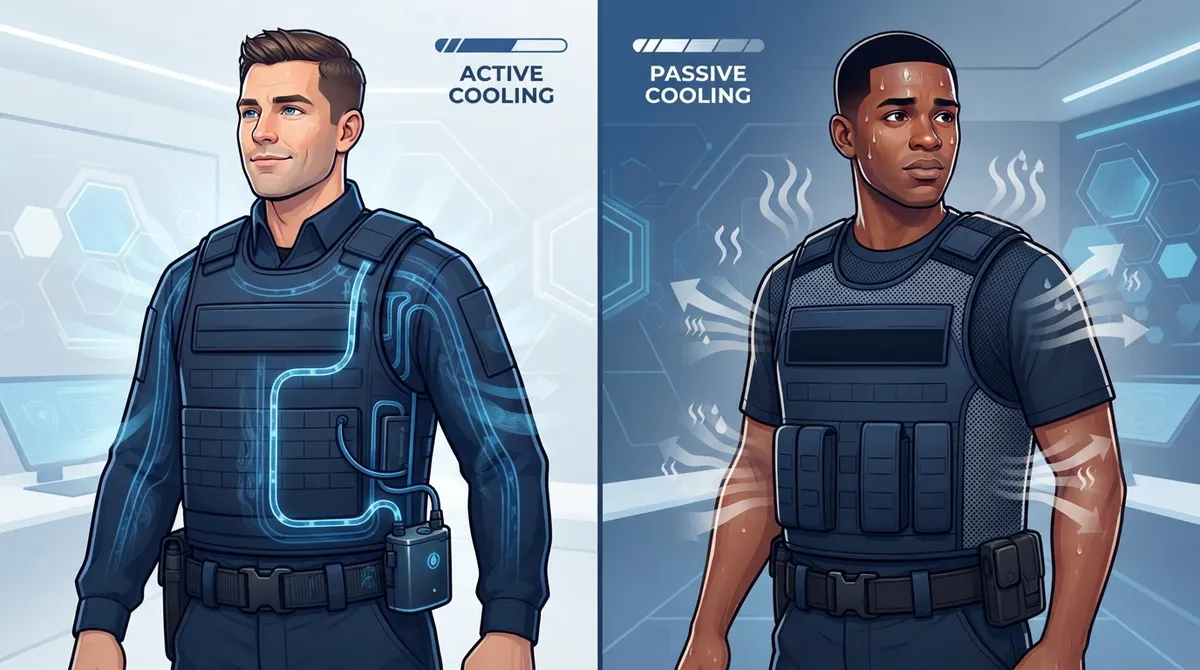
Passive vests work by absorbing your body heat until the material warms up or melts. They’re simple and don’t need batteries, but they only last so long before you need to swap them out or refreeze them. Active vests, on the other hand, keep working as long as the power holds out.
Here’s a fact that might surprise you: a 2021 study comparing cooling concepts found that active cooling vests extracted about 331 Wh/m² of heat over the test period. Compare that to roughly 164 Wh/m² for PCM vests, 146 Wh/m² for hybrid vests, and 113 Wh/m² for evaporative vests. That’s a pretty significant edge for active systems, especially during long, demanding shifts.
Quick Comparison: Cooling Methods at a Glance
| Cooling Type | Category | Typical Duration | Recharge Method |
|---|---|---|---|
| Air-cooled fan vest | Active | 8-32 hours (varies by setting) | USB or battery pack recharge |
| Liquid-cooled vest | Active | Several hours, tied to battery and reservoir | Refill coolant, recharge battery |
| PCM (phase-change) vest | Passive | 1-3 hours typically | Freeze or chill packs again |
| Ice vest | Passive | 1-2 hours typically | Refreeze ice inserts |
| Evaporative vest | Passive | Varies with humidity | Re-wet material |
Want a deeper breakdown of this exact comparison? Check out our full guide on passive vs. active tactical vest ventilation to see which wins for your specific role.
Why Active Cooling Matters More When You’re Wearing Body Armor
Here’s something a lot of folks don’t realize until they’ve lived it. Body armor and other protective gear can trap heat like nobody’s business. That impermeable or semi-permeable material blocks your sweat from evaporating naturally, which is your body’s built-in air conditioning system. When that system gets blocked, your internal temperature climbs fast.
The National Institute for Occupational Safety and Health (NIOSH) actually lists air-cooled garments, water-cooled garments, cooling vests, and wetted overgarments as recognized personal cooling systems for exactly this reason. And the research backs it up. In a NIOSH-reported study of healthcare workers wearing PPE in hot, humid conditions, those using cooling vests had smaller increases in body temperature and heart rate compared to workers without cooling vests.
That’s not just a nice-to-have. For officers, soldiers, and first responders, that kind of relief can mean the difference between staying sharp and starting to feel foggy, irritable, or slow. If you’ve ever wondered how heat affects the minds of law enforcement officers, the answer is more concerning than most people expect.
Who Benefits Most From an Active Cooling Vest?
Let’s talk about you specifically, because different jobs come with different heat challenges.
- Law enforcement officers: Long patrol shifts in a hot cruiser, foot pursuits, and standing at scenes all add up. An active cooling vest under your vest carrier helps you stay alert from roll call to end of watch.
- Military personnel: Deployed troops often work in extreme heat while wearing heavy tactical armor. Active cooling can reduce physiological strain during extended missions.
- Security professionals: Standing post for hours in various climates gets old fast. A quiet, lightweight fan system offers relief without drawing attention.
- Tactical and SWAT teams: High-intensity operations demand peak performance, and overheating is the enemy of quick decision-making.
- Emergency response personnel: Firefighters and hazmat teams already deal with extreme heat from their environment. Adding trapped body heat on top of that is a recipe for exhaustion.
No matter which group you fall into, the goal is the same: stay cooler, stay focused, and finish your shift feeling like a human being instead of a wrung-out sponge.
How BluHalo and BluFano Deliver Active Cooling Where It Counts
We’d be doing you a disservice if we didn’t mention the two products we’re proudest of. The BluHalo ventilation vest was actually created by a Chicago police officer who got tired of sweating through his shifts. It weighs under 7 ounces, sits flat when deflated, and lifts your vest up to about 1.5 inches off your body when inflated. That air gap makes a real difference, letting fresh air circulate where it’s needed most.
You attach it with Velcro to a clean vest, inflate it on demand with a small pump, and deflate it with the push of a button. It’s built from double-layer, high-strength polyethylene, so it can handle daily wear without falling apart. Officers who’ve used it during 12-hour shifts in 95-degree heat describe it as a genuine comfort upgrade.
If you want something with continuous, powered airflow, BluFano is our answer. This self-contained active airflow unit slides under any style of body armor thanks to its patented air-redirect spout. It runs 8 to 32 hours depending on your fan setting, thanks to a built-in 10,000mAh power bank that doubles as a phone charger. It even has a forward-facing light for low-light situations. Users say it noticeably reduces sweat and helps them stay focused during long, hot shifts.
Curious how these two compare? We break it all down in BluFano vs. BluHalo: Which Vest Cooling System Is Better? Many customers actually bundle both together for maximum cooling performance, and you can browse everything available in our shop.
Choosing the Right Active Cooling Vest: What to Look For
Ready to pick your cooling solution? Here’s a simple step-by-step approach to help you choose wisely.
- Identify your work environment. Dry heat and humid heat behave differently, and airflow performs better in drier conditions.
- Check compatibility with your gear. Make sure the vest fits comfortably under your specific body armor or PPE without restricting movement.
- Consider battery runtime. If you work 12-hour shifts, look for a system that can last the whole time or recharge quickly.
- Think about weight and bulk. Heavier liquid-cooled systems may not suit highly mobile roles like patrol or tactical response.
- Review maintenance needs. Air-cooled systems are typically easier to clean and maintain than liquid-cooled setups.
- Read real reviews. Check out feedback from people who actually wear the gear daily, like our customer reviews page.
Fit matters more than people expect. A cooling vest that bunches up or shifts around can actually make you less comfortable, not more. For a deeper dive into getting this right, check out our guide on how to choose the right body armor ventilation vest.
Active Cooling Isn’t a Silver Bullet, and That’s Okay
We want to be honest with you here. An active cooling vest is a fantastic tool, but it’s not a replacement for a full heat-safety plan. The OSHA Heat Stress Guide recommends drinking small amounts of cool water frequently, gradually acclimatizing to heat over several days, and taking scheduled rest breaks in shaded or air-conditioned areas.
OSHA also notes that daily body-water loss generally shouldn’t exceed 1.5% of your total body weight, and a heart rate above 110 beats per minute at the start of a rest period is a signal to shorten your next work period. Pair your cooling vest with smart hydration habits and proper rest, and you’ll be in much better shape all shift long.
It’s also worth noting that cooling performance depends on your setup. A vest that performs beautifully in dry desert heat may offer less benefit in thick, humid air. That’s why it helps to test your gear in the actual conditions you’ll be working in, alongside the same body armor or body armor standards you rely on for protection.
Hybrid Systems: The Best of Both Worlds?
Some newer designs combine fans with phase-change material inserts, creating a hybrid approach. The fan supports evaporation and convective cooling, while the PCM provides steady conductive relief. It sounds great on paper, but there’s a catch worth knowing.
Introducing warm ambient air too early can actually shorten how long the PCM stays effective, especially in hot, dry climates. That’s why understanding your specific environment matters so much when choosing between a pure active system and a hybrid one. For more on this topic, our article on ventilation vs. phase change cooling vests walks through the tradeoffs in detail.
Final Thoughts: Making the Switch to Active Cooling
Look, nobody signed up for a job that involves feeling like you’re melting inside your own gear. Whether you’re patrolling the streets, standing guard, deploying overseas, or responding to emergencies, staying cool isn’t just about comfort. It’s about staying sharp, staying safe, and finishing your shift feeling like yourself.
An active cooling vest, whether it’s an air-cooled system like BluHalo, a powered airflow unit like BluFano, or a combination of both, gives you a real edge against heat that passive solutions simply can’t match over long shifts. We built these products because we’ve lived the problem, and we genuinely want you to experience the relief that comes with proper ventilation.
Ready to stop dreading hot shifts? Reach out to our team today and let’s find the cooling solution that fits your work, your gear, and your life. You’ve got a demanding job. Your cooling system shouldn’t add to the struggle.
FAQs
Q: What is an active cooling vest and how is it different from a passive cooling vest?
A: An active cooling vest uses powered airflow or circulating liquid to pull heat away from your body, while passive vests rely on ice packs or phase-change material that simply absorbs heat until it warms up. Active systems, like fan-driven vests, keep working as long as the battery lasts, giving you more consistent relief during long shifts. Think of active cooling as your personal breeze machine versus passive cooling as a slowly melting ice pack.
Q: How does a ventilation vest with built-in fans cool the wearer?
A: A fan-powered ventilation vest pushes fresh air through channels beneath your body armor, helping sweat evaporate and carrying trapped heat away from your skin. This constant airflow mimics a gentle breeze right where you need it most. Products like BluFano use a patented air-redirect spout to make sure that airflow actually reaches your torso instead of just blowing around the edges.
Q: Are active cooling vests effective in hot and humid environments?
A: Active cooling vests still help in humid conditions, but their performance can be less dramatic than in dry heat since humidity slows sweat evaporation. That said, moving air is still better than stagnant air trapped under armor, so you’ll generally feel cooler with one than without. It’s always smart to test your gear in your actual working climate to see how it performs for you.
Q: How long does an active cooling vest battery last?
A: It really depends on the model and fan setting you choose. Our BluFano system, for example, runs anywhere from 8 to 32 hours on a single charge thanks to its built-in 10,000mAh power bank. Lighter systems like BluHalo use a simple pump to inflate on demand, so there’s no battery drain to worry about at all.
Q: Can an active cooling vest be worn under fire-resistant clothing or other PPE?
A: Many active cooling vests are designed specifically to fit under body armor and other protective gear without interfering with your safety equipment. Just make sure the model you choose is low-profile enough to avoid restricting movement or compromising your PPE’s fit. We always recommend checking product specs and testing the fit with your specific gear before your first full shift.