Key Takeaways
-
Phase change cooling vests provide 2-4 hours of cooling through conduction as PCM material melts, but require access to a freezer to recharge—making them impractical for mobile duty or long shifts without downtime.
-
PCM vests are heavier than airflow alternatives and lose effectiveness over time, leaving users with no cooling by hour 5 of a 12-hour shift, unlike fan-based systems that deliver 8-32 hours of continuous cooling.
-
Phase change vests work best for static, indoor work in hot humid conditions where sweat can’t evaporate (construction, warehouses, oil/gas), not for patrol officers or field personnel who need all-day cooling.
-
PCM vests cost $200-$400 per unit with recurring recharge needs, while lightweight airflow vests like BluHalo cost significantly less and require only USB charging or manual inflation without freezer access.
-
Hybrid systems combining PCM packs with ventilation fans show promise in research studies for reducing heat stress, suggesting the future of professional cooling gear may blend both conduction and airflow technologies.
-
Professionals switching to active airflow systems cite consistency and convenience as key factors—continuous cooling eliminates the need to plan shifts around freezer availability and recharge cycles.
If you wear body armor for a living, you already know the struggle. Heat builds up fast, sweat soaks through your uniform, and by hour six your focus starts to slip. Phase change cooling vests have become a popular fix for this exact problem, and today we’re breaking down everything you need to know about them. Grab a cold drink, get comfortable, and let’s talk about staying cool on the job.
Whether you’re a patrol officer sweating through a summer shift, a soldier operating in brutal heat, or a first responder suited up in heavy gear, this guide is for you. We’ll walk through how phase change cooling vests work, where they shine, where they fall short, and how they stack up against airflow-based options like the BluHalo ventilation vest. By the end, you’ll know exactly which cooling approach fits your job best.
1. Understanding What Phase Change Cooling Vests Actually Do
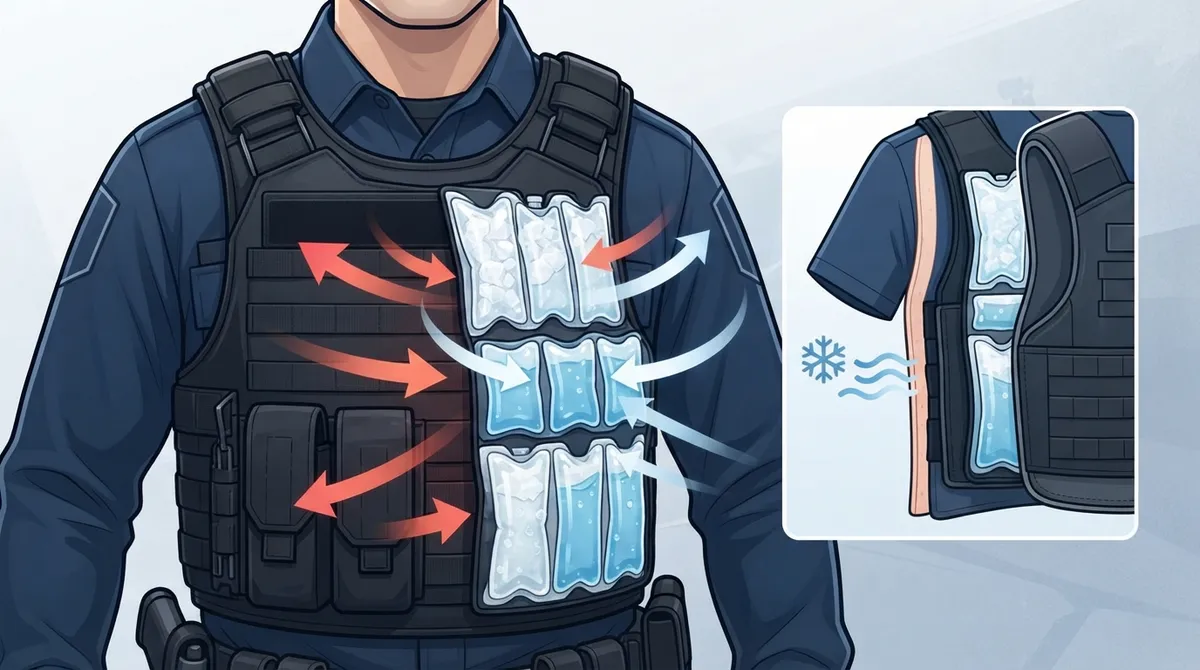
Phase change cooling vests use special packs filled with phase change material, or PCM. This material absorbs your body heat as it changes from a solid to a liquid. Think of it like an ice pack, but engineered to melt at a specific temperature instead of just plain freezing water.
These vests are popular in construction, warehouse work, and oil and gas jobs where heat stress is a daily risk. They’re also used by some tactical and emergency teams looking for a non-powered way to fight off overheating. The science here is simple: as the PCM melts, it pulls heat away from your skin through direct contact.
2. How PCM Packs Compare to Airflow-Based Cooling
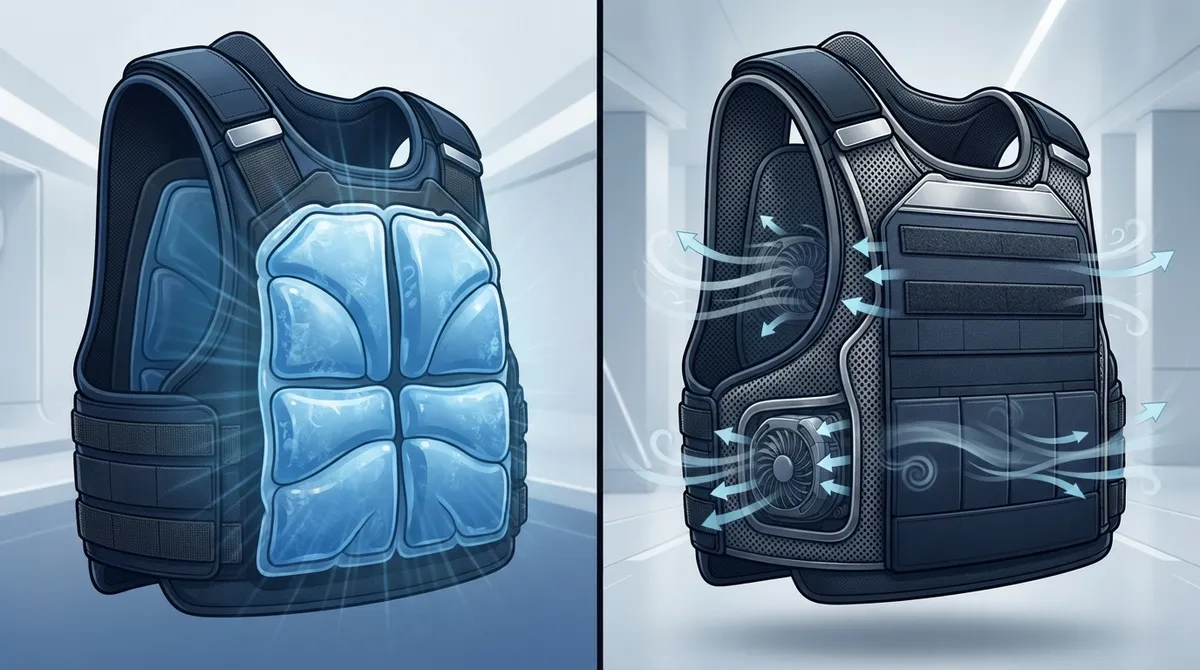
This is where things get interesting for anyone wearing body armor. Phase change vests cool through conduction, meaning the cold pack touches your body and pulls heat out directly. Airflow vests, like the BluHalo or Blufano fan system, work differently. They move fresh air under your armor to carry heat and moisture away.
Both methods have their place. But if you want a deeper breakdown of which style wins for tactical use, check out this comparison of ventilation versus phase change cooling vests. It’s a great read if you’re still on the fence.
| Cooling Type | How It Works | Typical Duration | Best For |
|---|---|---|---|
| Phase Change (PCM) | Conduction via melting packs | 2-4 hours | Hot, humid, static-position work |
| Airflow/Fan (BluHalo, Blufano) | Convection via moving air | 8-32 hours (Blufano) | All-day mobile duty, long shifts |
| Evaporative | Water evaporation cooling | Varies with humidity | Dry climates |
3. The Science Behind the Melt
Academic researchers classify phase change vests as one of several personal cooling technologies, alongside air-cooled, liquid-cooled, evaporative, and hybrid systems. According to research summarized by industrial cooling vest studies, PCM vests activate at a set temperature and stay effective until the material fully melts.
Studies also note that PCM vests can be especially helpful in hot, humid conditions or under thick protective clothing. In these settings, sweat can’t evaporate well, so a vest that cools through direct contact makes more sense than one relying purely on airflow.
4. How Long Does a Phase Change Vest Actually Stay Cold?
This is probably the most common question we hear. Commercial product listings, like the Chill-Its 6235 Standard Phase Change Cooling Vest, claim about 64°F (18°C) cooling for up to 4 hours when the packs are properly activated. Retail guidance generally puts the range at 2 to 4 hours, depending on your workload and the outside temperature.
Here’s the catch: once those packs warm up, you need to refreeze or rechill them before they work again. That means you’ll need a cooler, a freezer, or an ice source nearby. For officers on patrol or soldiers in the field, that’s not always practical.
5. Where Phase Change Vests Fall Short for Duty Gear
Let’s be honest about the limitations here. Phase change vests are heavier than airflow vests because they carry solid or gel packs. They also lose effectiveness over time, so by hour five of a twelve-hour shift, you might be back to square one with no cooling left.
There’s also the recharge problem. If you’re a patrol officer or security guard working a long shift, you likely don’t have access to a freezer mid-shift. Compare this to the Blufano fan system, which runs on a built-in 10,000mAh power bank and delivers adjustable airflow for 8 to 32 hours depending on the fan setting. No ice, no freezer, just consistent airflow all shift long.
6. Industries That Rely on Phase Change Cooling
Phase change vests are common in several industries where heat stress is a real concern. Here’s a quick rundown of where you’ll typically see them used:
- Construction sites with long outdoor exposure
- Warehouse and assembly line work in poorly ventilated buildings
- Oil and gas operations in remote, hot locations
- Some tactical teams during static observation posts
- Manufacturing plants with high ambient heat
A field study published on PubMed looked at construction workers in Hong Kong using a hybrid vest that combined PCM packs with ventilation fans. Researchers found this combo approach helped reduce heat stress during rest breaks, which tells us hybrid solutions might be the future for tough job sites.
7. Step-by-Step: How to Use a Phase Change Cooling Vest Properly
If you’re considering a PCM vest, here’s how the process typically works:
- Freeze or chill the PCM packs according to the manufacturer’s instructions, usually for several hours.
- Insert the chilled packs into the vest’s designated pockets or sleeves.
- Put the vest on under or over your body armor, depending on the design.
- Monitor how long the packs stay effective, typically 2 to 4 hours.
- Swap in fresh packs or recharge the used ones once cooling fades.
This cycle works fine for a job site with a break room and a freezer. It’s tougher for officers, security teams, or military personnel who are constantly moving and can’t always plan around a recharge schedule.
8. Comparing Costs: Phase Change vs. Airflow Ventilation Vests
Market data suggests PCM vests typically run between $200 and $400 per unit, though prices vary by brand and design. That’s a significant investment, especially if you need extra packs for longer shifts.
| Feature | Phase Change Vest | BluHalo Ventilation Vest | Blufano Fan System |
|---|---|---|---|
| Price Range | $200-$400 | $60 | Premium fan system |
| Weight | Heavier (solid/gel packs) | Under 7 ounces | Lightweight, self-contained |
| Power Source | None (recharge via freezing) | Manual pump | 10,000mAh power bank |
| Duration | 2-4 hours | All-shift cooling gap | 8-32 hours |
| Recharge Method | Freezer or ice | Reinflate anytime | USB charging |
For officers who want a budget-friendly, lightweight option, the BluHalo sits flat when deflated and lifts your vest up to 1.5 inches off your body when inflated. That air gap alone can make a huge difference during a hot patrol shift, and it costs a fraction of what most PCM vest systems run.
9. Why Many Professionals Are Switching to Active Airflow Systems
Here’s the bottom line for a lot of officers, soldiers, and security professionals: consistency matters. Phase change vests offer strong cooling for a short window, but that cooling fades and requires downtime to recharge. Active airflow systems keep working as long as you need them.
Officers who’ve used the BluHalo ventilation vest often describe major comfort improvements during long, hot shifts, including 12-hour days in 95-degree weather. Built from double-layer, high-tensile polyethylene, it attaches to a clean vest with Velcro and inflates on demand using a small hand pump. When you’re done, one button deflates it flat again.
For those who want continuous, hands-free airflow, Blufano takes things further with a patented air-redirect spout and adjustable fan settings lasting up to 32 hours. It even includes a forward-facing light for low-light situations, which is a nice bonus for night shift workers. Many customers choose to bundle both products together for maximum cooling coverage. If you want to see how real users describe the difference, our customer reviews page has plenty of honest feedback from law enforcement and security professionals.
Which Cooling Method Should You Choose?
Honestly, it depends on your job. If you work a fixed shift near a break room with a freezer, a phase change vest might work well for you. If you’re constantly moving, patrolling, or operating in the field for hours at a time, an airflow-based system tends to hold up better over a full shift.
Following heat safety guidelines, like those outlined in the OSHA Heat Stress Guide, is important no matter which cooling method you choose. Staying hydrated, taking breaks, and using the right gear all work together to keep you safe. It’s also worth reviewing body armor standards to make sure any cooling accessory you add doesn’t interfere with your protective gear’s performance.
We also recommend browsing our guide on how to prevent heat stress while wearing body armor for more practical tips beyond just vest technology. Combining smart habits with the right gear is the real secret to staying comfortable all shift long.
Final Thoughts on Staying Cool Under Pressure
Nobody should have to choose between safety and comfort. Whether you lean toward phase change packs or active airflow systems, the goal is the same: staying focused, alert, and cool no matter how hot it gets. We’ve seen firsthand how the right gear can turn a miserable shift into a manageable one.
If you’re ready to experience lightweight, on-demand cooling without the hassle of freezing packs, take a look at our full lineup in the shop. And if you have questions about which system fits your specific role, whether you’re in law enforcement, military, or security, our team is happy to help you find the perfect fit. Reach out to our team today and let’s get you set up for a cooler, more comfortable shift.
FAQs
Q: What is a phase change cooling vest?
A: It’s a vest with special packs that absorb your body heat as the material inside melts from solid to liquid. Think of it as a smarter, longer-lasting ice pack built right into your gear. They’re popular in construction and industrial jobs where heat stress is a real daily challenge.
Q: How long does a phase change cooling vest stay cold?
A: Most PCM vests stay effective for about 2 to 4 hours, depending on your activity level and the surrounding temperature. Some products claim up to 4 hours at around 64°F, but real-world results vary quite a bit. Once the packs warm up, you’ll need to refreeze them before they work again.
Q: Are phase change cooling vests better than airflow vests like BluHalo?
A: It really depends on your job and schedule. Phase change vests are great for static work near a freezer, but airflow vests like BluHalo keep working all shift without needing to be recharged. For officers and soldiers on the move, airflow tends to be the more practical choice.
Q: Can phase change cooling vests be worn under body armor or PPE?
A: Yes, many are designed to fit under protective gear, and they can be especially helpful in humid conditions where sweat doesn’t evaporate well. Just keep in mind they add extra weight and bulk compared to lightweight airflow options. Always check compatibility with your specific armor setup first.
Q: How do you recharge a phase change cooling vest?
A: You’ll need to place the used packs back in a freezer or cooler until they solidify again, which can take several hours. This works well if you have access to a break room or vehicle cooler during your shift. If that’s not realistic for your job, a rechargeable fan system might suit you better.