Key Takeaways
-
Heat stress under body armor causes fatigue, poor decision-making, and slower reaction times during critical moments; active cooling solutions directly address this safety and performance issue.
-
Air-powered/active cooling vests outperform passive methods by providing 8-32 hours of continuous cooling versus 2-8 hours for evaporative and PCM vests, making them ideal for long shifts.
-
Choose cooling vest type based on climate and shift length: evaporative for dry conditions, PCM for humidity, and active airflow for extreme heat or shifts exceeding 10-12 hours.
-
BluHalo and Blufano are designed specifically for professionals wearing body armor, weighing under 7 ounces and fitting under protective gear without compromising armor coverage or safety standards.
-
PCM vests can recharge in as little as 10 minutes in ice water, providing quick relief during breaks, while active systems offer on-demand control with adjustable settings for different activity levels.
-
Pre-cooling PCM inserts overnight and storing vests flat and dry after each shift are simple maintenance habits that maximize cooling performance across multiple deployments.
Picture this: it’s 95 degrees outside, you’re twelve hours into your shift, and your body armor feels like a wool blanket wrapped around a space heater. If you wear a vest for a living, you already know this feeling isn’t just uncomfortable. It can affect your focus, your energy, and even your safety. That’s exactly why finding the right cooling vest for hot weather matters so much for law enforcement, military personnel, security teams, and first responders alike.
The good news? You don’t have to just tough it out anymore. Cooling technology has come a long way, and there’s a solution for almost every job, climate, and body armor setup out there. In this friendly guide, we’ll walk through the different types of cooling vests, how they actually work, and how to choose one that fits your specific needs. Grab a cold drink (you deserve it) and let’s get into it.

Why Heat Under Body Armor Is Such a Big Deal
Body armor is designed to protect you, but that protection comes with a tradeoff. It traps heat and moisture right against your skin, especially in the torso area where your body works hardest to cool itself. When sweat can’t evaporate properly, your internal temperature climbs faster than you’d expect.
This isn’t just about feeling sticky and uncomfortable. According to the OSHA Heat Stress Guide, heat stress can cause fatigue, poor decision-making, and serious health risks like heat exhaustion. For officers and responders, that can mean slower reaction times during the moments that matter most. If you’ve ever felt foggy-headed halfway through a hot shift, you already know exactly what we’re talking about.
Who Feels This the Most
Some professions deal with this heat problem more than others. Here’s a quick look at who benefits most from a good cooling vest for hot weather:
- Patrol officers wearing body armor for 8-12 hour shifts
- Military personnel operating in high-heat deployment zones
- Security professionals standing post in direct sun for hours
- Tactical and SWAT teams carrying heavy gear during intense operations
- Firefighters and hazmat teams layered in thick protective gear
If you fall into any of these groups, you already understand why staying cool isn’t a luxury. It’s a performance issue and a safety issue rolled into one.
The Main Types of Cooling Vests for Hot Weather
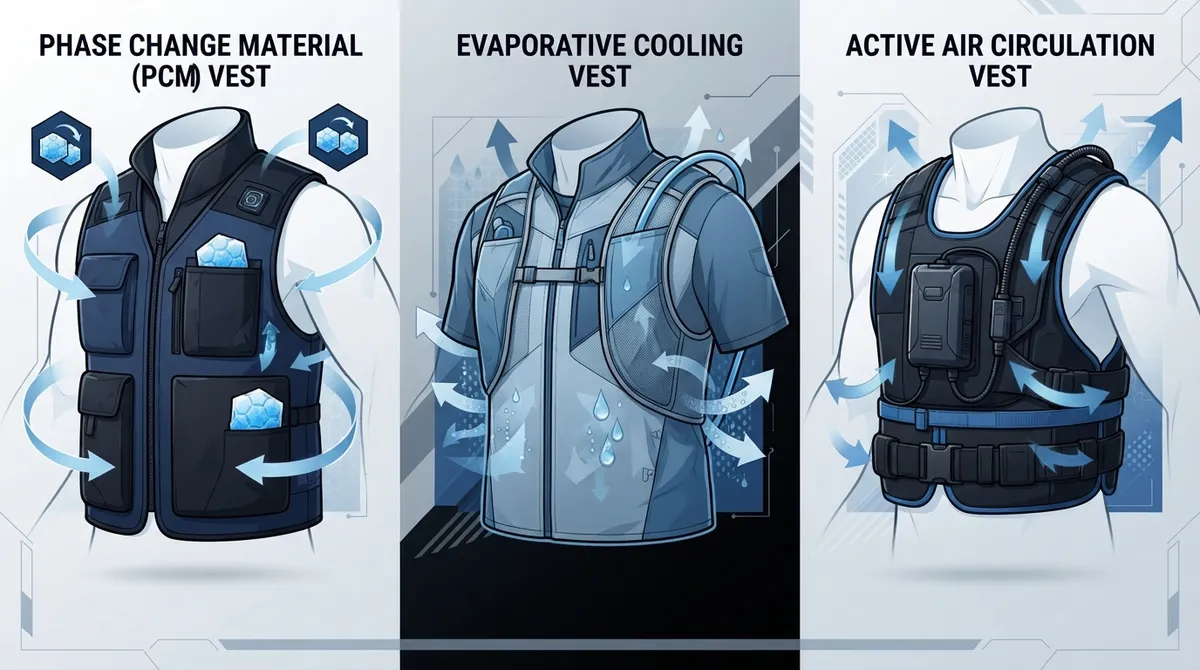
Not all cooling vests work the same way. Depending on your job and environment, one type might serve you far better than another. Let’s break down the three main categories you’ll come across.
1. Evaporative Cooling Vests
These vests use water to create a cooling effect through evaporation. You soak the vest, wring it out, and the moisture pulls heat away as it dries. They work best in dry or well-ventilated conditions, since evaporation slows down a lot in humid air.
Evaporative vests are commonly marketed to last about 4 to 8 hours per activation, depending on conditions. They’re lightweight and simple, but they can lose effectiveness fast in muggy climates or under tightly sealed body armor where air can’t circulate.
2. Phase Change Material (PCM) Cooling Vests
PCM vests use special inserts that you chill in a fridge, freezer, or ice water before wearing. These inserts absorb body heat at a steady, predictable temperature, which makes them a solid option in humid conditions or tight spaces where airflow is limited.
PCM vests are commonly marketed to maintain consistent cooling for about 2 to 4 hours before needing a recharge. Some products even recharge in as little as 10 minutes when placed in ice water, which is handy for quick breaks between calls or patrols.
3. Air-Powered and Active Cooling Vests
This is where things get exciting for anyone who works long, unpredictable hours. Air-powered vests use small fans or battery-driven systems to circulate fresh air underneath your gear continuously. Instead of relying on ice or water, they create ongoing airflow that pushes heat and moisture away from your skin.
Some industrial air-cooled systems are marketed to reduce temperature at the wearer interface by about 20°F. This is exactly the kind of active approach that BluHalo and Blufano are built around, giving you cooling relief that lasts your whole shift instead of just a few hours.
Comparing Cooling Vest Types Side by Side
| Vest Type | Best For | Typical Duration | Works Well Under Armor |
|---|---|---|---|
| Evaporative | Dry, ventilated climates | 4-8 hours | Limited |
| Phase Change Material (PCM) | Humid or enclosed conditions | 2-4 hours | Moderate |
| Air-Powered / Active Fan | Extreme heat, long shifts | 8-32 hours (adjustable) | Excellent |
As you can see, air-powered systems tend to offer the longest runtime and the best performance under tight-fitting protective gear. That’s a big reason why so many officers and responders are switching to fan-driven ventilation instead of sticking with older evaporative or ice-based methods.
How to Choose the Right Cooling Vest for Your Job
Picking the right vest isn’t a one-size-fits-all decision. Here’s a simple step-by-step process to help you land on the best choice for your situation.
- Think about your climate. If you work in dry heat, evaporative options can work fine. If you deal with humidity, PCM or active airflow will serve you much better.
- Consider your shift length. Short shifts might be fine with PCM inserts. Long 10-12 hour shifts usually call for an active air system that doesn’t run out of steam.
- Check compatibility with your armor. Some vests are built to slide under any style of body armor, while others need extra space or a looser fit.
- Factor in weight and bulk. You don’t want to add heavy gear on top of already-heavy armor. Look for lightweight options that stay low-profile.
- Decide if you need on-demand control. Some situations call for instant cooling you can turn on and off, especially during high-intensity operations.
If you want a deeper breakdown of how to match ventilation gear to your specific role, this guide on choosing the right body armor ventilation vest walks through even more details.
Why More Professionals Are Choosing Active Airflow Systems
Passive cooling methods like evaporative pads and ice packs have their place, but they all share one common weakness: they run out. Once the water dries up or the PCM insert warms up, you’re back to feeling the heat build again. That’s a real problem when you’re twelve hours into a shift with no way to recharge your gear.
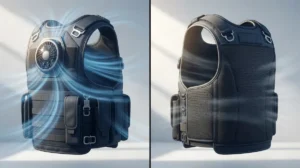
This is exactly why BluHalo was created. Designed by a Chicago police officer who got tired of overheating and sweating through long shifts, BluHalo is a lightweight ventilation vest that weighs under 7 ounces. It lies flat and unobtrusive when deflated, then inflates on demand to lift your body armor up to about 1.5 inches off your skin, creating an instant cooling air gap.
You attach it to a clean vest with Velcro, inflate it with a small pump whenever you need relief, and deflate it with the push of a button when you don’t. Officers have described major comfort improvements during brutal conditions, like 12-hour shifts in 95-degree heat. It’s built from double-layer, high-strength polyethylene, so it’s made to handle daily wear without falling apart.
Blufano: Continuous Airflow for All-Day Relief
If you want cooling that never really stops, Blufano takes things a step further. It’s a self-contained, active airflow system with a patented air-redirect spout that slides under any style of body armor. You can secure it with an optional strap, and it delivers adjustable fan-driven airflow for 8 to 32 hours depending on your chosen setting.
Blufano also includes a built-in 10,000mAh power bank, so it doubles as a charger for your phone or other USB devices during long shifts. It even has a forward-facing light for hands-free visibility in low-light situations. Users have reported faster cooling, less sweating, and better focus during hot days, especially when paired with a quick blast of vehicle AC before heading back out.
Whether you choose BluHalo, Blufano, or bundle both together for maximum comfort, you’re getting technology built specifically for people who wear protective gear every single day. You can browse the full lineup and pricing details in the shop anytime.
Cooling Vest Features Worth Comparing
| Feature | BluHalo | Blufano |
|---|---|---|
| Weight | Under 7 oz | Compact, self-contained unit |
| Cooling Method | Inflatable air gap | Continuous fan-driven airflow |
| Runtime | On-demand, instant inflate/deflate | 8-32 hours adjustable |
| Extra Features | Low-profile, Velcro attachment | 10,000mAh power bank, built-in light |
Both products are designed to fit under body armor without adding bulk, which matters a lot when you’re already carrying duty belts, radios, and other equipment. For more on how these two compare directly, check out this breakdown of Blufano versus BluHalo.
Tips for Getting the Most Out of Your Cooling Vest
Once you’ve picked your cooling vest, a few small habits can help you get even better performance out of it. Here are some friendly reminders that make a real difference:
- Attach your vest to clean, dry body armor for the best grip and airflow
- Pre-cool PCM inserts the night before a hot shift so they’re ready to go
- Recharge fan-based systems overnight so you start every shift at full battery
- Adjust airflow settings based on activity level, higher for intense work, lower for standing posts
- Store your vest flat and dry after each shift to extend its lifespan
Small habits like these keep your gear working at its best, shift after shift. If you ever run into fit or attachment questions, our team is happy to help. Feel free to reach out to our support team anytime you need guidance.
Understanding Body Armor Standards and Comfort
It’s worth remembering that ventilation gear works alongside your protective equipment, not instead of it. The Body Armor Standards set by national research bodies ensure your protective vest meets safety requirements. Cooling vests like BluHalo and Blufano are designed to complement that protection, not replace or interfere with it, giving you comfort without sacrificing safety.
Many officers worry that adding a ventilation layer might shift their armor or create gaps in protection. The good news is that products built specifically for this purpose, like the ones covered in our guide on best vest cooling systems for beating the heat, are engineered to fit securely without compromising your armor’s coverage.
Real Talk: Is a Cooling Vest Worth It?
If you’ve made it this far, you’re probably already dealing with the discomfort of overheating under your gear. So let’s be honest for a second: yes, a cooling vest for hot weather is absolutely worth it. Think about how much better your focus, mood, and energy would be if you weren’t fighting heat exhaustion every single shift.
Officers who’ve made the switch consistently describe feeling more alert, less drained, and genuinely more comfortable, even during brutal 95-degree days. That kind of relief adds up over weeks, months, and years of duty. You deserve gear that works as hard as you do.
Ready to stop sweating through your shifts? Explore our full lineup of cooling solutions and get in touch with our team to find the perfect fit for your needs. You’ve got a tough job. Let’s make staying cool the easy part.
FAQs
Q: How does a cooling vest work in hot weather?
A: A cooling vest works by pulling heat away from your body, either through water evaporation, chilled inserts, or active airflow from a small fan system. Vests like BluHalo create an air gap under your body armor, while Blufano circulates fresh air continuously to keep heat and sweat from building up against your skin.
Q: What is the difference between evaporative and PCM cooling vests?
A: Evaporative vests use water and rely on evaporation to pull heat away, so they work best in dry, ventilated conditions. PCM vests use chilled inserts that absorb heat at a steady temperature, making them a better pick for humid climates or tight spaces where air can’t move freely.
Q: Can you wear a cooling vest under protective clothing or a work uniform?
A: Yes! Cooling vests like BluHalo and Blufano are specifically designed to slide under body armor or protective gear without adding bulk. They’re built to be low-profile so they fit comfortably under your existing uniform or vest carrier.
Q: How long does a cooling vest stay cool?
A: It depends on the type. Evaporative vests typically last 4 to 8 hours per activation, PCM vests last about 2 to 4 hours before needing a recharge, and active airflow systems like Blufano can run anywhere from 8 to 32 hours depending on your fan setting.
Q: Which cooling vest is best for humid conditions?
A: For humid environments, active airflow systems or PCM vests tend to perform much better than evaporative options, since evaporation slows down significantly in moist air. Fan-driven systems like Blufano are especially effective because they continuously move air instead of relying on evaporation.