Key Takeaways
-
Create an air gap between body armor and skin using ventilation vests like BluHalo (up to 1.5 inches) to let trapped heat escape instead of building up against your torso.
-
Wear moisture-wicking, anti-microbial base layers instead of cotton to pull sweat away from skin and enable faster evaporation during long shifts.
-
Use active fan-powered cooling systems (like Blufano with 8-32 hour battery life) for shifts longer than 4 hours, as passive cooling alone often fails during intense heat or high-activity duty.
-
Match your cooling solution to your specific armor carrier type (concealable, external, plate carrier) to ensure proper fit, coverage, and full effectiveness of the ventilation system.
-
Combine cooling strategies during breaks by using vehicle AC alongside your ventilation system to actively lower core temperature before overheating becomes a safety issue.
-
Invest in quality, professionally-tested products designed for daily duty use rather than cheap alternatives, as poor construction can irritate skin and fail after few shifts.
If you wear body armor on the job, you already know the struggle. Heat builds up fast. Sweat soaks through your uniform. And by hour four of a twelve-hour shift, that vest feels like a sauna strapped to your chest. For security guards, this isn’t just uncomfortable — it’s a real safety concern. Heat stress can slow your reaction time, cloud your judgment, and make a long shift feel nearly impossible.
The good news? Most of the discomfort is avoidable. The bad news? A lot of security professionals are making the same cooling mistakes over and over again. Whether you’re working a summer post in a parking garage or patrolling an outdoor event in July, the right security guard body armor cooling approach makes all the difference. Let’s walk through the ten most common mistakes — and how to fix them for good.
Why Body Armor Cooling Matters So Much
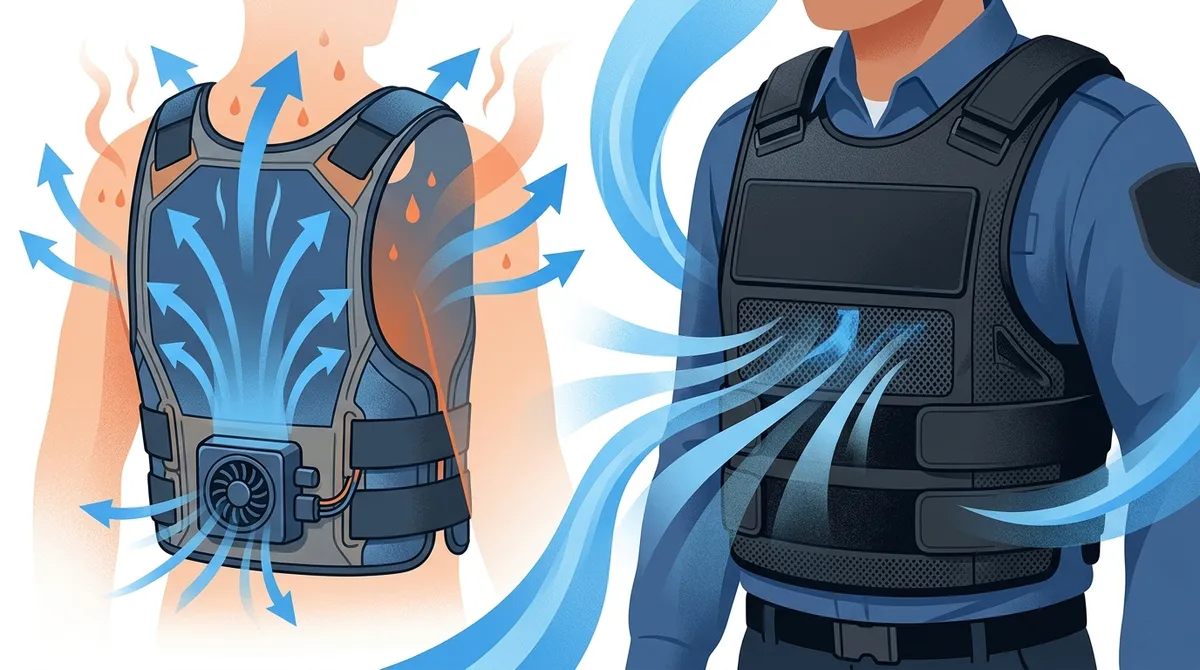
Before we dive into the mistakes, it’s worth understanding what’s actually happening under that vest. Body armor traps heat against your torso because it creates a sealed barrier between your skin and the open air. Sweat has nowhere to go. That moisture sits on your skin, raising your core temperature and making you feel much hotter than you actually are.
According to the OSHA Heat Stress Guide, prolonged heat exposure can lead to heat exhaustion and heat stroke — both of which are serious medical emergencies. For security professionals working long shifts, this risk is very real. A good ventilation system doesn’t just make you more comfortable; it helps keep you safe and alert on the job.
A 2026 market report on tactical body ventilation cooling vests estimated the global market at USD 0.45 billion in 2025 and projected it to reach USD 0.82 billion by 2034. That kind of growth tells you one thing loud and clear: more and more professionals are waking up to the importance of body armor cooling solutions.

Mistake 1: Ignoring Ventilation Altogether
This is the biggest one. Many security guards simply accept being hot as part of the job. They tough it out, drink water, and hope the shift ends before the heat gets unbearable. But ignoring what vest ventilation can actually do for you is leaving real comfort and performance on the table.
Ventilation vests and airflow systems exist specifically to solve this problem. They create space between your body and your armor so heat can escape. Don’t skip this step — it’s the foundation of everything else.

Mistake 2: Choosing the Wrong Base Layer
Your base layer matters more than you might think. Wearing a thick cotton undershirt under your armor is a recipe for disaster in warm weather. Cotton absorbs moisture and holds it against your skin. It doesn’t dry quickly, and it doesn’t help move sweat away from your body.
Instead, look for moisture-wicking, anti-microbial base layers designed for active duty use. These fabrics pull sweat away from your skin and help it evaporate faster. Combined with a good ventilation vest, they can dramatically improve how cool and dry you feel during a long shift. Check out some of the best moisture-wicking vests for body armor comfort to find the right pairing.
Mistake 3: Skipping the Air Gap
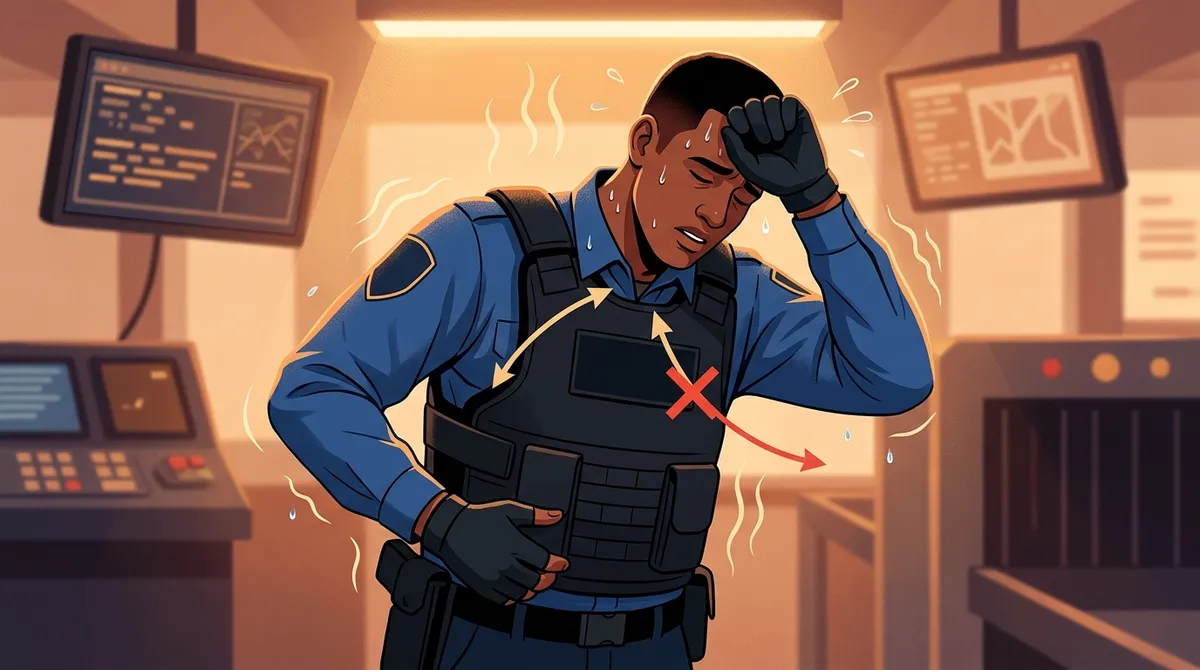
This one is huge. One of the most effective things you can do for security guard body armor cooling is to create physical space between your vest and your body. Without a gap, heat has no way to escape. It just keeps building.
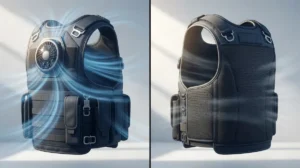
Products like the BluHalo ventilation vest are designed specifically for this. BluHalo was created by a Chicago police officer who got tired of overheating on duty. It weighs under 7 ounces, sits flat when deflated, and can lift your vest up to about 1.5 inches off your body when inflated. That air gap is everything. It gives trapped heat somewhere to go.
Mistake 4: Relying Only on Passive Cooling
Passive cooling — like mesh fabrics and spacer materials — is a great starting point. But on really hot days or during high-activity shifts, passive cooling alone often isn’t enough. You need airflow, not just space.
That’s where active cooling systems come in. Blufano is a fan-powered body armor ventilation system with a patented air-redirect spout that slides under any body armor style. It delivers adjustable fan-driven airflow for 8 to 32 hours depending on your setting, and it even includes a built-in 10,000mAh power bank that can charge USB devices. For security guards on long shifts, that kind of sustained cooling is a game-changer. Learn more about passive vs. active security personnel ventilation to understand which approach fits your needs best.
Mistake 5: Buying Gear That Doesn’t Fit Your Armor Style
Not all ventilation products work with every type of body armor. Some are designed for external carriers. Others are built for concealable vests worn under a uniform shirt. Using the wrong product for your armor type means you won’t get the full benefit — and you might actually make fit or mobility worse.
Before you buy, check whether the ventilation vest or cooling system is compatible with your specific carrier style. Good products are designed to work with both external and concealable armor without reducing coverage or concealability. Here’s a helpful guide on how to choose the right body armor ventilation vest in 2026.
| Armor Type | Best Cooling Approach | Key Consideration |
|---|---|---|
| Concealable Carrier | Low-profile ventilation vest | Must not affect concealment |
| External Carrier | Active fan system or 3D mesh liner | More space for larger units |
| Plate Carrier | Airflow channel system or spacer fabric | Weight distribution matters |
| Tactical/SWAT Vest | Active cooling with high airflow output | Durability under high activity |
Mistake 6: Forgetting About Moisture Management
Cooling and moisture management go hand in hand. Even if you have good airflow, sweat pooling against your skin will still make you feel hot and sticky. The best security guard body armor cooling systems address both heat and moisture together.
Look for ventilation solutions that include anti-microbial materials and moisture-wicking properties. These features keep sweat moving away from your skin and reduce odor buildup during long shifts. Your body — and your coworkers — will thank you. For a deeper dive, read about how sweat management works under body armor.
Mistake 7: Not Considering Shift Length
A cooling solution that works fine for a four-hour shift might fall completely flat during a twelve-hour day. When choosing your gear, always think about the longest shift you typically work. This is especially important for active cooling systems — you need to know the battery life and whether it matches your schedule.
Blufano offers 8 to 32 hours of fan-driven airflow depending on the setting, which covers even the longest duty shifts. That kind of range gives you real flexibility. You can run it on low during mild weather and crank it up when things get hot. That’s smart design for real-world use.
| Cooling Method | Typical Duration | Best For |
|---|---|---|
| Passive mesh vest | Unlimited (no power needed) | Mild weather, moderate activity |
| Inflatable air gap vest | Until deflated | On-demand cooling, any shift length |
| Fan-powered system (low setting) | Up to 32 hours | Long shifts, hot climates |
| Fan-powered system (high setting) | 8 hours | Intense heat, high-activity duty |
Mistake 8: Overlooking Armor Fit After Adding a Vest
Adding a ventilation layer under your body armor can sometimes affect the fit of your carrier. If your armor rides up, shifts to one side, or sits too loose, it’s no longer protecting you as designed. This is a safety issue, not just a comfort one.
Always test your armor fit after adding any ventilation vest or cooling layer. Make sure your coverage areas are still correct and your armor moves naturally with your body. Low-profile ventilation products are built to minimize this risk, but it’s always worth double-checking. Review the Body Armor Standards from the National Institute of Justice to understand what proper fit looks like.
You can also explore body armor fit and airflow tips for all-day comfort to make sure you’re set up correctly from the start.
Mistake 9: Not Using Cooling Strategically During Breaks
A lot of security guards put on their gear in the morning and don’t think about cooling strategy until they’re already overheated. Being proactive is so much more effective. Use your breaks to actively cool down — step into air conditioning, use a vehicle’s AC to speed up cooling, and take advantage of any airflow system features designed for quick cool-down.
Blufano users have reported using the system alongside vehicle AC for faster cooling during breaks. That kind of smart, layered approach to security guard body armor cooling keeps your core temperature lower throughout the entire shift — not just after you’ve already gotten too hot. You might also enjoy reading about how to get effective body armor heat relief all shift long.
Mistake 10: Buying Cheap, Unproven Products
When it comes to gear you wear under body armor, quality really matters. A cheap, poorly constructed ventilation vest might fall apart after a few shifts, lose its shape, or fail to provide meaningful airflow. Worse, low-quality materials can irritate your skin or break down under daily duty conditions.
Invest in products that are built for professional use, tested for durability, and backed by real user reviews from law enforcement and security professionals. BluHalo, for example, is constructed from double-layer high-strength, high-tensile polyethylene — materials built to last. And Blufano is engineered for daily duty use with a durable, self-contained design. Just like reliable gear specialists such as Panther Pools know that quality equipment matters in their industry, the same principle holds true for body armor ventilation — you get what you pay for.
Read real reviews from officers and security professionals who wear these products every day. Hearing from people in the same situation as you is the best way to make a confident purchase decision.
A Quick Comparison: Common Cooling Solutions
| Product Type | Airflow Method | Pros | Cons |
|---|---|---|---|
| 3D Mesh Spacer Vest | Passive (natural air) | Lightweight, no power needed | Less effective in still air |
| Inflatable Air Gap Vest (BluHalo) | Physical air gap | On-demand, very low profile | Requires inflation |
| Fan-Powered System (Blufano) | Active fan circulation | Continuous, adjustable cooling | Requires charging |
| Evaporative Cooling Panel | Water evaporation | Works well in dry heat | Less effective in humid climates |
Tips for Choosing the Right Cooling Setup
Not sure where to start? Here’s a simple process to find the right security guard body armor cooling solution for your situation:
- Assess your environment. Are you working indoors or outdoors? In dry heat or high humidity? Your climate matters a lot.
- Consider your shift length. Longer shifts need longer-lasting cooling. Active systems with good battery life are a smart investment.
- Check your armor compatibility. Make sure any ventilation vest or system you choose works with your specific carrier type.
- Think about your activity level. High-activity roles need more aggressive cooling than stationary posts.
- Read professional reviews. Look for feedback from other security guards, officers, or tactical professionals in similar roles.
You can also browse the full ventilation vest shop to explore all available options, or reach out to get personalized guidance on the best setup for your specific needs.
The Difference Good Cooling Makes
Here’s something worth thinking about: security guards who are cooler and more comfortable are more likely to wear their body armor consistently. That compliance piece is huge. When armor feels unbearable, people find reasons to take it off — even when they shouldn’t. Better cooling isn’t just a comfort upgrade; it’s a safety upgrade.
Better cooling also means better focus. When you’re not fighting heat exhaustion, you can pay attention to your surroundings. You’re sharper, more alert, and more effective at your job. That matters whether you’re protecting a corporate campus, a public event, or a retail location. Check out more on why professionals need a body armor ventilation vest to understand the full picture.
Wrapping It All Up
Security guard body armor cooling doesn’t have to be complicated. Avoid these ten common mistakes, choose the right combination of ventilation and moisture management, and invest in quality products built for the demands of real duty shifts. Whether you go with the on-demand air gap of the BluHalo, the sustained fan-driven cooling of Blufano, or a combination of both, you’ll feel the difference from your very first shift.
You work hard to keep others safe. You deserve to stay cool and comfortable while doing it. Don’t let heat get in the way of doing your best work. Get in touch with the BluHalo team to find the right ventilation solution for your body armor setup — your next shift will thank you.
FAQs
Q: What is a body armor cooling vest for security guards?
A: A body armor cooling vest is a ventilation layer worn under or alongside body armor to improve airflow, reduce heat buildup, and manage sweat during long shifts. It creates a gap between your skin and the armor so trapped heat can escape, keeping you more comfortable and alert on the job.
Q: Do ventilation vests really help keep body armor cooler?
A: They absolutely do! Ventilation vests work by creating physical space for air to circulate between your body and your armor, which is the main reason heat gets trapped in the first place. Products like BluHalo can lift your vest up to 1.5 inches off your body, and active systems like Blufano deliver continuous fan-driven airflow for up to 32 hours.
Q: Can a ventilation vest be worn under a concealable body armor carrier?
A: Yes — many ventilation vests are specifically designed with a low-profile construction so they don’t affect concealment, fit, or mobility. Always check that the product you choose is compatible with your specific carrier style before buying.
Q: How do security guards stay cool while wearing body armor on long shifts?
A: The most effective approach combines a good ventilation vest or active fan system with moisture-wicking base layers and smart break-time cooling habits. Using the vehicle’s AC during breaks, staying hydrated, and choosing gear built for daily duty use all add up to a much more comfortable shift.
Q: Are fan-powered body armor cooling systems safe to use with ballistic vests?
A: Yes! Quality fan-powered systems like Blufano are designed specifically for use with ballistic vests and don’t interfere with protective coverage. They’re engineered to sit securely under the carrier without affecting armor fit or ballistic performance — just check product compatibility with your specific vest type.