Key Takeaways
-
Maxx-Dri 4.0 passive system reduces surface temperatures by 23°F using 3D polymer and acceleration channels, making it a cost-effective solution for officers who don't need battery-powered cooling.
-
BluHalo inflatable system creates up to 1.5 inches of air gap on-demand, weighs under 7 ounces, and works with existing armor without modifications—ideal for 12-hour patrol shifts in 90°F+ heat.
-
BluFano active fan system delivers 8-32 hours of battery life with adjustable fan speed and includes a 10,000mAh power bank for charging USB devices, making it best for extended duty in hot climates.
-
Heat buildup under body armor reduces alertness and reaction time by raising core temperature; OSHA guidelines confirm prolonged exposure increases heat exhaustion and stroke risk even for fit individuals.
-
Passive systems require no battery and use breathable mesh and air channels for natural cooling, while active systems use fans or pumps for more powerful cooling—choose based on climate intensity and shift duration.
-
Pair ventilation solutions with moisture-wicking base layers, pre-cool active systems before shifts, and stay hydrated according to OSHA guidelines to maximize cooling effectiveness and maintain alertness.
If you wear body armor every day, you already know the struggle. Heat builds up fast under a vest. Sweat soaks through your uniform. By hour four of a 12-hour shift, staying focused feels harder than it should. You’re not alone — this is one of the biggest comfort challenges in law enforcement today. The good news? Police vest ventilation solutions have come a long way, and in 2026, there are more effective options than ever before.
Whether you’re on patrol in 95-degree heat or working a long event detail, the right ventilation system can make a huge difference. This guide breaks down the best options, how they work, and what to look for when choosing the right one for your needs. Let’s dive in.

Why Heat Under Body Armor Is Such a Big Problem
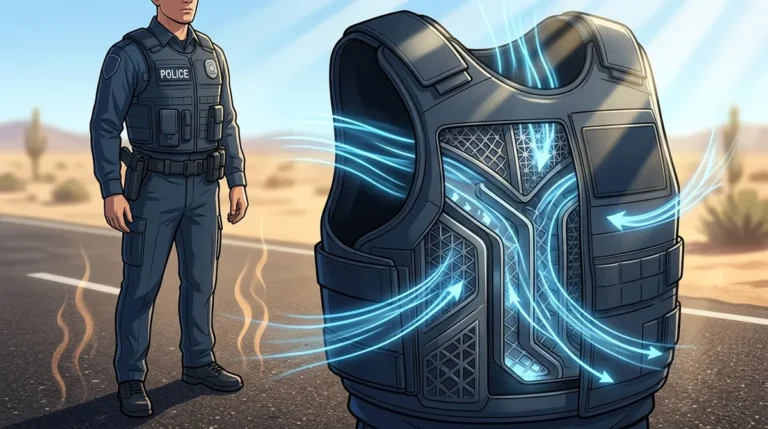
Body armor is essential. But it creates a sealed barrier between your skin and the air. Heat and moisture get trapped, your core temperature rises, and fatigue sets in faster. Over time, this can affect your alertness, reaction time, and overall performance on the job.
According to the OSHA Heat Stress Guide, prolonged heat exposure increases the risk of heat exhaustion and heat stroke — even for fit, healthy individuals. Law enforcement officers face this risk daily, especially during warm-weather months. That’s why understanding why police officers struggle with heat under body armor is the first step toward solving the problem.
The solution isn’t to remove the armor — it’s to improve airflow beneath it. That’s exactly what modern police vest ventilation solutions are designed to do.
Types of Police Vest Ventilation Solutions
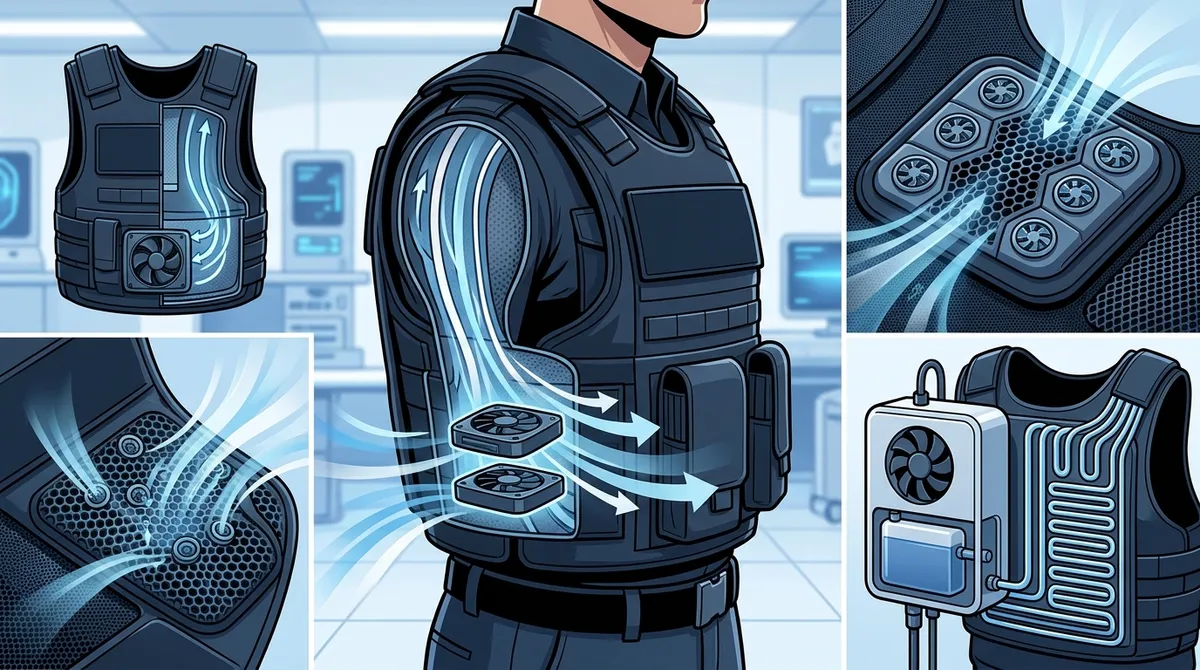
There are two main categories of ventilation solutions for body armor: passive systems and active systems. Each has its own strengths, and the best choice depends on your environment and how much cooling power you need.
Passive Ventilation Systems
Passive systems use materials and design features to promote natural airflow. They don’t require power — they just rely on convection, breathable mesh, and air channels to move heat away from your body.
- 3D mesh liners – Create a slight gap between your skin and the armor for air circulation
- Vertical air channels – Guide heat upward and out through natural convection
- Mesh panels – Allow sweat to evaporate more quickly
- Polymer spacing materials – Hold the armor slightly off the body to allow airflow
A great example is the Maxx-Dri 4.0, which features redesigned 3D polymer and “Acceleration Channels” that reduce surface temperatures by an impressive 23°F compared to wearing armor without ventilation. For many officers, a passive solution like this is a simple, affordable starting point.
Want a deeper look at how passive and active systems compare? Check out this breakdown of passive vs. active tactical vest ventilation.
Active Ventilation Systems
Active systems use fans, pumps, or inflatable components to push or circulate air beneath your vest. These provide more powerful and on-demand cooling relief, which is ideal for high-heat environments or intense physical activity.
- Battery-powered fan units – Slide under the armor and blow fresh air against your body
- Inflatable air gap systems – Use a pump to lift the vest off your skin and create cooling space
- Fan-integrated carrier vests – Built-in fans that run continuously during a shift
- Centrifugal fan systems – Tested by the Singapore Police Force, reducing lower back skin temperature by 1.86°C in 30°C/70% humidity conditions
To learn more about how active cooling works in ventilation vests, visit this helpful guide on how active cooling systems work in ventilation vests.
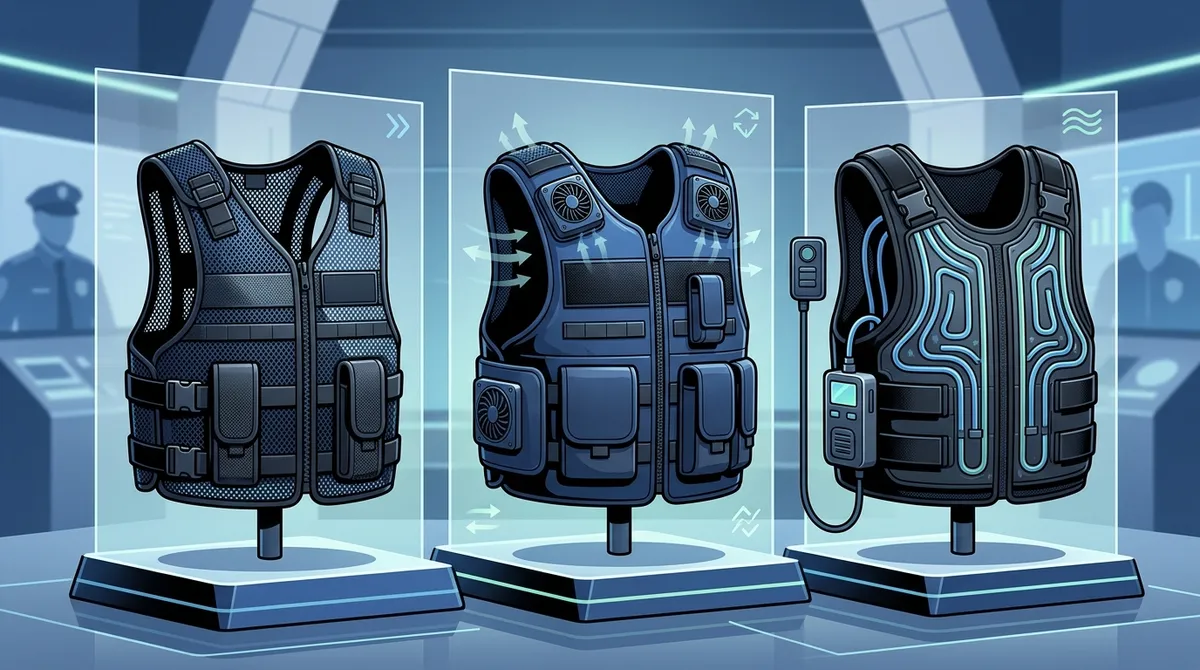
Comparing the Top Police Vest Ventilation Solutions
Here’s a side-by-side look at some of the leading options available in 2026. This table will help you see which solution fits your needs at a glance.
| Product | Type | Key Feature | Battery Life | Best For |
|---|---|---|---|---|
| BluHalo Ventilation Vest | Active (inflatable) | Up to 1.5″ air gap, under 7 oz | On-demand pump | Daily patrol, long shifts |
| BluFano Fan System | Active (fan-powered) | 8–32 hrs, 10,000mAh power bank | 8–32 hours | Extended duty, hot climates |
| Maxx-Dri 4.0 | Passive | 23°F temp reduction, 3D polymer | No battery needed | Budget-friendly daily use |
| Body Armor Vent (EVAP) | Passive (breathing-powered) | I.C.E. + B-24 panels, expels humid air | No battery needed | Concealable vests, plate carriers |
| TacVent | Passive | True separation space, minimizes backface deformation | No battery needed | Comfort + protection balance |
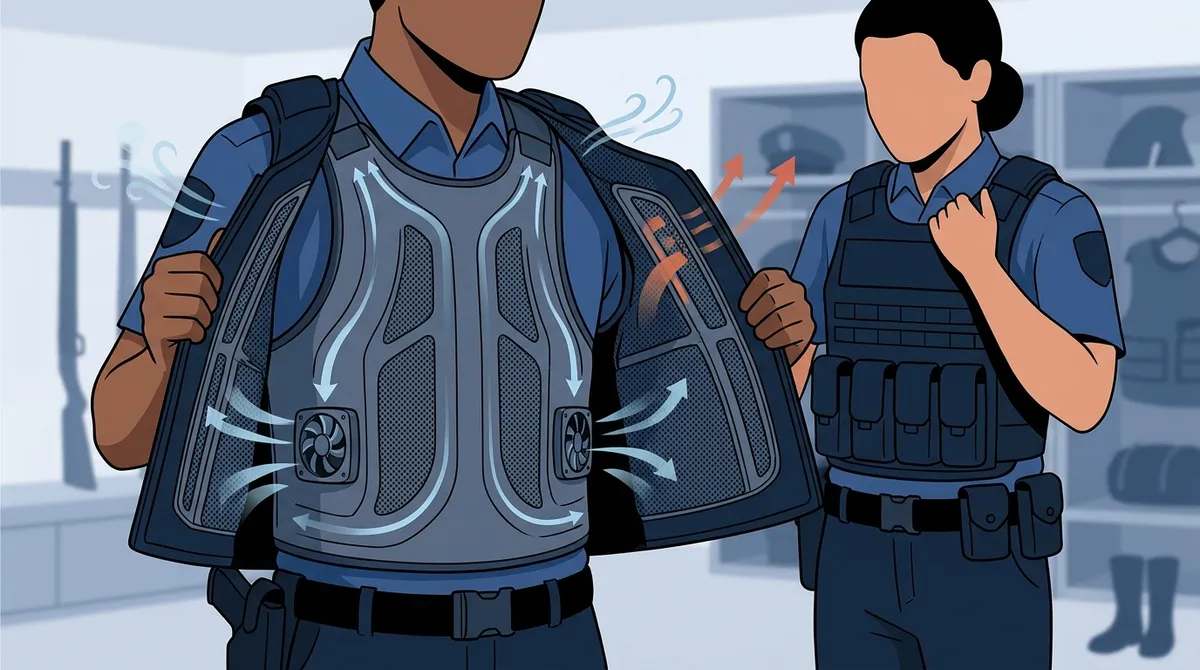
BluHalo and BluFano: Built for Officers, By an Officer
Two standout products in the world of police vest ventilation solutions are BluHalo and BluFano — both designed specifically with law enforcement in mind. In fact, BluHalo was created by a Chicago police officer who was tired of overheating on long, hot shifts.
BluHalo is a lightweight, on-demand inflatable system. It weighs under 7 ounces and sits flat when deflated — you won’t even notice it. When you need cooling relief, a simple pump inflates it to create up to 1.5 inches of air gap between your body and your armor. That gap lets heat and moisture escape freely. It’s been praised by officers working 12-hour shifts in 90°F+ conditions. You can learn exactly how to use the BluHalo ventilation vest for maximum comfort with their step-by-step guide.
BluFano takes things further with an active fan system that slides under any style of body armor. It features a patented air-redirect spout, adjustable fan speed, and a built-in 10,000mAh power bank that can also charge your USB devices. It runs for 8 to 32 hours depending on your setting — more than enough for any shift. Plus, it includes a forward-facing light for low-light situations. Visit the BluFano product page to see it in action.
Want to compare both options? Check out this detailed BluFano vs BluHalo comparison to find the right fit for you.
Key Features to Look for in a Vest Ventilation Solution
Not all ventilation solutions are created equal. Here are the most important factors to consider before you buy:
- Compatibility with your current armor – Make sure the system works with your existing vest, whether it’s a concealable soft armor or a plate carrier.
- Weight and profile – A bulky ventilation system defeats the purpose. Look for low-profile, lightweight designs that don’t add unnecessary bulk.
- Battery life or no-power options – Active systems need power. Make sure the battery lasts your full shift. Passive systems are a great backup for power-free cooling.
- Ease of use and maintenance – You need something easy to put on, adjust, and clean. Look for washable materials and simple controls.
- Cooling effectiveness – Look for measurable results. Certified testing data (like Maxx-Dri’s 23°F reduction) gives you confidence in the product’s performance.
For more help making the right choice, visit this guide on how to choose the best police vest ventilation system.
How Different Professionals Benefit from Vest Ventilation
Police vest ventilation solutions aren’t just for patrol officers. Here’s a quick look at how different professionals benefit:
| Professional Group | Main Challenge | Best Ventilation Type |
|---|---|---|
| Patrol Officers | All-day heat during long shifts | Inflatable gap system (e.g., BluHalo) |
| SWAT/Tactical Teams | Intense heat during high-activity ops | Active fan system (e.g., BluFano) |
| Military Personnel | Extended missions in extreme climates | Active cooling with long battery life |
| Security Professionals | Hours in hot indoor/outdoor environments | Passive or active depending on mobility |
| Emergency Responders | Extreme heat and physical exertion | High-output active fan or inflatable gap |
If you’re an emergency responder, be sure to read this guide on how to choose emergency responder gear that keeps you cool.
Tips for Getting the Most Out of Your Ventilation System
Even the best ventilation solution works better with a little planning. Here are some simple tips to maximize your comfort on the job:
- Wear moisture-wicking base layers – These pull sweat away from your skin and work great alongside ventilation vests. Browse the best moisture-wicking vests for body armor comfort for top picks.
- Pre-cool before a hot shift – If you’re using an active system, turn it on a few minutes before heading out to start cooling early.
- Stay hydrated – Ventilation reduces heat, but hydration is still critical. Follow the OSHA heat exposure guidelines for fluid intake during hot-weather duty.
- Clean your ventilation gear regularly – Sweat and dirt can clog mesh and reduce airflow. Follow the manufacturer’s cleaning instructions.
- Check your armor fit – A properly fitted vest allows ventilation systems to work more effectively. Read more about body armor fit and airflow tips.
What Body Armor Standards Say About Ventilation
You might wonder if adding a ventilation system affects your armor’s protective rating. The short answer is: it depends on the product. Well-designed ventilation solutions are built to work with certified body armor without compromising its integrity.
The NIJ Body Armor Standards provide guidelines on how armor should perform under various conditions. Always check that your chosen ventilation product is compatible with your armor’s NIJ rating and doesn’t interfere with its protective function. Products like TacVent are specifically designed to minimize backface deformation while enhancing comfort — a great example of safety and cooling working together.
Active vs. Passive: Which One Should You Choose?
Both options have real value. The right choice comes down to your specific situation.
| Factor | Passive System | Active System |
|---|---|---|
| Power required | No | Yes (battery) |
| Cooling power | Moderate | High |
| Cost | Lower | Higher |
| Maintenance | Easy | Moderate |
| Best climate | Mild to warm | Hot to extreme heat |
| Weight added | Minimal | Slightly more |
If you work in a mild climate or need a backup solution, a passive system like Maxx-Dri 4.0 is a smart, affordable choice. If you’re in a hot climate or on a physically demanding assignment, an active system like BluFano gives you the cooling power you need to stay sharp. For a full breakdown, check out this article on passive vs. active law enforcement cooling gear.
Final Thoughts: Stay Cool, Stay Sharp
Heat under body armor is a real problem — but it’s also a solvable one. In 2026, the range of police vest ventilation solutions available means every officer, soldier, or security professional can find something that works for their needs and budget. Whether you go with a simple passive liner or a full active fan system like BluFano, you deserve to feel comfortable doing your job.
Your safety and comfort on the job matter. The right ventilation solution doesn’t just keep you cool — it helps you stay focused, energized, and ready to respond. Don’t let heat slow you down. Explore the full range of ventilation vests and cooling systems available today, or reach out to the BluHalo team to find the perfect solution for your specific needs. Staying cool has never been this easy.
FAQs
Q: What is the best ventilation vest for police body armor in 2026?
A: The BluHalo ventilation vest and BluFano fan system are two of the top choices for police officers in 2026. BluHalo creates up to 1.5 inches of air gap using an on-demand pump, while BluFano delivers active fan-powered cooling for 8–32 hours per charge — perfect for long, hot shifts.
Q: Can I add a ventilation solution to my existing body armor?
A: Absolutely! Most police vest ventilation solutions are designed to work with your existing armor, whether it’s a concealable vest or a plate carrier. Products like BluHalo and BluFano simply slide or attach under your current armor without requiring any modifications.
Q: How much does body armor ventilation actually reduce heat?
A: The results are pretty impressive! Passive systems like Maxx-Dri 4.0 have been certified to reduce surface temperatures by 23°F, while active systems like BluHalo create a 1.5-inch air gap that significantly lowers heat and moisture buildup during 12-hour shifts in 90°F+ temperatures.
Q: Are there fan-powered cooling solutions for law enforcement vests?
A: Yes! The BluFano is a great example — it’s a self-contained fan unit with a patented air-redirect spout that slides under any style of body armor. It runs for 8 to 32 hours on a single charge and even doubles as a USB power bank for charging other devices.
Q: Do vest ventilation systems affect the protective rating of body armor?
A: Well-designed ventilation solutions are built to be compatible with certified body armor and should not compromise its protective rating. Always check that your chosen system is compatible with your armor’s NIJ rating, and look for products specifically tested alongside ballistic vests for safety and performance.