Key Takeaways
-
Heat buildup under body armor impairs decision-making, reaction time, and physical endurance; cooling solutions are essential for safety, not just comfort, especially during extended shifts in high-stakes roles.
-
Active fan-driven systems like BluFano deliver 8-32 hours of battery life and are ideal for 12+ hour shifts or extreme heat, while passive systems (inflatable vests, PCM materials) work well for 8-hour shifts and moderate environments.
-
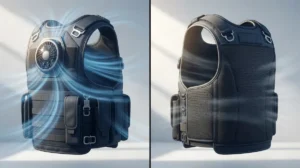
The BluHalo inflatable vest weighs under 7 ounces, creates a 1.5-inch air gap on demand, and attaches with Velcro—making it a lightweight, low-profile solution that doesn’t interfere with tactical mobility or visibility.
-
Advanced technologies like phase-change materials (PCM), graphene layers, and body-mapped ventilation channels in systems like Thermacore™ maintain core body temperature at 99.5°F while reducing skin temperature compared to traditional vests.
-
Layering passive and active cooling solutions together—such as combining an inflatable vest with a fan system—provides the best results for professionals needing customizable cooling intensity throughout varying shift conditions.
-
Test new cooling gear during training before relying on it during duty, ensure compatibility with your vest type, and maintain equipment regularly (charge batteries, inspect inflatable components) to maximize performance and reliability.
If you wear body armor for long shifts, you know the struggle. The heat builds up fast. Sweat soaks through your uniform. Your focus starts to slip. Whether you’re on patrol, running a security detail, or deployed in a hot environment, tactical vest cooling isn’t just a comfort upgrade — it’s a performance essential.
The good news? In 2026, there are more smart, effective options than ever before. From passive ventilation materials to active fan-driven systems, the technology has come a long way. This guide breaks down everything you need to know about staying cool under your vest, so you can focus on what matters most — doing your job well.

Why Heat Under Body Armor Is a Real Problem
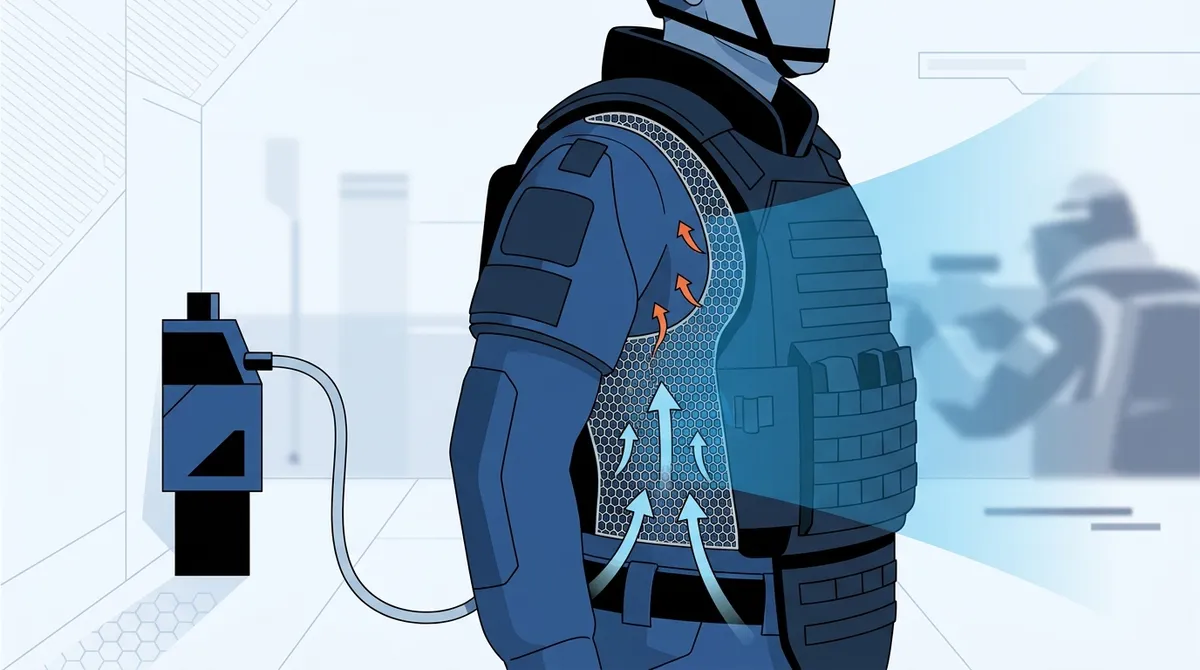
Body armor is designed to protect you. But it also traps heat. The material sits close to your body and blocks airflow. Over time, this creates a layer of hot, moist air between the vest and your skin. That’s uncomfortable at best and dangerous at worst.
According to the OSHA Heat Stress Guide, prolonged heat exposure can lead to heat exhaustion, impaired decision-making, and even heat stroke. For professionals in high-stakes roles, that’s a serious concern. Heat stress affects your reaction time, your focus, and your physical endurance. Solving it should be a priority.
The challenge is that most vests aren’t built with airflow in mind. That’s where vest ventilation technology steps in to fill the gap.
How Tactical Vest Cooling Works
Tactical vest cooling refers to any system, material, or product designed to reduce heat and moisture buildup under body armor. There are two main approaches: passive cooling and active cooling. Each has its own strengths depending on your role and environment.
Passive Cooling
Passive cooling doesn’t use electricity or moving parts. Instead, it relies on advanced materials and smart vest design to move heat away from your body. Think moisture-wicking fabrics, phase-change materials (PCM), and ventilation channels built directly into the vest structure.
For example, body-mapped ventilation channels use raised foam panels that target heat zones like the spine and shoulders. These channels promote airflow even when you’re standing still. Passive systems like these are lightweight, low-maintenance, and always working — no batteries needed.
Active Cooling
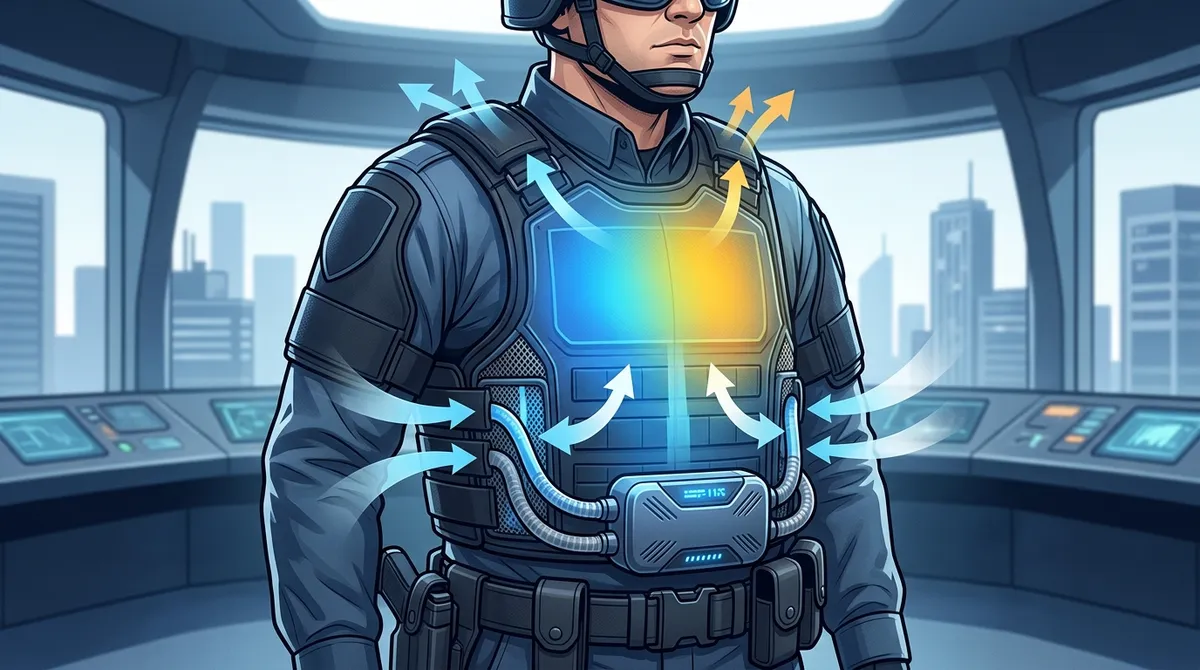
Active cooling uses fans, pumps, or powered airflow systems to circulate fresh air under your vest. These systems are more powerful and provide faster relief, especially in extreme heat. They’re ideal for long shifts, high-activity missions, or hot climates where passive cooling alone isn’t enough.
Active systems like BluFano deliver adjustable fan-driven airflow for up to 32 hours on a single charge. That kind of endurance makes a real difference during extended operations. You can learn more about the best vest cooling systems available right now to compare your options.

Key Technologies in 2026 Tactical Vest Cooling
The tactical vest cooling space has seen exciting innovation in recent years. Here’s a look at the main technologies shaping the industry in 2026.
| Technology | How It Works | Best For |
|---|---|---|
| Phase-Change Materials (PCM) | Absorbs and releases heat at a set temperature | Sustained comfort in moderate heat |
| Graphene Layers | Conducts heat away from the body rapidly | High-activity, high-heat environments |
| Body-Mapped Channels | Raised panels create airflow paths under the vest | Passive, always-on ventilation |
| Inflatable Spacer Vests | Creates a physical air gap between vest and body | On-demand cooling under armor |
| Fan-Driven Systems | Circulates fresh air using a powered unit | Active cooling for long shifts |
One exciting example is the Thermacore™ system by Ace Link Armor, which combines a base layer with 37.5® Technology and Outlast® Fresh2Skin, plus PCM and graphene in the vest carrier. It creates what they call a “thermal highway” to expel heat efficiently. Lab tests show it can maintain core body temperature at 99.5°F, with lower skin temperatures compared to traditional vests.
Laser-cut laminate construction is another big innovation. It reduces vest weight by up to 30% compared to traditional MOLLE webbing while integrating ventilation for better mobility and cooling — a real win for anyone who wears armor all day.
Top Solutions for Tactical Vest Cooling in 2026
There are several strong options on the market. Here’s how they compare across key performance factors.
| Product/System | Cooling Type | Battery Life | Weight | Key Feature |
|---|---|---|---|---|
| BluHalo Ventilation Vest | Passive (inflatable) | No battery needed | Under 7 oz | On-demand 1.5″ air gap |
| BluFano Fan System | Active (fan-driven) | 8–32 hours | Compact unit | 10,000mAh power bank + light |
| Maxx-Dri Vest 3.0 | Passive (spacer) | No battery needed | Lightweight | 360-degree body separation |
| Thermacore™ by Ace Link | Passive (PCM + graphene) | No battery needed | Standard | Maintains core temp at 99.5°F |
For professionals who want a simple, reliable, and affordable solution, the BluHalo ventilation vest is a standout choice. It was created by a Chicago police officer who experienced the heat problem firsthand. It weighs under 7 ounces, attaches to your vest with Velcro, and inflates on demand to create a cooling air gap of up to 1.5 inches. When you don’t need it, you just deflate it and it lies flat — no bulk, no fuss.
Read what other officers are saying on the BluHalo reviews page — the testimonials from real users working 12-hour shifts in 95-degree heat are pretty compelling.
Choosing the Right Tactical Vest Cooling System
Not every cooling solution fits every situation. Here’s how to match the right system to your needs.
Consider Your Work Environment
Are you working indoors, outdoors, or in extreme heat? Officers on foot patrol in summer heat need more aggressive cooling than security staff in air-conditioned buildings. Active fan systems shine in sustained high-heat conditions. Passive systems work well for moderate environments or as a constant baseline.
Think About Shift Length
For 8-hour shifts, a quality passive system or inflatable vest may be all you need. For 12-hour days or extended operations, an active fan-driven system with long battery life — like BluFano with its 8–32 hour runtime — makes a big difference. You can also learn how to choose the right body armor ventilation vest based on your specific needs.
Factor in Mobility Requirements
SWAT teams and tactical units need gear that won’t slow them down. Lightweight, low-profile designs are key. Inflatable vests like BluHalo are ideal here — under 7 ounces and virtually invisible under your armor. Read more about optimal cooling for tactical vests to see which designs fit high-mobility roles best.
Benefits of Proper Tactical Vest Cooling
Investing in a good cooling solution pays off in more ways than one. Here are the main benefits you’ll notice.
- Better focus: When you’re not distracted by heat and discomfort, you think more clearly and react faster.
- Reduced fatigue: Heat drains energy. Keeping cool helps you stay sharp through long shifts.
- Less sweat and moisture: Dry skin reduces chafing, rashes, and skin irritation from extended wear.
- Improved performance: Physical endurance stays higher when your core temperature is managed.
- Greater safety: Preventing heat exhaustion protects you and those around you in high-stakes situations.
The Body Armor Standards from the NIJ focus on ballistic protection, but comfort and wearability are increasingly recognized as critical to compliance and daily use. Officers who are uncomfortable in their vests may wear them less consistently — and that’s a safety risk. Cooling solutions help bridge that gap.
How to Get Started With Vest Ventilation
Getting started is easier than you might think. Follow these steps to find the right solution for your situation.
- Assess your heat exposure: Think about your typical shift — how long, how hot, how active. This guides which system level you need.
- Check your vest compatibility: Most cooling solutions fit under standard body armor and plate carriers. Confirm sizing and attachment options before buying.
- Choose passive, active, or both: Many professionals layer solutions — for example, using an inflatable vest for passive separation and adding a fan unit for active airflow on the hottest days.
- Try it during a training day: Before relying on new gear during duty, test it in a low-stakes setting so you can adjust your setup comfortably.
- Maintain your gear: Keep fan units charged, inspect inflatable components for wear, and clean materials regularly to maintain performance.
You can also explore how to stay cool under body armor with smart ventilation for more practical tips. And if you’re curious about what the research shows on preventing heat stress while wearing body armor, that’s a great read too.
What to Look for in a Quality Cooling Vest
Not all products are created equal. When shopping for a tactical vest cooling solution, keep these factors in mind.
| Feature | Why It Matters |
|---|---|
| Low weight (under 7–10 oz) | Adds minimal burden to already heavy gear |
| Low profile design | Doesn’t interfere with vest fit or mobility |
| Durable materials | Withstands daily duty use and rough conditions |
| Easy attachment | Simple setup means faster deployment and less fuss |
| Adjustable airflow | Lets you customize cooling intensity to your needs |
| Long battery life (active systems) | Ensures cooling lasts through your full shift |
The BluHalo shop offers both the BluHalo vest and BluFano fan system individually or as a bundle for maximum cooling performance. Bundling is a smart move for professionals who want both passive separation and active airflow working together. Check out the product videos to see exactly how each system works before you buy.
Conclusion: Stay Cool, Stay Sharp
Tactical vest cooling isn’t a luxury. For law enforcement, military personnel, security professionals, and first responders, managing heat under body armor is a real operational need. The right cooling system helps you stay focused, comfortable, and safe through every shift — no matter how hot it gets.
In 2026, the options are better than ever. Whether you go with a simple passive spacer vest, a high-tech PCM system, or a powerful fan-driven unit like BluFano, there’s a solution that fits your role and budget. The key is to start somewhere and stop letting heat hold you back.
Ready to find your perfect fit? Reach out to the BluHalo team — they’re happy to help you choose the best tactical vest cooling solution for your needs. You work hard to protect others. It’s time your gear worked just as hard to protect you.
FAQs
Q: What is tactical vest cooling and why does it matter?
A: Tactical vest cooling refers to any product or system designed to reduce heat and moisture buildup under body armor. It matters because prolonged heat exposure under a vest can cause fatigue, impaired focus, and even heat exhaustion — all of which affect your ability to do your job safely and effectively.
Q: What’s the difference between passive and active tactical vest cooling?
A: Passive cooling uses materials and design features like ventilation channels, PCM, or inflatable spacers to create airflow without batteries. Active cooling uses fan-driven systems like BluFano to circulate fresh air under your armor with powered airflow. Many professionals use both for the best results!
Q: Can I use a cooling vest under any type of body armor?
A: Most tactical vest cooling solutions are designed to fit under standard body armor and plate carriers. Products like BluHalo use a flat, low-profile design that attaches with Velcro and works under virtually any vest style — soft armor, plate carriers, and more.
Q: How long does a fan-driven cooling system last on a single charge?
A: It depends on the system and the fan setting you use. The BluFano fan system, for example, runs for 8 to 32 hours depending on the airflow level — more than enough to get you through even the longest shifts with cooling to spare.
Q: Is tactical vest cooling worth the investment for daily use?
A: Absolutely! If you wear body armor regularly, the comfort, safety, and performance benefits of a quality cooling solution far outweigh the cost. Reduced heat stress means better focus, less fatigue, and safer outcomes — and that’s priceless for any professional who puts on a vest every day.