Key Takeaways
-
Heat-trapped body armor reduces officer focus, reaction time, and safety by raising heart rate and increasing fatigue; overheating impairs decision-making on duty, making cooling solutions a legitimate safety tool, not just comfort.
-
Passive air-gap vests like BluHalo offer lightweight, battery-free simplicity with instant inflation to create 1.5-inch airflow gaps, while active fan systems like Blufano provide 8-32 hours of adjustable cooling; many officers combine both for comprehensive heat management.
-
Design quality and engineering matter more than broad cooling technology categories; a 2025 review showed liquid-circulating vests reduced skin temperature by 3°C and air-ventilation combos by 0.72°C, while poorly engineered passive vests showed no statistically significant improvement.
-
When selecting cooling gear, verify compatibility with your NIJ-certified armor configuration, confirm 8+ hour battery life or all-shift passive function, and test during normal shifts before department-wide rollout to ensure it doesn't compromise ballistic coverage or equipment access.
-
Evaporative garments work best in humid climates, phase-change packs last only 3-4 hours and need pre-cooling, and liquid systems add weight and maintenance complexity; passive inflation and active fans are the most practical for standard patrol operations.
-
Pair any cooling system with hydration habits and regular breaks in extreme heat; small changes like switching between passive and active cooling as conditions change compound benefits without requiring complete uniform overhauls.
If you’ve ever finished a 12-hour shift with a soaked undershirt and a back that feels like it’s been in an oven, you already know the problem. Body armor saves lives, but it also traps heat like nobody’s business. That sweaty, sticky, overheated feeling isn’t just uncomfortable. It can wear down your focus, your energy, and even your safety on the job.
The good news? You don’t have to just “tough it out” anymore. Body armor cooling for law enforcement has come a long way, and there are now real options that help officers stay drier and more comfortable during long patrols, tactical calls, and training days. But not all cooling methods work the same way, and some popular ideas don’t hold up as well as you’d hope under real testing.
In this friendly, no-nonsense guide, we’ll walk through the main types of cooling technology, compare fan-based airflow against simple air-gap designs, and help you figure out what actually works for the way you wear your gear. Whether you’re a patrol officer, a SWAT operator, or part of a security team, this one’s for you.
Why Body Armor Makes You So Hot in the First Place
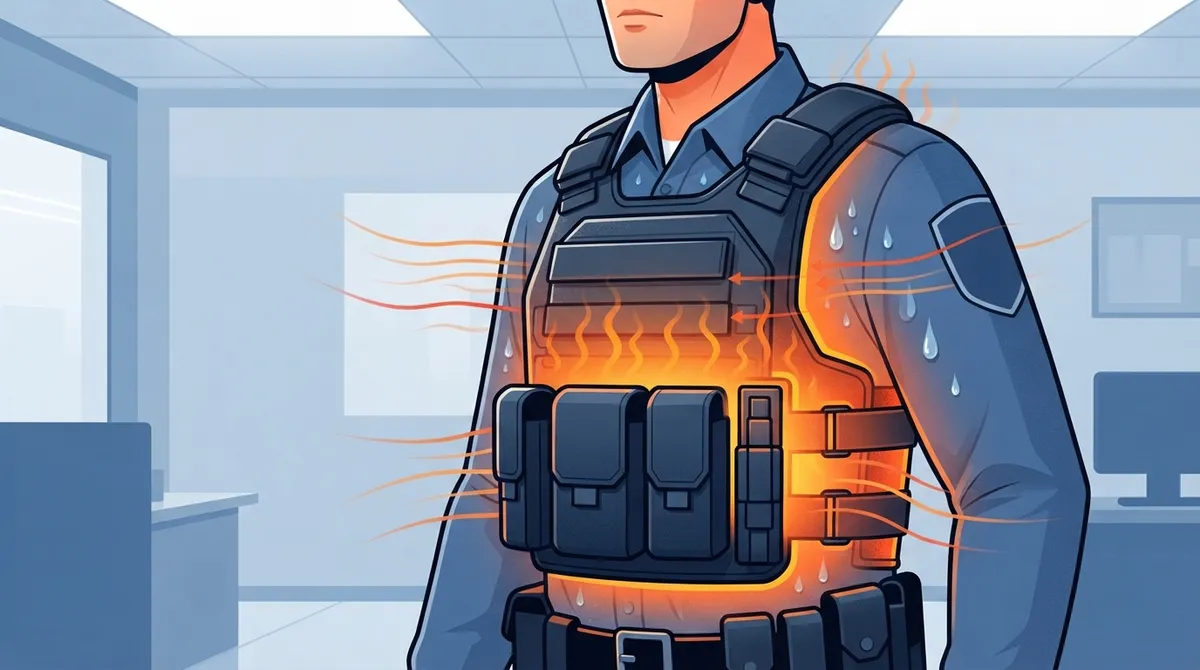
Let’s start with the obvious: armor covers your torso, and that’s exactly where your body needs to release heat. When that area gets sealed off, sweat can’t evaporate the way it’s supposed to. Moisture and warm air just sit there, trapped against your skin.
Add in the extra weight of plates, panels, and duty gear, and your body has to work even harder. That combination raises your heart rate, increases fatigue, and can bump up your risk of heat-related illness during hot or humid shifts, according to the OSHA Heat Stress Guide. If you’ve ever felt foggy or sluggish near the end of a hot shift, this is likely why.
This isn’t just a comfort issue, either. Officers who are overheated tend to think less clearly and react more slowly. That’s a real safety concern, not just an annoyance. If you want to dig deeper into how heat impacts decision-making on duty, check out our article on how heat affects the minds of law enforcement officers.
The Main Types of Body Armor Cooling Technology
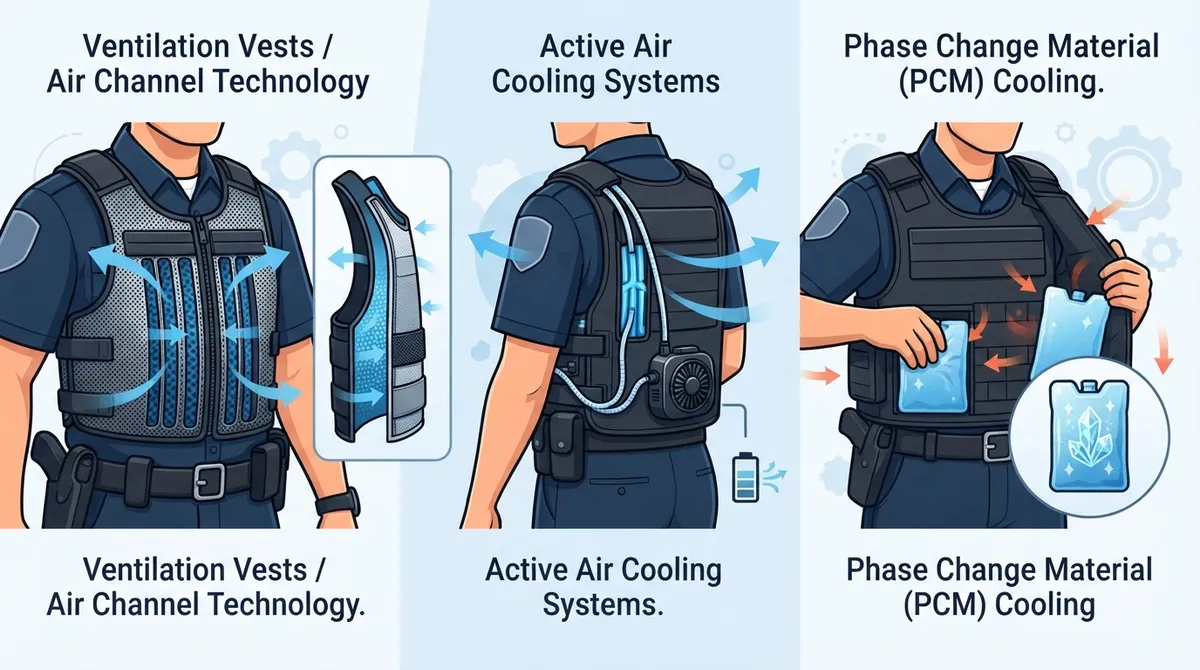
Before we compare fans versus air gaps, it helps to know the full lineup. Cooling systems for armor generally fall into a few categories:
- Air-ventilation systems: These create a gap between your skin and your armor, letting air move and sweat evaporate.
- Evaporative garments: These use moisture-wicking fabrics that pull sweat away from the body.
- Phase-change material (PCM) packs: Special inserts that absorb heat as they change from solid to liquid.
- Liquid-circulating systems: Tubes filled with cool liquid that circulate against the skin.
- Thermoelectric devices: Battery-powered units that actively cool using electric current.
Each type has its own trade-offs. Some need batteries. Some need water. Some are heavier than others. The Police Magazine coverage of body armor innovation notes that even prototype cooling pads with water reservoirs only lasted around three hours before needing a refill. That’s a big deal if you’re working a double shift.
Fan-Powered Airflow vs. Passive Air Gaps: The Real Comparison
This is where things get interesting. Two of the most common ventilation approaches are passive air-gap vests and active fan-powered systems. Let’s break down how they stack up.
How Passive Air-Gap Vests Work
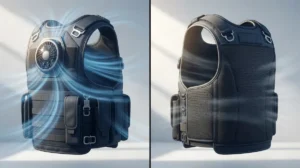
Passive vests use spacer materials, mesh channels, or inflatable inserts to physically lift your armor off your body. No batteries, no noise, just a small gap that lets air move naturally. Our own BluHalo ventilation vest is a great example. It’s a lightweight, low-profile insert that inflates on demand to lift your vest up to about 1.5 inches off your body, creating instant airflow space.
The appeal here is simplicity. There’s nothing to charge, nothing to break, and it weighs less than 7 ounces. Officers can inflate it during a hot call and deflate it flat again in seconds when they’re back in the cruiser with the AC running.
How Active Fan Systems Work
Active systems, like our Blufano fan system, take things a step further. Instead of just creating a gap, they actively push fresh air underneath the armor using a small, self-contained fan unit. Blufano slides under any style of body armor and delivers adjustable airflow for 8 to 32 hours, depending on the fan speed setting.
Because it includes a built-in 10,000mAh power bank, it can also charge your phone or flashlight during a shift. That’s a nice bonus when you’re out on patrol all day and don’t want a dead phone battery.
Which One Wins? It Depends on Your Job
Here’s the honest answer: neither option is universally “better.” It comes down to your specific needs. If you want something ultra-light, silent, and simple, a passive vest like BluHalo is fantastic. If you want continuous, adjustable airflow for long shifts in extreme heat, an active system like Blufano gives you more consistent cooling power.
Many officers actually love combining both. You get the instant lift-and-gap benefit from BluHalo plus the ongoing fresh air circulation from Blufano. We even offer a bundle discount for exactly this reason, since together they cover more cooling scenarios than either one alone.
What the Research Actually Says
It’s worth being upfront here: cooling technology isn’t magic, and results vary a lot depending on design and workload. A 2014 study published in the Annals of Occupational Hygiene tested an air-filled vest under both military and concealable law-enforcement armor. The results showed no statistically significant improvement in core temperature, skin temperature, heart rate, or sweat rate.
In that law-enforcement trial, final gastrointestinal temperature was about 38.0°C with the air vest compared to 38.1°C without it. Heart rate was around 132 versus 135 beats per minute. Sweat rates were nearly identical too, about 1.39 liters per hour with the vest and 1.37 without it.
So what does that mean for you? It means not every “air gap” product performs the same, and it really matters how the airflow is generated and how well it’s engineered. On the flip side, a 2025 review of cooling technologies found much more promising results with certain systems:
- An air-ventilation and phase-change combo system reduced skin temperature by about 0.72°C and also lowered core temperature, heart rate, and the feeling of wetness during a 90-minute exercise test at 36°C and 60% humidity.
- A liquid-circulating vest reduced skin temperature by roughly 3°C compared to other tested methods during a 120-minute trial at 42.2°C and 20% humidity while worn under ballistic protection.
- An evaporative cooling vest provided cooling for up to about 3.5 hours at 35°C in manikin testing, though real-world duration depends heavily on humidity and activity level.
The takeaway? Design quality and engineering matter more than the broad category of “cooling technology.” That’s exactly why we’ve focused so much attention on refining how BluHalo and Blufano actually move air and manage moisture, rather than just slapping a label on a basic mesh panel.
Comparing Cooling Approaches at a Glance
| Cooling Type | How It Works | Best For | Limitations |
|---|---|---|---|
| Passive Air-Gap Vest | Creates space between skin and armor for natural airflow | Daily patrol, all-shift comfort, lightweight needs | No active airflow push; relies on movement and ambient air |
| Active Fan System | Uses a small fan to push fresh air under the vest | Long shifts, extreme heat, tactical operations | Requires battery charging; slightly more bulk |
| Evaporative Garments | Wicks sweat away using moisture-absorbing fabric | Humid climates, indoor security work | Performance drops in high humidity |
| Phase-Change Packs | Absorbs heat as material changes from solid to liquid | Short bursts of intense heat exposure | Limited duration; needs freezing or pre-cooling |
| Liquid-Circulating Systems | Circulates cooled liquid through tubing against skin | Extreme heat, specialized tactical roles | Heavier, more complex, higher maintenance |
What Agencies Should Look for When Choosing Cooling Gear
If you’re helping your department pick a cooling solution, don’t just look at marketing claims. The Department of Homeland Security’s SAVER program actually classifies personal cooling systems under a specific PPE category, evaluating them for real operational use. That’s a good sign the industry takes this seriously, not just as a comfort perk but as a genuine performance tool.
Here’s a simple checklist to keep in mind:
- Does it fit under your specific carrier without shifting ballistic panel coverage?
- Is it compatible with NIJ-certified armor configurations? Check the Body Armor Standards from NIJ for reference.
- Does it stay concealable if you wear plainclothes or covert armor?
- How long does the battery or airflow last during a full shift?
- Is it easy to clean and durable enough for daily use?
- Can you still access your duty belt and equipment easily while wearing it?
For a deeper walkthrough on evaluating fit and compatibility, take a look at our guide on how to choose the right body armor ventilation vest.
Real Officers, Real Results
We hear from officers all the time who describe the difference cooling gear makes on brutal shifts. One Chicago patrol officer told us about working 12-hour days in 95-degree heat and finally feeling like he could breathe again once he started using BluHalo under his vest. Others love that Blufano lets them cool down fast just by cranking the fan while sitting in the cruiser with the AC blasting.
These aren’t just nice stories. They reflect exactly what the research points to: airflow and moisture management genuinely help comfort, focus, and overall shift quality, even if it’s not a magic fix for every physiological metric. You can browse more firsthand accounts on our customer reviews page.
Quick Steps to Start Cooling Down Your Shift Today
- Check your current armor carrier for compatibility with slim, low-profile inserts.
- Decide whether you want passive airflow, active fan cooling, or both combined.
- Order a trial unit and test it during a normal shift before committing department-wide.
- Keep it clean and dry between uses to extend its lifespan.
- Pair your cooling gear with good hydration habits and regular breaks in extreme heat.
Small changes like these add up fast. You don’t need to overhaul your entire uniform to feel a real difference by the end of your shift.
Ready to Beat the Heat on Your Next Shift?
Body armor cooling for law enforcement isn’t about chasing hype. It’s about finding gear that actually respects how your body works under stress, heat, and heavy protective equipment. Whether you lean toward the simplicity of a passive air-gap vest or the steady power of an active fan system, the goal is the same: staying focused, comfortable, and ready for whatever the shift throws at you.
We built BluHalo and Blufano because we know exactly what it feels like to sweat through a vest during a long, hot patrol. If you’re ready to try a smarter way to stay cool, browse our shop or reach out and get in touch with our team to find the right cooling setup for your gear and your shift schedule.
FAQs
Q: Do ventilation vests actually work under police body armor?
A: Yes, many officers find real comfort benefits from ventilation vests, though results depend on design quality. Products like BluHalo create a genuine air gap that helps sweat evaporate and heat escape, making long shifts much more bearable.
Q: What’s the difference between a ventilation vest and a cooling vest?
A: A ventilation vest, like BluHalo, focuses on creating airflow space between your skin and armor using inflation or spacer materials. A cooling vest might use ice packs, phase-change materials, or circulating liquid for a more direct temperature drop, though these often add weight and complexity.
Q: Can a cooling or ventilation vest affect my body armor’s ballistic protection?
A: A well-designed ventilation vest, like BluHalo or Blufano, is built to work alongside your armor without interfering with ballistic panel coverage or fit. Always check compatibility with your specific carrier and confirm it meets NIJ-compliant configurations before daily use.
Q: How long does a body-armor cooling vest actually provide cooling?
A: It really depends on the system. Passive air-gap vests can be used all shift long since they don’t rely on battery power, while active fan systems like Blufano offer 8 to 32 hours of adjustable airflow depending on the fan setting you choose.
Q: What should my department consider when picking cooling gear for officers?
A: Look at compatibility with your current carriers, NIJ certification, battery life, durability, and how easily officers can clean and maintain the gear. It also helps to run a small trial period before rolling out any cooling system department-wide.