Key Takeaways
-
Active cooling systems with forced airflow reduce rectal temperature by 0.26-0.34°C and decrease physiological strain by 9-21% during hot exercise in body armor, significantly outperforming passive cooling methods.
-
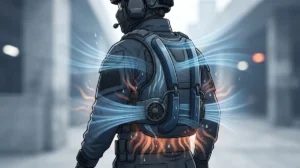
Ventilation vests create a 1.5-inch air gap under armor to boost sweat evaporation, increasing heat loss by approximately 45 watts and reducing water-vapor resistance by 20% compared to standard armor.
-
Research shows active ventilation systems improved results in 6 out of 6 studies tested, while passive cooling designs showed negligible results, making forced-air the scientifically-backed choice for extended duty.
-
Phase-change materials and ice-based cooling provide only brief relief (under 30 minutes) and may reduce ballistic efficiency, making ventilation fans the safer option for maintaining armor protection.
-
Battery-powered ventilation systems offer 8-32 hours of runtime depending on fan settings, enabling continuous cooling throughout long patrol shifts or extended military missions without carrying chilled fluids or ice packs.
-
Cooling gear must be paired with fundamental heat-safety practices including proper hydration, acclimatization, and scheduled work-rest cycles to effectively prevent heat-related illness in high-temperature environments.
If you’ve ever worn body armor during a hot patrol, a long deployment, or a summer training exercise, you already know the struggle. Sweat pools against your skin. Heat builds up with nowhere to go. Your focus starts to slip when all you can think about is how badly you want to rip that vest off. You’re not imagining it, and you’re definitely not alone. Military body armor cooling has become a serious topic in recent years, and for good reason: keeping our service members and protectors cool isn’t just about comfort, it’s about safety and performance.
At BluHalo, we’ve spent a lot of time thinking about this exact problem. Our whole mission is to help people who wear body armor stay cooler, drier, and more comfortable while they work. In this article, we’ll walk through what the research says about cooling under body armor, how ventilation vests actually work, and what to look for if you’re ready to upgrade your gear. Let’s get into it.
Why Body Armor Traps So Much Heat
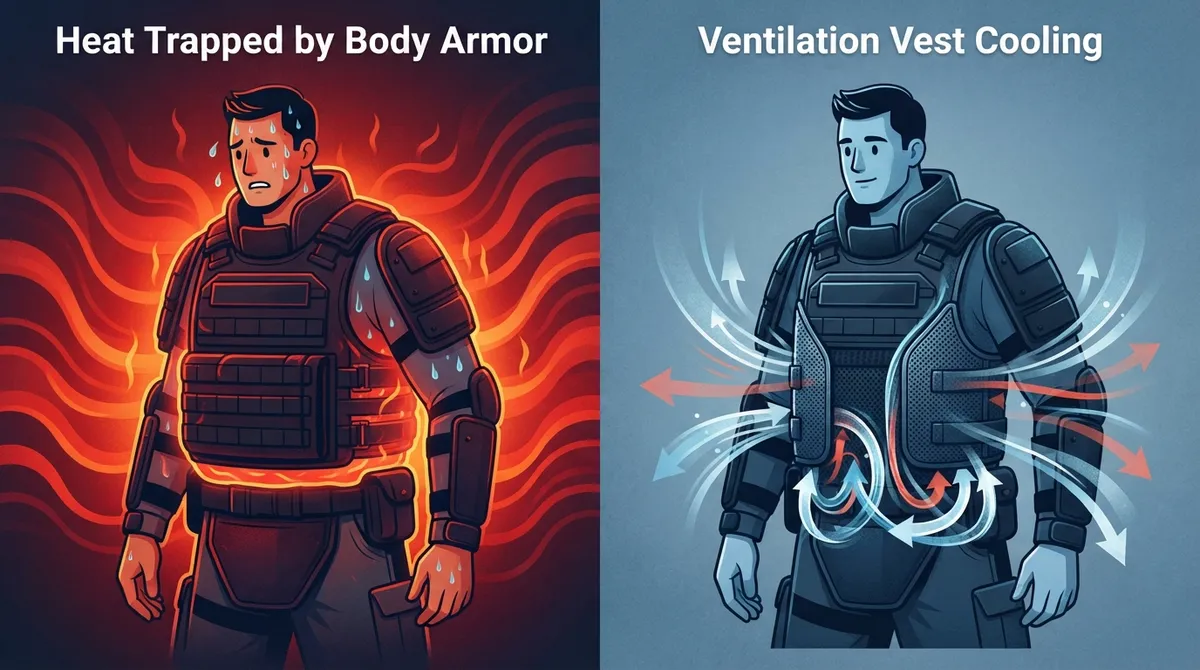
Body armor is designed to protect you, not to breathe. Ballistic plates and heavy carriers sit tight against your torso, blocking the natural airflow your body needs to cool down. This traps heat and sweat right where you don’t want them.
Under normal conditions, your body cools itself by sweating and letting that sweat evaporate. But armor blocks that process. Heat can’t escape efficiently, and sweat has nowhere to go. This combination raises your skin temperature, your heart rate, and your overall physical strain, especially during physical exertion in warm environments.
According to the OSHA Heat Stress Guide, heavy protective clothing significantly increases the risk of heat-related illness because it limits the body’s ability to release heat. That’s exactly what happens when you layer body armor over a uniform in the field, on patrol, or during a training exercise.
The Science Behind Military Body Armor Cooling
Researchers have studied this problem for years, and the results are pretty clear. Active cooling systems, meaning devices that actively move air or fluid, tend to outperform passive designs like extra padding or mesh alone.
A 2014 systematic review looked at nine separate studies on body armor cooling devices. Six of those studies tested active cooling devices, and every single one showed a reduction in at least one measure of physiological strain. The three passive-device studies, on the other hand, showed mostly negligible results. That’s a big deal for anyone deciding what kind of gear to invest in.
What Happens When Active Cooling Is Used
A 2008 study published in the European Journal of Applied Physiology tested a personal ambient ventilation system on 12 male volunteers wearing a ballistic vest. They exercised in two hot environments: 40°C at 40% humidity, and 35°C at 60% humidity.
Here’s what the researchers found after about 100 minutes of activity:
- Rectal temperature rise was 0.26°C lower in the hotter, drier condition, and 0.34°C lower in the warmer, more humid condition, when cooling was active.
- Mean skin temperature dropped by about 0.9°C and 0.6°C in the two conditions.
- Physiological strain index dropped by roughly 9% and 21%.
- Heat storage rate fell by about 19% to 24%.
- Sweat rate decreased by 21% to 25%.
These aren’t small numbers. They show that moving air under armor genuinely helps your body manage heat more effectively, not just feel a little more comfortable.
Ventilation vs. Other Cooling Methods
It’s worth pointing out that ventilation isn’t the same as liquid cooling or ice-based systems. Ventilation works by improving sweat evaporation, not by physically chilling your skin. This makes it lighter and easier to wear for long shifts, since you don’t need to carry chilled fluid or ice packs.
| Cooling Method | How It Works | Best For |
|---|---|---|
| Ventilation (Fan/Spacer) | Moves air to boost sweat evaporation | All-day wear, active duty, patrol |
| Liquid Circulation | Circulates chilled fluid through tubing | Short, high-heat missions with support gear |
| Phase-Change Material | Absorbs heat as material changes state | Brief cooling bursts, limited duration |
| Ice-Based Packs | Direct contact cooling from ice or gel packs | Recovery periods, not active movement |
A 2025 study published in the Journal of Industrial Textiles tested phase-change-material-coated Kevlar and found it only provided mild cooling for less than 30 minutes. Even more concerning, it reduced ballistic efficiency in the tested setup. That’s a reminder that any cooling modification needs to be tested carefully so it doesn’t compromise the protection your armor provides, as outlined in the Body Armor Standards from the National Institute of Justice.
How Ventilation Vests Create Airflow Under Armor
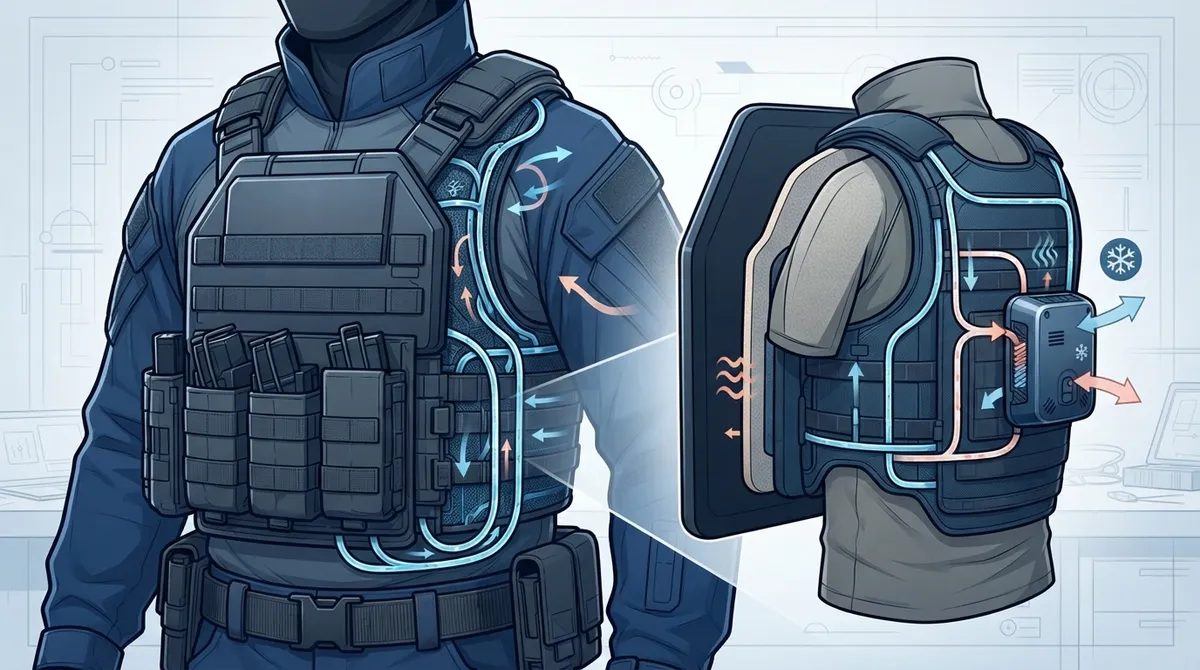
So how do ventilation vests actually pull this off? The idea is simple: create a small air gap between your body and the armor, then move air through that gap.
Some designs use spacers or mesh panels to lift the armor slightly and let air flow naturally. Others use small battery-powered fans to actively push air through the gap. Research from a spacer-vest study showed an estimated 20% increase in evaporative cooling potential compared to armor worn without a spacer. That’s a meaningful improvement, especially over a long shift.
A U.S. Army Research Institute of Environmental Medicine test used a sweating manikin to measure this effect more precisely. A battery-powered system moving about 9 liters of air per second increased heat loss by roughly 45 watts. It also reduced water-vapor resistance by 20%, meaning sweat could evaporate more easily. This is the exact mechanism our BluHalo ventilation vest relies on to help you stay cooler under pressure.
BluHalo: Built by Someone Who Understands the Problem
BluHalo wasn’t designed in a lab far removed from the daily grind. It was created by a Chicago police officer who got tired of sweating through his shirt during 12-hour shifts in 95-degree heat. He wanted something lightweight, simple, and effective, so he built it.
The BluHalo vest weighs under 7 ounces and sits flat when deflated. When you need cooling, you inflate it with a small pump, and it lifts your armor up to about 1.5 inches off your body. That gap creates the air channel your body needs to cool down naturally. When you’re done, one button deflates it so it lies flat again.
It attaches to your existing vest with Velcro, so there’s no complicated setup. Officers who’ve used it during long, hot shifts describe real, noticeable relief, especially during extended outdoor duty. You can browse the full lineup in our shop if you want to see how it fits into your existing gear.
Blufano: Active Cooling for Extended Duty
If you want something with continuous fan-driven airflow, Blufano is our answer to that need. It’s a self-contained, active ventilation unit with a patented air-redirect spout that slides under any style of body armor.
Here’s what makes Blufano stand out:
- Adjustable fan settings that run anywhere from 8 to 32 hours depending on the power level you choose.
- A built-in 10,000mAh power bank that can also charge your phone or other USB devices in the field.
- A forward-facing light for hands-free illumination during low-light situations.
- Simple control knob operation, so you can adjust airflow without fumbling with complicated buttons.
Users have reported faster cooling, especially when combined with vehicle air conditioning during breaks, along with reduced sweat and better focus during long, hot days. You can learn more about how this system compares to passive designs in our breakdown of Blufano’s fan system versus passive cooling.
Choosing the Right Cooling System for Your Role
Different jobs come with different cooling needs. Here’s a simple breakdown to help you figure out what fits your situation best.
- Law Enforcement Officers: Long patrol shifts call for reliable, all-day comfort. A lightweight, on-demand system like BluHalo works well for officers who need quick relief without added bulk.
- Military Personnel: Extended missions in extreme heat benefit from active airflow systems that maintain performance over many hours, which is where Blufano’s extended battery life shines.
- Security Professionals: Standing posts for hours at a time means comfort matters just as much as durability. Look for gear that’s easy to attach and doesn’t interfere with movement.
- Tactical and SWAT Teams: High-intensity operations demand cooling that won’t shift armor plates or restrict mobility during fast movement.
- Emergency Response Personnel: Firefighters and hazmat teams need durable systems that hold up under extreme conditions and rapid temperature changes.
No matter your role, the goal is the same: reduce heat strain without sacrificing protection or mobility. For a deeper look at how different systems stack up, check out our guide on the best vest cooling systems for beating the heat in body armor.
What to Look For Before You Buy
Not every cooling product is created equal. Before you invest in a system, keep these factors in mind.
| Feature | Why It Matters |
|---|---|
| Weight | Heavier add-ons cause fatigue over long shifts |
| Battery Life | Longer runtime means fewer interruptions during duty |
| Fit and Compatibility | Must not shift plates or interfere with gear |
| Noise Level | Quiet operation matters for tactical situations |
| Durability | Daily wear requires rugged, long-lasting materials |
Keep in mind that cooling gear should work alongside, not replace, standard heat-safety practices like proper hydration, acclimatization, and scheduled work-rest cycles. These fundamentals remain critical for anyone working in high-heat environments, regardless of what cooling gear you’re using.
Beyond Cooling: A Full-Body Approach to Comfort
Cooling gear is one piece of the puzzle, but overall wellness matters too. Staying properly hydrated, eating well, and taking care of your body outside of work all contribute to how well you handle heat stress on the job. For officers and first responders looking for broader wellness resources, partners like Smile District can be a great addition to a well-rounded self-care routine.
Final Thoughts on Staying Cool Under Armor
Heat stress under body armor is a real and serious challenge, but it’s one you don’t have to face without help. Whether you’re patrolling city streets, deployed overseas, or standing guard through a summer heatwave, the right ventilation system can make a measurable difference in how you feel and perform.
Both BluHalo and Blufano are built with real users in mind, tested against the demands of daily duty, and designed to keep you cooler without compromising your protection. If you’re ready to experience the difference for yourself, our team would love to help you find the right fit. Reach out to our team today and let’s get you geared up for a cooler, more comfortable shift.
FAQs
Q: How does a ventilation vest cool someone wearing military body armor?
A: It creates a small air gap between your body and the armor, then moves air through that gap so sweat can evaporate more easily. This is exactly how BluHalo works, lifting your armor up to 1.5 inches for better airflow when you need it most.
Q: Is forced-air ventilation better than liquid-cooling or phase-change cooling for body armor?
A: Research consistently shows active airflow systems outperform passive cooling methods like phase-change materials, which often provide only brief relief. Ventilation is also lighter since you’re not carrying chilled fluid or ice packs around all shift.
Q: Can a cooling vest be worn under a ballistic plate carrier?
A: Absolutely, that’s exactly what products like BluHalo and Blufano are designed for. They attach easily to your existing armor setup without shifting plates or interfering with your gear.
Q: How long does a military body armor cooling vest battery last?
A: It depends on the system, but options like Blufano offer anywhere from 8 to 32 hours of runtime depending on your chosen fan setting. That flexibility makes it a solid choice for long missions or extended shifts.
Q: Will a cooling vest affect ballistic protection or tactical mobility?
A: A well-designed ventilation vest shouldn’t compromise your armor’s fit or protective coverage at all. BluHalo and Blufano are both built to work with your existing gear, not against it, so you get cooling relief without sacrificing safety.