Key Takeaways
-
Active cooling vests use battery-powered fans or inflatable systems to continuously circulate air between skin and armor, eliminating the setup hassle of passive evaporative vests and providing reliable cooling for shifts up to 32 hours.
-
Fan-driven systems like Blufano offer 8-32 hour battery life with adjustable speed settings, while inflatable airspace vests create up to 1.5-inch gaps for natural air circulation—choose based on mobility needs and shift length.
-
Heat stress under body armor directly impairs cognitive function, reaction time, and physical performance; active cooling systems address this safety gap by maintaining core body temperature during long shifts.
-
When selecting an active cooling system, prioritize compatibility with your specific armor type, battery life matching your shift duration, and low-profile weight (under 7 ounces preferred) to maintain mobility.
-
Maximize cooling effectiveness by wearing moisture-wicking base layers, charging devices fully before shifts, adjusting fan speed based on activity level, and using vehicle AC to pre-cool between calls.
-
Different professions have different optimal systems: law enforcement benefits from fan-driven or inflatable designs for all-day comfort, while firefighters and hazmat teams need battery-powered systems that function in fully sealed protective suits.
If you wear body armor for work, you already know the struggle. Heat builds up fast. Sweat soaks through. Focus drops. After a long shift in the summer sun, it can feel like you’re baking from the inside out. The good news? Active cooling technology in ventilation vests has come a long way — and in 2026, there are more options than ever to help you stay cool, dry, and focused under your gear.
Whether you’re a patrol officer pulling 12-hour shifts, a soldier on a hot deployment, or a firefighter suiting up in extreme heat, this guide walks you through exactly how active cooling works — and how to put it to work for you. Let’s break it down in plain terms so you can make the best choice for your situation.

What Is Active Cooling Technology in Ventilation Vests?
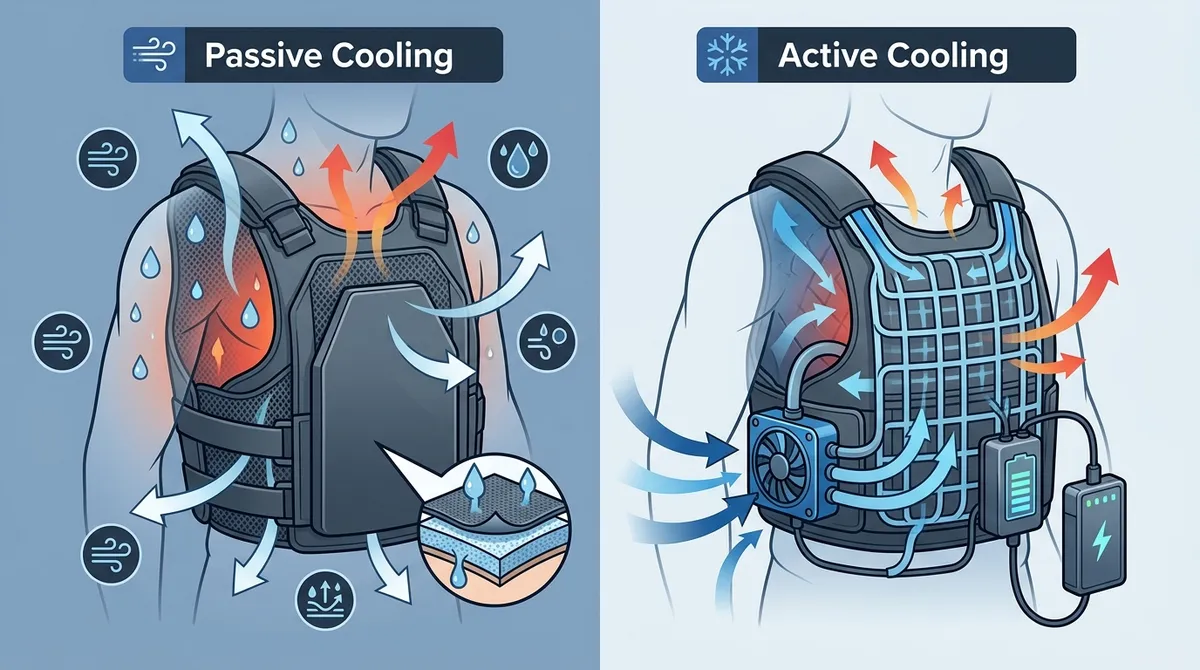
Active cooling technology refers to any powered system that actively moves air, cold, or cool liquid to reduce body heat. Unlike passive methods — like evaporative vests you soak in water — active systems use batteries, fans, or compressed air to deliver continuous cooling without any pre-soak or setup hassle.
For people wearing body armor, this is a game changer. Vests trap heat against your torso. Active ventilation systems break that heat trap by creating airflow channels between your skin and your armor. The result? Less sweat, less fatigue, and better performance on the job.
If you want a deeper dive into why this matters for officers, check out this article on body armor ventilation as a game changer for officers.
Active vs. Passive Cooling: What’s the Difference?
Before choosing a system, it helps to understand the two main cooling approaches. Here’s a quick comparison:
| Feature | Active Cooling | Passive Cooling |
|---|---|---|
| Power Source | Battery, compressed air | None required |
| Setup Time | Quick, no pre-activation | Requires soaking or freezing |
| Duration | On-demand, continuous | Limited (evaporates or melts) |
| Effectiveness | High, consistent | Moderate, decreases over time |
| Best For | Long shifts, extreme heat | Short tasks, mild heat |
As you can see, active cooling wins on consistency and convenience. For professionals on long shifts, that reliability is critical. You can also explore more solutions in this helpful guide on best vest cooling systems to beat the heat in body armor.
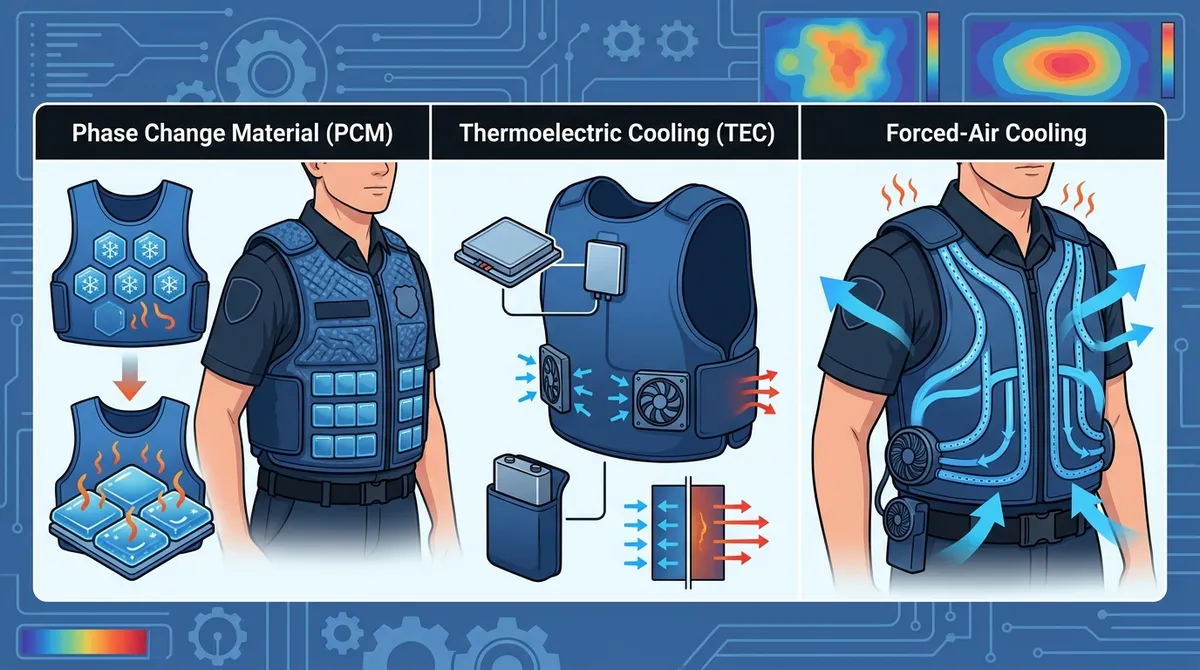
Types of Active Cooling Technology for Ventilation Vests
There are several active cooling approaches used in ventilation vests today. Each works a bit differently, so knowing the basics helps you choose wisely.
1. Fan-Driven Airflow Systems
These use small, battery-powered fans to push fresh air under your body armor. The fans draw cool air in and push hot, humid air out — creating a constant airflow channel against your torso. They’re lightweight, rechargeable, and easy to use.
The Blufano from BluHalo is a great example. It’s a self-contained active airflow unit with a patented air-redirect spout that slides under any body armor style. It runs for 8 to 32 hours depending on the fan setting and includes a built-in 10,000mAh power bank. It even has a forward-facing light for low-light situations — a thoughtful touch for duty use.
2. Inflatable Airspace Vests
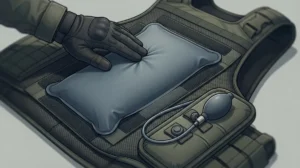
Some vests use an inflation system to physically lift the armor off your body. This creates a gap — up to 1.5 inches — that lets natural air circulate between your skin and gear. The BluHalo ventilation vest works this way. You inflate it on demand with a small pump, and it deflates flat with the push of a button. It weighs under 7 ounces and sits unobtrusive under your vest when not inflated.
This design, created by a Chicago police officer, solves a real problem that officers face daily. You can read more about what this product does and why you need one at what is body armor vent and why do you need one.
3. Vortex Tube Systems
Vortec Cooling Vests (VCVs) use a vortex tube to split compressed air into hot and cold streams. The cold air is then delivered through a perforated vest for continuous, deep cooling. These systems are powerful but require a compressed air source, which makes them better for stationary environments. They’re available in sizes Large to XX-Large and can be worn under protective clothing.
4. Battery-Powered Air Circulation Vests
Products like INUTEQ-AIR® use a patented battery-powered system to actively circulate air around the body. They require no pre-cooling and are designed to work even inside sealed environments like hazmat suits. This makes them ideal for firefighters and hazmat response teams who need reliable cooling in fully enclosed gear.

How to Choose the Right Active Cooling System
Not every system works for every job. Here’s a step-by-step approach to picking the right active cooling technology for your needs:
- Identify your work environment. Do you move around a lot? Are you in extreme heat? Are you in a sealed suit? Your environment shapes everything.
- Check compatibility with your armor. Not all cooling systems fit all vest types. Look for systems designed to work under standard body armor configurations.
- Consider shift length. A system that lasts 8 hours won’t cut it for a 12-hour shift. Look for long battery life or easy recharging options.
- Think about weight and profile. Extra bulk is a real concern. Lightweight, low-profile designs — like BluHalo’s under-7-ounce vest — keep you agile.
- Factor in maintenance and ease of use. You don’t want a complicated setup mid-shift. Simple controls and fast activation matter.
For a more detailed breakdown of what to look for, this guide on how to choose the right body armor ventilation vest in 2026 is a great resource.
Active Cooling Technology by Profession
Different jobs have different needs. Here’s a quick overview of which systems tend to work best for each professional group:
| Profession | Best Active Cooling Type | Key Priority |
|---|---|---|
| Law Enforcement | Fan-driven or inflatable airspace | All-day comfort, low profile |
| Military Personnel | Fan-driven, long battery life | Durability, extended use |
| SWAT/Tactical Teams | Fan-driven, compact design | Mobility, peak performance |
| Firefighters/Hazmat | Battery-powered air circulation | Works in sealed suits |
| Security Professionals | Inflatable or fan-driven | Comfort over long hours |
Heat stress is a serious occupational hazard. The OSHA Heat Stress Guide outlines thresholds and protective measures all professionals in high-heat environments should know. It’s worth a read — especially if you manage a team.
How to Get the Most Out of Your Active Cooling Vest
Once you’ve picked your system, here are some practical tips to maximize its effectiveness:
- Charge your device the night before every shift. Don’t trust a half-charged battery in the middle of a hot day.
- Wear moisture-wicking base layers. Active cooling works even better when sweat is moved away from your skin quickly.
- Use your vehicle’s AC to pre-cool. Several Blufano users report using the fan along with AC to cool down faster between calls.
- Adjust fan speed based on activity level. Lower settings conserve battery; higher settings give you a blast of cool air when you need it most.
- Check your gear for fit regularly. A loose-fitting vest reduces the effectiveness of any ventilation system.
You can also learn more about smart ventilation strategies in this helpful article on how to stay cool under body armor with smart ventilation.
Comparing Top Active Cooling Solutions in 2026
Here’s a side-by-side look at some of the leading active cooling options available in 2026:
| Product | Cooling Method | Battery/Power | Best For |
|---|---|---|---|
| Blufano (BluHalo) | Fan-driven airflow | 10,000mAh, 8–32 hrs | Law enforcement, daily duty |
| BluHalo Vest | Inflatable airspace | No battery needed | Officers, security, patrol |
| Vortec Cooling Vest | Vortex tube (cold air) | Compressed air source | Stationary/industrial tasks |
| INUTEQ-AIR® | Battery air circulation | Battery-powered | Firefighters, hazmat teams |
Both Blufano and the BluHalo vest are listed among the top picks for heat stress prevention in body armor for 2026. For professionals who wear body armor daily, having both systems available — and being able to bundle them — gives you maximum cooling flexibility on any shift.
Why Active Cooling Matters for Heat Stress Prevention
Heat stress is not just uncomfortable — it’s dangerous. When your core temperature rises too high, cognitive function drops, reaction time slows, and physical performance suffers. For officers and soldiers in the field, that’s not just a discomfort issue — it’s a safety issue.
According to the Body Armor Standards from the National Institute of Justice, armor design continues to improve — but thermal management remains a key challenge for wearers. Active cooling systems directly address this gap. You can also learn practical prevention strategies in this guide on how to prevent heat stress while wearing body armor.
Want to know more about vest ventilation basics and why it’s essential? This article on what is vest ventilation and why you need it is a great starting point. And if you’re specifically in law enforcement, this piece on optimal cooling for tactical vests is a must-read.
For the latest cooling solutions tailored to officers in 2026, you can also check out this overview of body armor cooling solutions for officers in 2026.
Making the Switch to Active Cooling
If you’re still relying on a damp towel or a basic evaporative vest, it’s time to upgrade. Active cooling technology has become more affordable, more reliable, and more comfortable than ever. The barrier to entry is low — and the payoff in comfort, focus, and safety is real.
Start by checking out your options at the BluHalo shop, where you can compare the BluHalo ventilation vest and Blufano fan system. You can also read real reviews from officers and professionals who have already made the switch and noticed a big difference.
Stay cool out there. You’ve got enough on your plate — overheating shouldn’t be part of the job description.
Ready to find the right active cooling solution for your gear? Reach out to the BluHalo team and get personalized guidance on the best ventilation vest for your role, armor type, and shift demands. We’re here to help.
FAQs
Q: What is the difference between active and passive cooling vests?
A: Active cooling vests use powered systems — like fans or compressed air — to continuously circulate cool air under your armor without any pre-soak or setup. Passive vests rely on water evaporation or frozen PCM packs, which lose effectiveness over time. For long shifts in serious heat, active cooling is the more reliable choice.
Q: How does active cooling technology work under body armor?
A: Active cooling systems create airflow channels between your skin and body armor by using fans, inflatable air gaps, or powered air circulation. This moves trapped heat and moisture away from your torso and replaces it with cooler, fresher air. The result is a noticeably cooler and drier wearing experience — even on the hottest shifts.
Q: How long does a battery-powered ventilation vest last on a single charge?
A: It depends on the system and fan setting you use. The Blufano by BluHalo, for example, runs anywhere from 8 to 32 hours on a single charge thanks to its built-in 10,000mAh power bank. Lower fan settings stretch battery life, while higher settings give you stronger cooling when you really need it.
Q: Can active cooling vests be worn under any type of body armor?
A: Most active cooling ventilation vests — including the Blufano and BluHalo vest — are designed to fit under standard body armor styles used by law enforcement and military personnel. Always check size compatibility and armor fit before purchasing. Many systems are slim and low-profile so they won’t interfere with how your armor sits or moves.
Q: Is active cooling technology worth it for security professionals?
A: Absolutely — especially if you work long hours outdoors or in warm climates. Security professionals often wear body armor for extended shifts, and heat buildup can lead to fatigue and reduced focus. An active cooling ventilation vest is a practical, affordable upgrade that can make a real difference in how you feel and perform throughout your shift.