Key Takeaways
-
Install a ventilation vest under your armor to create an air gap that allows sweat evaporation; passive designs like BluHalo or active fan systems like Blufano can reduce heat buildup significantly during long shifts.
-
Drink about one cup of water every 15-20 minutes during moderate activity in heat, and start hydrating before your shift begins rather than waiting until you're thirsty.
-
Schedule short breaks in shaded or air-conditioned areas and remove outer gear during downtime; allow adequate recovery time since core temperature drops slowly after physical activity.
-
Acclimate your body to heat gradually over 2 weeks before peak summer season, which can increase exercise time by 18% and lower skin temperature when combined with ventilation gear.
-
Ensure your body armor fits properly to prevent heat trapping and movement restriction; verify that any ventilation vest is compatible with your specific carrier and doesn't interfere with coverage.
-
Maintain your cooling gear regularly by charging fan systems before shifts, checking for damage, and wiping down after use to ensure consistent performance throughout the season.
If you’ve ever finished a 12-hour shift with a soaked undershirt and a chest that feels like it’s been in an oven, you already know the struggle. Learning how to stay cool in body armor isn’t just about comfort—it’s about staying sharp, safe, and ready for whatever your shift throws at you. Whether you’re a patrol officer, a soldier on deployment, a security pro standing post, or a first responder racing into danger, heat buildup under your vest can wear you down fast.
The good news? You don’t have to just tough it out. Ventilation vests, smart gear choices, and a few field-tested habits can make a real difference. We’ve pulled together research, real-world testing, and practical tips to help you build a cooling strategy that actually works. Let’s get into the seven best ways to beat the heat without sacrificing protection.
Why Body Armor Traps So Much Heat
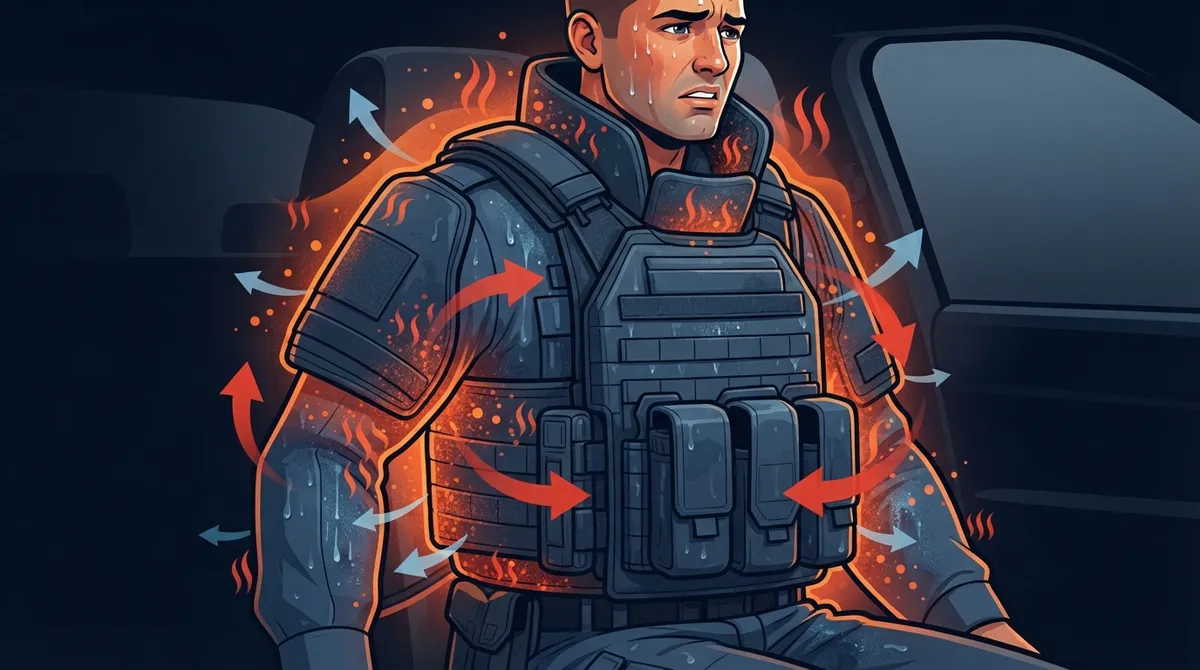
Body armor is built to protect you, not to breathe. That’s just the nature of the material. Ballistic panels and carriers sit tight against your torso, blocking the airflow your body needs to cool itself through sweat evaporation.
When sweat can’t evaporate, it just sits there. Your skin stays wet, your core temperature climbs, and you start feeling sluggish and irritable. This is exactly why so many officers and soldiers search for real answers on how to stay cool in body armor, especially during summer months or in hot climates.
According to OSHA Heat Stress Guide, heavy protective gear is one of the biggest contributors to on-the-job heat stress. The agency notes that PPE like body armor limits the body’s natural cooling process, making heat illness more likely during long shifts or intense physical activity.

7 Proven Ways to Stay Cool in Body Armor
Here are seven strategies that combine smart gear with smart habits. Use them together for the best results.
1. Add a Ventilation Vest Under Your Armor
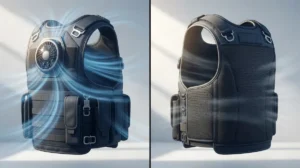
This is the single biggest upgrade you can make. A ventilation vest creates a gap between your body and your armor, letting air move and sweat evaporate instead of getting trapped. Passive spacer designs and active fan-powered systems both work toward the same goal: giving your skin room to breathe.
The BluHalo ventilation vest was actually created by a Chicago police officer who got tired of overheating on long, hot shifts. It weighs less than 7 ounces, lies flat when not in use, and inflates on demand to lift your vest up to about 1.5 inches off your body. That small air gap makes a big difference when you’re baking in 95-degree heat for 12 hours straight.
For those who want continuous airflow instead of an on-demand lift, Blufano offers a self-contained fan system with a patented air-redirect spout. It slides under any style of body armor and runs for 8 to 32 hours depending on your fan setting, all powered by a built-in 10,000mAh battery that can also charge your phone. Many professionals combine both products, using BluHalo for quick cooling-on-demand and Blufano for all-shift airflow.
2. Choose Passive or Active Cooling Based on Your Job
Not all cooling gear works the same way, and picking the right type matters. Here’s a quick breakdown to help you decide.
| Cooling Type | How It Works | Best For |
|---|---|---|
| Passive Spacer Vest | Creates an air gap using mesh or inflatable panels | Officers needing lightweight, low-profile comfort |
| Active Fan System | Uses a battery-powered fan to push air under armor | Long shifts, extreme heat, extended missions |
| Phase-Change Material (PCM) | Absorbs heat through material that changes state | Short bursts of intense activity |
| Ice Pack or Liquid-Cooled Garment | Circulates chilled packs or liquid for direct cooling | Fixed posts with access to recharging stations |
A 2025 study on passive cooling vests tested under ballistic clothing found that a PCM vest lowered torso temperature by an average of 1.5°C during a 120-minute trial, with the strongest effect lasting about 60 minutes. That’s helpful, but it fades—which is why many professionals prefer ventilation systems that keep working all shift long.
3. Master Your Hydration Routine
No cooling vest can replace proper hydration. Your body needs water to sweat, and sweat is your main defense against overheating.
NIOSH recommends drinking about one cup of water every 15 to 20 minutes during moderate activity in moderate heat. Here’s a simple hydration checklist to follow during your shift:
- Start hydrating before your shift begins, not after you’re already thirsty
- Sip water consistently rather than chugging large amounts at once
- Avoid excessive caffeine or sugary drinks that can worsen dehydration
- Watch for dark urine or headaches, which signal you’re falling behind on fluids
- Keep an electrolyte drink on hand for extra-long or extra-hot shifts
Pairing good hydration habits with a solid heat stress prevention plan gives you a much stronger defense against fatigue and heat illness.
4. Plan Your Work and Rest Cycles
Your body needs breaks to recover, especially in extreme heat. NIOSH points out that core temperature drops slowly, so simply pausing strenuous activity doesn’t cool you down right away.
Follow these steps during hot-weather shifts:
- Schedule short breaks in shaded or air-conditioned areas whenever possible
- Remove your outer gear during breaks if it’s safe to do so
- Use the break to rehydrate and check in with your body
- Apply active cooling, like a cold towel or cooling vest, during downtime
- Avoid jumping straight back into high-intensity tasks the moment your break ends
This kind of planning matters even more for tactical and SWAT teams, who often face back-to-back high-intensity operations with heavy loadouts. Reviewing optimal cooling strategies for tactical vests can help teams build smarter rotation schedules.
5. Get Your Armor Fit Checked
A poorly fitted vest traps more heat and restricts your movement, making everything worse. Fit isn’t just about comfort—it directly affects how well your armor protects you and how much airflow can reach your skin.
When adding any ventilation vest, make sure it’s designed to work with your specific armor carrier. It shouldn’t interfere with coverage, retention, or mobility. Always follow guidance from both your armor and vest manufacturer, and check with your agency before making any changes to standard-issue gear. The Body Armor Standards from the National Institute of Justice offer helpful background on what proper protective performance looks like.
If you’re unsure how a ventilation vest might affect your current setup, our team can walk you through it. Feel free to reach out to our support team with questions about fit and compatibility.
6. Acclimate to Heat Before Peak Season Hits
Your body actually adapts to heat over time, a process called acclimatization. Give yourself a couple weeks of gradual heat exposure before the hottest days of summer arrive.
A small study on ventilated vests in hot, dry conditions used eight heat-acclimated men wearing full combat gear and a 19-kg load. The group using a ventilated vest saw 18% more exercise time and noticeably lower skin temperatures under their armor compared to the group without one. That’s a solid reminder that acclimatization and ventilation work best as a team, not as substitutes for each other.
7. Maintain Your Gear So It Keeps Performing
Even the best cooling vest won’t help much if it’s dirty, damaged, or not charged. Regular maintenance keeps your gear working at full strength when you need it most.
Follow this simple care routine:
- Wipe down your ventilation vest after every shift to remove sweat and buildup
- Let it fully air dry before storing it away
- Check straps, valves, and Velcro attachments for wear
- Charge fan-powered systems like Blufano before each shift, especially for longer rotations
- Inspect for punctures or seam damage on inflatable designs
Good maintenance habits stretch the life of your gear and keep it ready to perform, shift after shift. For more detailed guidance, check out our tips on choosing and caring for the right ventilation vest.
The Research Behind Ventilation Vests
This isn’t just marketing talk—there’s real science behind ventilation technology. A military spacer-vest study found that wearing a spacer layer under armor reduced thermal and evaporative resistance compared to armor alone, boosting modeled evaporative-cooling potential by about 20%.
A separate thermal-manikin evaluation of a passive Interceptor Ventilation Vest found roughly 15% greater evaporative-cooling potential than armor alone. When researchers tested a powered body-ventilation system with the blower turned on, that number jumped to about 18%. These numbers show why active airflow, like what you get from Blufano, can offer an edge over passive designs alone.
Still, it’s worth remembering that these are lab and field study results, not guarantees for every wearer or every climate. Ventilation vests are one part of a bigger heat-safety plan, not a magic fix.
Building Your Complete Heat-Safety Plan
The best approach to staying cool combines gear, habits, and awareness. Think of it like a toolbox:
- A ventilation vest to boost airflow and reduce trapped heat
- Consistent hydration throughout your shift
- Smart work and rest cycles based on conditions
- Properly fitted armor that doesn’t restrict movement
- Gradual heat acclimatization before peak summer months
- Routine gear maintenance and charging
Tools like SEO Rocket help businesses like ours reach the people who need this information most, so more officers, soldiers, and first responders can find real solutions instead of just suffering through the heat.
Whether you’re gearing up for patrol, deployment, or a long shift at a security post, small changes add up. Combining the right ventilation system with smart daily habits can be the difference between a miserable shift and one you barely notice the heat on.
Ready to Beat the Heat?
You don’t have to accept sweat-soaked shirts and heat exhaustion as part of the job. BluHalo and Blufano were built by people who understand exactly what you’re dealing with under that vest, day after day. If you’re ready to upgrade your comfort and performance, get in touch with our team today and let’s find the right cooling solution for your gear and your job.
FAQs
Q: How does a ventilation vest help keep you cool under body armor?
A: A ventilation vest creates a small air gap between your body and your armor, letting sweat evaporate instead of getting trapped. This helps release built-up heat and moisture, which can make a huge difference during long, hot shifts.
Q: What is the difference between a ventilation vest and a cooling vest?
A: Ventilation vests, like BluHalo, use passive or active airflow to move air and moisture away from your skin. Cooling vests often rely on ice packs, phase-change materials, or liquid circulation, which cool through a different method and usually need recharging.
Q: Can you wear a ventilation vest under a plate carrier or ballistic vest?
A: Yes! Both BluHalo and Blufano are designed to fit under nearly any style of body armor or plate carrier. Just make sure the vest you choose is compatible with your specific carrier and doesn’t interfere with fit or protective coverage.
Q: Do ventilation vests work in hot, humid weather?
A: They can still help, though performance may vary since humidity slows sweat evaporation. Active fan-powered systems tend to perform better in humid conditions because they physically move air, rather than relying on passive airflow alone.
Q: What other steps help prevent heat stress while wearing body armor?
A: Staying hydrated, planning smart work and rest cycles, and acclimating to heat gradually all make a big difference. Combine these habits with a good ventilation vest, and you’ll have a much stronger defense against heat-related fatigue.